Jiwei MINI Radar Level Transmitters Deployed for Sea Water Monitoring at the Hong Kong–Zhuhai–Macau Bridge
As a major cross-sea transportation project connecting Hong Kong, Zhuhai, and Macau, the Hong Kong–Zhuhai–Macau Bridge not only handles significant traffic volume but also represents an important example of smart transportation and digital infrastructure in China. The surrounding marine environment is subject to tidal variations, monsoon climate, typhoon impacts, and storm surges, causing continuous fluctuations in sea level. Real-time monitoring of sea water levels is therefore critical for improving bridge operation management and ensuring safety.
Recently, Jiwei Automation’s self-developed JWrada® MINI radar level transmitters were successfully deployed in bulk for the sea water monitoring project at the Hong Kong–Zhuhai–Macau Bridge. By installing multiple radar level transmitters at key bridge monitoring points, the system enables round-the-clock real-time monitoring of water level changes beneath the bridge, providing reliable data to support bridge operation, disaster prevention, and marine environment management.
Why Sea Water Monitoring is Needed at the Hong Kong–Zhuhai–Macau Bridge
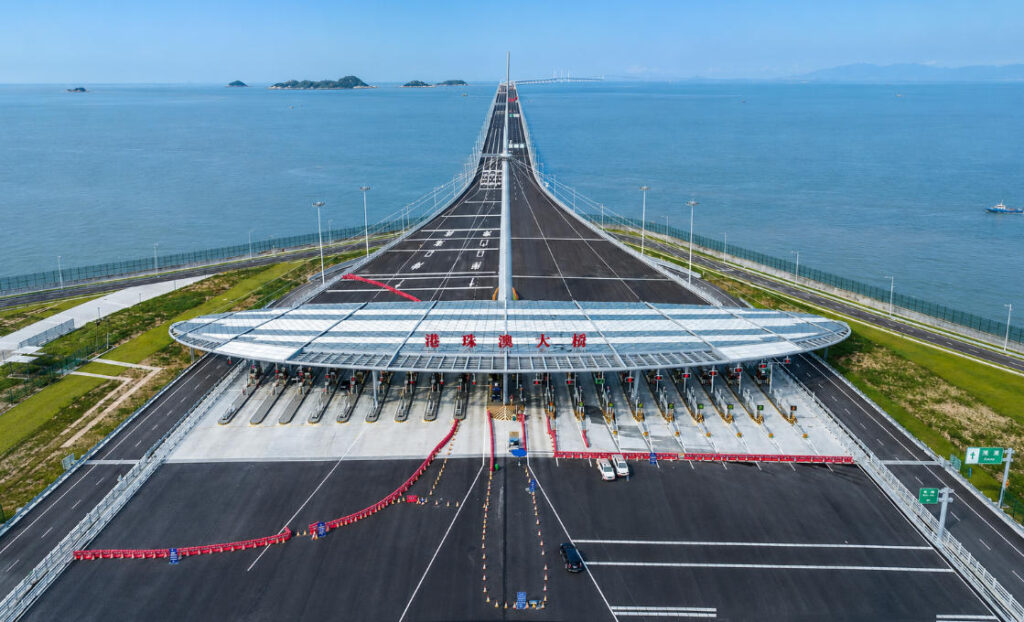
Spanning the Lingdingyang waters of the Pearl River Estuary, the Hong Kong–Zhuhai–Macau Bridge stretches approximately 55 kilometers and is one of the most representative cross-sea bridges in the world. The bridge is constantly exposed to tidal variations, wave impacts, and extreme weather conditions, all of which affect operational safety.
Sea water level monitoring is not only vital for structural safety assessment but also closely related to navigation management, marine environment monitoring, meteorological early warning, and smart transportation systems. During typhoon seasons or severe convective weather events, having timely sea level data allows operators to take proactive safety measures.
Traditional water level monitoring methods, typically contact sensors or manual observation, incur high maintenance costs and are prone to corrosion, signal drift, or failure due to prolonged exposure to high salt and humidity. Therefore, a solution that is highly stable, low-maintenance, and precise is essential.
JWrada® MINI Radar Level Transmitters: The Optimal Choice
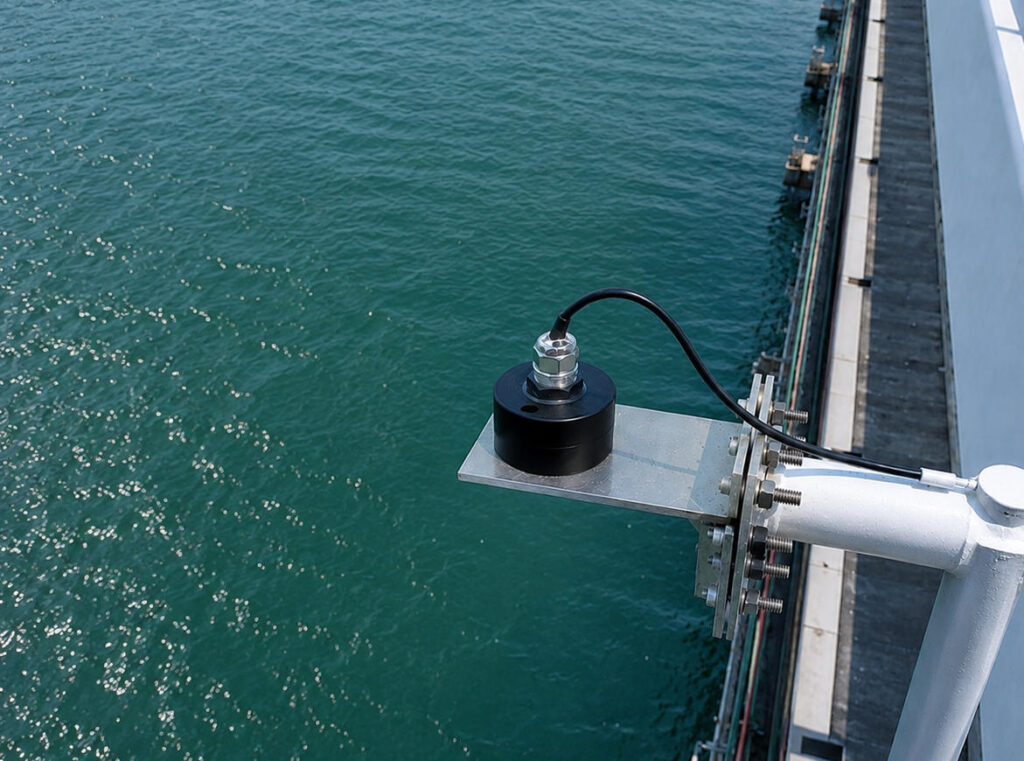
After evaluating on-site conditions and multiple technical options, the project selected Jiwei’s JWrada® MINI radar level transmitters as the core monitoring equipment.
JWrada® MINI uses advanced 80GHz high-frequency radar technology. By emitting microwave signals and receiving reflections from the sea surface, the system provides continuous, non-contact water level measurement. This completely avoids corrosion from seawater and biofouling that can affect traditional sensors.
At the Hong Kong–Zhuhai–Macau Bridge, the transmitters are mounted on dedicated brackets outside the bridge railings, with radar probes pointing directly at the water. Unobstructed below, the radar beam can accurately measure water levels, producing stable and reliable data. Compared to conventional contact measurement devices, non-contact radar measurement improves reliability and significantly reduces maintenance efforts.
80GHz High-Frequency Radar Ensures Accurate Measurement
Sea water level monitoring differs from standard tank level measurement. The surface is constantly dynamic, affected by waves, tides, and currents. Cross-sea bridge locations also experience strong winds, vibration, high humidity, and electromagnetic interference, posing higher requirements for measurement equipment.
JWrada® MINI uses 80GHz millimeter-wave radar, offering narrower beam angles and stronger signal focus than traditional low-frequency radars. It can precisely capture real sea surface reflections even amid waves, avoiding interference from nearby structures or environmental noise. Advanced digital signal processing algorithms filter short-term wave-induced fluctuations, delivering stable measurements under calm or rough sea conditions.
Compact Design Meets Bridge Installation Requirements
Bridge monitoring points often have limited space. Equipment must ensure accurate measurement while minimizing impact on bridge structures and maintenance operations.
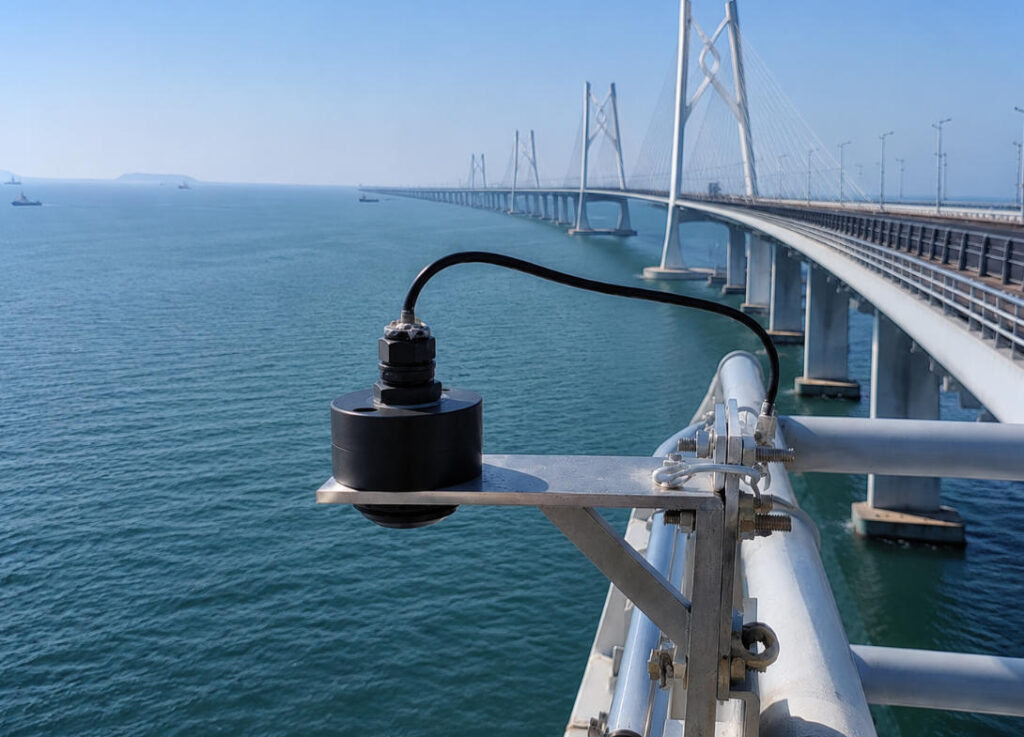
JWrada® MINI features a compact industrial design with small dimensions and supports miniature G3/4 process connections. It is especially suitable for installation on bridge railings, hydrological stations, rivers, and other restricted spaces. Installed at the Hong Kong–Zhuhai–Macau Bridge, the transmitters blend seamlessly with the structure, fulfilling functional requirements while maintaining aesthetic consistency and reducing support loads.
Bluetooth Wireless Commissioning Enhances Maintenance Efficiency
Beyond hardware performance, JWrada® MINI provides clear advantages in intelligent maintenance. Built-in Bluetooth allows wireless commissioning through the “Jiwei Tools” app. Field personnel can adjust parameters, configure ranges, view echoes, and perform diagnostics without opening the transmitter housing.
For high-altitude bridge installations, this wireless commissioning reduces maintenance time, increases operational efficiency, and minimizes safety risks. The devices can also interface with PLC, SCADA, DCS, and smart traffic platforms, enabling remote data collection and centralized management.

Long-Term Stability Validated on Site
Since deployment, JWrada® MINI transmitters have demonstrated long-term stable operation. Field testing confirms reliable performance in high salt, humidity, and UV conditions, without significant drift. Non-contact measurement avoids the need for frequent cleaning and eliminates biofouling errors.
Even during typhoon seasons and adverse weather, the monitoring system maintains continuous operation, providing real-time water level data. Operators report improved measurement stability, reduced maintenance burden, and lower long-term operating costs compared to traditional systems.
Advancing Smart Bridges and Smart Ocean Monitoring
As digital management of bridge infrastructure advances, sea water monitoring has become a critical component of cross-sea bridge operations. Reliable, continuous, and precise water level data supports operational management, extreme weather monitoring, tide analysis, and marine environment oversight.
The successful deployment of JWrada® MINI radar level transmitters at the Hong Kong–Zhuhai–Macau Bridge demonstrates their ability to operate reliably in high-salt, high-humidity, and high-wind conditions. Combining 80GHz radar technology, non-contact measurement, and compact installation, these transmitters provide long-term, stable sea level monitoring while overcoming the limitations of traditional contact sensors. The system now serves as a model for bridge water level monitoring, river and reservoir monitoring, port terminal supervision, and smart water management applications.