Radar Level Meter for Ship Berthing Distance Measurement: JWrada® Supports Port Safety and Intelligent Upgrading
With the rapid development of port automation and smart shipping, ship berthing safety has become a critical issue in terminal management. Traditional methods relying on manual visual inspection or simple auxiliary tools can no longer meet modern port requirements for high precision, real-time performance, and safety. How to accurately measure the distance between vessels and docks and achieve scientific berthing control has become a key focus of the industry.
In this application scenario, radar level meters are gradually extending from traditional liquid level measurement to ship distance monitoring and berthing assistance systems. In particular, the JWrada® radar level meter launched by Shenzhen Jiwei Automations Ltd. provides a new intelligent solution for ports with its high-precision measurement and powerful software capabilities.
I. Core Requirements of Ship Berthing Distance Measurement
During the berthing process, the distance between the ship and the dock changes rapidly and is influenced by multiple complex factors:
- Water currents and wind causing vessel movement
- Ship inertia making precise speed control difficult
- Reduced visibility at night or in harsh weather conditions
- Delay and errors inherent in manual judgment
Improper distance control may lead to structural damage from collisions, abnormal stress on mooring lines, safety incidents, and reduced berthing efficiency, affecting overall port throughput. Therefore, ports urgently require a non-contact, reliable, and real-time measurement technology for continuous monitoring and dynamic warning of berthing distances.
II. Why Radar Level Meters Are Suitable for Ship Distance Measurement
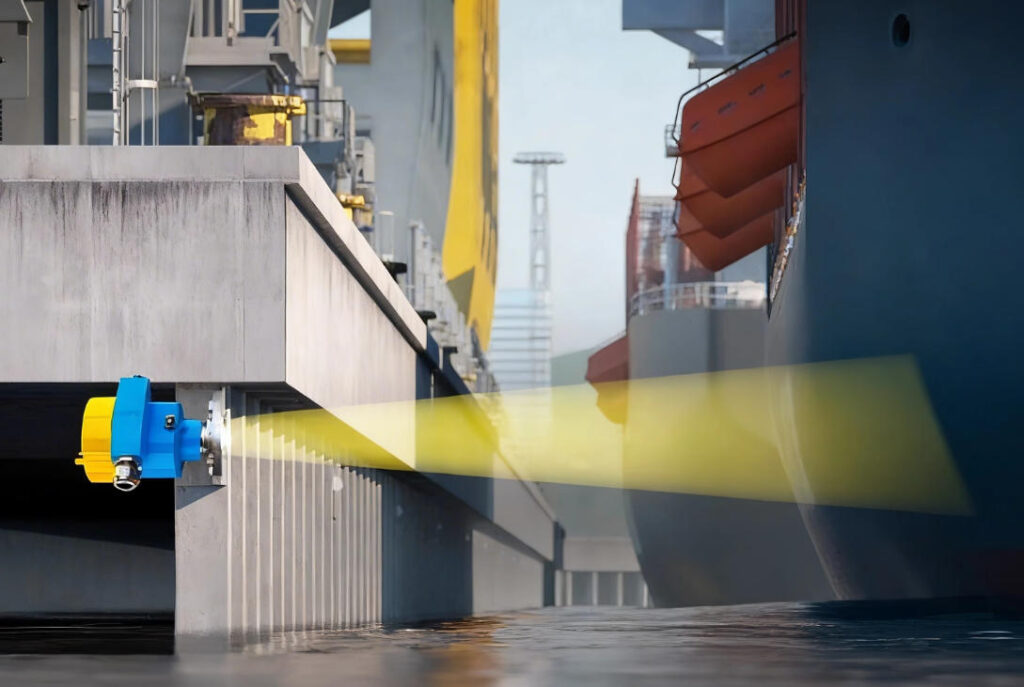
Radar level meters operate based on microwave measurement principles. They transmit electromagnetic waves and receive echoes to calculate distance. Compared with traditional methods, they offer significant advantages:
1. Non-Contact Measurement, Safe and Reliable
Radar signals propagate through air without touching the vessel, avoiding equipment damage and safety risks.
2. High Measurement Accuracy
The JWrada® radar level meter can achieve an accuracy of up to ±1 mm, fully meeting the requirements of precise berthing control.
3. Not Affected by Environmental Conditions
Radar measurement is not influenced by:
- Rain or fog
- Day or night lighting
- Wind and waves
- Dust or steam
4. Real-Time Response
With millisecond-level response speed, radar provides real-time distance feedback, enabling operators to make quick adjustments.
III. Application of JWrada® in Berthing Scenarios
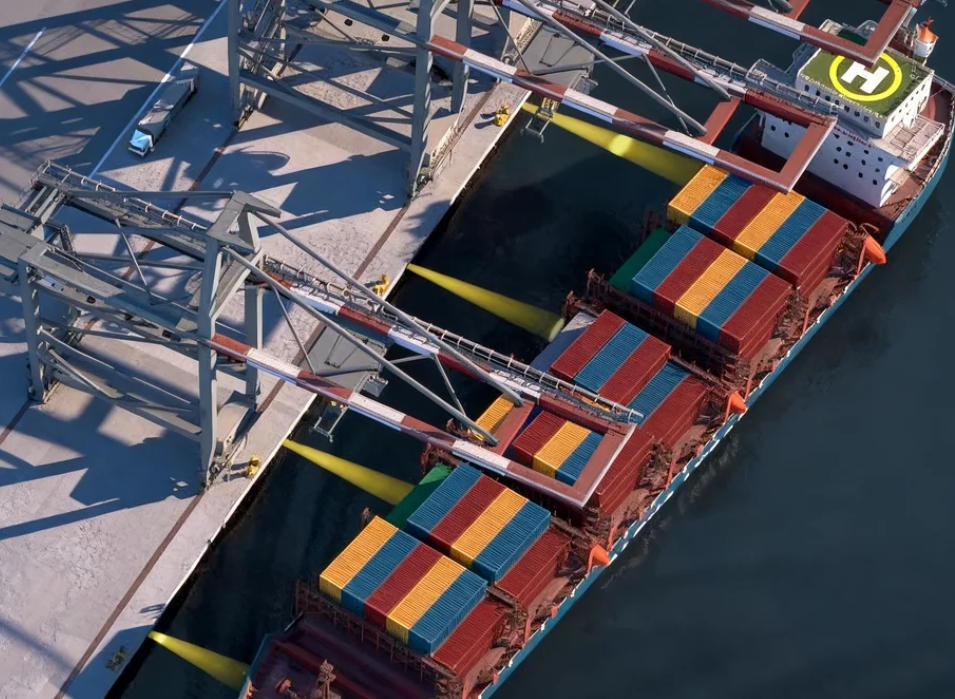
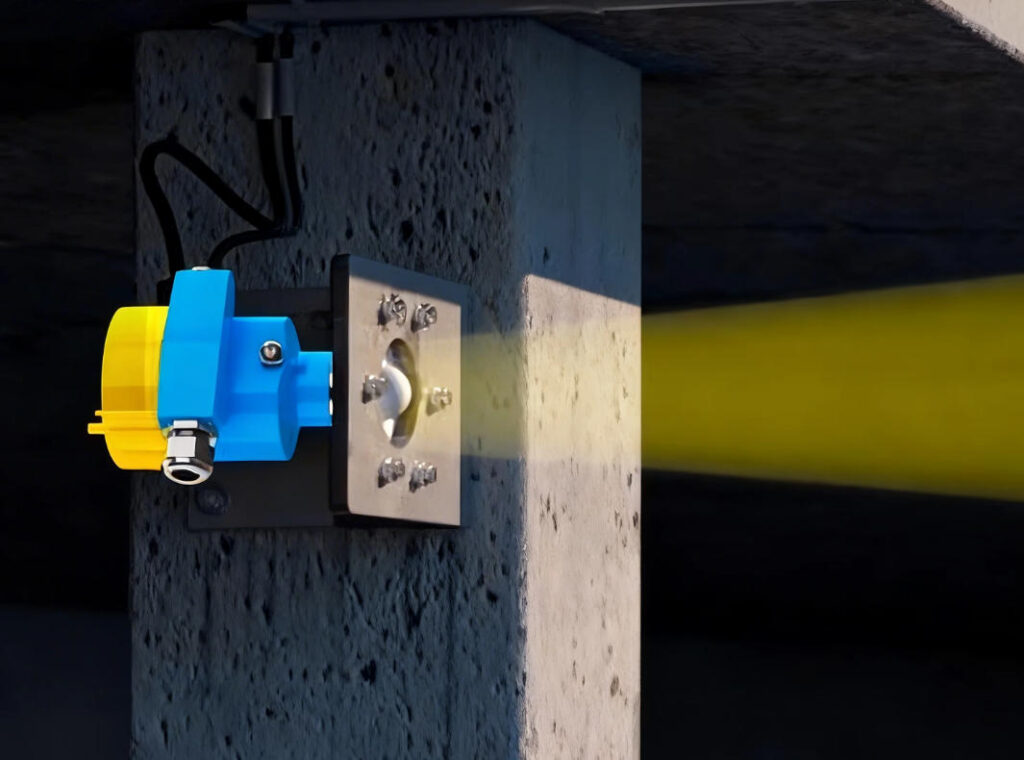
In practical applications, the JWrada® radar level meter is typically installed at the dock edge or on anti-collision structures to continuously monitor vessel distance.
Even under complex conditions such as rain, fog, or wave surge, it maintains reliable operation.
The system enables:
- Real-time display of ship-to-dock distance
- Customizable safety threshold alarms
- Seamless integration with PLC or DCS systems
- Intuitive visualization interfaces
When the vessel approaches the dock, the system dynamically outputs key data such as:
- Distance changes (e.g., 3.5 m → 2.0 m → 1.0 m)
- Approach speed trends
- Entry into the safety zone
This provides quantitative guidance for operators, reduces human error, improves safety, and enhances port efficiency.
IV. JWrada® Core Advantage: Software-Defined Radar
Beyond hardware performance, one of the core strengths of JWrada® is its software system.
It includes:
- Online software updates
- On-site commissioning
- Flexible parameter configuration
- Fault code diagnostics
These features significantly improve maintainability and adaptability.
V. Cloud-Based Remote Commissioning: A Revolutionary Upgrade for Port Operations
JWrada® radar level meters support cloud-based remote debugging.
1. One-to-One Remote Collaboration
Engineers can connect with on-site personnel via cloud servers without being physically present.
2. Real-Time Curve Analysis
The system supports:
- Echo Curve
- EFT Curve
Through curve analysis, engineers can determine:
- Whether the vessel signal is stable
- Whether interference sources exist (waves, structural reflections)
3. Customized Algorithm Optimization
Based on different port conditions (wave height, vessel type, installation location), engineers can:
- Adjust filtering parameters
- Optimize signal thresholds
- Improve measurement stability
Ensuring optimal performance in specific environments.
VI. Advantages Compared with Traditional Methods
| Item | Traditional Methods | Radar Level Meter |
|---|---|---|
| Measurement Method | Manual / Mechanical | Microwave Non-Contact |
| Accuracy | Low | ±1 mm |
| Environmental Impact | High | Minimal |
| Real-Time Performance | Delayed | Real-Time |
| Maintenance Cost | Higher | Lower |
VII. Application Value: More Than Distance Measurement
The JWrada® radar level meter is not only a distance sensor but also an important component of port safety systems, including:
- Anti-collision warning systems
- Smart port data acquisition nodes
- Automated berthing assistance systems
- Digital twin port infrastructure
It enables higher levels of automation and digital management.
Conclusion
With the development of smart ports and unmanned operations, ship berthing is shifting from experience-based control to data-driven intelligent decision-making.
The JWrada® radar level meter is transforming from a traditional industrial measurement device into essential port infrastructure.
With ±1 mm high precision, non-contact measurement, strong anti-interference capability, and advanced cloud remote commissioning technology, JWrada® not only enhances ship berthing safety but also significantly improves port operational efficiency.
In the future, with continuous software upgrades, radar level meters will play an even greater role across multiple industries.