Tube-11 Dual-Rod Vibrating Rod Level Switch – The Ideal Solution for Flour Mills
Abstract
In flour processing and storage, the unique characteristics of powder materials place high demands on level measurement devices in flour mills. Traditional rotary paddle level switches often suffer from poor sealing, frequent maintenance, and limited reliability due to their mechanical design. This article compares rotary paddle switches with vibrating rod level switches, explores measurement challenges specific to flour mill conditions, and highlights the innovative advantages of Jiwei’s Tube-11 dual-rod vibrating rod level switch technology.
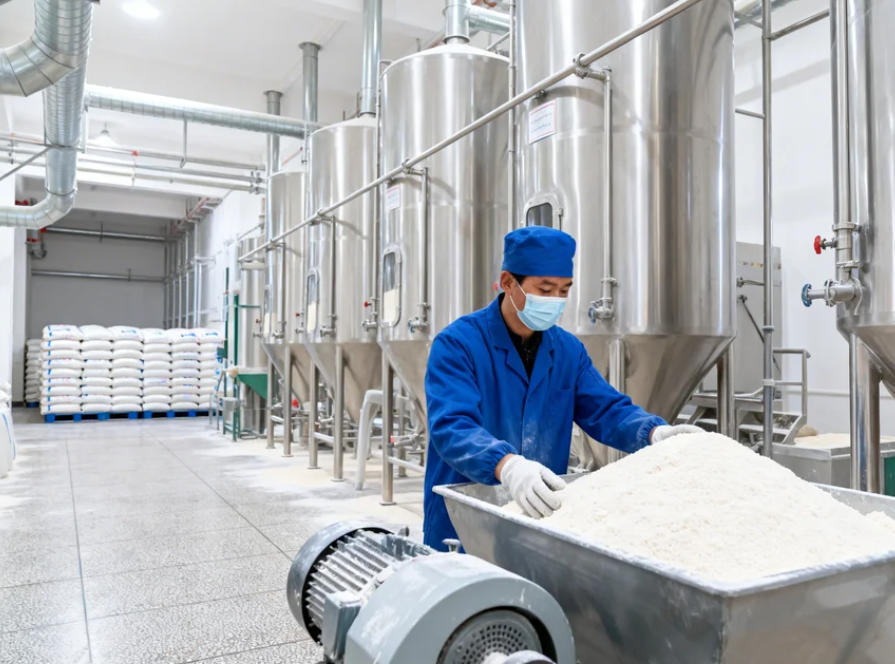
I. Challenges in Level Measurement for Flour Processing
1. High Dust Concentration
Flour is extremely fine and easily penetrates mechanical gaps, requiring devices with high sealing performance.
2. Low Bulk Density
Some refined flours or additives have very low density, demanding sensors with high detection sensitivity.
3. Material Adhesion
Flour may adhere to sensors due to moisture or static electricity, increasing false alarm risks.
4. Environmental Pressure and Temperature
Pneumatic conveying and silo conditions involve pressure fluctuations, requiring sensors capable of long-term stable operation.
II. Limitations of Rotary Paddle Level Switches

1. Seal Failure and Shaft Obstruction
Rotary paddle switches rely on motor-driven blades with shafts passing through the housing. Fine flour can cause “jamming” or powder leakage at the shaft.
2. Frequent Maintenance and False Alarms
Powder accumulation at rotating parts can overload motors and trigger false alarms, increasing downtime and maintenance costs.
3. Structural Deficiencies
Rotating parts make high protection ratings difficult to achieve; sealing may fail under pressurized conditions.
Low-end rotary paddle switches have poor sealing, causing on-site jamming and downtime.
III. Advantages of Vibrating Rod Level Switches
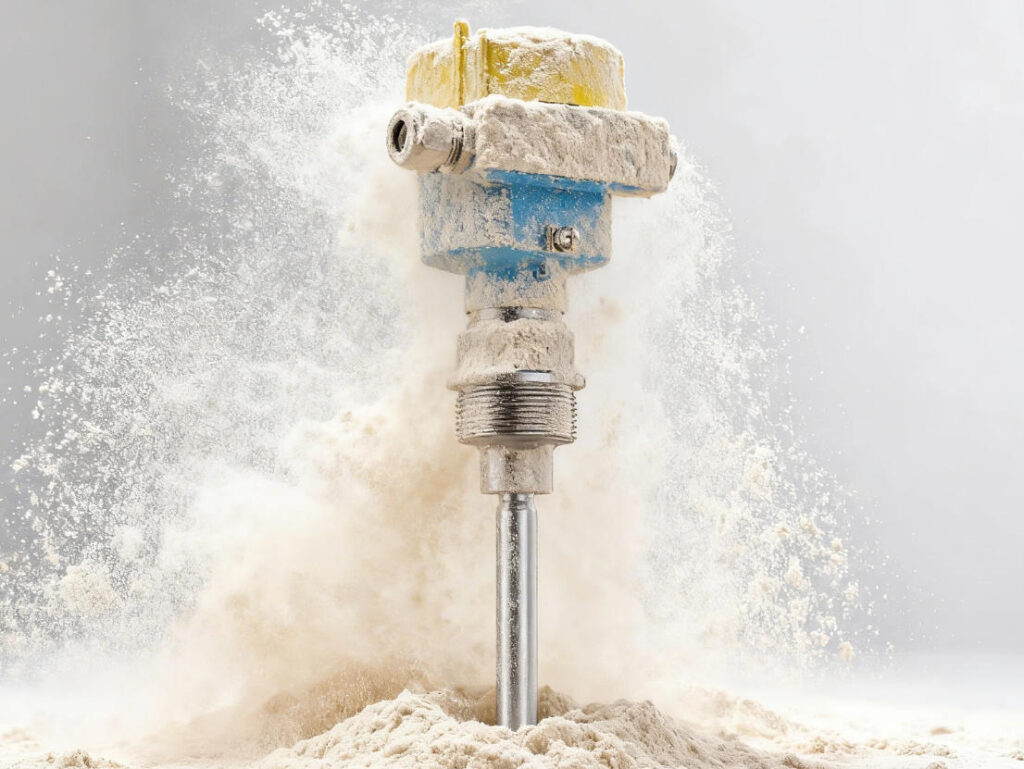
1. High Protection Rating
Fully sealed design, IP65/IP66, effectively isolates fine dust.
2. Anti-Adhesion
Vibrating probe has self-cleaning effect, reducing false alarms.
3. Long Service Life
No mechanical wear; significantly longer lifespan than rotary paddle switches.
IV. Jiwei Tube-11 Vibrating Rod Level Switch – Technical Innovation and Patent Advantages
1. Dual-Rod Nested Structure – China First
The Tube-11 features a dual-tube nested design, protected by multiple invention patents (ZL201510009538.3, ZL201510059187.7, ZL201610511184.7) and 11 utility model patents.
Core Principle:
Inner and outer rods are tuned to the same resonance frequency. When material contacts the outer rod, the resonance is disturbed, triggering the alarm.
2. High Reliability and Sensitivity
Tube-11 detects extremely low-density materials, down to 0.02 g/cm³, ensuring precise measurement even for fine flour or additives.
3. Resilient in Complex Conditions
The probe design easily handles dust exposure and pressure fluctuations, requires minimal maintenance, and allows easy installation — truly “plug-and-play.”
Tube-11 Dual-Rod Vibrating Rod Level Switch – The Preferred Solution for Flour Mills
V. Conclusion
For flour mills prioritizing automation and safety, replacing high-maintenance rotary paddle switches is a growing trend. The Jiwei Tube-11 dual-rod vibrating rod level switch resolves jamming, false alarms, and sealing issues, improving storage and logistics efficiency. Choosing Jiwei means selecting a high-performance level measurement device backed by domestic innovation and quality.