Why Vibrating Rod Level Switches are Superseding Rotary Paddle Switches in Flour Mill Applications
Abstract
In the flour processing and grain storage industries, dust explosion risks, low media density, and harsh environmental conditions are typical challenges for level measurement. For a long time, Rotary Paddle Switches were widely used due to their low initial cost. However, their inherent mechanical sealing defects and high failure rates have increasingly become bottlenecks, restricting safety and automation upgrades in modern flour mills.
This white paper provides a deep dive into the technical differences between Rotary Paddle Switches and Vibrating Rod Level Switches across dimensions such as working principles, sealing performance, maintenance costs, and adaptability to specialized conditions. It further demonstrates why the Jiwei Tube-11 Vibrating Rod Level Switch, with its independent R&D and patented dual-rod technology, is the ideal solution for flour mill level measurement.
1. Introduction: Unique Challenges in Flour Mill Level Measurement
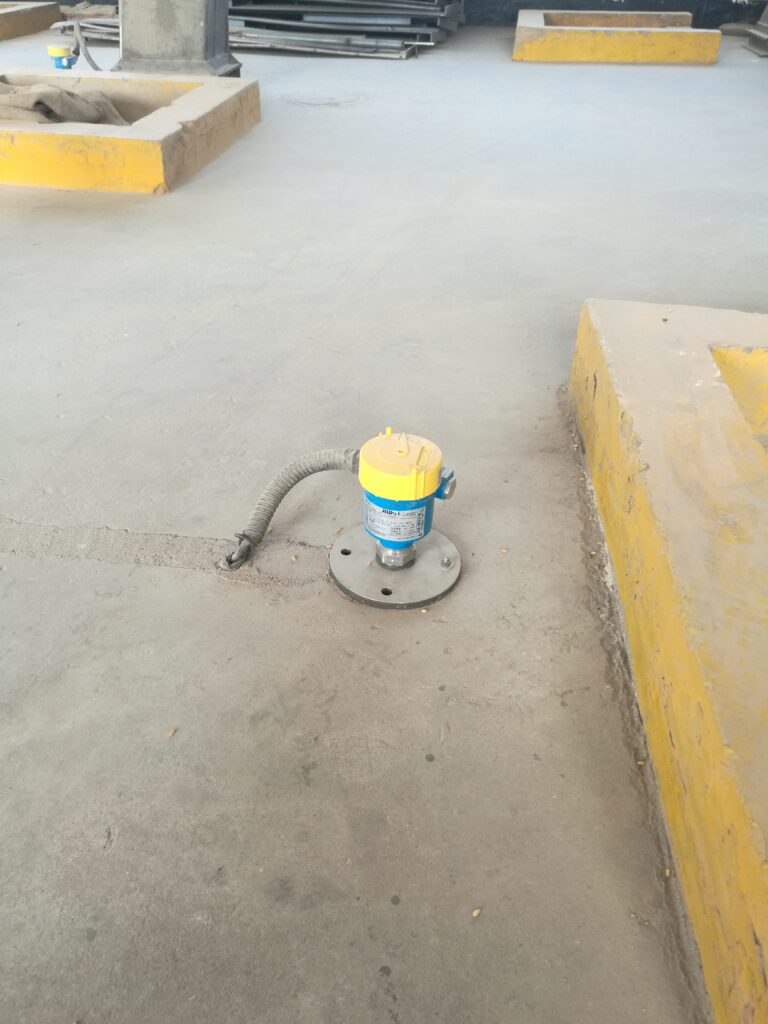
The production environment of a flour mill is highly specialized. As a typical combustible dust area, the air is filled with organic dust that is extremely prone to explosion. According to global dust explosion safety regulations, level measurement instruments used in flour silos and processing pipes must possess high protection ratings (typically IP65 or higher) and reliable explosion-proof certifications.
Furthermore, flour has a low bulk density (usually 0.4 to 0.6 g/cm³ or even lower) and good fluidity, but it is also prone to moisture absorption and clumping. This requires sensors to be not only highly sensitive but also interference-resistant and hermetically sealed to prevent dust from entering the housing, which could cause short circuits or mechanical jamming.
2. The Pitfalls of Traditional Solutions: Limitations of Rotary Paddle Switches
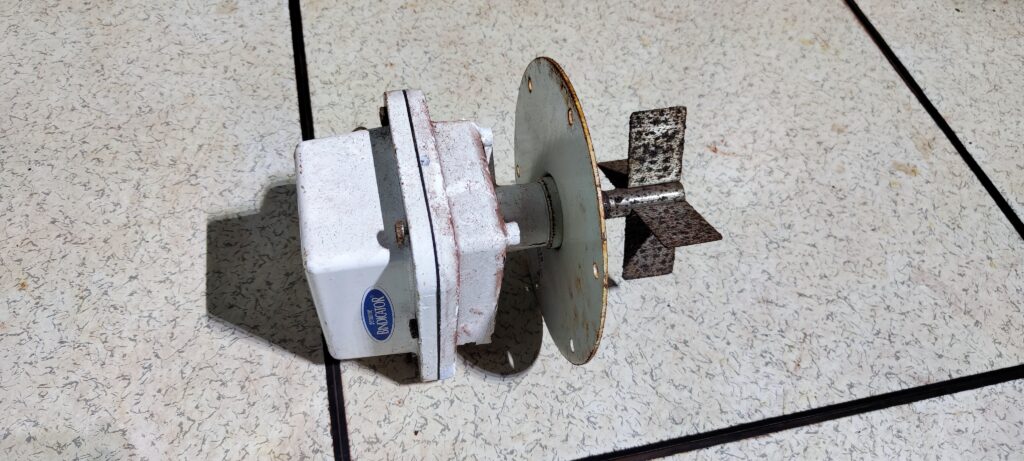
The Rotary Paddle Switch is a traditional mechanical instrument. Its principle involves an internal motor driving a shaft and paddle. When material reaches the paddle, rotation is impeded; this torque overcomes a spring or magnetic force to trigger a microswitch, cutting motor power and outputting an alarm.
Despite their low cost, the “mechanical rotation” nature of these switches leads to significant drawbacks in flour applications:
A. Inherent Sealing Defects
The core of a rotary switch is the rotating shaft. To ensure free rotation, a mechanical gap must exist between the shaft and the housing. In high-dust environments like flour mills, fine particles inevitably penetrate these gaps:
- Bearing Seizure: Flour mixes with lubricants to form a “sludge,” increasing friction until the motor burns out or the shaft jams.
- Frequent False Alarms: If the bearing is hindered by dust, the instrument may misinterpret the resistance as a “high level” even if no material is present.
B. Build-up and Compaction Issues
Flour is adhesive. During discharge, material can pack tightly above the paddle or stick to its surface:
- Startup Failure: If flour tightly packs around the paddle, the motor may fail to start, leading to total sensor failure.
- False Triggers: Accumulated material increases rotational resistance, causing the sensor to stay in an alarm state.
C. High Maintenance and Short Lifespan
Motors, gears, and bearings are all wear parts. In harsh flour mill conditions, the Mean Time Between Failures (MTBF) is short. Maintenance crews must frequently clean dust, replace seals, or swap motors, increasing operational risks and spare parts costs.
3. Technical Revolution: The Advantages of Vibrating Rod Switches
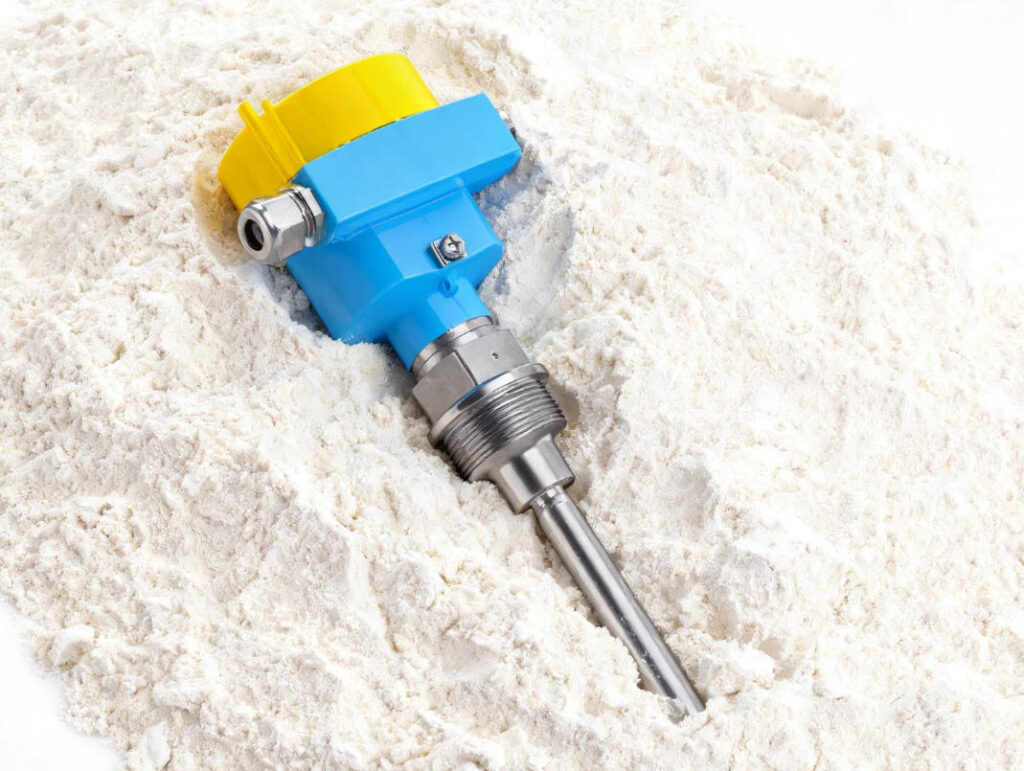
Unlike the mechanical rotary principle, the Vibrating Rod Level Switch utilizes acoustic vibration generated by piezoelectric ceramics. The probe vibrates at a specific frequency; when material contacts the probe, the vibration is dampened. The electronics detect this amplitude drop and output a signal.
In flour mills, this technology offers overwhelming advantages:
- Superior Sealing (IP66/IP67): There is no rotating shaft. The probe and housing are integrated through high-standard sealing or welding, completely isolating the electronics from fine flour dust.
- Extreme Sensitivity: Flour’s low density often leads to missed detections by mechanical means. The Jiwei Tube-11 can detect densities as low as 0.02 g/cm³, ensuring even the fluffiest flour is accurately monitored.
- Maintenance-Free Reliability: With no motors, bearings, or gears, there is zero mechanical wear. Once installed and calibrated, the device requires virtually no human intervention.
4. Industry Benchmark: Core Technology of Jiwei Tube-11
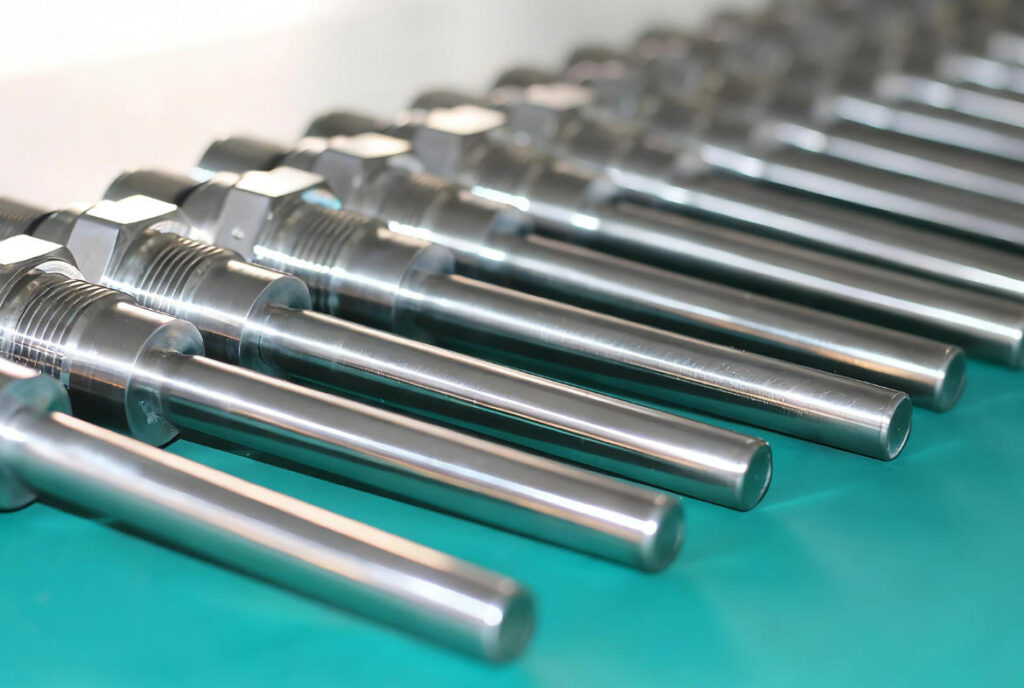
While vibrating rod technology is superior, market quality varies. Many single-rod designs struggle with “resetting” after heavy material build-up. Shenzhen Jiwei Automation solved this with the Tube-11 Vibrating Rod Level Switch.
I. China’s First Dual-Rod Nested Design
The Tube-11 features a unique “tube-in-tube” structure. This is the core differentiator from standard single-rod switches:
- Principle: Through precision tuning, the resonant frequencies of the inner and outer tubes are matched exactly. This “heterodyne resonance” technology ensures extreme stability.
- Advantage: While single-rod switches may stop vibrating due to “clinging” material and fail to restart once the material drops, the Tube-11’s dual-rod structure suppresses the damping effect of build-up. It maintains vibration characteristics even with some coating and restarts instantly once the load is cleared.
II. Patented Protection
As a national high-tech enterprise, Jiwei holds a solid intellectual property barrier for the Tube-11:
- Invention Patents: ZL201510009538.3, ZL201510059187.7, ZL201610511184.7.
- Utility Model Patents: 11 additional patents supporting its structural innovation.These patents guarantee sensitivity and stability in measuring ultra-low density flour, solving the industry-wide headache of “undetectable low-density” and “false alarms due to build-up.”
5. Practical Comparison: Application Scenarios
| Scenario | Rotary Paddle Switch Performance | Jiwei Tube-11 Performance |
| Finished Flour Silos | Insufficient sensitivity; flour enters bearings causing jams. | High sensitivity (0.02 g/cm³); stable long-term operation. |
| Inlet/Transfer Points | Dust penetrates shaft gaps quickly; motor life is shortened. | IP67 rating isolates dust; no moving parts to fail. |
| Moist/Clumped Flour | Paddles get stuck or shafts bend under heavy clumping. | Dual-rod design resists build-up; high-strength probe. |
6. Conclusion: Why Flour Mills Choose Jiwei
In the era of Industry 4.0 and stricter safety standards, flour enterprises are shifting from “initial cost” to “Total Cost of Ownership (TCO).”
While Rotary Paddle Switches are cheaper upfront, their high maintenance costs, frequent downtime, and safety risks make them significantly more expensive over time. The Jiwei Tube-11, with its pioneered dual-rod structure, core invention patents, and superior protection, perfectly aligns with the industry’s demand for “Safe, Reliable, and Maintenance-Free” operations.
Choosing Tube-11 is not just choosing a high-performance instrument; it is choosing the safety and peace of mind provided by patented core technology. This is why more flour mills are turning to Jiwei and standardizing on the Tube-11.