Pumps, EMI, and Level Switch Reliability: A System Engineering View
In industrial installations, pipelines, pumps, and level switches appear in almost every process unit. Due to their extremely high frequency of use, these components are often regarded as “mature configurations,” and therefore tend to be simplified during design and selection stages. However, in actual operation, problems such as false level alarms, interlock abnormalities, and premature instrument failure are precisely concentrated in these most basic systems.
If such problems are analyzed only from the perspective of the instrument itself, it is often impossible to reach a true engineering conclusion.

1. Level Problems Often Do Not Start with the Level Switch
The output signal of a level switch does not exist in isolation. It directly reflects the combined state of fluid pressure, liquid distribution, and system disturbances within the pipeline. Abnormal level signals usually indicate changes in internal energy distribution or flow conditions within the system, rather than a simple instrument malfunction. Without understanding upstream and downstream system conditions, discussing level switch reliability alone leads to an incomplete judgment.
Pipeline length, diameter, elbows, and valve opening all influence liquid pressure distribution. Even if a level switch is properly designed, changes in pipeline resistance or localized blockage can still cause signal fluctuations or momentary false actuation. Pump start-up, shutdown, or speed adjustment also leads to pressure fluctuations in the pipeline. Local liquid levels may rise or fall instantaneously, triggering level switch alarms. This effect is especially pronounced when variable-frequency pumps or high-flow pumps start up, where pressure shock waves make short-term level signal abnormalities more likely.
Changes in medium properties are another critical factor. Variations in liquid density, viscosity, and temperature affect the response characteristics of contact-type level switches. For example, the vibration frequency of vibrating rod or tuning fork level switches may shift slightly, altering the switching point. During long-term operation, liquid deposits or foam may also cause false actuation. External conditions such as electromagnetic interference, vessel vibration, and environmental factors can further superimpose on signal lines, leading to drift or transient fluctuations.
Therefore, level abnormalities are often manifestations of systemic issues rather than isolated level switch failures. Engineering analysis of level signals must consider pipeline layout, pump operation, medium properties, and environmental conditions from multiple dimensions. Establishing this system-level perspective is the key to evaluating level switch reliability and preventing potential problems.

2. Engineering Attributes of Pipeline Systems: Controlled Conveyance Systems
Pipelines are not merely channels connecting equipment. In essence, they are controlled conveyance systems. They must ensure continuous flow, controllable flow behavior, and stability under changing operating conditions. If any of these conditions are not met, level signals will inevitably be affected.
2.1 Pipelines Can Operate Without Pumps in Limited Cases
In the following operating conditions, pipelines may function without pumps:
- Gravity-driven transfer from elevated storage tanks to lower-level equipment
- Systems with inherent pressure sources such as steam or compressed air
- Short-distance pipelines with low resistance
The common characteristic of these systems is that the energy required for transport already exists within the system itself.
2.2 Active Conveyance Is the Norm for Industrial Pipelines
Once any of the following conditions arise, pumps become the core equipment of the system:
- The need to overcome elevation differences
- Long pipelines with many bends and high resistance
- High-viscosity or high-temperature media
- Explicit control requirements for flow rate or liquid level
In industries such as chemical processing, petrochemicals, energy, and water treatment, the vast majority of pipeline systems are fundamentally pump-driven systems.
3. The Engineering Role of Pumps: Points of Energy Input
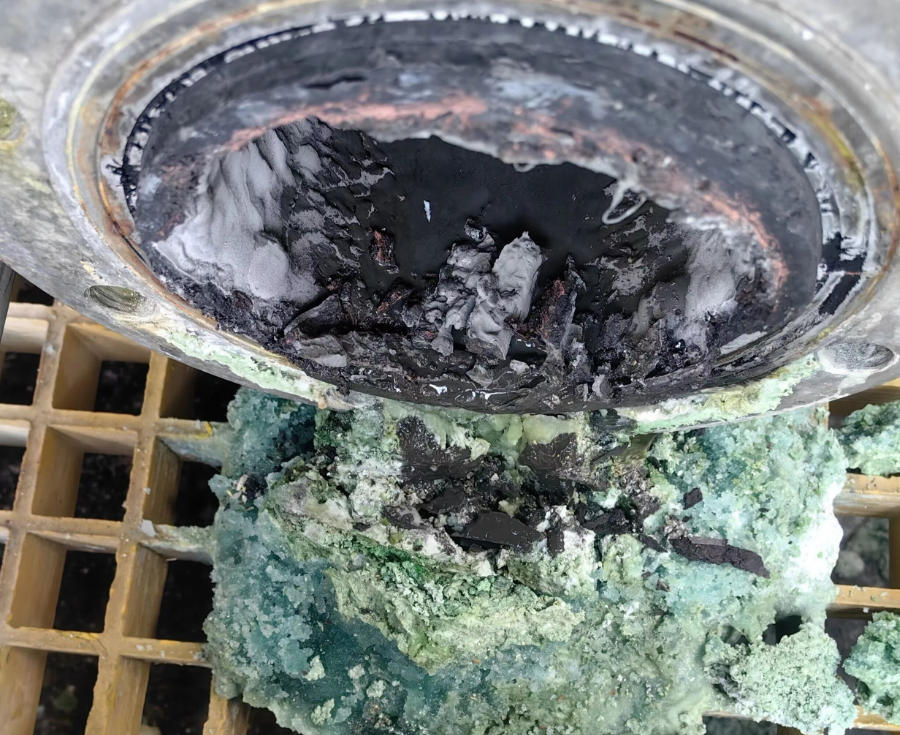
The basic function of a pump is to input energy into the fluid to overcome system resistance and maintain flow. From an engineering perspective, however, the pump is also the origin of system disturbances. Pump start-up, shutdown, speed regulation, and operating variations directly cause fluctuations in flow rate, pressure, and local liquid levels. These changes ultimately affect the signals of level switches.
Level switches are often directly involved in pump system control logic. They are used for high-level overflow protection, low-level dry-run protection, pump start/stop interlocking, and as input signals for Safety Instrumented Systems (SIS). A level switch is not an isolated measurement point, but a core element of pump system safety. If pump operation is unstable, even a well-designed level switch may experience false actuation or signal fluctuations.
4. Who Determines the Electromagnetic Environment
In industrial engineering, the signal stability of level switches is often affected by the surrounding electromagnetic environment. This leads to a common question: “Will the pump interfere with the level switch?” From an engineering standpoint, this question is not precisely framed. The pump itself is a mechanical device used for fluid transfer and pressurization, and its structure does not generate significant electromagnetic fields. The electromagnetic environment surrounding a level switch is primarily determined by the motor driving the pump, its drive method, and the surrounding electrical wiring—not by the pump’s mechanical structure.
In common pump types such as centrifugal pumps, gear pumps, and screw pumps, mechanical components do not directly generate electromagnetic interference (EMI). Pump start-up, shutdown, and speed changes mainly affect fluid pressure and flow rather than the electrical signals of level switches. The true sources of interference are the motor and its control system, including conducted interference through power lines, ground potential fluctuations, and radiated interference.
In power-frequency motor-driven pump systems, current surges occur during start-up and shutdown, potentially creating short-term interference on signal lines. Such interference is mainly conducted through power lines or common grounding paths into the instrument. With proper wiring and grounding practices, this interference is relatively controllable and does not constitute a systemic risk. Therefore, in traditional power-frequency pump systems, level switches generally operate stably with a low probability of false actuation.
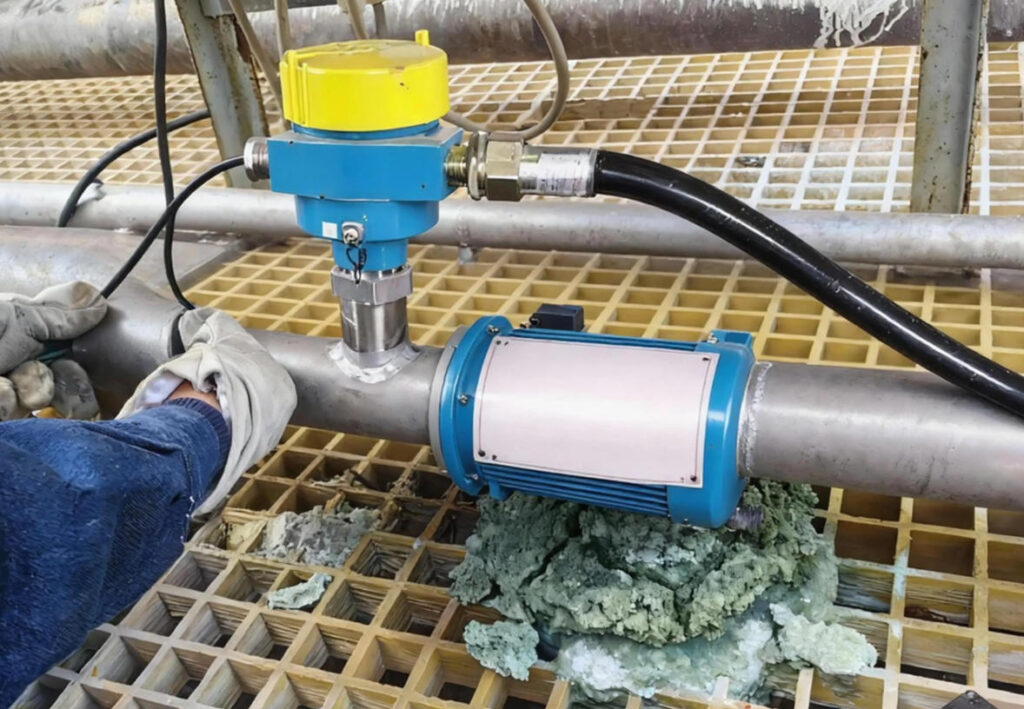
By contrast, variable-frequency driven pump systems exhibit much more complex electromagnetic characteristics. Variable frequency drives (VFDs) control motor speed using high-frequency PWM signals. Continuous high-frequency switching, steep voltage rise times (high dv/dt), and significant common-mode currents are inherent to their operation. Such high-frequency interference can be conducted through power lines or radiatively coupled into nearby signal wiring. Without dedicated EMI-resistant design, level switches may experience occasional false actuation, signal drift, or even long-term cumulative damage. From an engineering perspective, VFD-driven pumps represent the most typical and complex EMI source in pump systems and must be carefully considered during instrument selection and wiring design.
In addition, the installation environment of the level switch can amplify or mitigate electromagnetic interference. Proximity to VFDs, motor cables, switchgear, or other high-power electrical equipment increases susceptibility to high-frequency fields. Proper separation, shielded cables, and independent grounding can significantly reduce interference risks. In other words, reliable level switch operation depends not only on its internal design but also on the overall planning and wiring practices of the pump electrical system.
In summary, from a system engineering perspective, the pump itself is not an EMI source. The electromagnetic environment is determined by the motor, its drive method, wiring layout, grounding strategy, and surrounding high-power electrical equipment. These factors must be fully evaluated during level switch design and selection to ensure long-term stable operation in complex industrial environments.
5. Engineering Mechanisms of Electromagnetic Interference on Level Switches
In industrial systems, the impact of electromagnetic interference on level switches is not an instantaneous event but a gradual engineering process resulting from operating time, electromagnetic stress, and design margins. Level switches are typically installed in environments dense with pumps, motors, and variable frequency drives, making electromagnetic interference both persistent and complex. Understanding its mechanisms requires analysis of interference paths, electromagnetic stress characteristics, cumulative effects, and design limitations.
5.1 Interference Does Not Enter the Instrument Through a Single Path
In the field, level switches are usually subjected to multiple types of interference simultaneously. First, power supply lines may conduct transient current pulses from motors or VFDs, superimposing voltage fluctuations at the instrument’s power input. Second, high-frequency radiated interference originates from VFD switching actions, motor cables, and nearby high-power equipment. This radiated field can couple into signal wiring, especially when shielding or grounding is inadequate. Finally, ground potential fluctuations can create common-mode interference, imposing additional voltage stress on internal logic circuits.
These disturbances exist almost continuously during system operation. Even if individual transients are small, their cumulative effect over time can significantly impact internal electronic components and logic modules.
5.2 Electromagnetic Stress Is Long-Term in Industrial Environments
Under typical operating conditions, the electromagnetic environment surrounding a level switch represents a long-term, repetitive stress load. Examples include:
- Continuous PWM high-frequency signals from long-running variable frequency pumps
- Repeated current surges from frequent pump start-stop or speed regulation
- Complex electromagnetic superposition from multiple high-power motors operating in parallel
- Increased coupling due to limited separation between power cables and instrument signal lines
In such environments, even well-performing level switches may exhibit signal drift or false actuation if they lack adequate design measures against high-frequency common-mode currents or wiring-coupled interference.
5.3 Cumulative Effects Are the Core Issue
The effects of electromagnetic interference accumulate gradually rather than causing immediate failure. For level switches with insufficient anti-interference design, long-term operation commonly leads to:
- Drift in comparison thresholds, resulting in unstable switching points
- Fluctuations in analog reference levels, reducing signal accuracy
- Occasional logic resets or abnormal outputs
- Long-term voltage stress on output stages, potentially shortening service life
Initially, these issues often manifest as sporadic false alarms or brief signal disturbances. Over time, cumulative effects intensify.
5.4 Evolution from Functional Anomalies to Failure
Under sustained electromagnetic stress, the failure progression of a level switch typically follows this path:
- Early stage: Occasional false alarms and intermittent signal anomalies
- Middle stage: Increased frequency of misoperation and declining signal stability
- Late stage: Gradual degradation of electronic components, delayed response, and more frequent logic abnormalities
- Final stage: Irreversible failure, with the level switch completely losing functionality
This gradual cumulative damage is the fundamental reason why many low-end level switches “fail within less than one hour” in real industrial installations.
5.5 Design Assumptions Determine the Outcome
Many low-end level switches are designed under limited assumptions, such as:
- Low-interference power supply environments
- Simple electrical systems with adequate separation between power and signal lines
- Installation near power-frequency motors or low-power equipment
- Standardized power and grounding with minimal environmental interference
Once these products are deployed in high-interference conditions—such as variable-frequency pump systems, long power cables, or areas dense with high-power motors—the actual electromagnetic stress far exceeds design assumptions. Internal electronic components are subjected to additional load, leading to performance degradation or premature failure.
6. The Engineering Value of Level Switches: Reliability First
In real industrial environments, the value of a level switch lies not in its datasheet specifications, but in its ability to operate reliably over the long term under complex conditions and strong electromagnetic interference. For factory automation, pump protection, and safety interlocks, level switch reliability directly determines system safety and production continuity. From an engineering standpoint, a level switch is not merely a measurement instrument but a critical node in the safety interlock chain.
6.1 Engineering Orientation of the Ring-11 Level Switch
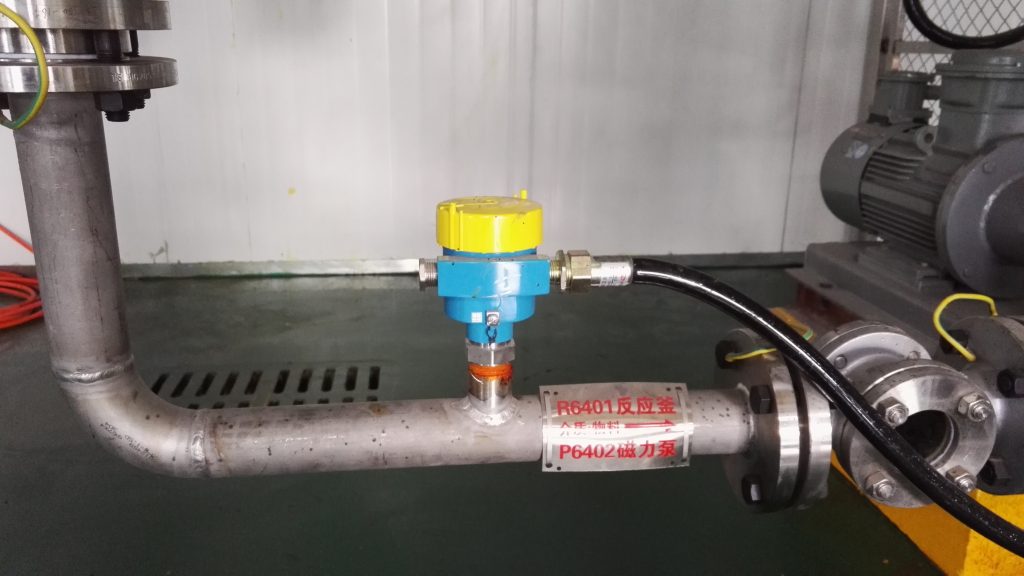
The Jiwei Ring-11 tuning fork level switch is designed specifically for typical industrial pump system applications. System-level factors are fully considered at the design stage, including overflow protection, dry-run prevention interlocks, and long insertion installations. Its structure allows installation close to pumps and motors, while its internal circuitry provides strong resistance to electromagnetic interference. This ensures stable signal output during pump start-stop events, pressure fluctuations, or pipeline disturbances, preventing false actuation and safeguarding pump system operation.
Furthermore, Ring-11 accommodates various pipeline layouts and pump system types. Whether handling high-temperature, high-viscosity media or long-distance pumping applications, it maintains reliable response. Its engineering advantage lies not only in level detection, but in ensuring reliable execution of pump system interlock logic.
6.2 Positioning of the Ring-21 Compact Level Switch
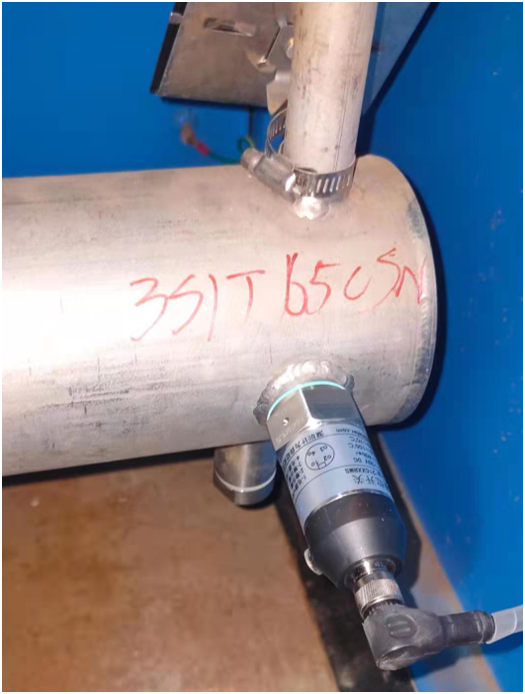
The Ring-21 compact tuning fork level switch is designed for space-constrained installations without sacrificing reliability. Despite its compact form, it retains full EMI-resistant design, making it suitable for installation near pumps or electrical equipment. In strong electromagnetic environments, Ring-21 can operate stably over long periods without requiring additional shielding or isolation measures.
For industrial engineers, this means that even in complex variable-frequency pump systems or high-power motor clusters, level signals remain reliable, and safety interlocks such as overflow protection and dry-run prevention continue to function effectively. Ring-21’s anti-interference capability directly reduces troubleshooting time and improves equipment availability.
6.3 Engineering Implications of EMI Resistance
From an engineering perspective, the EMI resistance of a level switch directly affects the long-term reliability of pump systems and level control systems. This is reflected in the following aspects:
- No false actuation during pump start-stop or pipeline pressure fluctuations
- Stable output signals without drift during variable-speed operation
- No premature failure due to long-term electromagnetic stress
This means that the level switch can truly withstand the persistent electromagnetic environment of industrial sites, rather than only meeting short-term laboratory performance metrics. Its engineering value is reflected in reduced production interruptions, lower maintenance costs, and enhanced overall system safety.
7. Engineering Conclusions from a System Perspective
A level switch is never an isolated device. Its reliability must be evaluated from a system perspective:
- Pipelines determine fluid transport methods and flow characteristics
- Pumps determine energy input, flow stability, and level disturbance magnitude
- Electrical systems determine the electromagnetic environment surrounding the level switch
- Level switches determine whether pump interlocks, overflow protection, and dry-run prevention logic are executed reliably
In industrial environments characterized by strong electromagnetic interference and high-power pump systems, the ability of a level switch to operate reliably over the long term is itself the most valuable engineering metric. Through systematic design, Ring-11 and Ring-21 achieve reliability and stability under complex operating conditions, elevating the level switch from a simple measurement device to a core safeguard for industrial system safety and production continuity.