Alumina Level Measurement in Electrolytic Aluminum | A Cost-Effective Alternative
I. Industry Background: The “High Threshold” of Level Detection in Electrolytic Aluminum
Electrolytic aluminum is a typical high-energy-consumption and highly continuous industrial process, which places extremely high demands on the stability of automation systems. During electrolytic production, the continuous and stable feeding of alumina is one of the key factors ensuring the safe operation of electrolytic cells and maintaining current efficiency. Once level detection fails, minor issues may lead to feeding imbalance and frequent manual intervention, while severe cases can cause fluctuations in electrolytic cell operating conditions, affecting the stable operation of the entire production line.
However, unlike ordinary bulk solids, alumina level detection under electrolytic aluminum operating conditions has long been regarded as a major industry challenge. In the long-term operating practices of several large electrolytic aluminum enterprises in Shandong Province, this problem has become particularly prominent.
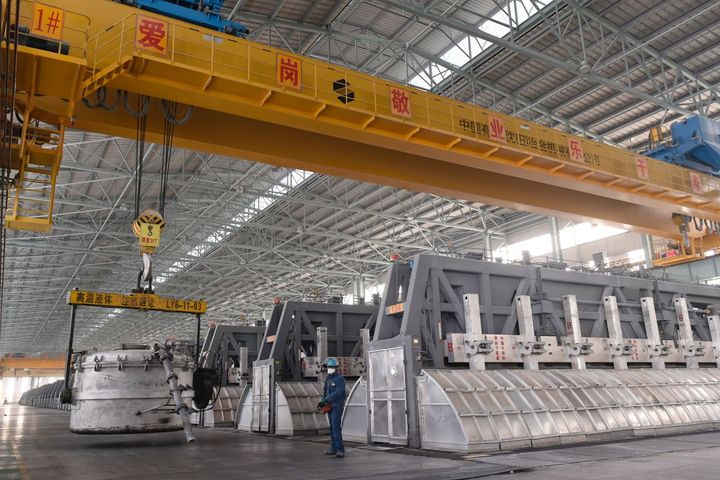
II. Application Challenges: Multiple Extreme Factors Make Level Switches “Hard to Survive”
In this batch of electrolytic aluminum projects in Shandong, alumina storage bins and feeding systems have been operating for long periods under the following complex conditions:
1. Strong Adhesion of Alumina
Alumina particles are fine and have a large specific surface area, exhibiting strong hygroscopic and adhesive properties. As a result, material easily builds up and cakes on the probe surface. Once the probe is covered, conventional level switches are prone to false alarms, delayed response, or even signal failure.
2. Significant Strong Magnetic Field Interference
During the operation of electrolytic cells, there is a continuous and strong magnetic field in the surrounding area, which places extremely high requirements on the anti-interference capability of electronic components and signal processing circuits. Many domestic level switches experience signal instability, control board crashes, and frequent resets under such conditions.
3. High Ambient Temperature and High Process Temperature
The overall ambient temperature in electrolytic workshops is relatively high, while the process temperature near storage bins and chutes remains at elevated levels for long periods. Although some devices meet temperature resistance requirements under laboratory conditions, in long-term real-world operation, accelerated aging of internal components leads to a sharp decline in reliability.
4. Continuous Operation with Zero Tolerance for Reliability Issues
Electrolytic aluminum production allows almost no room for frequent shutdowns or maintenance. A single false alarm may affect the entire feeding chain and even require on-site manual intervention, resulting in high safety risks and management costs.
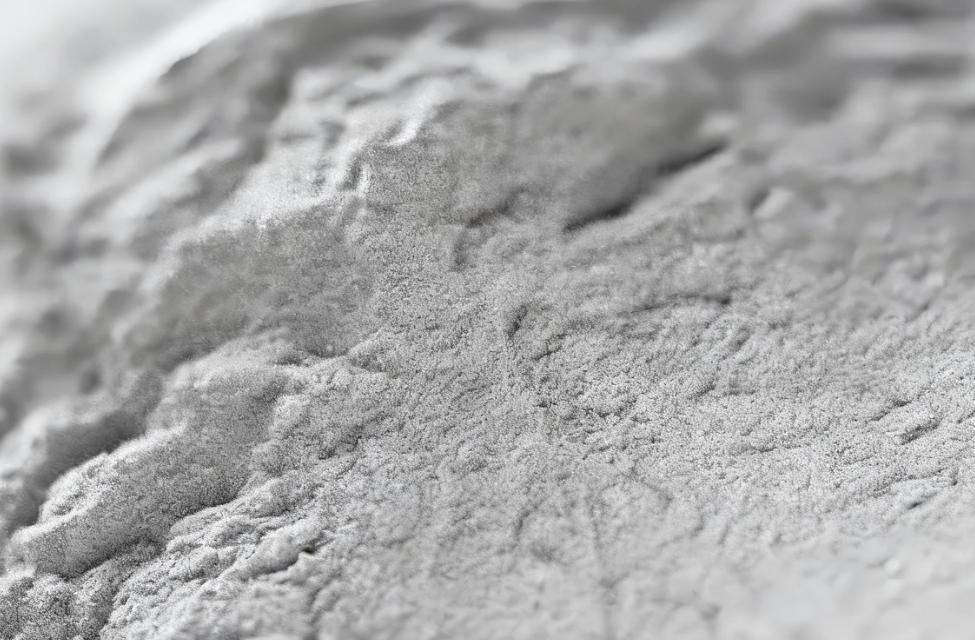
Under the combined impact of these factors, it is widely reported on-site that domestic level switches can be “installed, but not used for long.”
III. Dilemma of Traditional Solutions: Domestic Products Are Unreliable, Imported Products Are Too Expensive
At the early stage of the project, users attempted multiple solutions:
Most Domestic Level Switches
These products may function adequately in the short term, but under conditions of strong alumina adhesion, strong magnetic interference, and high temperatures, false alarms occur frequently and long-term stability is insufficient. As a result, they fail to meet the requirements of continuous production and are gradually eliminated.
Some Imported Brand Level Switches
These products demonstrate relatively stable performance and can adapt to complex operating conditions. However, their unit prices are extremely high, making large-scale application economically challenging.
A more practical issue is that even when enterprises can afford the high cost of imported brands, long procurement cycles and uncertain delivery times force users to purchase additional instruments as spare stock in case of unexpected on-site failures. This not only ties up significant capital but also substantially increases the total cost of ownership, placing a long-term burden on enterprises.
Faced with the reality of solutions that are “too expensive to use, too slow to obtain, and too costly to maintain,” users urgently needed a domestic solution that is truly suitable for electrolytic aluminum applications and capable of large-scale deployment.
IV. Solution: Targeted Design of the Jiwei Tube-11 Vibrating Rod Level Switch
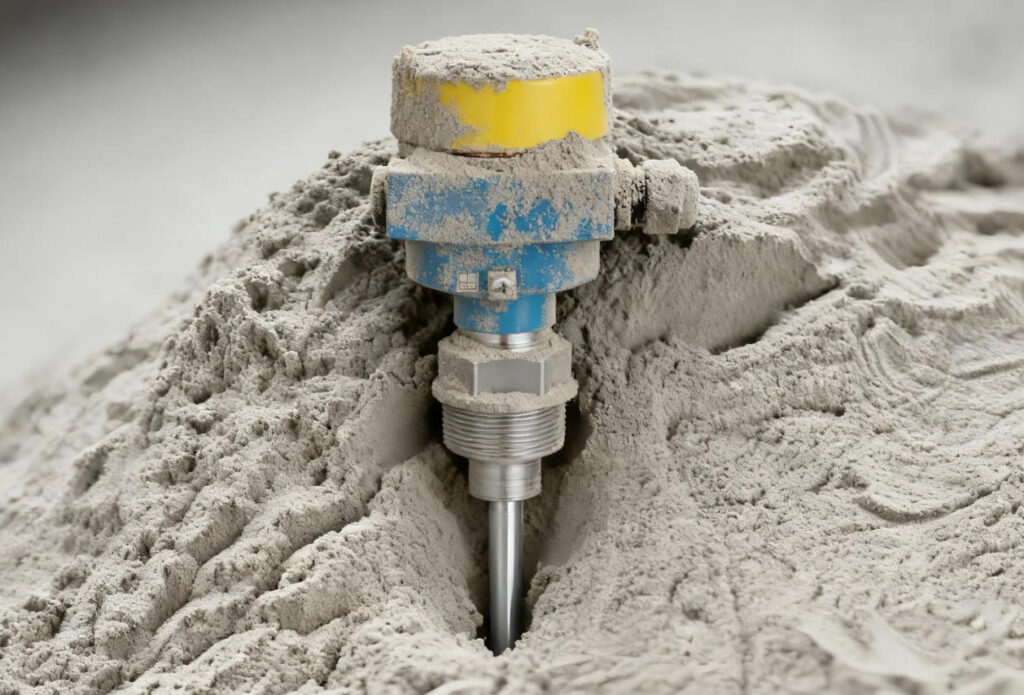
After multiple rounds of technical comparison and on-site evaluation, several electrolytic aluminum enterprises in Shandong ultimately selected the Jiwei Tube-11 vibrating rod level switch, achieving large-scale deployment.
The Tube-11 is not a simple “general-purpose product.” Instead, it was optimized from the design stage specifically for industrial environments characterized by high temperature, heavy dust, and strong interference.
1. China’s First Dual Vibrating Rod Structure with Strong Anti-Buildup Capability
The Tube-11 operates based on the vibration detection principle, determining material presence by monitoring changes in vibration characteristics between free vibration and material-covered states. In highly adhesive powder applications such as alumina, continuous vibration effectively suppresses material buildup and adhesion on the probe surface, preventing false alarms caused by caking or coating and significantly improving long-term operational stability.
From a structural design perspective, the Tube-11 adopts a domestically pioneering dual vibrating rod structure, offering stronger resistance to material buildup and interference in complex bulk solid applications, and providing a solid technical foundation for demanding electrolytic aluminum environments.
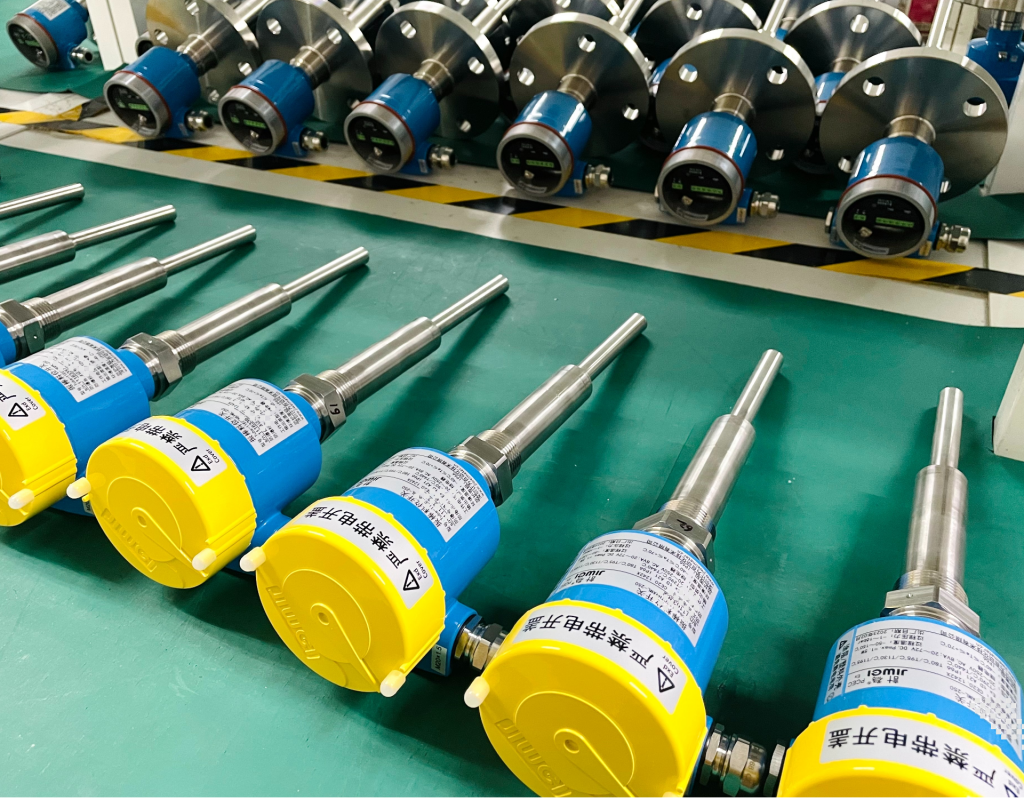
This technology is supported by a systematic intellectual property portfolio.
The Tube-11 series vibrating rod level switches have been granted 3 invention patents
(Patent Nos. ZL201510009538.3, ZL201510059187.7, ZL201610511184.7)
and are further supported by 11 utility model patents, ensuring long-term reliable operation under harsh conditions through innovations in structure, vibration modes, and signal processing.
2. Strong Anti-Interference Design for Electrolytic Cell Magnetic Fields
At both hardware and signal processing levels, the Tube-11 has been specifically optimized for strong electromagnetic environments. Even when operating close to electrolytic cells, it maintains stable signal output, effectively avoiding system crashes and abnormal resets.
3. Reliable High-Temperature Resistance for Long-Term Operation
Material selection and internal component design fully account for high-temperature aging effects, ensuring long-term stable operation under high ambient temperatures and process temperatures of up to 400°C.
4. Simple Structure with High Operational Reliability
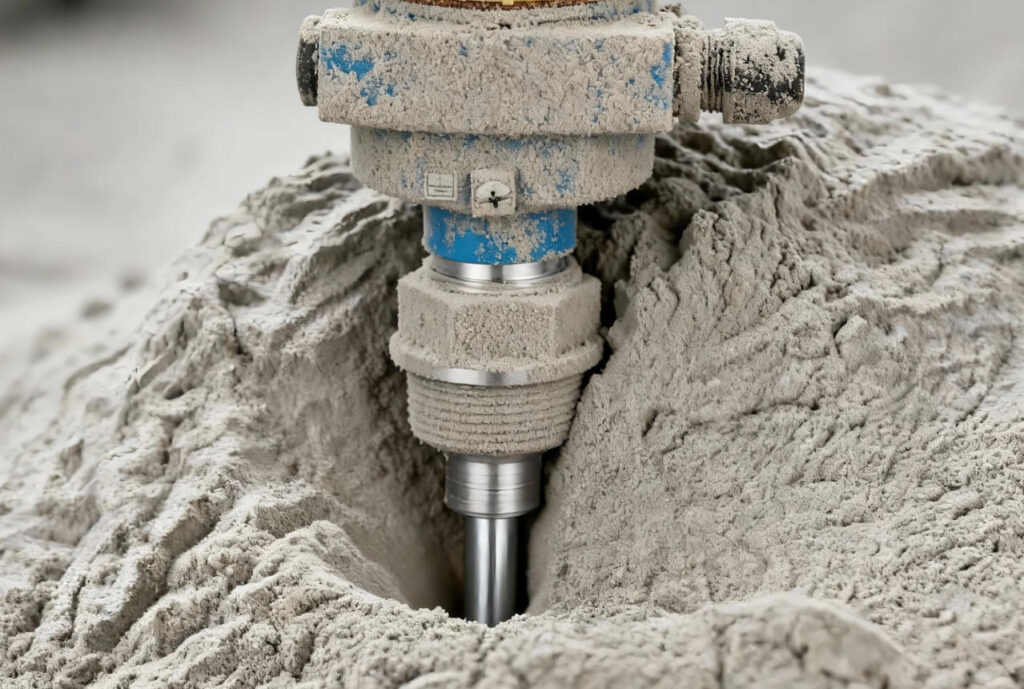
The Tube-11 features a simple structural design without complex mechanical transmission components, reducing failure risks caused by wear or jamming. In electrolytic aluminum environments characterized by continuous operation, high dust concentration, and limited maintenance accessibility, the device can maintain stable long-term operation.
Thanks to its robust structural design and mature vibration detection principle, the Tube-11 achieves continuous long-term operation with stable performance and low failure rates, effectively reducing unplanned downtime and manual intervention while providing reliable level signals for automation systems, thereby enhancing overall production safety and continuity.
V. Application Results: From “Problem Point” to “Standard Configuration”
In the Shandong electrolytic aluminum projects, the Jiwei Tube-11 vibrating rod level switch has been deployed on a large scale, covering key positions such as alumina storage bins and chutes.
Actual operating results show:
- Significant reduction in false alarms
- Stable long-term continuous operation with no system crashes
- Substantial decrease in on-site manual intervention
- Noticeable reduction in spare parts inventory pressure
More importantly, domestic products have, for the first time, achieved long-term and scalable application under such harsh operating conditions, enabling users to ensure production stability while effectively controlling the total cost of automation systems.
VI. Conclusion: True Reliability Comes from Real Operating Conditions
The electrolytic aluminum industry is not short of equipment options; what it lacks are products that truly understand operating conditions and can withstand long-term testing. The successful application of the Jiwei Tube-11 vibrating rod level switch in Shandong electrolytic aluminum projects proves that domestic level switches are not inherently unusable—the key lies in whether the design is driven by real operating conditions rather than nominal parameters.
Under extreme conditions of high temperature, strong magnetic fields, and strong material adhesion, stable operation itself is the most convincing proof of product reliability.