JWrada®-23 Radar Level Sensor for Urban Park River Monitoring
With the rapid development of smart cities and sponge city infrastructure, urban park rivers, landscape lakes, and artificial wetlands are no longer simply recreational spaces. They now serve as critical components in urban flood prevention, ecological regulation, water resource management, and environmental protection. Under harsh and constantly changing outdoor conditions, achieving accurate, low-maintenance, and long-term stable water level monitoring has become a major challenge for city managers and engineering professionals.
The JWrada®-23 stainless steel radar level sensor combines advanced 80GHz microwave technology, rugged industrial construction, and outstanding environmental resistance to deliver stable and reliable real-time monitoring in rivers, reservoirs, and landscape water systems. With high accuracy, rapid response capability, and minimal maintenance requirements, the JWrada®-23 radar level sensor helps improve the intelligence and efficiency of modern urban water management systems.
I. Challenges in Urban Park River Monitoring
Compared with conventional industrial applications, park river and landscape water monitoring environments are significantly more complex.
Aesthetic Integration Requirements
Public parks are designed for relaxation and visual enjoyment. Monitoring equipment must blend naturally into the surrounding environment without affecting the overall landscape appearance.
Long-Term Outdoor Exposure
Continuous exposure to rain, humidity, sunlight, and temperature fluctuations can cause conventional plastic or aluminum housings to age, corrode, or deform over time.
Complex Water Surface Conditions
Floating plants, debris, bridge structures, and waterfront facilities can generate clutter echoes and signal interference, affecting measurement reliability.
High Maintenance Costs
Traditional contact-type water level instruments, such as submersible pressure transmitters, are easily affected by mud accumulation and aquatic vegetation, leading to frequent maintenance and cleaning.
II. Core Advantages of the JWrada®-23 Radar Level Sensor
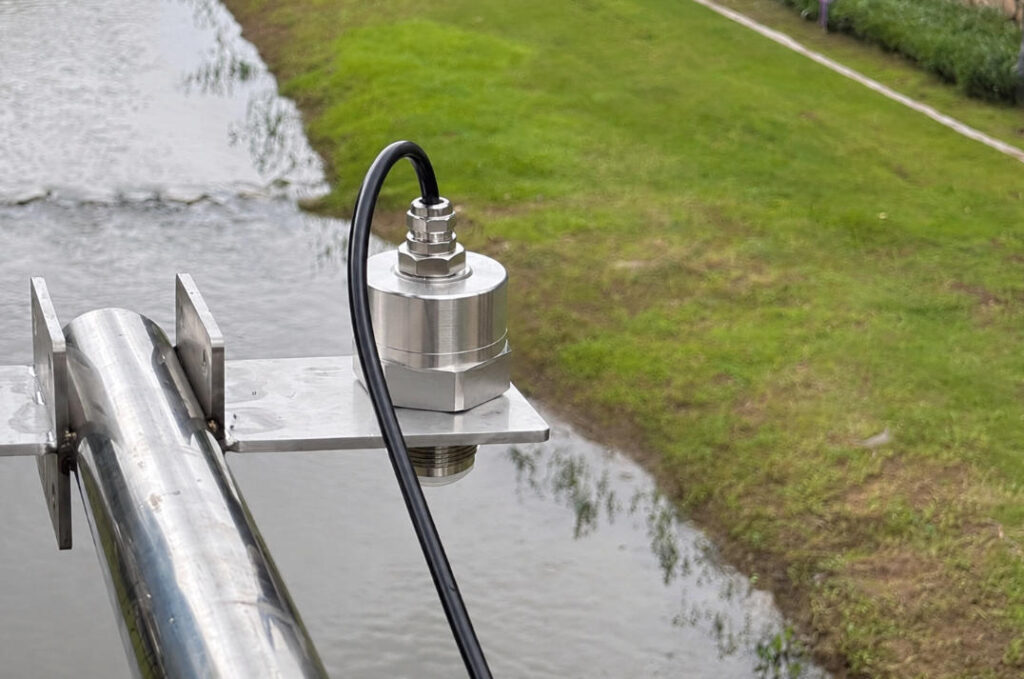
The JWrada®-23 series radar level sensor is specifically designed for water conservancy projects, navigation channels, rivers, and landscape water monitoring applications.
1. 316L Stainless Steel Industrial Housing
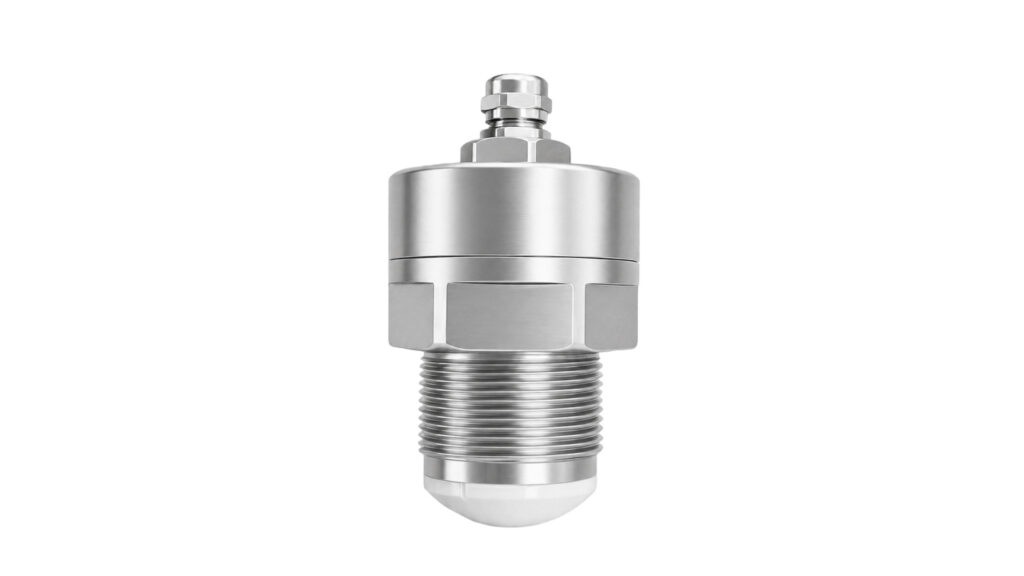
Unlike conventional plastic enclosures, the JWrada®-23 adopts an integrated 316L stainless steel housing design.
Excellent Corrosion Resistance
Even in highly humid environments, saline water conditions, or ecological parks near industrial facilities, the sensor maintains outstanding long-term corrosion resistance.
IP68 Protection Rating
The radar level sensor features an IP68-rated enclosure capable of withstanding heavy rainfall, flooding, and harsh outdoor conditions.
Superior Weather Resistance
The JWrada®-23 operates reliably in temperatures ranging from -40°C to 80°C while resisting UV aging and material degradation.
2. Advanced 80GHz Radar Technology
The JWrada®-23 radar level sensor utilizes advanced 80GHz radar technology with an extremely narrow beam angle between 3° and 6°.
Precise Obstacle Avoidance
In narrow rivers or installations near bridge piers, railings, and embankments, the focused radar beam effectively avoids surrounding obstacles and accurately targets the water surface.
High-Resolution Measurement
The sensor provides millimeter-level measurement resolution, enabling accurate detection of even slight water level fluctuations.
3. Non-Contact Measurement Technology
The non-contact radar measurement principle means the sensor never physically contacts the water surface.
This eliminates issues caused by mud, aquatic plants, corrosion, or mechanical wear, significantly extending service life while reducing maintenance frequency and operational costs.
III. Application Case: Ecological River Monitoring Project in Guangdong
Project Background
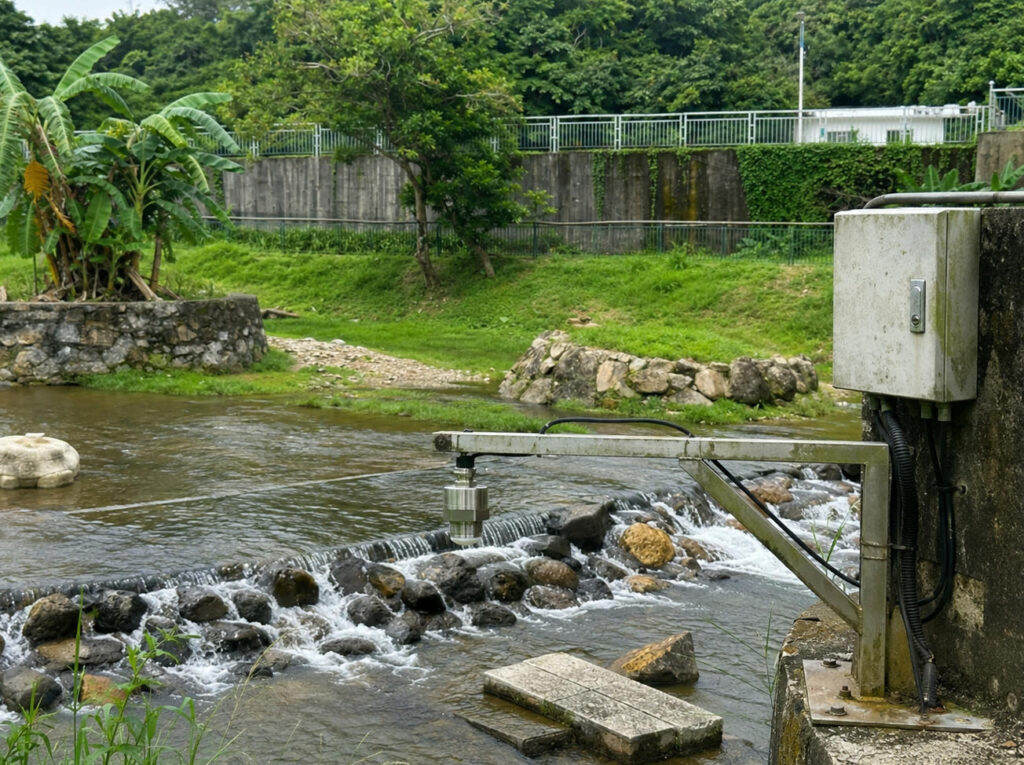
A large wetland park in Huizhou City serves as both a national ecological attraction and an important component of the local sponge city flood management system. The park contains a 5-kilometer circular landscape river with complex terrain and irregular shorelines.
The original submersible pressure sensors frequently experienced failures due to sediment accumulation and aquatic vegetation entanglement. These issues caused unstable readings, false alarms, and inaccurate measurements, especially during dry seasons when sensors became trapped in mud.
To solve these challenges, the project team selected the Jiwei JWrada®-23 stainless steel radar level sensor as the primary monitoring solution.
Solution Design
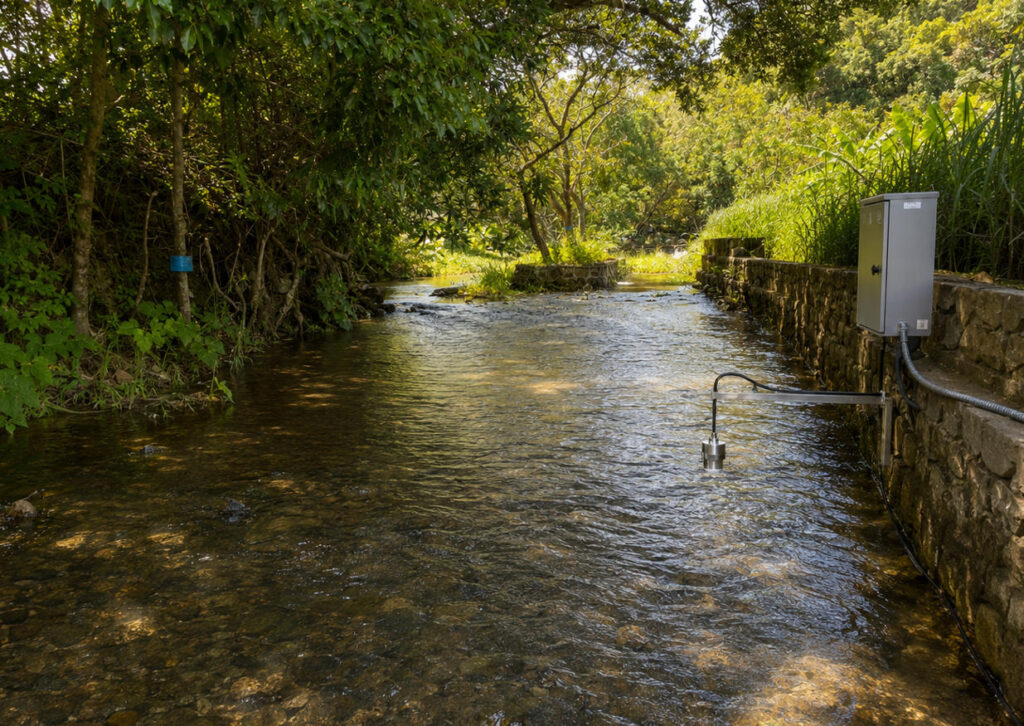
Leveraging its non-contact measurement capability and corrosion-resistant design, the JWrada®-23 radar level sensor was installed at 12 critical monitoring points throughout the river system.
Installation Locations
Deployment locations included floodgate areas, bridge centers, riverbanks, and waterfront boardwalks to ensure complete monitoring coverage.
Data Transmission System
The radar level sensors were connected to industrial wireless RTU terminals through the RS485/Modbus protocol. Water level data was transmitted every five minutes through 4G/5G networks to the smart park management platform for centralized monitoring and visualization.
IV. Project Results
Truly Low-Maintenance Operation
After nearly one year of operation, the region experienced multiple heavy rainstorms exceeding 150 mm of rainfall. The JWrada®-23 radar level sensors continued operating reliably under strong wind, rain, and flood conditions without signal drift or equipment damage.
The 80GHz radar technology successfully penetrated water mist and floating debris, eliminating the frequent manual cleaning previously required by contact-based sensors.
Intelligent Water Management Integration
The radar level sensors became an important data source for the park’s intelligent water management system.
Automatic Water Replenishment
When water levels fall below the ecological threshold, the system automatically activates upstream pumping stations to maintain stable water circulation and fountain operation.
Intelligent Flood Control
During flood seasons, the system automatically adjusts floodgate openings based on real-time radar level sensor data, ensuring safe and efficient flood discharge management.
V. Conclusion
The JWrada®-23 stainless steel radar level sensor is not only an advanced hydrological monitoring instrument, but also an invisible guardian protecting the safety and ecological balance of urban water systems.
Its rugged stainless steel construction withstands harsh weather conditions and challenging outdoor environments, while its advanced 80GHz radar technology captures even the smallest water level changes with exceptional precision and reliability.
At the same time, the JWrada®-23 radar level sensor features a compact and aesthetically pleasing design that integrates naturally into park rivers, landscape lakes, and wetland environments without affecting the surrounding scenery.
Whether applied in flood prevention, ecological protection, water resource scheduling, or smart water management systems, the JWrada®-23 provides a reliable, long-lasting, and intelligent monitoring solution for modern cities.
For projects requiring accurate, low-maintenance, and durable water level monitoring, the JWrada®-23 radar level sensor represents one of the leading technologies available in today’s smart water management industry.
radar level sensor, water level radar sensor, JWrada®-23, stainless steel radar level sensor, 80GHz radar sensor, non-contact radar level sensor, smart water monitoring, river monitoring radar sensor, landscape water monitoring, water conservancy radar sensor