Penetrating Level Measurement Application of 80 GHz Radar Level Transmitters in IBC Totes and Polyethylene Tanks
In industrial sectors such as chemicals, pharmaceuticals, food processing, and water treatment, plastic storage tanks (such as polyethylene PE tanks and polypropylene PP tanks) and IBC totes are widely used for storing and transferring various liquid materials due to their low procurement cost, strong chemical corrosion resistance, and excellent mobility. However, the structural characteristics of these containers differ significantly from traditional metal tanks, which brings certain challenges to automated level measurement.
To address such special working conditions, the Jiwei JWrada®-3x and JWrada®-2x series radar level transmitters based on 80 GHz high-frequency radar technology provide a penetrating level measurement solution. This solution utilizes the physical characteristics of high-frequency electromagnetic waves to achieve accurate level measurement through plastic containers.
I. Industry Pain Points in Level Measurement of Plastic Containers
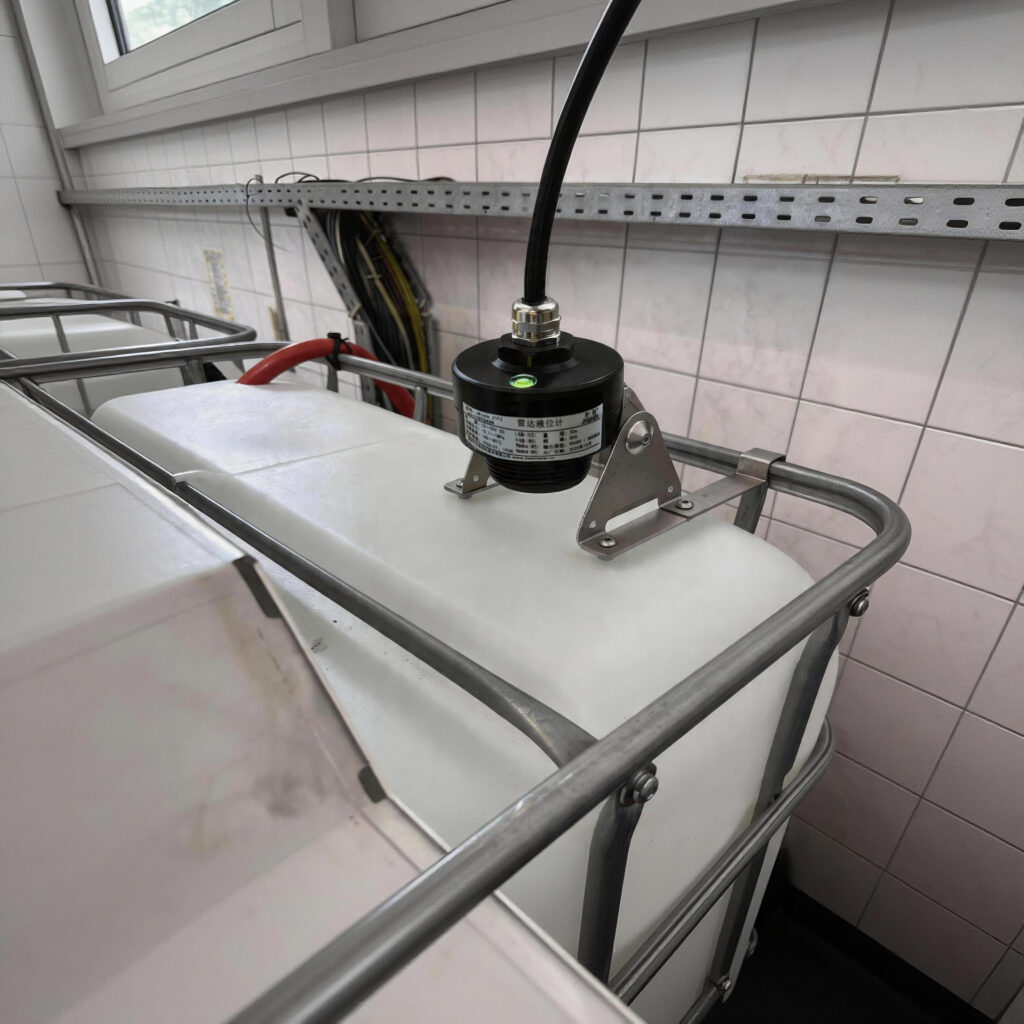
In actual industrial operations, plastic storage tanks and IBC totes often lack standard process connection interfaces. Since many chemical reagents must be stored in plastic containers, and IBC totes are designed for forklift handling and flexible movement, installing traditional intrusive level instruments by drilling into the tank will not only damage the structural integrity of the container and increase the risk of leakage, but also completely eliminate its mobility advantages.
Due to these physical limitations, many enterprises still rely on manual inspection, recording data by visually observing the level scale on the side of the container. This method cannot achieve continuous level monitoring, results in delayed data, and cannot be integrated into DCS or PLC systems, seriously restricting process automation optimization and refined inventory management.
II. Measurement Principle: Physical Mechanism of 80 GHz Radar Penetrating Plastic
To achieve non-invasive penetrating measurement, the key lies in understanding the interaction mechanism between microwave radar and different materials, where the critical parameter is the dielectric constant.
The dielectric constant reflects the degree of polarization of a material under an electromagnetic field. When microwave radar propagates in space, it produces strong reflections when encountering media with a high dielectric constant (such as water and most liquids); when encountering non-conductive materials with a very low dielectric constant, most of the electromagnetic wave energy passes through, producing only very weak surface reflections.
Common industrial plastics, including polyethylene (PE) and polypropylene (PP), typically have dielectric constants between 2.0 and 3.0, making them typical low-dielectric, non-conductive materials. When an 80 GHz high-frequency radar wave strikes the plastic tank wall, the echo energy from the plastic layer itself is extremely weak, allowing the signal to pass through the wall without obstruction and continue propagating inside the tank until it reaches the liquid surface with a higher dielectric constant, where a strong reflection occurs.
The JWrada®-3x and JWrada®-2x series radar level transmitters are developed based on this 80 GHz physical characteristic. The high-frequency electromagnetic waves emitted by the device can effectively ignore the presence of the plastic container structure and accurately capture the reflection signal from the internal liquid surface, thereby calculating the true level height.
III. Technical Adaptability of JWrada Series Products
For different application scenarios of plastic storage tanks and IBC totes, Jiwei Automation provides differentiated 80 GHz radar solutions:
1. JWrada®-3x Series: Main Force for High-Precision Penetrating Measurement
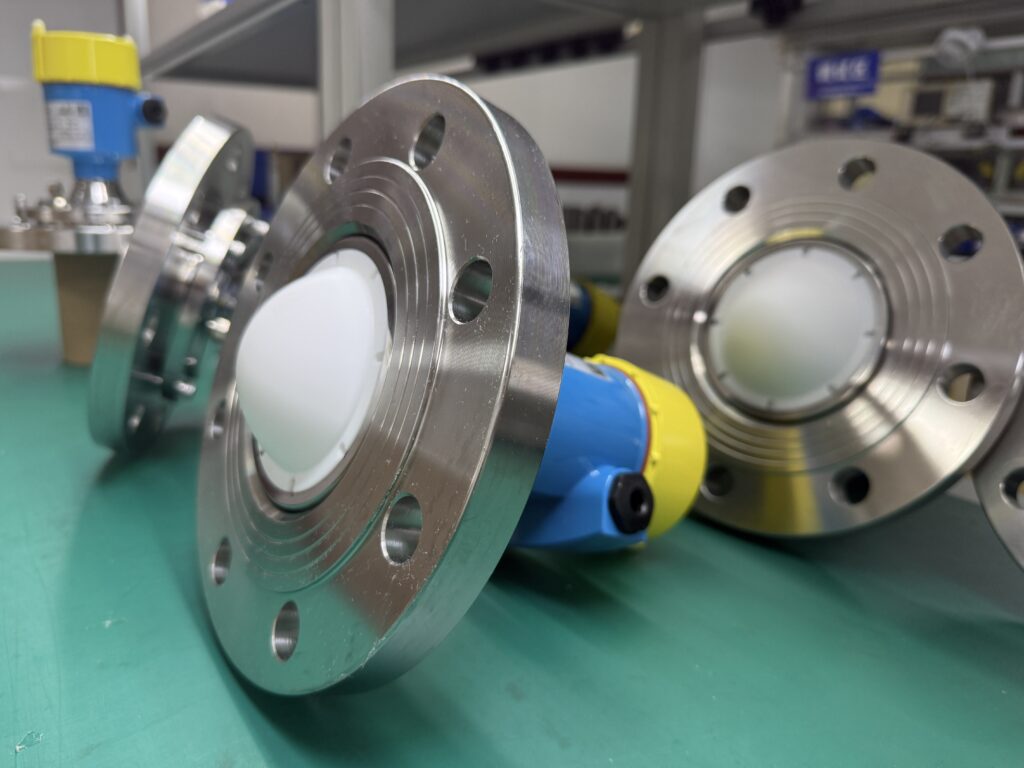
This series adopts advanced 80 GHz FMCW (Frequency Modulated Continuous Wave) technology, featuring extremely high signal bandwidth and a very narrow beam angle. Even when penetrating thick polyethylene tank walls, it can maintain excellent signal strength. Its built-in intelligent echo processing algorithm can automatically filter out weak false echoes generated by the plastic surface and accurately lock onto the internal liquid level. This series is particularly suitable for high-precision continuous measurement in fixed, large-capacity plastic reactors or storage tanks.
2. JWrada®-2x Series: Preferred Choice for Compact IBC Tote Measurement
For IBC totes with compact space and relatively short measuring ranges, the JWrada®-2x series adopts a compact antenna design. It also has the capability to penetrate low-dielectric plastic, with a small size that facilitates installation above densely arranged totes or on supporting structures. While ensuring stable measurement performance, this series effectively controls the cost per measurement point, making it highly suitable for large-scale deployment in mobile container monitoring applications.
IV. Engineering Installation Specifications and Precautions for Penetrating Measurement
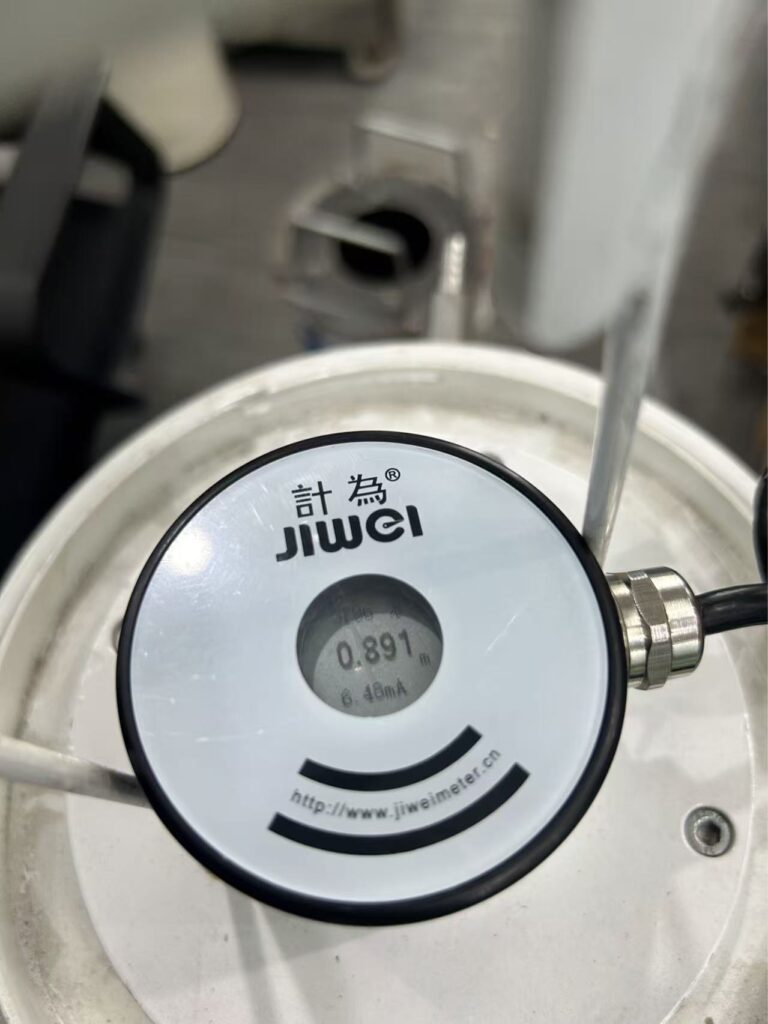
Although 80 GHz radar has the capability to penetrate plastic, the handling of installation details in actual field deployment directly determines the final measurement accuracy. The following engineering guidelines ensure stable measurement:
1. Strict Indoor Application Requirement
The penetrating measurement solution is only suitable for indoor environments, and direct interference from natural environmental factors such as rain, snow, and dew must be avoided. If plastic tanks are placed outdoors, rainwater or snow adhering to the tank top surface—due to the high dielectric constant of water—will directly reflect the radar wave, preventing it from penetrating into the tank and causing serious measurement errors. In indoor environments, even if dust or dirt accumulates on the tank top, their low dielectric properties ensure that the advanced electronics inside the JWrada® radar can still maintain normal signal penetration without interference.
2. Distance Control Between Sensor and Curved Tank Surface
The installation position of the sensor needs to be accurately calculated based on the geometry of the tank top. For plastic tanks or IBC totes with curved tops, the radar sensor should be installed approximately 100 mm to 200 mm (4 to 8 inches) above the highest point of the curved surface. This spacing, combined with the curvature of the tank top, allows the minimal surface reflections generated during penetration to be deflected laterally, preventing them from returning directly to the antenna and interfering with measurement.
For plastic containers with completely flat tops, due to the lack of curvature to deflect false echoes, more precise spacing calculations are required in combination with the instrument’s near-field blind zone parameters. If necessary, the false echo suppression threshold should be adjusted via software.
3. Avoidance of Electromagnetic Interference from Metal Structures
Although plastic itself does not produce electromagnetic interference, it is essential to ensure that the radar sensor is kept away from surrounding metal structures such as supports, pipelines, or ladders. Due to the high sensitivity of 80 GHz radar, external metal objects may be detected by the edge of the radar beam, generating interfering echoes. The sensor must be installed vertically downward, with no metal obstacles within the beam path.
V. Solution Benefits
By applying the JWrada®-3x and JWrada®-2x series 80 GHz radar level transmitters, industrial enterprises achieve significant technological upgrades in plastic container level management:
First, true non-invasive measurement is realized. There is no need to drill holes in plastic tanks or IBC totes, completely eliminating the risk of material leakage while maintaining the original structural strength and sealing performance of the containers.
Second, the mobility of containers is preserved. In fixed applications, instruments can be installed on overhead structures; in mobile IBC tote applications, forklifts can move containers in and out of the measurement position without disconnecting any instrumentation, significantly improving material handling efficiency.
Finally, digital inventory management is enabled. With relatively low implementation cost, this solution transforms manual, blind-spot level readings into continuous automated digital signals, providing accurate real-time material data for ERP systems or production control systems, thereby optimizing procurement planning and production scheduling.
VI. Conclusion
Level measurement through plastic tanks was traditionally considered difficult to achieve, but with the maturity of 80 GHz radar technology, this challenge has now been effectively solved. By leveraging the low dielectric properties of plastic, radar signals can penetrate IBC totes and polyethylene tanks to achieve accurate measurement.
Whether it is the high-performance JWrada®-3x series or the cost-effective JWrada®-2x series, both can operate stably in this application and meet the needs of different industrial scenarios.
For enterprises aiming to improve automation, reduce manual intervention, and optimize production processes, radar level transmitters are undoubtedly an efficient, reliable, and sustainable solutio