Case Study: JWrada® 80GHz Radar Level Meter for Riverside Water Level Monitoring
The “China Solution” for Riverside Water Level Monitoring: Integration of Jiwei JWrada® Radar Level Meter and Solar Power Systems
In the fields of hydraulic engineering and environmental monitoring, real-time tracking of river water levels is a critical component for flood control, maritime safety, and water resource management. However, riverside environments are complex and volatile: water levels fluctuate drastically, often accompanied by floating debris, waves, and turbulence. Furthermore, these locations are frequently remote, lacking a stable municipal power supply. Achieving high-precision, low-power, and easy-to-maintain water level monitoring under such harsh field conditions has long been a technical challenge for the industry.
The JWrada® series high-frequency radar level meter, launched by Shenzhen Jiwei Automations Ltd. (Jiwei), has successfully addressed these pain points through 80GHz high-frequency technology, innovative software algorithms, and ultimate operational convenience, combined with external solar power systems. In numerous riverside monitoring projects, JWrada® has not only achieved domestic replacement for top-tier international brands like VEGA but has also defined a new standard for industrial level measurement with its unique dual-guarantee of Bluetooth remote commissioning and manual control.
I. Challenges and Requirements of Riverside Water Level Monitoring
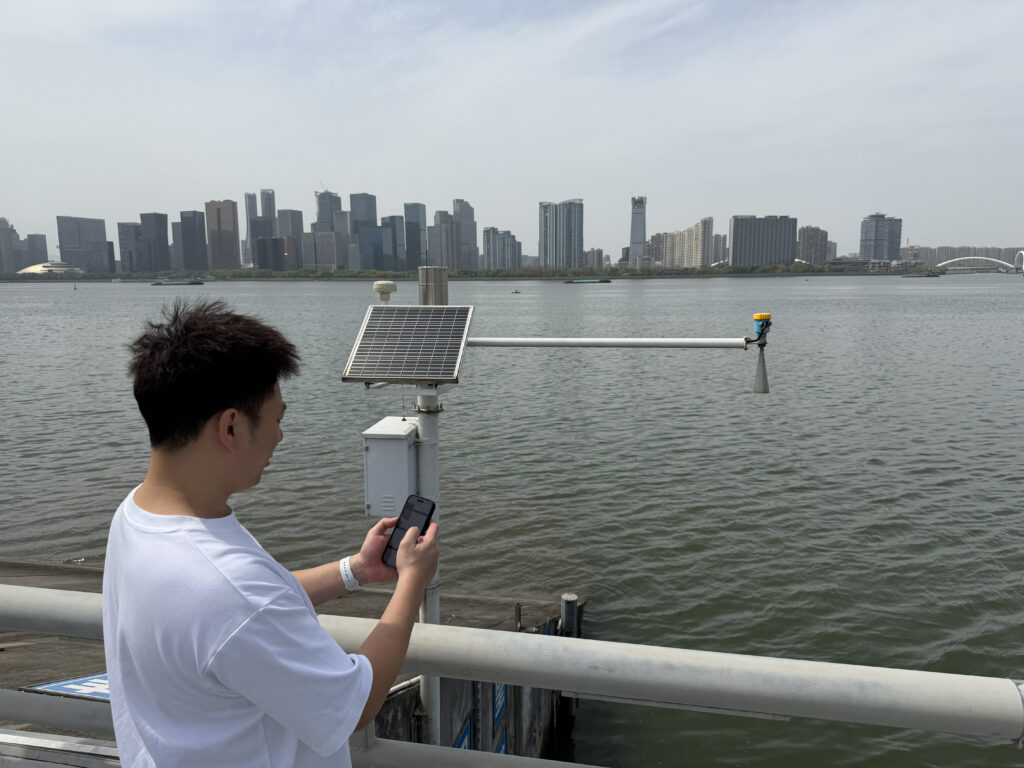
Riverside monitoring stations typically possess characteristics that place extremely high demands on sensor performance:
- Power Constraints: Riverbanks are long, making cable laying prohibitively expensive and difficult. Systems must rely on solar panels and batteries, requiring level meters with extremely low static power consumption.
- Harsh Environments: These areas face high winds, high humidity, heavy rainfall, and lightning. Radar level meters must possess superior weather resistance and anti-interference capabilities.
- High Installation Positions: To cover the range from extreme low-water levels to catastrophic flood levels, radars are often installed on brackets or bridges several to over a dozen meters above the water surface, making on-site commissioning highly inconvenient.
- Signal Interference: Surface ripples, reflections from passing ships, and shoreline vegetation can generate false echoes, requiring advanced signal processing.
II. Core Technical Advantages of JWrada® Radar Level Meter
To meet these challenges, the Jiwei JWrada® radar level meter (equipped with a horn antenna) demonstrates excellent adaptability.
1. 80GHz Frequency & Horn Antenna: Precision Focusing
JWrada® utilizes an 80GHz frequency, which offers a much narrower beam angle compared to traditional 26GHz radars. Coupled with a specially designed horn antenna, energy is highly concentrated. In riverside applications, this narrow beam effectively avoids interference from embankments, vegetation, and support structures, locking directly onto the water surface echo. This maintains a high signal-to-noise ratio even at long measurement distances.
2. Low-Power Design & Solar Compatibility
To perfectly integrate with solar power systems, the hardware circuitry of JWrada® has been deeply optimized. It features low startup current and rapid response times. In intermittent measurement mode, the device completes measurements and transmits data in a very short window before entering a low-power sleep mode, significantly extending the battery life of solar systems during consecutive rainy days.
3. Bluetooth Connectivity & One-Tap APP Commissioning
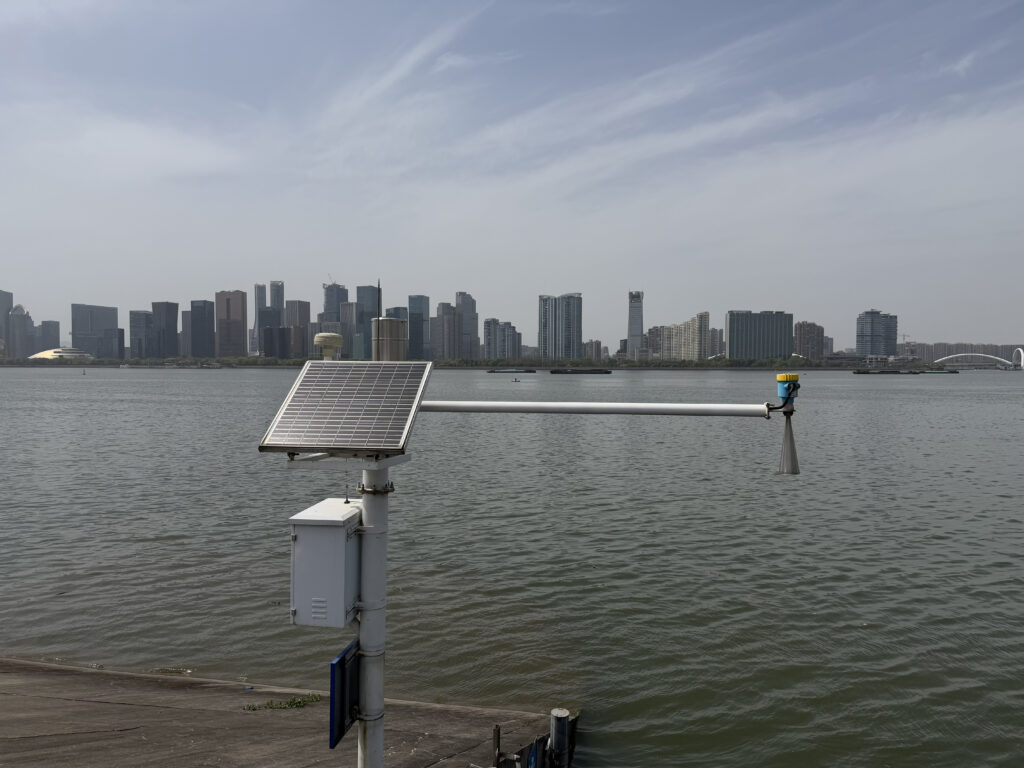
This is the standout feature of JWrada®. With an integrated stable Bluetooth module, staff no longer need to climb high brackets; they can connect to the device via a smartphone APP from the ground.
- Parameter Replication: When deploying monitoring points in bulk, an engineer only needs to set the range, blind zone, and filter coefficients for the first unit. These settings can then be “copied with one tap” to all subsequent devices via the APP, with each unit taking only 2–5 minutes to configure.
- Remote Collaboration: If complex conditions arise, on-site personnel can share the Bluetooth connection. Engineers at Jiwei’s headquarters in China can then view echo curves and perform remote debugging in real-time, solving technical support issues in remote areas.
4. LCD Screen & Physical Buttons: Dual Protection
While the Bluetooth functionality is powerful, Jiwei continues to provide an LCD display and physical buttons. In extreme cases where a phone is dead or radio interference is severe, maintenance personnel can still view the current level and adjust parameters via the manual control panel. This “software + hardware” dual-control logic reflects a commitment to industrial-grade reliability.
III. Case Study: Major River Trunk Water Level Monitoring Project
1. Project Background
The project is located in the lower reaches of a major river, requiring 15 monitoring points along a 50km stretch. The area features significant turbulence and muddy tidal flats, making it impossible to lay power lines.
2. Solution Configuration
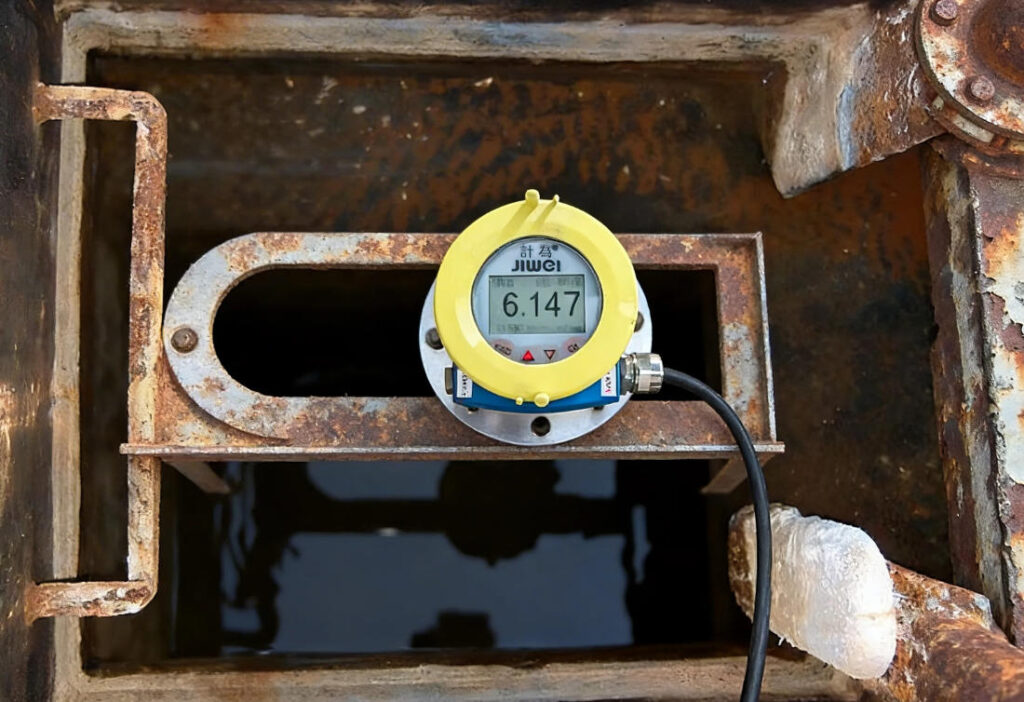
- Instrument: Jiwei JWrada® 80GHz Radar Level Meter (Anti-corrosion horn antenna version).
- Power System: 60W solar panel + 40Ah lithium battery pack.
- Communication: 4G/5G Wireless Remote Terminal Unit (RTU).
- Support System: 5-meter L-shaped stainless steel pillar.
3. Implementation Process
During installation, engineers found significant surface waves, and due to the dry season, the installation height was approximately 12 meters above the water.
- Installation Optimization: Utilizing the strong penetration of the horn antenna, the radar was installed vertically to the water surface.
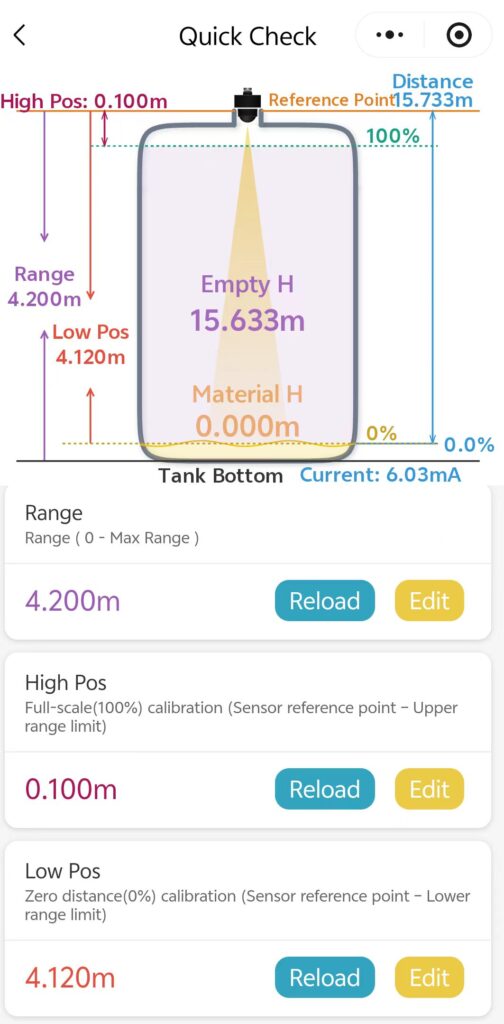
- Rapid Commissioning: Standing beneath the pillar, the engineer quickly set the range via the mobile APP. Since the Jiwei radar supports “commissioning with liquid present,” there was no need to empty the area or find specific reference points.
- Echo Suppression: Through the APP’s intuitive algorithm adjustments, fixed interference echoes from the pillar were shielded with one click, making the water surface echo clearly visible on the curve.
4. Operational Results
After a full rainy season, the system demonstrated exceptional stability:
- Accuracy: Compared with manual water gauge observations, the error remained consistently within ±2mm.
- Power Performance: Even during 7 consecutive days of rain, the voltage remained above the safety threshold with no disconnections.
- Maintenance Cost: Thanks to seamless Bluetooth software upgrades, the system underwent an algorithm optimization where staff updated the firmware via the APP from the bank without needing to dismantle the unit.
IV. The Inevitability of Replacing VEGA: The Rise of Domestic Radars
Before the advent of JWrada®, the high-end water level monitoring market was largely dominated by international giants like VEGA. However, Jiwei has achieved parity and beyond through independent R&D in several dimensions:
- Adaptive Development: Jiwei developed signal processing algorithms specifically for the high-impurity and high-interference environments found in Chinese rivers, matching or exceeding international brands in capturing weak signals.
- Service Response: The remote debugging service provided by Chinese engineers breaks the barriers of long support cycles and high costs associated with foreign brands.
- Cost-Effectiveness: While providing equivalent or superior features (such as the coexistence of Bluetooth and physical buttons), JWrada® offers a more competitive total cost of ownership.
V. Conclusion
The successful application of the Jiwei JWrada® radar level meter in riverside scenarios proves the reliability of the product in extreme environments and showcases the innovative strength of Chinese manufacturing in the industrial sensor sector. By combining horn antennas, 80GHz technology, and solar power with a leading Bluetooth ecosystem, Jiwei is providing a more efficient, flexible, and cost-effective “China Solution” for global hydraulic and industrial measurement.
Whether facing surging river waters or remote wilderness, JWrada® remains a steadfast guardian of precision and safety, standing as a premier national force capable of competing directly with the world’s top-tier brands.