Sugar Dissolver Tank Level Measurement: JWrada®-35 Radar Level Meter Application
1. Industry Background: The Role of Sugar Dissolver Tanks in the Sugar Refining Process
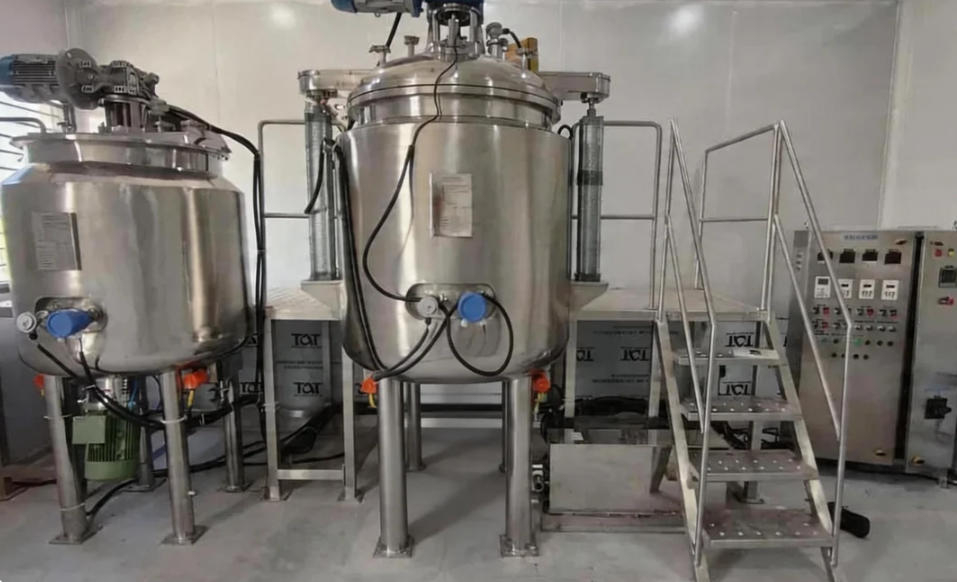
In beet sugar refining, the sugar dissolver vessel is a key piece of equipment used for dissolving raw sugar and enabling its reuse. Raw sugar is mixed with water under heating to form sugar liquor, which then flows step by step through multiple interconnected agitated tanks. These tanks typically use weirs to enable continuous liquid transfer, ensuring stable operation of the overall process.
During this process, by-product sugar generated in downstream refining is also reintroduced into the system to improve sugar recovery efficiency. Therefore, maintaining a stable liquid level is not only essential for material balance, but also directly affects production efficiency and product quality.
Against this background, achieving stable and accurate level measurement in sugar dissolver tanks becomes critical for ensuring continuous production.
2. Application Challenges: Why Traditional Instruments Frequently Fail
1. Measurement Failure Caused by Steam Condensation
During the dissolution process, continuous heating generates a large amount of high-temperature steam inside the tank. This steam condenses on the tank roof and sensor surfaces, forming droplets that significantly attenuate or completely block ultrasonic signals, leading to measurement failure.
2. False Level Readings Caused by Thick Foam
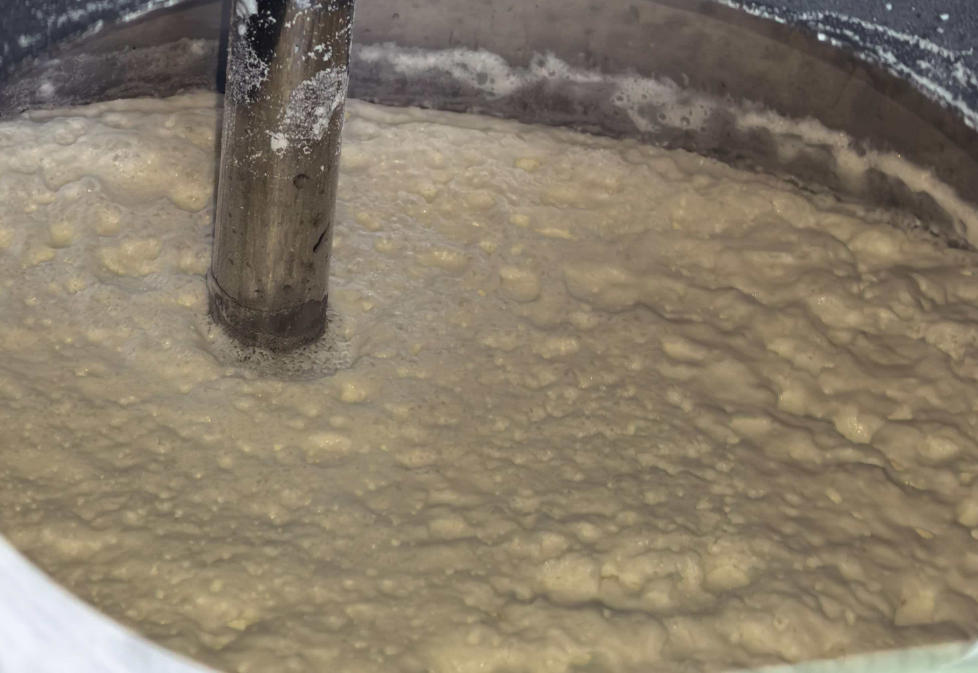
Strong agitation and the introduction of by-product sugar create a dense foam layer. Traditional measurement technologies struggle to penetrate this foam effectively and often misinterpret the foam interface as the actual liquid surface, resulting in consistently overestimated readings.
3. Fouling and Mechanical Jamming Due to High-Viscosity Sugar Liquor
Sugar liquor has strong adhesion properties. Contact-based measurement devices, such as floats or guided wave probes, are prone to crystallization and buildup, which increases measurement error and may even cause mechanical components to jam.
4. Signal Instability Due to Dynamic Liquid Surface
Continuous inflow, outflow, and agitation cause constant fluctuations in the liquid surface. Traditional instruments often have limited response capability, resulting in unstable output signals that are difficult to use for stable process control.
3. Jiwei Solution: Technical Implementation of the JWrada®-35 Radar Level Meter
1. Penetration of Foam and Steam: Advantages of High-Frequency Millimeter Waves
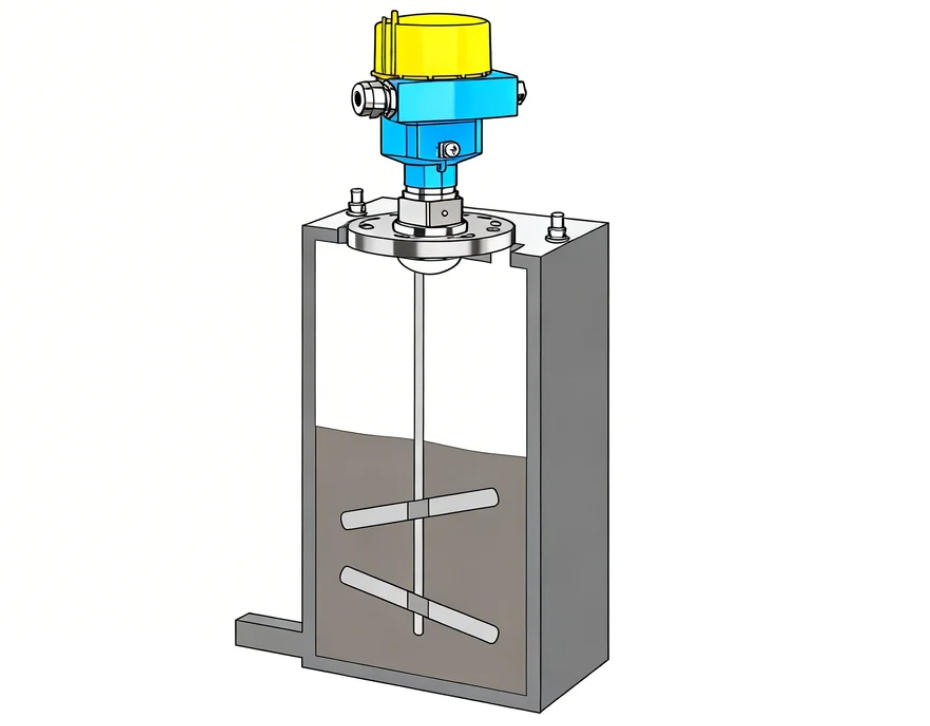
The 80 GHz millimeter-wave technology features short wavelength, high directionality, and concentrated energy. Combined with a 76 mm lens antenna forming a narrow beam, it can effectively penetrate foam layers and steam environments, enabling reliable detection of the true liquid surface.
2. Suppression of Interference Echoes: Adaptive Echo Recognition Algorithm
The device integrates a self-learning echo processing algorithm that automatically identifies and suppresses fixed interference signals generated by internal structures such as agitator shafts and weirs. Through multi-echo separation and dynamic target tracking, it ensures stable identification and output of the actual liquid level.
3. Non-Contact Measurement: Eliminating Fouling Effects
By adopting a non-contact measurement principle, the sensor does not come into direct contact with the medium. This fundamentally avoids adhesion, crystallization, and fouling caused by high-viscosity sugar liquor, significantly reducing maintenance requirements.
4. Safety and Maintenance Optimization
The device complies with explosion-proof standards and integrates a Bluetooth 5.0 wireless communication module. This enables remote parameter configuration, echo monitoring, and fault diagnosis, improving operational safety and maintenance efficiency.
4. Customer Feedback
Measurement Performance
After replacing the original instrument with the JWrada®-35 radar level meter, the on-site level measurement showed a significant improvement in stability. Compared to the previous equipment, which experienced signal fluctuations under strong agitation and heavy foam conditions, the new device provides more continuous and stable level trend data, with significantly reduced signal noise.
In actual operation, even under complex conditions such as continuous agitation, liquid surface fluctuations, and foam coverage, the instrument is able to accurately reflect real level changes. This provides a reliable data foundation for downstream multi-tank control systems, improving overall control stability and consistency.
Maintenance Cost
During the operating cycle, no significant probe fouling, adhesion, or mechanical jamming was observed. The overall operating condition of the device remained stable. Compared to previous solutions that required periodic shutdowns for probe cleaning or false alarm handling, the new system significantly reduces maintenance frequency and on-site intervention.
Under continuous operation, the device maintains long-term stability, reducing downtime and production interruption risks associated with maintenance activities. This leads to lower overall maintenance costs and improved operational continuity.
Commissioning Experience
The new system adopts Bluetooth wireless commissioning, allowing parameter configuration and operational monitoring to be carried out in a safe area without frequent access to elevated or hazardous locations.
Compared to traditional methods that require opening the device or performing local adjustments, this approach reduces the need for high-altitude work and enclosure opening, thereby lowering operational risks. The commissioning process is more intuitive, and parameter adjustments respond quickly, helping shorten commissioning time, improve project delivery efficiency, and enhance on-site safety and convenience.
5. Conclusion
The key to level measurement in sugar dissolver tanks lies in the instrument’s ability to adapt to complex operating conditions and maintain long-term stability. The JWrada®-35 effectively addresses typical challenges such as foam, steam, adhesion, and dynamic disturbances through high-frequency radar technology, intelligent signal processing algorithms, and a non-contact design.
This solution not only improves measurement accuracy and system stability, but also significantly reduces maintenance costs, providing reliable technical support for continuous production and digital transformation in the sugar industry.