Marine Bilge Well Level Measurement Solution:Application Case of the JWrada®-32 Radar Level Transmitter
In ship engine rooms and double-bottom structures, the bilge well is designed to collect engine-room leakage water, condensate, and small amounts of oil–water mixtures. The collected liquid is discharged through the bilge pumping system or directed to an oily water separator for further treatment.
Although the bilge well has a relatively small volume, its level signal is directly involved in pump control logic. Therefore, it represents a critical monitoring point in shipboard systems. Reliable level measurement in this application requires continuous operation, strong anti-interference capability, and long-term stability.
For this type of service condition, Shenzhen Jiwei Automations Ltd implemented the JWrada®-32 Radar Level Transmitter in practical marine projects, forming a stable application case.
I. Operating Characteristics of Bilge Well Level Measurement
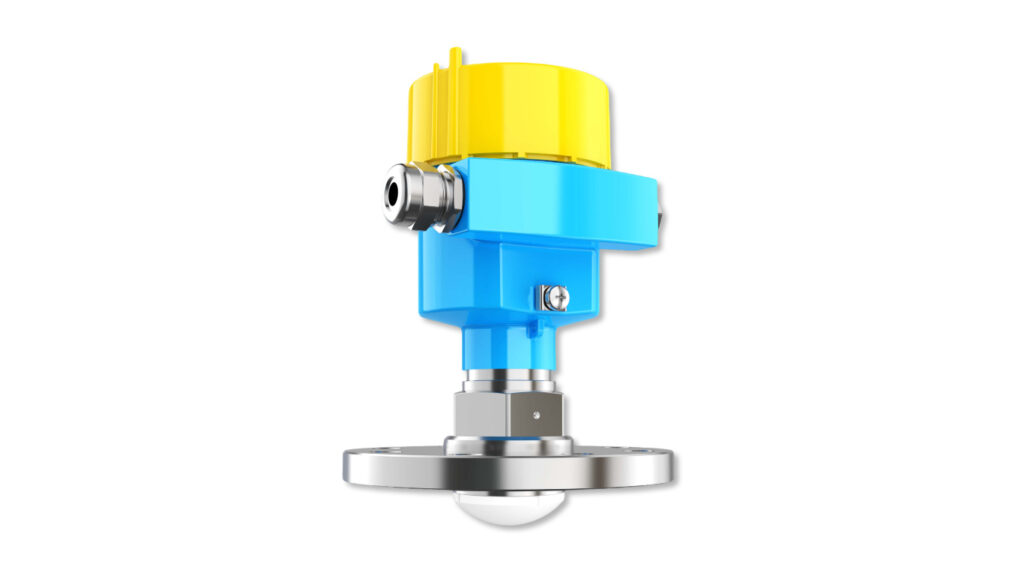
In actual marine projects, bilge well level measurement may appear simple in terms of measuring range. However, engineering implementation reveals several technical challenges.
1. Limited Installation Space and Short Measuring Distance
Bilge wells are typically compact structures, with depths of approximately 2.5 m in this project. The available space at the top is limited, and the instrument must be installed vertically from the top.
Under short-range measurement conditions, if the instrument has an excessively large dead zone or wide beam angle, interference from the well wall reflections may occur. Especially at low liquid levels, stray echoes may overlap with the true level signal, complicating signal identification.
Therefore, this application requires:
- A small dead zone
- A focused beam angle to avoid wall interference
- The ability to distinguish structural reflections from the true liquid surface
During commissioning, echo curve analysis clearly showed fixed reflections from the well structure. After parameter optimization, the system was able to lock onto the true liquid surface without misreading at low levels.
2. Oil–Water Mixture and Interface Variations
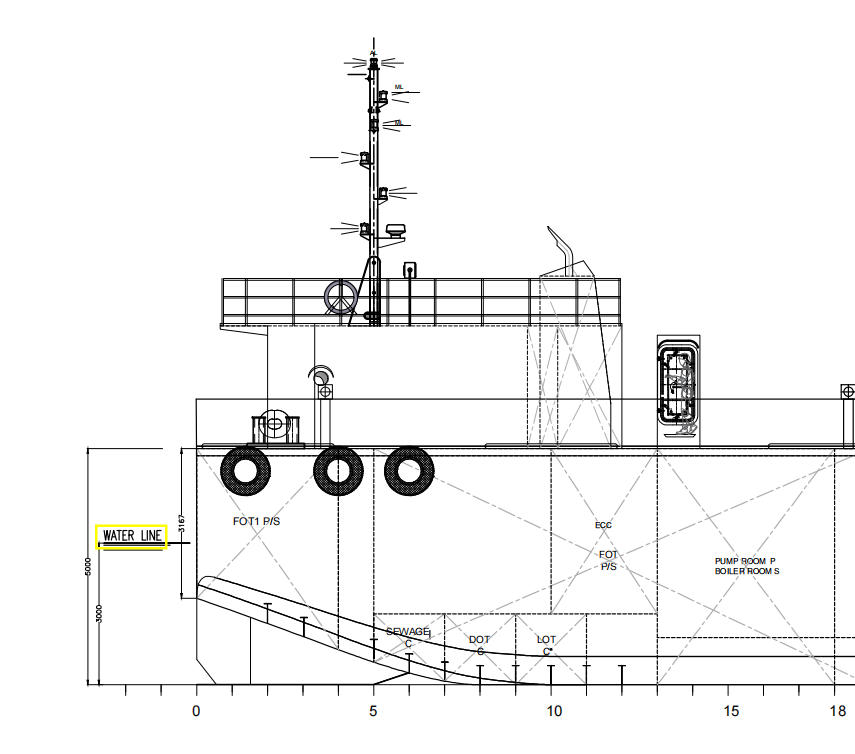
The bilge well typically contains condensate water mixed with small amounts of lubricating oil or fuel leakage. Depending on operating conditions, the oil proportion may vary, and a thin oil layer may form on the surface.
During certain pumping cycles, distinct oil–water stratification may appear, resulting in multiple reflection signals from both the oil surface and the underlying water surface.
If the signal processing algorithm cannot correctly distinguish the primary echo, level fluctuation or false alarms may occur.
In this project, historical trend data showed continuous and stable level curves without abnormal jumps, indicating that the instrument maintained reliable primary echo detection under interface variation conditions.
3. Vessel Motion and Vibration
Ships are continuously affected by sea conditions, including rolling and pitching movements. In addition, engine-room equipment generates mechanical vibration.
Under dynamic conditions, the liquid surface may oscillate periodically. Without stable filtering mechanisms, the output signal could fluctuate and affect bilge pump control logic.
During extended voyages in relatively rough sea conditions, the level trend data remained stable. Pump start/stop records followed normal operation patterns, with no abnormal activation caused by signal instability.
This demonstrates stable performance under combined vibration and surface disturbance conditions.
4. High Humidity and Condensation Environment
Engine rooms typically experience high humidity and significant temperature variations. During nighttime or equipment shutdown periods, condensation may form around the well opening.
Condensation on the antenna surface may affect signal propagation, particularly at low level conditions.
Throughout one year of operation, no manual cleaning of the well was required. Maintenance records and field feedback indicated no signal loss or drift caused by condensation.
This confirms that the mechanical sealing and antenna design are suitable for long-term operation in high-humidity environments.
II. Technical Adaptability of the JWrada®-32
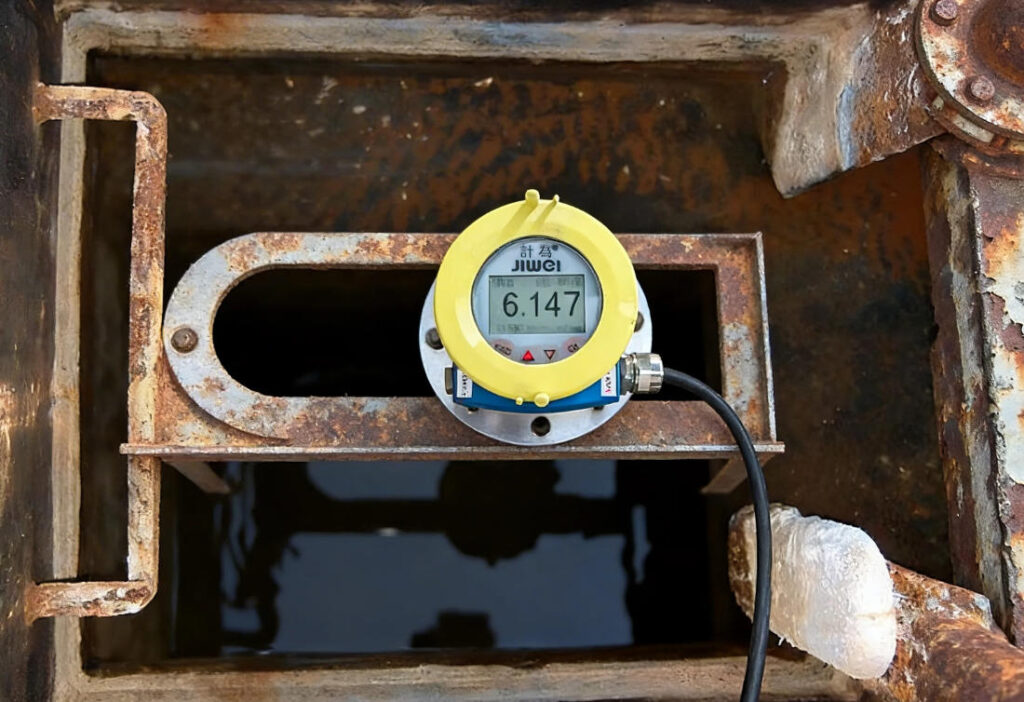
The JWrada®-32 Radar Level Transmitter adopts high-frequency radar technology with a narrow beam angle and concentrated signal energy, making it suitable for installation in confined structures.
In cases of oil–water stratification or minor foam presence, the device distinguishes true liquid surface echoes from false reflections through its echo recognition algorithm, reducing measurement fluctuations caused by interface changes.
As a non-contact measurement device, the output is not affected by changes in medium density and contains no moving mechanical components.
The system design includes:
- Enhanced vibration resistance
- Optimized antenna structure to reduce condensation influence
- Support for parameter adjustment and echo curve analysis
The software platform enables operational optimization, fault diagnosis, and remote technical support during vessel operation.
III. Project Operation Results
In a marine bulk carrier project, the JWrada®-32 was installed at the top of the bilge well (approximately 2.5 m measuring range) for automatic bilge pump control and level monitoring.
After one full year of continuous operation:
- No false alarm events were recorded
- No measurement anomalies caused by oil–water stratification were observed
- No open-well maintenance was required
- Output signals remained continuous and stable
The level signal was used as the control input for the pump system. During multiple automatic drainage cycles, no abnormal pump activation was observed.
The operational data indicates that the device maintained stable echo detection performance under combined vibration and interface variation conditions, meeting the requirements of bilge well level measurement.
IV. Engineering Significance
In bilge well applications, level signal stability directly affects:
- Pump start/stop frequency
- Alarm system accuracy
- Manual inspection workload
Radar level transmitters offer advantages in this scenario, including:
- Non-contact measurement
- Independence from density variations
- No mechanical wear components
- Reduced maintenance requirements
Field experience demonstrates that radar technology provides reliable suitability for bilge well level monitoring in marine systems.
V. Conclusion
Although the bilge well structure is relatively small, the operating conditions are complex. Under combined oil–water mixture, vibration, and high-humidity environments, level measurement stability becomes essential.
Based on actual shipboard project data, the JWrada®-32 Radar Level Transmitter achieved continuous and stable operation in this application, meeting the reliability requirements of marine automation systems.
In the field of marine level measurement, radar technology is increasingly being adopted as a viable solution for bilge well applications, gradually replacing traditional contact-based methods.