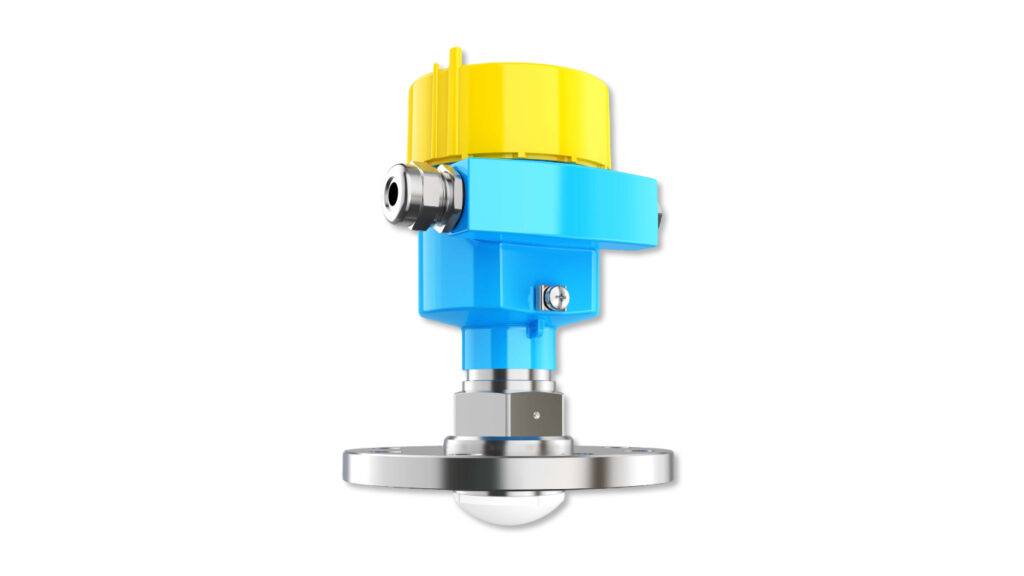
JWrada®-32 Radar Level Transmitter for Reliable Slop Tank Monitoring in Marine Applications
During long-distance ocean transportation, the slop tank plays a critical yet often overlooked role. Particularly on oil tankers and chemical vessels, slop tanks are used to collect tank washing water, residual oil, and chemical mixtures generated during cleaning operations. The accuracy of level data directly affects cleaning efficiency, cargo handling rhythm, and overall navigational safety.
To address this demanding application, Shenzhen Jiwei Automations Ltd has introduced the JWrada®-32 radar level transmitter, which has been operating reliably in multiple marine projects and has become a dependable solution for slop tank level monitoring.
What Challenges Does Slop Tank Level Measurement Face?
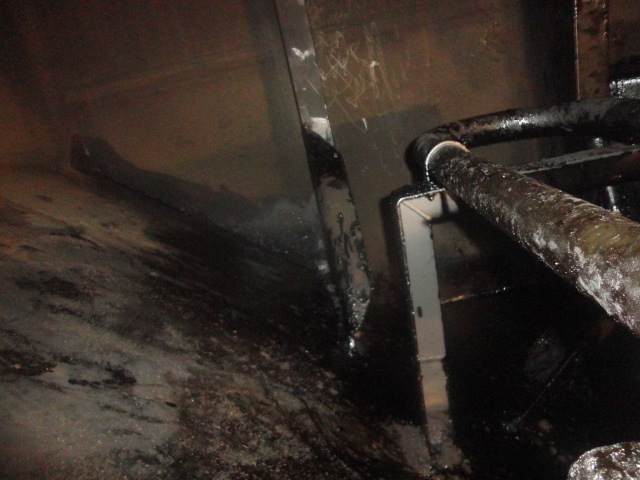
Based on practical vessel application data, slop tanks (oily water storage tanks) typically present complex and dynamic working conditions. The measuring point is mainly used for continuous level monitoring, with the sensor installed on the tank top to achieve non-contact space measurement. The typical maximum measuring range is about 6 meters, which falls into a medium-to-small range application.
In terms of medium characteristics, the tank usually contains washing water mixed with different types of chemical cleaning agents, along with residual edible oil, fuel oil, or other hydrocarbons. This results in a multiphase mixture with unstable density and dielectric constant, posing challenges to signal recognition.
The process temperature generally ranges from +10 °C to +40 °C. The tank may operate under slight negative or slight positive pressure, alternating dynamically during ventilation or liquid transfer operations. Pressure fluctuations can occur during navigation or loading/unloading.
Additionally, several special challenges are present:
- Severe foam formation during tank washing
- Natural oil-water stratification
- Multiple liquid interfaces
- Unstable foam thickness and layered reflections
Although the measuring range is only 6 meters, the medium properties, interface complexity, and dynamic marine environment make slop tank level measurement a typical complex-interface application. High stability, strong signal processing capability, and anti-interference performance are essential.
Why Choose JWrada®-32 Radar Level Transmitter?
To cope with foam interference, oil-water stratification, pressure fluctuation, and condensation conditions inside slop tanks, the JWrada®-32 provides a structurally robust and algorithmically advanced solution designed for long-term continuous vessel operation.
High-Frequency Radar Technology for Accurate Surface Detection
The JWrada®-32 operates with high-frequency radar technology, featuring a narrow beam angle and concentrated energy. Even in the presence of foam layers or minor stratification, the device effectively identifies the true liquid surface echo, reducing false signal risks.
In typical 6 m applications, the transmitter delivers continuous and stable output, with smooth response during dynamic tank washing processes.

Proprietary Software System with Cloud-Based Remote Debugging
One of the core competitive advantages of the JWrada® series lies in its independently developed software platform.
Beyond robust hardware, the transmitter integrates an intelligent signal processing system supporting:
- Online firmware updates
- Parameter configuration and optimization
- Fault code diagnosis
- Echo curve analysis
- EFT curve analysis
The system supports cloud-based remote debugging. Engineers can collaborate one-on-one with onboard personnel, access real-time operating data, and analyze echo and EFT curves remotely. This enables:
- Remote parameter optimization
- Rapid interference elimination
- Customized algorithm adjustment
- Reduced onboard service visits
- Improved measurement stability in complex environments
All software functions are independently developed by Shenzhen Jiwei Automations Ltd, providing clear advantages in system architecture and remote service capability.
Adaptation to Slight Negative and Positive Pressure Conditions
Slop tanks typically operate within a pressure fluctuation range of -200 mbar to +400 mbar during cleaning and ventilation. The JWrada®-32 remains stable under atmospheric and slight pressure variations, unaffected by vapor phase changes, ensuring continuous level output integrity.
Anti-Condensation Structural Design
The internal humidity of slop tanks is high, and condensation often forms after washing operations. The antenna and sealing structure of JWrada®-32 are optimized to minimize condensation influence on signal transmission.
This design results in:
- Reduced maintenance frequency
- Lower cleaning demand
- Extended service life
- Improved onboard safety by minimizing tank entry
Project Performance Feedback
In one ocean-going tanker project, two slop tanks were equipped with JWrada®-32 radar level transmitters for tank cleaning and post-cleaning monitoring.
After commissioning, the system achieved:
- 24-hour continuous level monitoring
- Real-time feedback during tank washing
- Complete loading and unloading level traceability
After one year of operation:
- No false alarms caused by foam or interface interference
- No open-tank maintenance required
- Continuous and stable data output
Stable and reliable level data provided clear operational references, helping optimize cleaning and transfer scheduling while reducing downtime caused by measurement uncertainty.
Practical Value for Shipowners and Shipyards
Reliable operation ensures smooth cleaning processes and avoids overflow or pump-dry risks.
Stable level data improves cargo handling efficiency and increases vessel operational availability.
Non-contact measurement eliminates mechanical wear components, significantly lowering long-term maintenance costs compared to traditional contact-based instruments.
Why Radar Is More Suitable for Slop Tanks
Compared to mechanical float, differential pressure, or other contact-type measurement methods, radar level transmitters offer clear advantages:
1. Unaffected by density variation
2. Less influenced by foam thickness
3. No contact with corrosive mixtures
4. No moving parts
Especially in environments containing chemical cleaning agents and oil mixtures, radar technology provides superior stability and safety.
Conclusion
Although not the primary cargo tank, the slop tank directly influences cleaning efficiency and vessel operation rhythm. Under complex washing conditions, selecting a reliable radar level transmitter is essential for maintaining efficient ship performance.
The JWrada®-32 from Shenzhen Jiwei Automations Ltd has been proven in 6-meter slop tank applications. Even under foam, stratification, and pressure fluctuation challenges, it maintains stable and continuous output.
For shipowners and shipbuilders seeking long-term operational stability and low maintenance cost, it represents not just a level transmitter, but a dependable operational safeguard solution.