Why Many Projects Switch from Ultrasonic to Radar Level Meters
In many industrial projects, the replacement of level instruments does not occur during the design phase but after the system has been in operation for a period. The most common scenario is: an ultrasonic level meter is selected at the early stage of the project, commissioning goes smoothly, and readings appear normal. However, after months or even longer continuous operation, signal fluctuations, occasional loss, or unexplained alarm behavior start to appear, forcing a switch to radar level meters.
When reviewing such adjustments afterward, they are often simplistically summarized as: “Ultrasonic isn’t accurate, radar is more accurate.” From an engineering perspective, this is not the real reason.
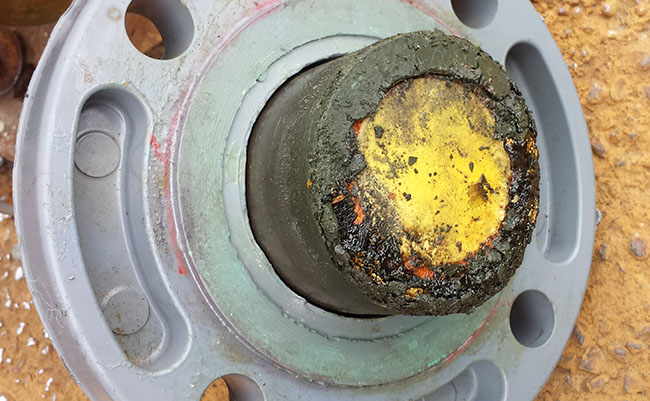
Level Issues Often Don’t Begin with Measurement Accuracy
A level signal is never an isolated number. It reflects the combined state of pipeline flow, media distribution, system disturbances, and environmental conditions. Many ultrasonic level meters perform well initially because the site conditions match design assumptions: stable liquid surface, simple gas phase, and ideal echo conditions.
As the facility enters long-term operation, situations begin to change. Process adjustments introduce steam or volatile gases, feeding schedules create more foam or liquid surface turbulence, and seasonal temperature changes create gradients—these factors continuously affect sound wave propagation conditions.
In such cases, ultrasonic level meters are not “inaccurate”; rather, the measurement assumptions themselves become unstable.

Ultrasonic’s Engineering Boundaries Determine Its Application
Ultrasonic level meters rely on sound wave propagation, reflection, and echo recognition in the gas phase. Unlike electromagnetic waves, sound is highly dependent on the medium: its propagation speed, energy attenuation, and echo characteristics are strongly influenced by the physical state of the gas.
Extensive industrial measurement and process control studies (including consensus from ISA and IEEE publications) indicate that gas temperature gradients, composition changes, flow turbulence, and movement significantly impact ultrasonic propagation paths and echo stability.
Even under ideal laboratory conditions, sound speed can only be treated as constant if the gas composition is stable and temperature distribution is uniform. In real industrial sites, this assumption rarely holds.
Common scenarios include:
- Persistent or intermittent steam above the liquid surface
- Gas temperature stratification due to process exothermic reactions or feeding
- Gas movement caused by venting, inlet flow, or agitation
- Foam, mist, or suspended dust particles
In these conditions, the sound wave path can bend (refraction), propagation speed becomes spatially non-uniform, and echo energy is unpredictably attenuated or distorted. Research classifies this as a non-stationary acoustic environment, which is typical in industrial sites.
In practice, temperature compensation and signal algorithms cannot overcome the physical boundary of ultrasonic meters. Common methods—using temperature sensors to adjust sound speed or filtering/averaging echo signals—only work when temperature is uniform and interference is random noise. Industrial conditions often include local temperature gradients, periodic steam concentration changes, and structural echo distortions, making reliable signal calculation impossible.
The result is “intermittent failure”: some shifts run normally, others trigger alarms that are hard to reproduce. This is not an instrument quality issue, but a system running near the physical limits of ultrasonic principles. In control and safety interlock systems, this conditional uncertainty is far more dangerous than a constant bias: signal credibility fluctuates, operators cannot judge alarm validity, and control logic may fail.

Engineering conclusion: Ultrasonic level meters are not “inaccurate”; they have clear operational boundaries. When site conditions exceed these assumptions—such as significant steam, foam, or dust interference—the measurements cannot reliably support control and interlock functions. Understanding this explains why many projects switch to radar level meters to achieve system-level stability and reliability.
Radar Level Meters Are Chosen Not for “More Precision”
Radar meters are not selected to achieve “finer measurement,” but to ensure signal reliability and system stability. When a project enters stable production, engineering focus shifts from “can we measure?” to:
- Can the level signal consistently support safety interlocks and control logic?
- Can operators trust the alarm immediately when triggered?
- Are anomalies caused by process fluctuations or the instrument itself?
From this system perspective, radar meters excel due to lower sensitivity to environmental changes. Unlike ultrasonic meters that depend on sound propagation, radar uses high-frequency electromagnetic waves, which are nearly unaffected by gas temperature, humidity, steam concentration, or dust. Radar can also handle foam, surface disturbances, and local airflow variations, maintaining stable echo signals even under fluctuating conditions.
In short, radar meters do not primarily improve short-term measurement accuracy. Their value lies in providing reliable, controllable, and predictable signals under complex, dynamic conditions—exactly what industrial control and safety systems require.
JWrada® PRO Series: Engineering Radar for Complex Industrial Conditions
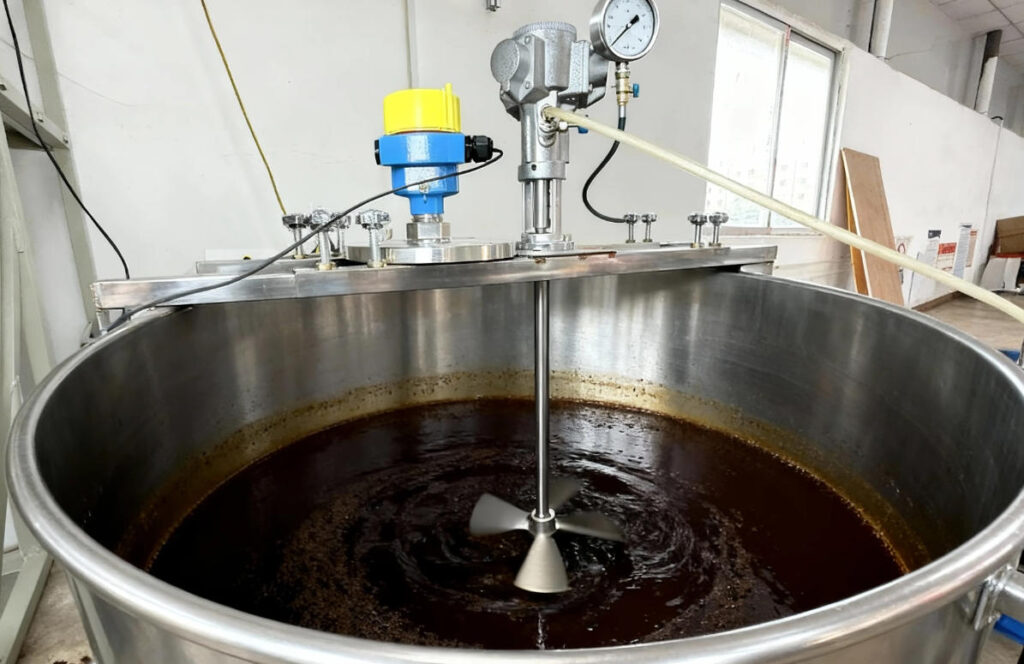
In high-temperature, steam, dust, and hazardous environments, a radar meter must not only “measure” but also “last long-term.”
The JWrada® PRO Series uses 80 GHz millimeter-wave radar technology, with a 76 mm antenna lens, achieving a maximum range of 150 m and strong signal-to-noise ratio under complex echo conditions.
Standard HART communication and built-in Bluetooth 5.0 allow wireless commissioning via the Jiwei Smart Control® WeChat app; combined with cloud data networks, remote commissioning and monitoring are also supported, greatly reducing on-site maintenance costs.
Its core feature is a proprietary echo-learning adaptive algorithm, capable of learning false echo patterns, separating multiple layers, and tracking dynamic targets. This ensures long-term stable operation even in complex environments.
The PRO Series can operate at 220℃, withstand steam and dust, and holds national explosion-proof certifications (Ex db / Ex ia / Ex tb / Ex ia). Combined with professional corrosion-resistant design, it is ideal for petrochemical and chemical plants with flammable, explosive, or highly corrosive conditions.
JWrada® MINI Series: Ideal Upgrade from Ultrasonic
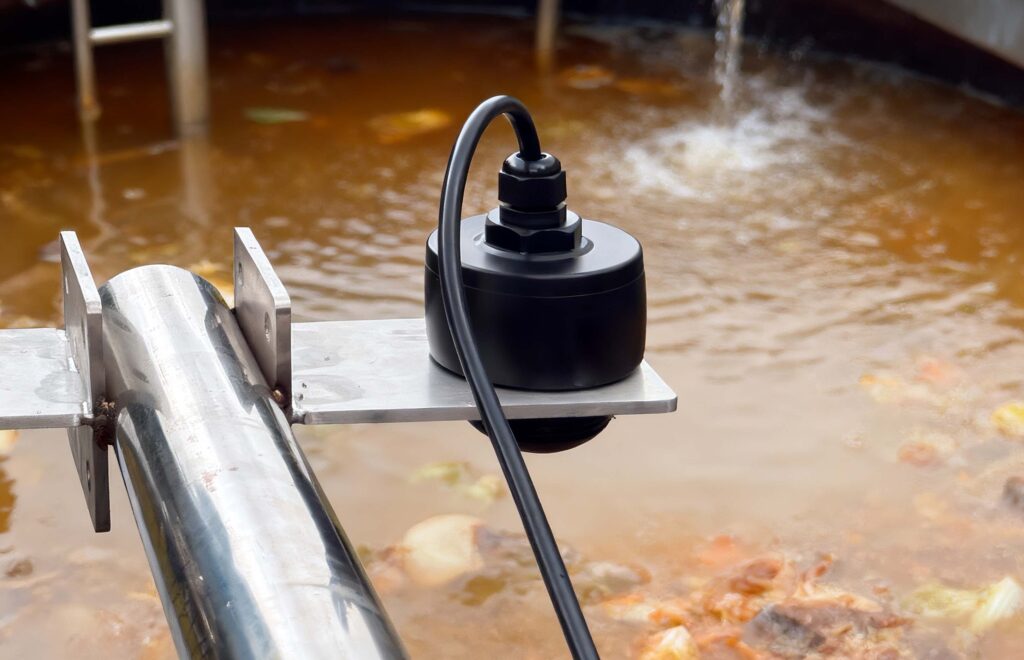
Not all projects require ultra-long range or extreme conditions. For water utilities, water level monitoring, and general industrial applications, stability, simplicity, and low maintenance are key.
The JWrada-21 MINI Series uses 80 GHz FMCW radar technology, with a maximum range of 30 m, ideal for small-scale or relatively simple liquid and solid level measurement.
Standard HART/Modbus protocols and Bluetooth 5.0 support on-site wireless commissioning via Jiwei Smart Control®, with cloud connectivity for remote monitoring and software upgrades.
Its echo-learning algorithm adapts automatically to site changes, ensuring long-term stable measurement. Compact, maintenance-free design makes it an ideal replacement for ultrasonic meters, offering high cost-effectiveness in hydrology, water level monitoring, and general industrial applications.
Conclusion: Mature Selection Comes from Respecting System Variability
Many projects switch from ultrasonic to radar not because ultrasonic is “inadequate,” but because site conditions have exceeded the original design assumptions, system reliability requirements increase, and engineering risks must be absorbed proactively rather than deferred to the operation stage.
Level meter selection is never absolutely right or wrong. The core question is: does your measurement principle truly match the system’s long-term operational conditions and reliably provide usable, trustworthy signals? Understanding this is the mark of mature engineering experience.