How to Solve Installation Angle Limitations of Radar Level Transmitters? Universal Flange with JWrada®-35 for Optimized Installation
In level measurement applications for chemical storage tanks, LPG/LNG tanks, and advanced material reactors, radar level transmitters have become the mainstream choice due to their non-contact operation, high accuracy, and low maintenance requirements. However, in real engineering projects, many users encounter situations where, even after selecting high-end radar instruments, measurement results remain unstable, with issues such as signal loss or level fluctuation.
Based on extensive project experience, these problems are often not caused by insufficient instrument performance, but rather by a frequently overlooked factor — installation angle and on-site adaptability.
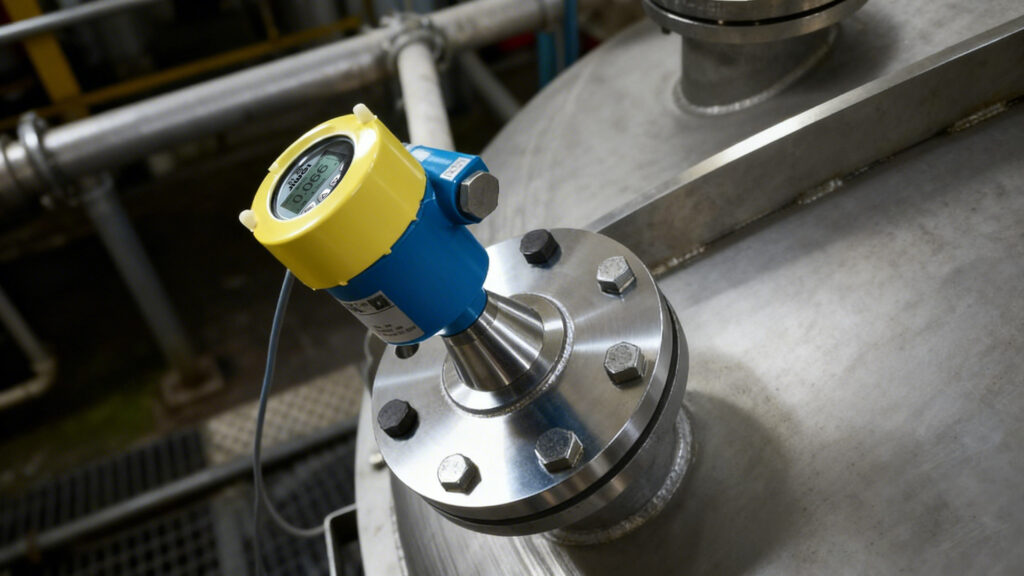
I. Hidden Bottleneck in Tank Level Measurement: Installation Conditions Define Measurement Limits
1. Limited installation space directly affects measurement path
Under ideal conditions, radar level transmitters should be aligned vertically to the liquid surface to achieve the strongest echo signal and highest measurement accuracy. However, in real industrial environments, tank tops are often densely populated with structures such as inlet pipelines, steam lines, safety valves, and agitator supports. As a result, installation nozzles are rarely located at the center of the tank, causing the radar beam to deviate from the optimal vertical path, which directly limits measurement quality from the outset.
2. Internal structures reduce echo signal accuracy
In addition to installation constraints, internal tank structures are a major source of interference. Components such as heating coils, baffles, and ladders may fall within the radar beam path and generate strong false echoes. Under certain conditions, these signals can be misinterpreted as the actual liquid surface, resulting in abnormal level readings, signal fluctuations, or even incorrect data being transmitted to the DCS system, negatively impacting process control.
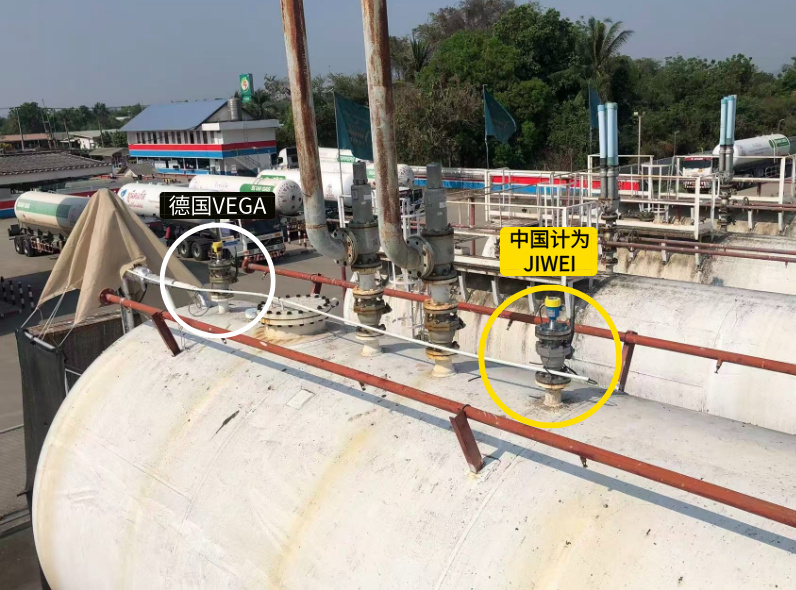
3. Traditional fixed installation lacks adjustability
Once a traditional fixed flange is welded and installed, the instrument angle is essentially locked. When issues such as off-center installation, insufficient echo signal, or obstructed measurement paths arise, engineers often need to cut pipelines, add elbows, or re-drill installation points to correct the alignment. This approach increases construction cost and downtime, and in hazardous environments such as chemical or energy facilities, it significantly raises safety risks. Therefore, in complex applications, installation flexibility is a critical factor in ensuring reliable level measurement.
II. Universal Flange: A Key Component for Cost-Effective Installation Optimization
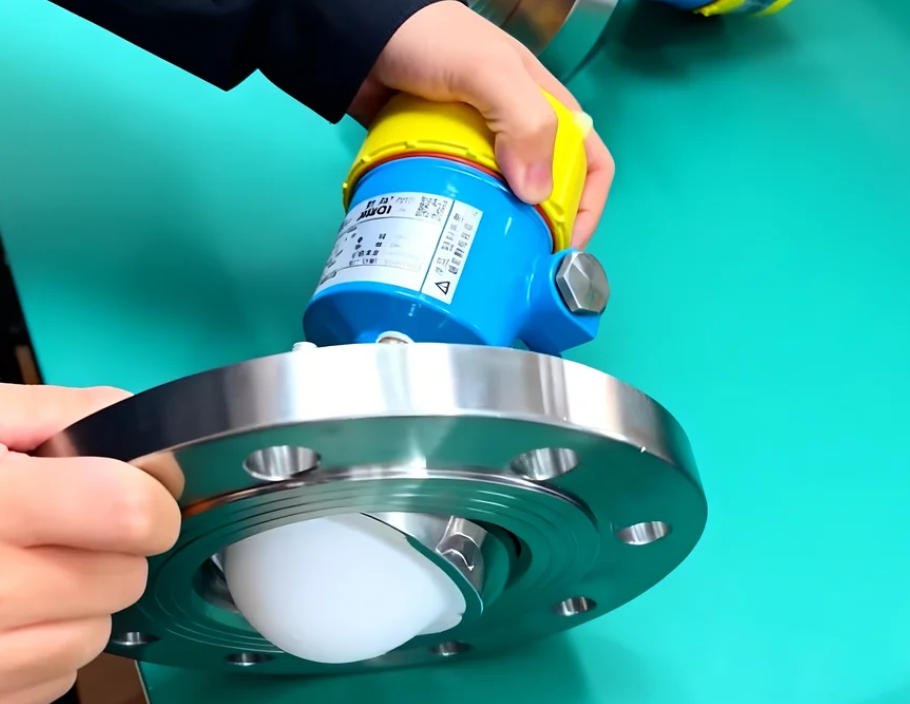
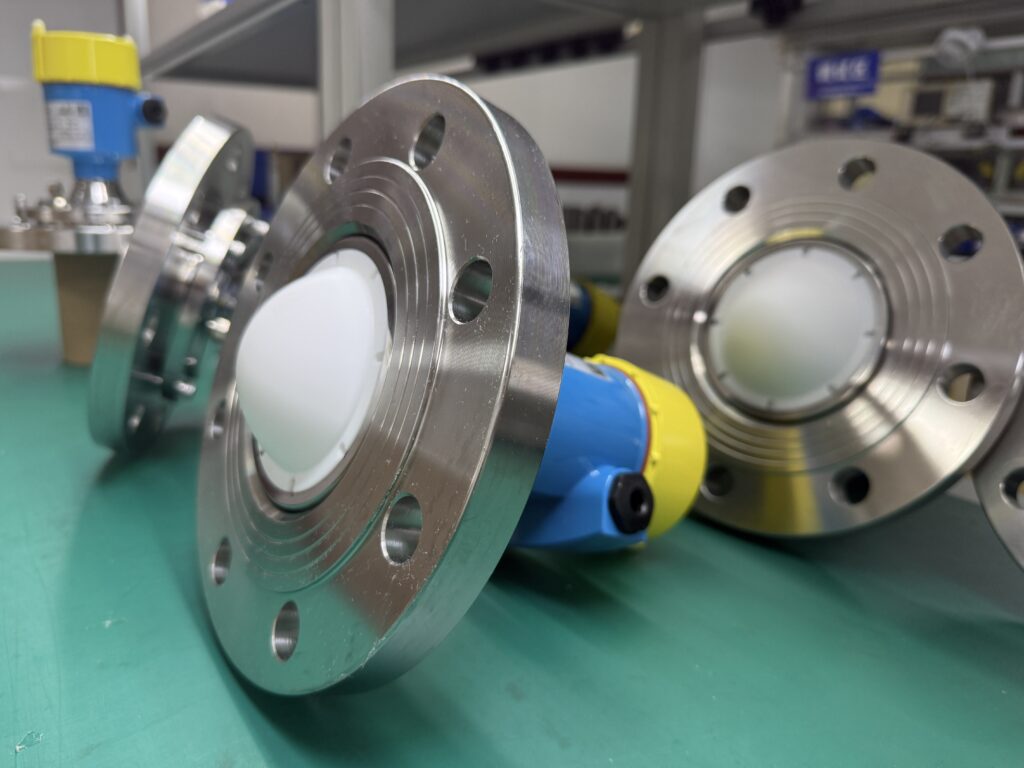
A universal flange (adjustable-angle flange) incorporates a high-strength spherical or hinge structure, allowing the radar level transmitter to be adjusted within a certain angular range (typically ±15° or more) after installation. Compared with traditional fixed flanges, this design significantly enhances post-installation adjustability, removing dependence on the initial mounting position.
In engineering practice, the key advantage of a universal flange lies in enabling flexible optimization of the measurement direction without modifying existing piping or performing hot work. Through simple angle adjustments, engineers can quickly align the radar beam with the optimal reflection point on the liquid surface while avoiding internal obstructions. This not only reduces construction risks but also improves commissioning efficiency, making level measurement in complex environments more controllable and reliable.
III. JWrada®-35 Combined with Universal Flange for Dual Optimization of Installation and Performance
1. Narrow beam with adjustable angle improves effective echo quality
The JWrada®-35 utilizes 80 GHz high-frequency radar technology with a beam angle of approximately 3°, providing highly concentrated signal energy and strong directional performance. When combined with a universal flange, engineers can precisely adjust the emission direction to avoid internal obstructions such as agitators, coils, baffles, and inlet disturbance zones, allowing the radar beam to focus directly on the effective liquid surface. This approach transforms measurement from passive adaptation to active optimization, significantly enhancing stability.
2. Strong adaptability in complex process conditions
In complex applications, the combination of JWrada®-35 and a universal flange demonstrates excellent adaptability. For LPG and LNG storage tanks, angle adjustment helps avoid inlet impact zones and local disturbances, improving signal continuity. In high-viscosity reactors, the measurement direction can be optimized to reduce foam-related interference. In dusty or fibrous environments such as carbon fiber production, adjusting the installation orientation helps minimize buildup, static interference, and scattered echoes. This makes the solution suitable for both standard and highly challenging industrial conditions.
3. Improved installation efficiency, ideal for retrofit projects
The JWrada®-35 supports quick integration with both standard and universal flanges, eliminating the need for complex structural modifications. There is no requirement to re-drill mounting points or alter nozzle orientation. For retrofit projects or installations with limited space, this significantly reduces construction time, complexity, and associated risks. The ability to adjust alignment after installation provides strong practical value in upgrading existing systems.
4. Intelligent commissioning enhances on-site and remote collaboration
Beyond mechanical adjustability, the JWrada®-35 offers advanced smart commissioning capabilities. It supports Bluetooth communication and mobile device configuration, enabling engineers to view echo curves in real time, analyze signal conditions, and guide on-site personnel in fine-tuning the universal flange angle. This approach allows rapid identification of the optimal measurement position, reducing repeated installation adjustments and improving commissioning efficiency. It is particularly beneficial for elevated installations or hazardous environments.
5. Reduced long-term maintenance costs
By optimizing installation angle and measurement path, the JWrada®-35 effectively reduces issues such as signal loss, level fluctuation, and false alarms. This minimizes the need for repeated troubleshooting and parameter adjustments. Additionally, the non-contact measurement principle reduces buildup and mechanical wear, lowering maintenance frequency. Overall, this solution improves operational reliability while reducing lifecycle costs.
IV. Engineering Value Summary
Through the combined application of a universal flange and JWrada®-35, radar level measurement evolves from a standalone device selection into an integrated optimization solution covering installation, measurement, and commissioning. This approach delivers significant value in real engineering applications.
1. Improved measurement stability
By adjusting the installation angle, the radar beam avoids internal obstructions and directly targets the effective liquid surface. Combined with the narrow beam and high focus of JWrada®-35, false echoes are minimized, ensuring stable long-term measurement.
2. Greater installation flexibility
In off-center or space-constrained installations, optimal measurement paths can be achieved without modifying existing structures, greatly improving adaptability in complex conditions.
3. Enhanced construction safety
Adjustability after installation eliminates the need for cutting pipelines or re-drilling, reducing high-risk operations in hazardous environments such as LPG or chemical storage.
4. Higher commissioning efficiency
With real-time signal analysis via mobile devices, engineers can guide fine adjustments on-site, quickly identifying optimal positions and reducing commissioning time.
5. Easier maintenance and lower lifecycle cost
Accurate installation and stable measurement reduce false alarms and maintenance frequency, while non-contact operation extends equipment lifespan.
This solution transforms installation constraints into adjustable advantages, balancing measurement accuracy, safety, and cost-effectiveness. It is particularly suitable for industries such as chemicals, energy, and advanced materials where reliability is critical.
V. Conclusion: Turning Installation Constraints into Operational Advantages
In complex industrial environments, measurement accuracy depends not only on instrument performance but also on installation quality. By combining the JWrada®-35 with a universal flange, installation limitations are converted into controllable variables, enabling full-process optimization from setup to operation.
For projects requiring high reliability, low maintenance cost, and efficient delivery, the JWrada®-35 is not only a high-performance radar level transmitter but also a comprehensive engineering solution.