
Stability Design of Mini Level Switches under Strong Electromagnetic and Mechanical Combined Interference Conditions — A Case Study of Ring-21
Abstract
In industrial sites where pumps, motors, and frequency converters are widely used, mini level switches are often exposed to combined effects of electromagnetic interference (EMI), power disturbances, and mechanical vibration, resulting in false alarms and unstable output signals. This paper analyzes the fundamental reasons for failures of traditional mini level switches under harsh interference conditions based on field applications and system-level design methodology. Taking the Jiwei Ring-21 mini level switch as the research object, the study systematically discusses key technical approaches for achieving stable operation in pump-based applications, including electromagnetic compatibility design, signal processing architecture, mechanical structure optimization, and environmental reliability verification. Test results show that a complete anti-interference design system combined with strict environmental validation can significantly improve long-term reliability and operational stability in complex industrial environments.
1. Introduction
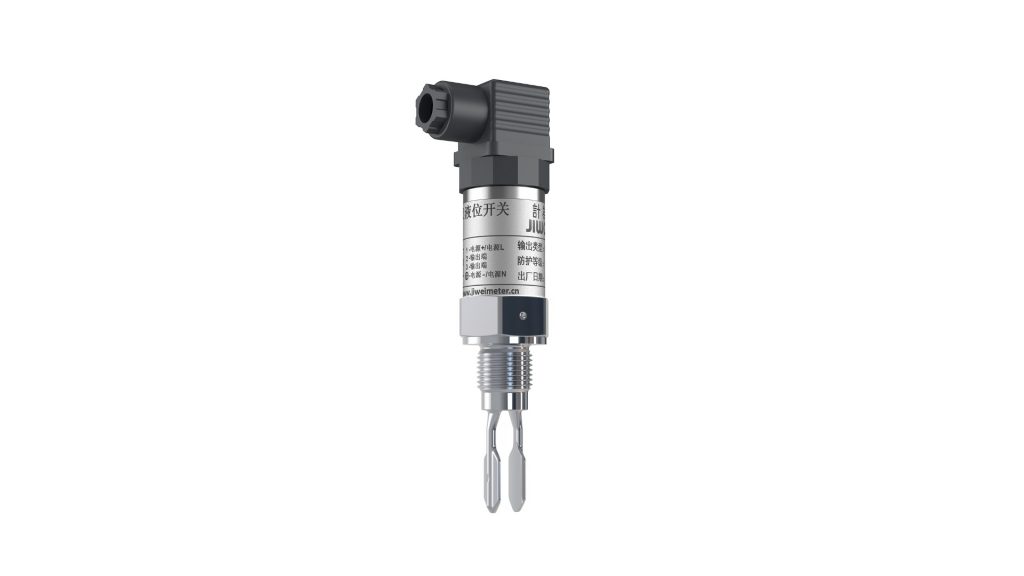
In modern industrial automation systems, liquid level detection is a critical element in process control and is widely applied in storage tanks, pipelines, and equipment protection systems. Mini level switches are extensively used in compact systems due to their small size, flexible installation, and fast response characteristics.
However, with the increasing density of electrical equipment in industrial environments, the widespread use of pumps, frequency converters, and high-power drive systems has significantly worsened both electromagnetic and mechanical conditions. As a result, false triggering of level switches has become a common field issue, causing serious challenges in commissioning and maintenance.
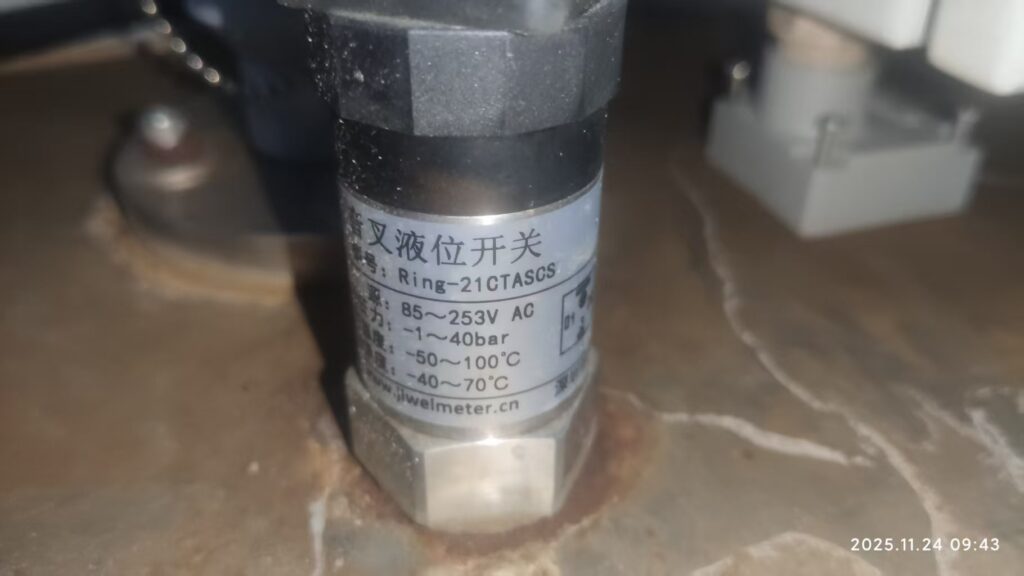
Field cases show that some mini level switches begin to exhibit signal instability and continuous false switching shortly after pump startup. For example, a certain brand device installed at a customer site experienced continuous interference and frequent output switching within approximately two hours, failing to meet stable operation requirements.
In contrast, the Jiwei Ring-21 mini level switch demonstrates stable performance under the same working conditions. This difference is not caused by a single performance factor, but rather reflects a system-level engineering design capability.
2. Mechanism Analysis of Strong Interference Environment
2.1 Electromagnetic Interference Propagation Paths
Pump and frequency drive systems generate complex electromagnetic noise covering a wide frequency range. The main sources include:
- Motor inrush current during startup transients
- High-frequency switching noise from VFD (PWM signals)
- Common-mode interference caused by ground potential fluctuations
- Radiated electromagnetic fields
These interference signals enter the sensor system through three main paths: power line conduction, signal line coupling, and spatial radiation coupling. Without proper system protection, these disturbances directly affect the detection circuit.
2.2 Impact of Power Disturbances
During pump start and stop operations, the power system experiences instantaneous voltage drops and surge spikes. These disturbances destabilize the internal reference voltage of the sensor, causing comparator or detection module misjudgment and resulting in abnormal output behavior.
2.3 Mechanical Vibration Coupling
Mechanical vibration generated by pump operation is transmitted to the sensor body through pipelines and mounting structures. When the vibration frequency approaches the natural frequency of the sensor structure, resonance occurs, leading to non-real signal variations.
3. Design Limitations of Traditional Mini Level Switches
In strong industrial interference environments, failures of traditional mini level switches exhibit clear systemic characteristics. The root cause is not a single component defect but a combination of electrical, signal processing, mechanical, and validation deficiencies, representing an incomplete system design approach.
3.1 Insufficient Circuit Anti-Interference Design
Most traditional products adopt a basic electronic architecture aimed only at achieving fundamental functionality, without a complete industrial EMC design system. In implementation, they often lack surge and ESD protection at the input stage, have insufficient power filtering (typically single-stage filtering), and do not isolate analog and digital circuits. In addition, PCB layout often fails to optimize return current paths and grounding segmentation, resulting in noise coupling channels that allow external electromagnetic interference to directly enter the core detection circuit, degrading system stability.
3.2 Simplified Signal Processing Mechanism
Traditional mini level switches typically adopt a single-threshold comparator-based logic. While structurally simple, this approach lacks robustness in complex industrial environments. It does not include time-domain filtering mechanisms, hysteresis control, or signal stability judgment logic. It also lacks multi-condition fusion decision-making. As a result, transient electromagnetic noise generated during pump start/stop or VFD operation can directly trigger false switching or output oscillation.
3.3 Mismatch Between Mechanical Structure and Vibration Environment
Due to size constraints, mini level switches require high mechanical design precision under vibration conditions. However, traditional designs often lack proper dynamic analysis. Structural natural frequencies may fall within industrial pump vibration ranges, causing resonance. Insufficient damping prevents effective energy dissipation. Poor mounting rigidity leads to direct vibration transmission, and weak internal fixation may result in micro-displacement during long-term operation. These factors collectively cause unstable output signals or false triggering.
3.4 Lack of Systematic Reliability Validation
In many cases, traditional products only undergo basic functional testing without a complete environmental qualification system. Key tests such as vibration life testing, temperature-humidity cycling, and long-term operational stability verification are often absent. As a result, devices may perform normally in laboratory conditions but fail in real industrial environments.
4. System-Level Anti-Interference Design of Ring-21
4.1 Electromagnetic Compatibility (EMC) Design
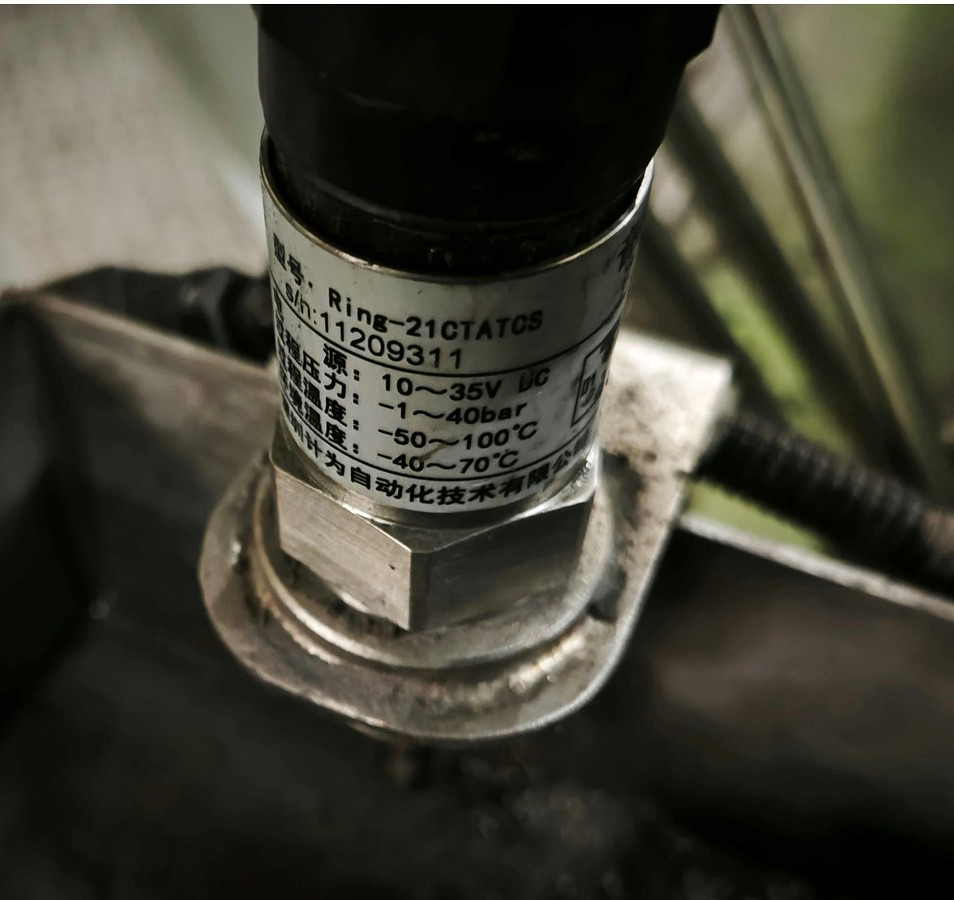
Ring-21 integrates an industrial-grade EMC design system, including multi-stage surge and transient suppression, a complete power filtering architecture, analog/digital circuit partitioning, and optimized grounding paths. This system significantly reduces the probability of interference entering the signal chain.
4.2 Signal Processing and Anti-Jitter Mechanism
The signal processing layer incorporates multiple stability mechanisms, including time-delay judgment to suppress transient triggering, amplitude filtering to reduce noise fluctuation, and state-locking logic to prevent output oscillation. This architecture ensures both fast response and high stability.
4.3 Mechanical Structure Optimization
Through structural dynamics optimization, Ring-21 achieves natural frequency separation from typical pump vibration ranges, improved structural damping to suppress resonance, optimized installation rigidity, and enhanced probe stability.
4.4 Industrial Environment Adaptation Design
Temperature, humidity, and dust conditions are comprehensively considered during the design phase to ensure long-term operational reliability.
5. Reliability Test and Validation System
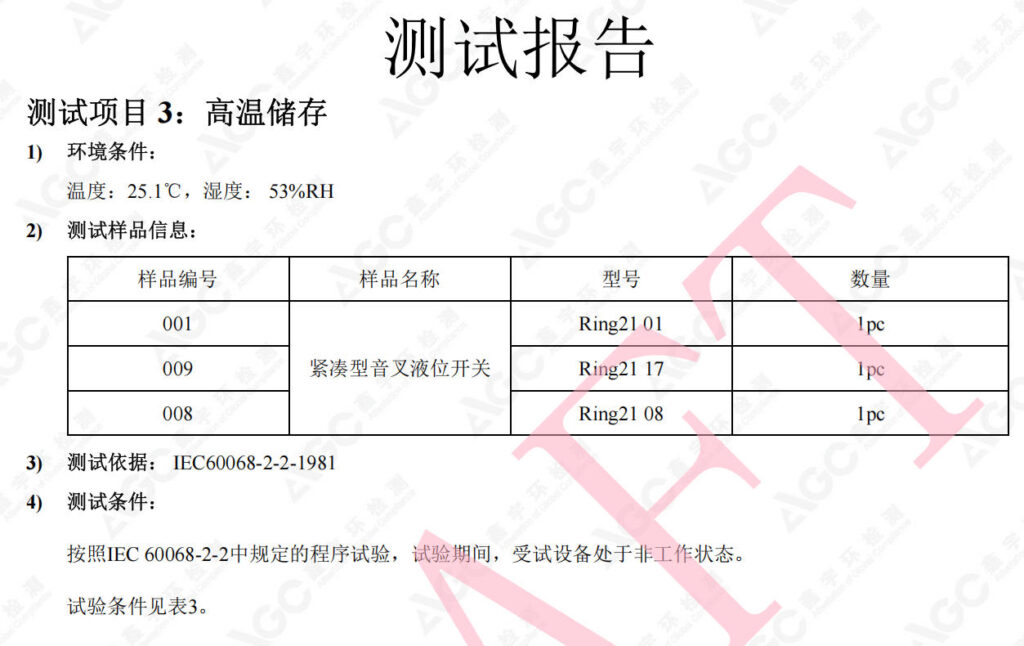
Ring-21 has established a complete reliability validation system, with a 33-page test report covering environmental adaptability, mechanical reliability, and protection performance.
Temperature testing includes low-temperature storage, low-temperature operation, high-temperature storage, high-temperature operation, and thermal shock tests, evaluating material stability and electronic performance boundaries.
Humidity testing includes alternating humidity and constant humidity tests, verifying insulation stability and corrosion resistance under high-humidity conditions.
Mechanical testing includes sinusoidal vibration, multi-axis vibration loading, and long-duration vibration tests, evaluating structural stability and fatigue resistance.
Protection testing includes IP rating verification, ensuring sealing reliability in dust and humid environments.
Overall, the test system not only verifies functionality but also evaluates long-term operational reliability under extreme conditions.
6. Field Application Performance Analysis
In practical industrial applications, Ring-21 has been deployed in cement silos and pump-integrated systems.
Typical site conditions include high dust concentration, continuous mechanical vibration, and strong electromagnetic interference. Traditional products often experience false alarms or signal drift, and in some cases fail within hours of installation.
In contrast, Ring-21 demonstrates stable performance under identical conditions, including no abnormal output during pump start/stop cycles, no false alarms during long-term operation, and stable detection even under dust accumulation.
Its stability is achieved through multi-layer coordination, including EMI suppression, signal filtering, mechanical vibration isolation, and system-level validation.
7. Conclusion
The stability of mini level switches in strong interference industrial environments is fundamentally a result of system engineering capability rather than single-point improvements. A complete technical system must integrate electromagnetic compatibility design, signal processing mechanisms, mechanical optimization, and reliability validation.
The engineering practice of Ring-21 demonstrates that only through system-level design and rigorous testing can long-term stable operation be achieved in complex industrial environments such as pump-based systems. This conclusion highlights a key trend in industrial sensor development: future competition will shift from “whether it works” to “whether it works reliably in complex environments over time.”