How to Choose Between Radar and Pressure Level Measurement? — A Technical Guide for Industrial Level Measurement
Selecting the right level measurement technology has a profound impact on process efficiency, equipment reliability, and operational safety. Across industries such as petrochemicals, water treatment, pharmaceuticals, and food processing, radar level transmitters and hydrostatic level transmitters remain two of the most trusted solutions for continuous level monitoring. However, each technology is based on a distinct physical principle, and its suitability depends heavily on specific process conditions and tank design.
When facing real-world engineering projects, how should instrumentation engineers make the optimal choice? This article starts from the measurement principles, provides an in-depth analysis of the advantages and limitations of both technologies, and combines the practical features of the Jiwei JWrada®-35 radar level transmitter to offer a scientific selection guideline.
I. Radar Measurement Technology: Non-Contact Spatial Sensing
Radar sensors transmit high-frequency electromagnetic waves toward the product surface via an antenna and receive the reflected signals. The internal electronics calculate the level based on the time difference between signal transmission and reception, known as Time of Flight. In simple terms, a strong signal with a short return time indicates a higher level, while a weaker signal with a longer return time indicates a lower level.
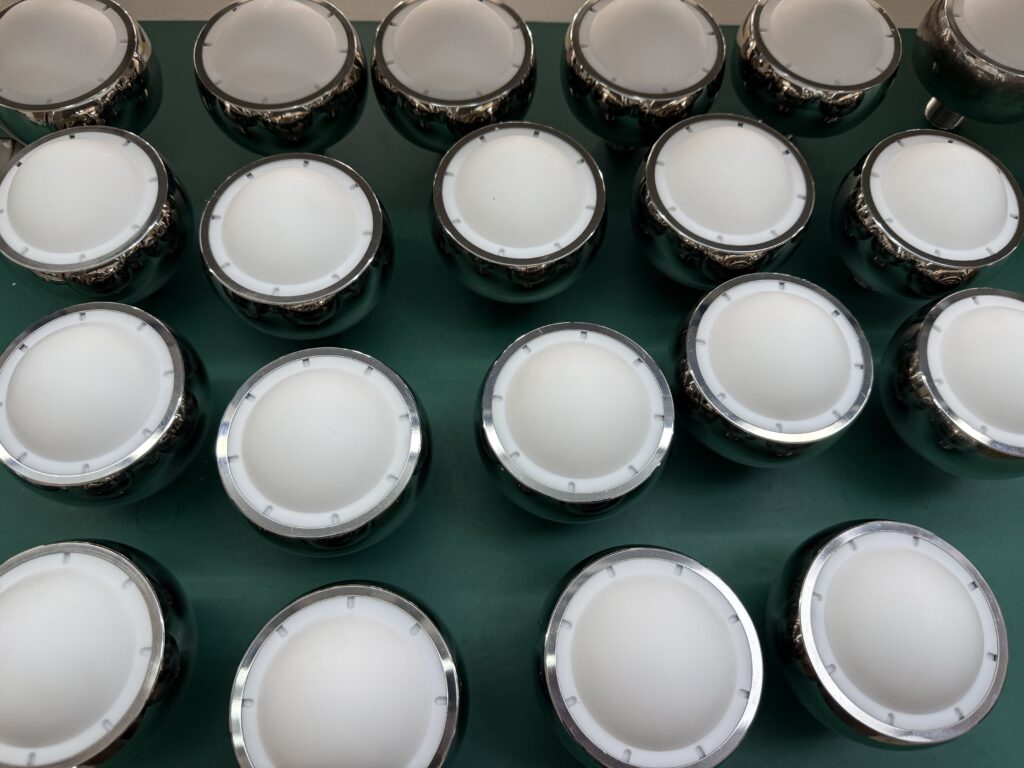
The core advantage of radar technology lies in its non-contact measurement principle. It operates using microwaves, a type of electromagnetic wave that does not require a transmission medium (unlike ultrasonic technology), allowing it to propagate even in a vacuum. The most advanced radar sensors currently use the 80 GHz frequency band, enabling extremely narrow beam angles—as small as approximately 3°.
Because most of the radar signal energy is concentrated within a very small conical area, the radar beam can easily bypass internal obstructions such as heating coils, baffles, agitators, or anti-vortex plates. At the same time, the narrow beam significantly reduces noise caused by wall reflections. Additionally, microwave signals are unaffected by process temperature and pressure, giving radar technology exceptional adaptability across a wide range of operating conditions.
II. Pressure Measurement Technology: Bottom Sensing Based on Physical Laws
Long before radar instruments became widely available, hydrostatic pressure transmitters had already been providing accurate level measurements in industrial applications. But how do pressure instruments convert pressure into level?
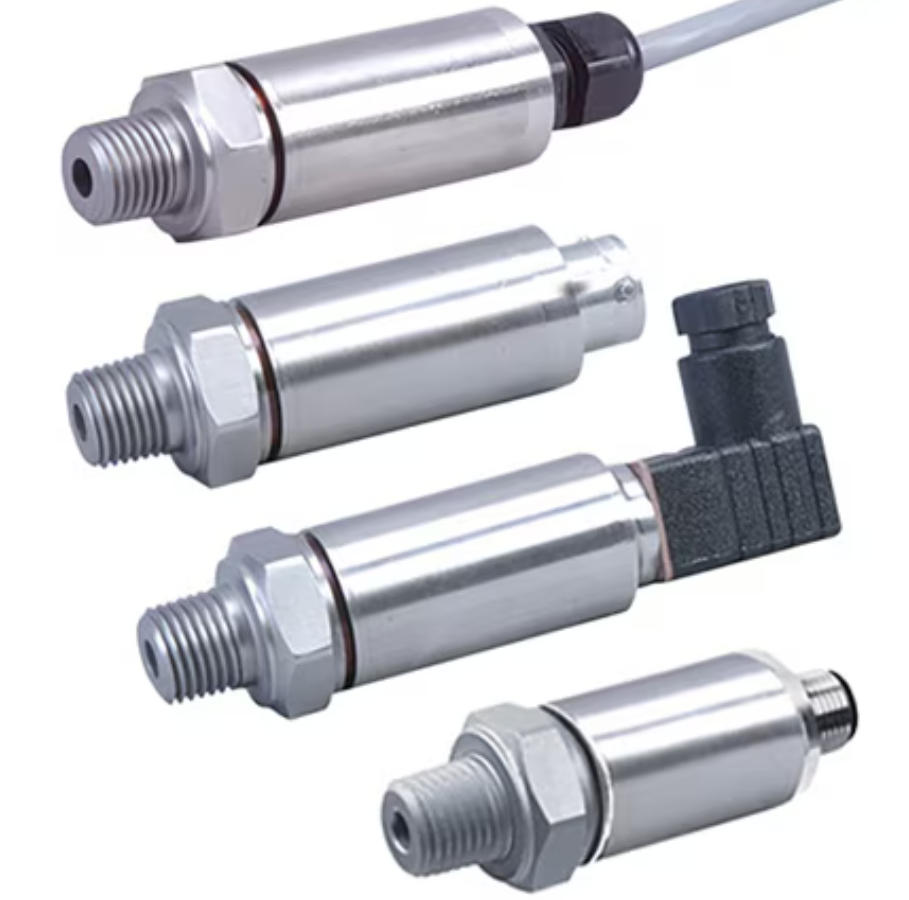
Traditional pressure transmitters with metallic diaphragms rely on filling oil as a transfer medium to transmit pressure from the diaphragm to the internal sensing element. Pressure transmitters with ceramic diaphragms, on the other hand, perform capacitive measurement directly at the pressure point, eliminating the need for filling oil. This design is particularly suitable for abrasive, acidic, or highly corrosive media.
The conversion from pressure to level is based on the hydrostatic formula:
P = ρ × g × d
Where:
- P represents pressure
- ρ (rho) represents liquid density
- g is gravitational acceleration (typically 9.8 m/s²)
- d represents liquid depth (level)
This equation clearly shows that hydrostatic level measurement requires accurate knowledge of the liquid density. Therefore, pressure transmitters are best suited for applications where density remains stable and predictable.
III. Key Application Comparisons: How to Make the Right Decision
Every industrial process comes with unique challenges. Temperature fluctuations, foam, low reflectivity media, dust, condensation, buildup, and electromagnetic noise can all affect measurement accuracy. Therefore, the first step in selection is to thoroughly evaluate tank design, installation conditions, and process characteristics.
1. Complex Tank Structures with Obstructed Line of Sight
Non-contact radar measures from the top of the tank downward and requires a clear line of sight to the liquid surface. The JWrada®-35 radar level transmitter, with its 80 GHz technology and ultra-narrow 3° beam angle, can easily bypass most internal obstructions and deliver reliable results even in complex tank geometries.
However, in certain applications—such as distillation columns with dense trays or tanks with large multi-layer agitators—the radar installed at the top may not have a clear view of the liquid surface. In such cases, pressure transmitters are often the better choice. Installed at the bottom of the tank, they measure level upward as long as the sensing element remains in contact with the liquid. For vessels where top-mounted radar has a blind spot, pressure transmitters provide a simple and highly reliable alternative.
2. Small Vessels and Low Dielectric Media
Radar technology is not ideal for very small tanks, especially those with a height of around 30 cm (approximately 12 inches). In such small vessels, low-conductivity liquids or low dielectric media can create a minimum measurable distance (dead band) of up to 15 cm (approximately 6 inches), limiting effective level detection. In contrast, pressure transmitters can measure the entire range and easily capture rapid level changes in small tanks.
3. Mixing Processes with Changing Density
When process conditions involve frequent density changes—such as in mixing operations or shared storage tanks—radar is typically the preferred solution. Since radar measurement is based on electromagnetic wave reflection, it is completely independent of density variations. Even when the liquid density changes continuously, radar maintains high accuracy without requiring recalibration.
In contrast, pressure transmitters rely heavily on liquid density. Any deviation in density directly affects measurement accuracy unless operators manually update the transmitter’s density settings, which is impractical in continuous automated processes.
4. Foam Conditions and Measurement Strategies
Foam is one of the most common challenges in level measurement. Radar performs well in clean or light foam conditions, where high-frequency signals can penetrate the foam layer and reach the true liquid surface. The JWrada®-35 radar level transmitter, equipped with high dynamic range signal processing and intelligent echo algorithms, can extract valid level signals under such conditions.
However, in the presence of thick, dirty foam—such as in flotation cells in the mining industry—radar signals may reflect off the foam surface instead of penetrating it. In these cases, pressure transmitters installed below the foam layer can provide more consistent measurements.
For extremely complex conditions involving both density variations and heavy foam, electronic differential pressure (DP) systems offer an advanced solution. By measuring the pressure difference between the top gas phase and the bottom liquid phase, the system can perform density compensation and output an accurate level measurement, ensuring process safety even when single-point measurement fails.
IV. Intelligent Advantages of JWrada®-35
Beyond the traditional choice between radar and pressure, the intelligent features of modern instruments add another important dimension to selection. The JWrada®-35 not only delivers top-tier performance with 80 GHz FMCW radar technology but also introduces significant improvements in operational convenience.
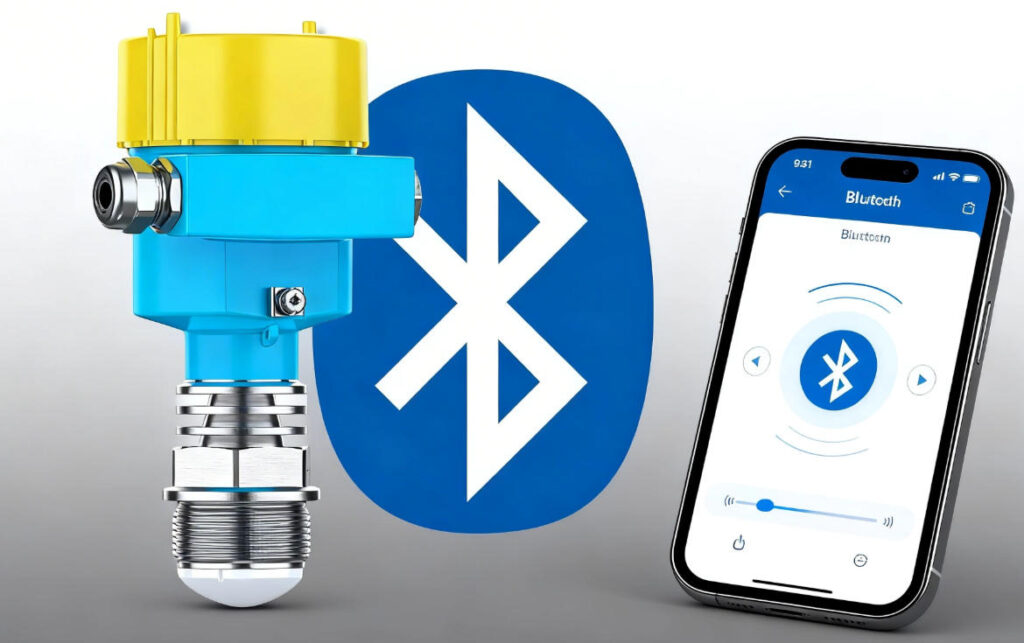
The device integrates a Bluetooth 5.0 communication module and supports the dedicated “JW Tools” App. During commissioning or maintenance, regardless of tank height or harsh environmental conditions, engineers no longer need to climb hazardous areas or open the instrument housing. Instead, they can complete wireless parameter configuration, real-time echo curve diagnostics, and fault troubleshooting directly via a smartphone. Combined with its cloud upgrade capability, the JWrada®-35 not only provides strong interference resistance at the measurement level but also significantly reduces hidden costs in system integration and full lifecycle maintenance.
V. Conclusion
Radar and pressure level measurement technologies are not simple substitutes but complementary industrial sensing tools. Hydrostatic technology, rooted in fluid mechanics, performs reliably in bottom measurement applications with stable density and no foam, especially where structural limitations exist. Meanwhile, 80 GHz radar technology—represented by the JWrada®-35—has become the mainstream solution for modern complex processes due to its independence from density, strong anti-interference capability, and non-contact, maintenance-free operation.
Only by understanding tank structure, analyzing medium properties, evaluating environmental interference, and considering digital operation and maintenance requirements can engineers make the most appropriate technical decision between radar and pressure measurement.