Solar-Powered + Smart Connectivity Era:JWrada® Radar Level Meter Redefining Industrial Measurement
In the field of industrial level measurement, power supply methods, commissioning efficiency, and system reliability are becoming more critical competitive factors than measurement accuracy itself. This is especially true in remote storage tanks, off-grid locations, outdoor environments, and distributed industrial systems, where traditional radar level meters are often limited by power supply constraints and complex commissioning processes, resulting in high deployment costs and long maintenance cycles.
Against this background, the Jiwei JWrada® radar level meter series (including the MINI JWrada-2X and PRO JWrada-3X) is reshaping industry practices in a more flexible, intelligent, and engineering-oriented way. In particular, its ability to support external solar power systems enables radar level measurement to truly achieve “off-grid deployment capability” for the first time.
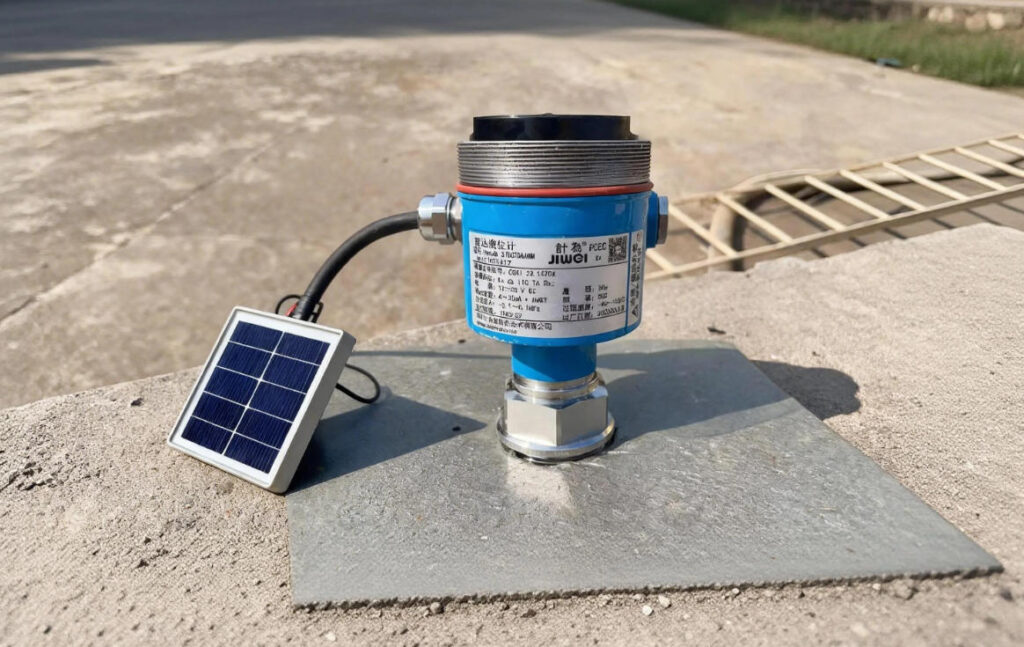
🌞 1. Solar Power Supply: Entering a “Boundary-Free Application Era”
Traditional industrial radar level meters rely on stable mains power or 24V DC supply. In remote areas, mobile tanks, or outdoor storage applications, cable routing is costly, installation is time-consuming, and in some cases, power access is simply unavailable.
The JWrada®-2X MINI and JWrada®-3X PRO series support external solar power systems, fundamentally changing the application logic.
When sufficient sunlight is available, the device can operate independently through solar energy without additional grid wiring, significantly reducing installation complexity and engineering cost.
This is not only a change in power supply method, but also a transformation of radar level meters from “fixed industrial equipment” into “deployable industrial terminals.”
For applications such as water treatment stations, agricultural tanks, remote mining sites, and temporary oil and gas storage systems, this capability is particularly critical.
📡 2. Bluetooth + APP: True Engineering-Grade Mobile Commissioning
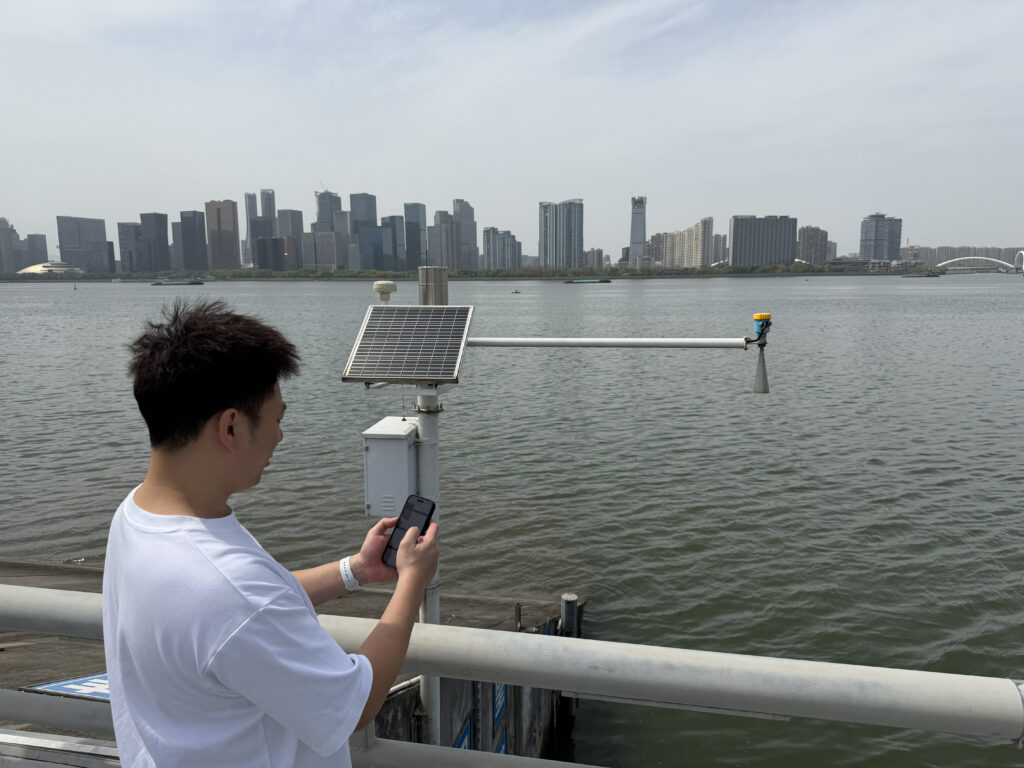
Another key breakthrough of the JWrada® radar level meter lies in its Bluetooth wireless commissioning system combined with a dedicated APP platform.
Through the built-in Bluetooth module, engineers can directly connect to the device via a smartphone on-site, access the configuration interface, and perform integrated parameter setup and status monitoring.
Compared with traditional radar devices, this approach brings three major improvements.
First, commissioning efficiency is significantly improved. In most scenarios, no additional complex steps are required. Even when installed on top of a tank, full parameter configuration—including range, medium parameters, and output mode—can typically be completed within 2–5 minutes.
Second, it enables parameter replication capability. In multi-device deployment scenarios, once one device is configured, its parameters can be copied to multiple devices via the APP, eliminating repetitive commissioning work.
Third, it enables remote engineering support. Chinese engineers can perform real-time remote commissioning via Bluetooth connection, significantly reducing on-site dependency during project delivery and after-sales support.
🧠 3. Dual Operating System: LCD + Keypad + APP Integration
JWrada® does not rely solely on APP control. Instead, it adopts a more robust dual-operating-system architecture.
On one hand, the device is equipped with an LCD display and physical buttons, allowing on-site manual operation and status verification. Even without a smartphone or network connection, full configuration and monitoring can still be completed.
On the other hand, the Bluetooth APP provides higher-level functionality, including batch parameter management, data visualization, device status analysis, and seamless software upgrades.
The core value of this design is:
👉 On-site reliability does not depend on smart terminals
👉 Advanced functions are extended via APP
👉 Two systems complement rather than replace each other
Therefore, whether in strong electromagnetic environments, dusty conditions, or mobile applications, JWrada® maintains stable and controllable operation.
⚙️ 4. Evolution from “Commissioning Device” to “System-Level Industrial Tool”
Traditional radar level meters are typically positioned as single-function measurement instruments, focusing primarily on distance measurement. As a result, they are usually deployed as standalone devices with limited integration into engineering systems.
JWrada® radar level meters, however, are evolving from this traditional model toward a “system-level industrial tool.”
At the system engineering level, JWrada® implements standardized parameter architecture, including range settings, media correction parameters, echo algorithm configuration, and output mode definitions. All key variables follow a unified data model, ensuring consistent parameter representation across devices.
This standardization enables batch deployment. In practical applications, users only need to complete calibration on a single device, after which parameters can be quickly copied and synchronized to multiple devices via the Bluetooth APP. This significantly reduces engineering time and minimizes human error associated with traditional one-by-one commissioning.
In large-scale storage tank systems or distributed monitoring networks, this capability is particularly valuable. Traditional solutions require individual calibration for each tank, while JWrada® enables parameter broadcasting from a master configuration template, transforming deployment from “point-by-point operation” to “system-level batch configuration.”
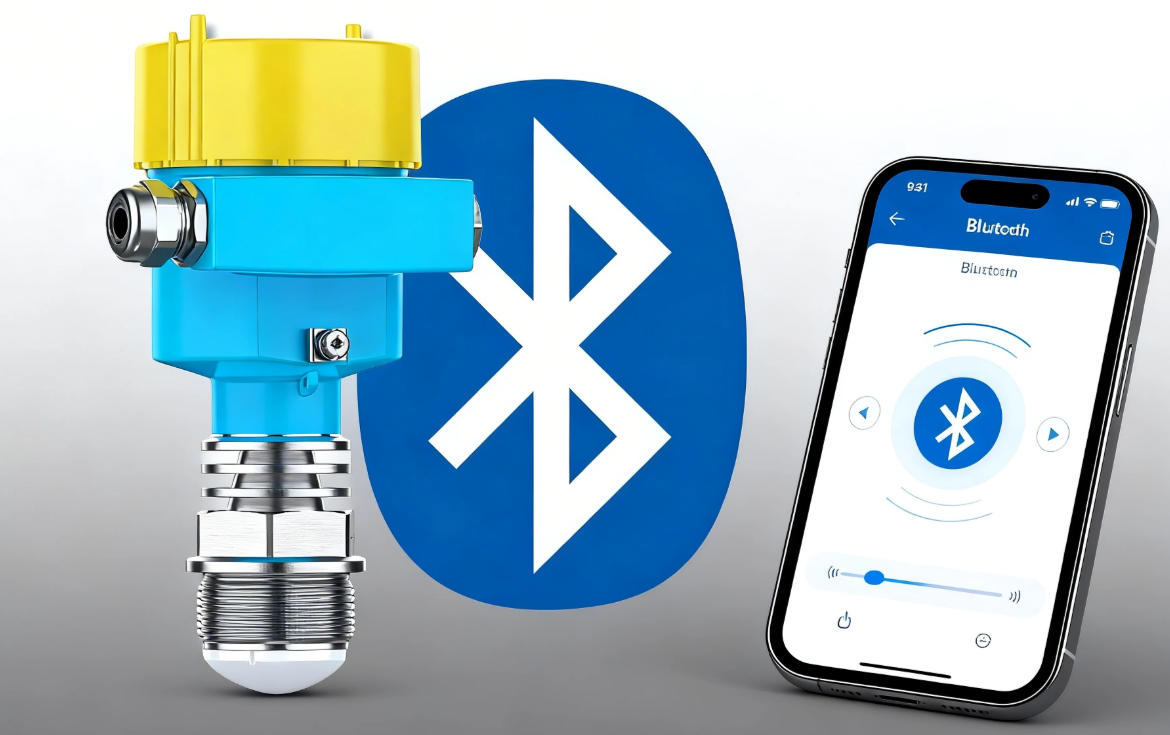
At the same time, the introduction of external solar power capability allows the device to operate in off-grid environments. By combining solar power modules with low-power design strategies, the system is suitable for outdoor tanks, remote stations, and infrastructure-limited regions. This design enables radar level meters to operate independently of fixed industrial power supplies, significantly expanding deployment boundaries.
More importantly, the integration of power and communication capabilities transforms JWrada® into a true industrial node. In industrial IoT architectures, each device not only performs data acquisition but also supports configurable parameters, remote synchronization, and independent energy supply, making it a scalable and replicable standardized unit.
From an engineering perspective, this fundamentally shifts radar level measurement from point-based deployment to a system architecture characterized by scalability, networkability, and energy independence. As a result, JWrada® is no longer just a measurement device, but an industrial node capable of rapid expansion and system coordination in complex industrial environments.
🌍 5. Global Application Flexibility and Engineering Reliability
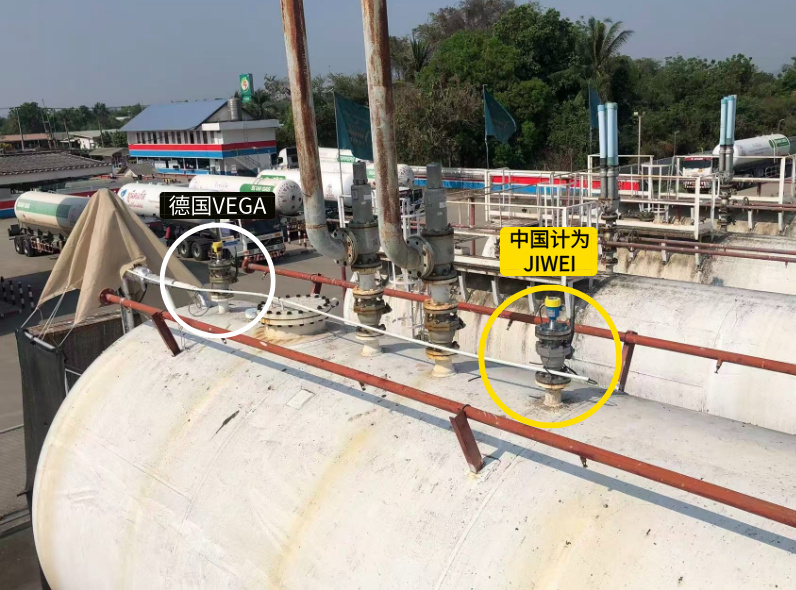
JWrada® radar level meters are designed for the global industrial market, with the core objective not merely being “functionality,” but adaptability across different industrial systems.
Whether in chemical, food, energy, environmental, or water treatment industries, the design focuses on one core requirement: stable measurement under complex operating conditions.
In multiple international projects, JWrada® has successfully replaced brands such as VEGA in certain applications, demonstrating higher deployment flexibility and faster commissioning efficiency.
This is especially evident in projects requiring rapid delivery, multi-point deployment, or remote engineering support.
🔋 6. Engineering Value: Integration of Efficiency, Reliability, and Scalability
From an engineering perspective, the value of JWrada® lies not only in having more features, but in achieving three key integrations:
- Power supply flexibility (solar expansion capability)
- Commissioning efficiency (2–5 minute field setup)
- System scalability (one-click parameter replication + APP management)
This combination enables higher adaptability within modern industrial automation systems, particularly for distributed, remote, and non-standard applications.
🚀 Conclusion
Industrial measurement is shifting from “single-point accuracy competition” to “system efficiency competition.”
Through solar power expansion capability, Bluetooth APP intelligent commissioning, and dual control architecture, JWrada® radar level meters are redefining how radar level measurement is applied.
It not only solves the complexity of traditional installation and commissioning, but also provides global industrial users with a more flexible, efficient, and reliable measurement solution.
Across multiple applications, JWrada® has demonstrated that true industrial innovation is not only about making devices more accurate, but about making systems easier to use, more stable, and more scalable.