Does the Bluetooth Function Increase the Power Consumption of a Radar Level Meter?
With the development of industrial digitalization, more and more radar level meters are integrating Bluetooth functions for parameter setting, remote debugging, and field maintenance. While Bluetooth communication brings operational convenience, it also raises a common question: Does the Bluetooth function increase the power consumption of a radar level meter?
The answer is: Yes, it does increase power consumption. However, with proper design, the increase is usually very small and can be considered negligible.
This article provides a systematic analysis from the perspectives of power consumption structure, Bluetooth working principles, application scenarios, and low-power design.
I. Power Consumption Structure of a Radar Level Meter
The power consumption of an industrial radar level meter mainly comes from the following components:
- Radar transmitting module (core power consumption source)
- Signal processing unit
- Display and interface circuits
- Communication modules (such as 4–20mA, HART, RS485, etc.)
- Optional functional modules (such as Bluetooth)
Among these, the radar transmitting unit is the primary power-consuming component. Especially in high-frequency radar devices operating continuously, stable power supply is required to ensure signal transmission and echo processing.
In comparison, the Bluetooth module is an auxiliary communication function, and its power consumption typically accounts for only a small proportion of the overall system.
II. Why Does Bluetooth Increase Power Consumption?
When operating, the Bluetooth module performs data transmission, including:
- Establishing connection
- Data transmission
- Signal maintenance
- Authentication
These processes consume electrical current.
However, the actual power consumption depends on the Bluetooth type and system design:
1. Traditional Bluetooth
Traditional Bluetooth has relatively higher power consumption and is typically used in applications requiring continuous data transmission and long-term stable connections, such as audio devices or large data transfer environments. In this mode, the device must maintain frequent communication, resulting in higher overall energy consumption.
2. Low Energy Bluetooth (BLE)
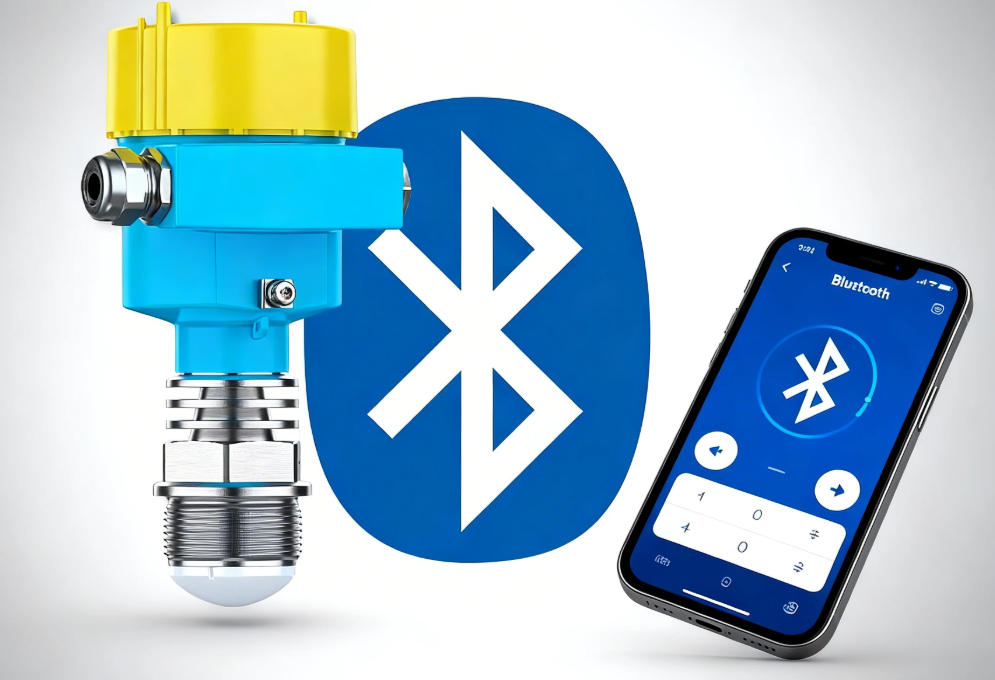
Modern industrial equipment typically adopts Bluetooth Low Energy (BLE) technology. BLE is specifically designed for low-power applications and features short-time communication, intermittent wake-up mechanisms, extremely low standby power consumption, and automatic sleep functions.
When no data transmission is taking place, the module automatically enters low-power mode. Therefore, under normal usage conditions, it consumes almost no additional energy.
3. Bluetooth Design of the Jiwei JWrada® Series
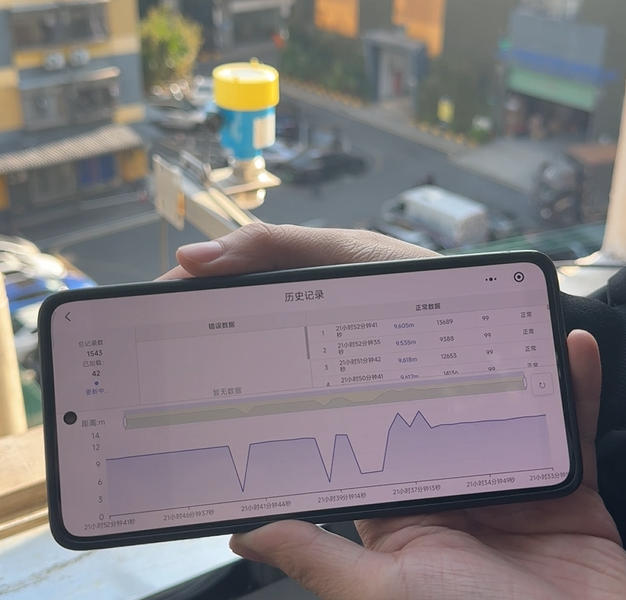
The Jiwei JWrada® series radar level meters adopt a low-power Bluetooth solution and support Bluetooth® v5.4 standard. This latest BLE-based protocol ensures stable connection and fast data transmission while maintaining extremely low standby power consumption.
In practical applications, the Bluetooth function is mainly used for parameter configuration and field debugging. Its impact on power consumption during normal operation is very small, and the overall increase is usually minimal and can be considered negligible in most industrial scenarios.
III. Actual Impact of Bluetooth on Radar Power Consumption
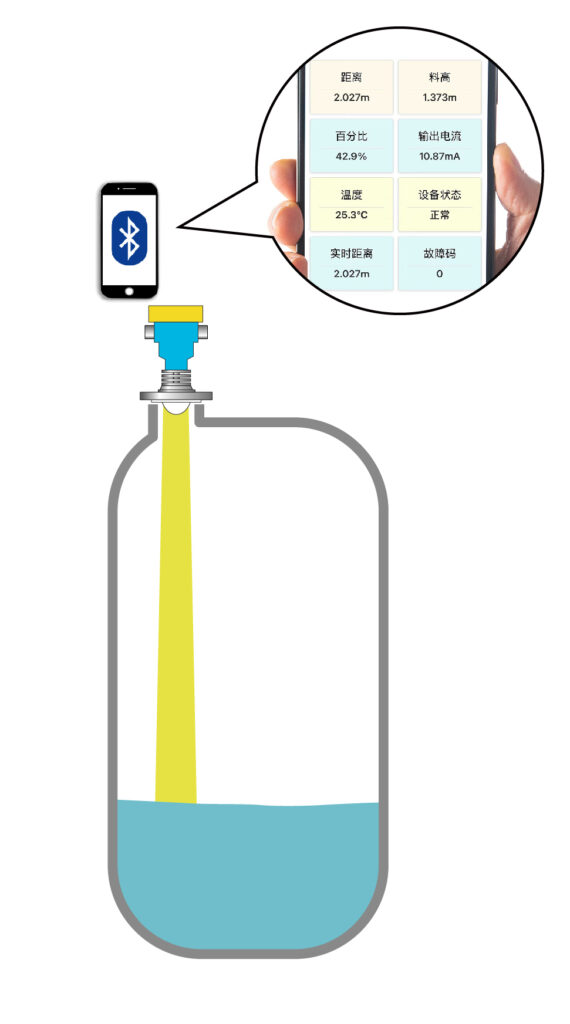
In industrial radar applications, Bluetooth is typically used for parameter debugging, short-distance data reading, on-site quick configuration, and mobile device connection.
Bluetooth communication is not continuously enabled; it operates on an on-demand basis. After configuration or data reading is completed, the system automatically returns to standby mode, following an intermittent operation pattern.
Therefore, the impact of Bluetooth on power consumption mainly occurs during short debugging periods. During long-term stable operation, the effect is extremely small. In most industrial environments, the Bluetooth module accounts for a very low proportion of total system power consumption.
Especially in mains-powered environments, this additional power consumption has almost no impact on system operation.
IV. Impact in Battery or Solar-Powered Systems
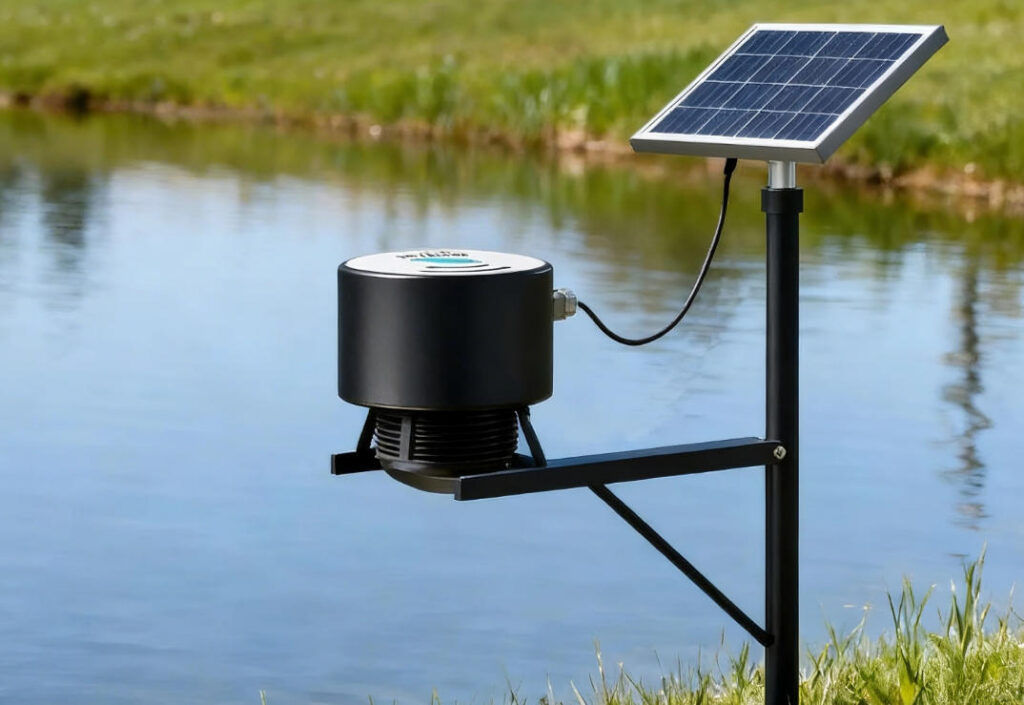
In special applications such as battery-powered radars, solar-powered systems, and remote unattended stations, overall power control is particularly important. In such low-power environments, any additional function must be carefully evaluated.
However, even in these scenarios, as long as BLE design is adopted along with automatic sleep mechanisms, timeout disconnection functions, and on-demand wake-up modes, the Bluetooth module operates only during actual communication and remains in low-power state otherwise.
Therefore, within the overall system architecture, the impact of Bluetooth on total energy consumption remains very limited.
V. Importance of Low-Power Design
Modern industrial radar design typically considers overall energy efficiency optimization, including:
- Power management circuit optimization
- Chip-level low-power control
- Standby mode design
- Functional module time-sharing operation
The Bluetooth module usually operates under independent control logic and automatically enters sleep mode when not connected. Therefore, under normal operating conditions, its power increase is very small.
VI. Low-Power Design of Jiwei Radar Level Meters
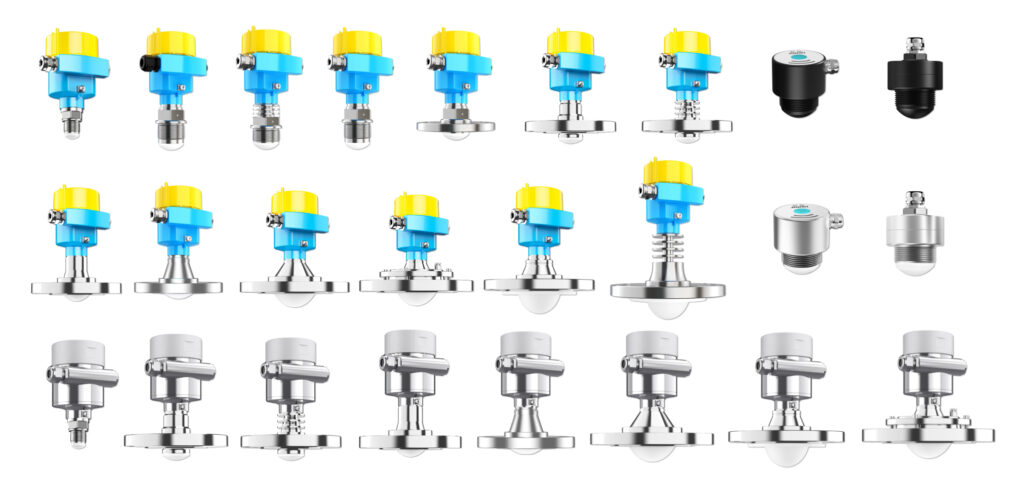
In industrial radar applications, the Bluetooth function is mainly used for parameter debugging, short-distance data reading, on-site quick configuration, and mobile connection. It operates on an on-demand basis and does not remain continuously active.
During design, Jiwei radar level meters adopt a system-level low-power optimization strategy to balance functionality and energy efficiency. This includes:
- Adoption of low-power Bluetooth modules (Bluetooth Low Energy, BLE)
- Support for Bluetooth® v5.4 standard
- On-demand communication activation
- Automatic sleep mechanism
- Timeout disconnection function
- Functional module separation control
- Optimized power management structure
BLE is specifically designed for intermittent communication and features extremely low standby power consumption and automatic sleep capability.
When no data exchange occurs, the module automatically enters low-power mode, resulting in almost no additional energy consumption under normal operation.
In special applications such as battery-powered radars, solar systems, and remote unattended stations, power control is critical. Even in these environments, with BLE design combined with sleep and wake-up mechanisms, Bluetooth only operates during communication periods and remains in low-power state otherwise.
Therefore, Bluetooth has a very limited impact on total system energy consumption.
In practical operation, the Bluetooth module is activated only during connection or debugging, and remains in standby mode otherwise. Compared with non-Bluetooth versions, the overall power increase is typically very small and can be considered negligible in most industrial applications.
Especially in mains-powered environments, the overall energy variation is minimal and does not affect system stability.
VII. Practical Value of Bluetooth
Compared with its minor power impact, Bluetooth provides significant practical advantages:
- No need to open the housing for debugging
- Improved on-site operational safety
- Reduced high-altitude work risk
- Increased maintenance efficiency
- Support for fast mobile configuration
- Shortened installation and commissioning time
In complex or hazardous environments, Bluetooth debugging significantly improves operational convenience. From an engineering perspective, the efficiency improvement far outweighs the minimal power increase.
VIII. Overall Conclusion
Bluetooth functionality does increase the power consumption of a radar level meter. However, under modern low-power design architecture, the increase is typically very small.
With low-power Bluetooth (BLE) technology, automatic sleep mechanisms, and optimized power management, the impact on overall energy consumption can be considered negligible.
Through system-level low-power design, Jiwei radar level meters achieve a balance between functional expansion and energy efficiency, ensuring stable and reliable long-term operation while maintaining communication convenience.
Therefore, in industrial applications, the convenience brought by Bluetooth far exceeds its minimal power impact, making it a mature and reliable technical configuration.