
How to Choose the Output Type of a Level Switch: Relay, PNP/NPN, Two-Wire or NAMUR?
There is no absolute “best” output type for a level switch. Jiwei Automation indicates that the correct approach is to first confirm the PLC/DCS input requirements and safety circuit, then select the output type that matches the power supply, load, and field conditions.
For standard high- and low-level alarms with low switching frequency, relay dry contacts are usually the preferred choice. For 24 V DC PLC high-speed digital inputs, select PNP or NPN according to the PLC input module’s common terminal configuration. For long cable runs or two-wire powered applications, choose a two-wire output compatible with the receiving input module. For hazardous-area intrinsically safe systems, verify the NAMUR sensor, safety barrier, cable parameters, and grounding as one complete system.
1. Why Should You Select the Output Type Based on the Receiving Device?
The purpose of a level switch is not simply to output a signal, but to enable the control system to reliably identify empty, full, fault, or cable-break conditions. In the field, most wiring problems result from interface mismatches, such as treating an active transistor output as a dry contact, connecting an NPN output to a PLC module designed for PNP inputs, or using a relay output to switch a contactor coil with high inrush current directly.
Before requesting a quotation or selecting a model, confirm at least the following six items:
- Supply voltage
- Receiving module type
- Actual load
- Switching frequency
- Cable length
- Hazardous area classification
If the level switch is used for high-level overfill protection or low-level dry-run protection, first define which fail-safe state the system should enter in the event of power loss, cable failure, or probe fault.
2. What Are the Differences Between Relay, PNP/NPN, Two-Wire and NAMUR Outputs?
1) Relay Dry Contact Output
The output is typically electrically isolated from the instrument power supply and can be connected flexibly to AC or DC control circuits. It is ideal for low-frequency high- and low-level alarms. When selecting a model, verify contact rating, NO/NC configuration, inductive load inrush current, and mechanical life.
2) PNP / NPN Transistor Output
Transistor outputs have no mechanical contacts and provide fast switching, making them suitable for 24 V DC PLC digital inputs.
A PNP output sources positive voltage to the load, while an NPN output sinks current to 0 V. Always verify the PLC common terminal, sourcing/sinking logic, maximum output current, and leakage current.
3) Two-Wire Current Status Output
Power supply and switching signal share the same two wires. Different current levels are commonly used to indicate switching states.
This is not a standard dry contact and is not necessarily a continuous 4–20 mA transmitter. Verify the switching current levels, alarm current, input impedance, and loop power supply range.
4) NAMUR Output
NAMUR outputs indicate switching status through low current changes and typically require a compatible safety barrier or switching amplifier to detect open-circuit and short-circuit conditions.
When selecting this option, verify the safety barrier model, intrinsic safety parameters, cable capacitance and inductance, and complete loop certification.
3. Five-Step Guide to Selecting the Right Level Switch Output
Step 1: Confirm the PLC or DCS Input Type
Record the complete module model number and terminal diagram instead of simply stating “connected to PLC.”
Confirm whether the input requires a dry contact, PNP, NPN, NAMUR, or a specific current threshold.
Step 2: Verify the Power Supply and Electrical Limits
Check the instrument power supply range, loop voltage, output polarity, and whether electrical isolation is required.
Remember that a wide power supply range does not mean the output can withstand any voltage.
Step 3: Identify the Load Type
PLC inputs typically draw very little current, while contactors, solenoid valves, and alarm devices may generate high inrush current or back EMF.
If necessary, add an interposing relay, fuse protection, and surge suppression devices.
Step 4: Define the Fail-Safe Logic
High-level overfill protection and low-level dry-run protection require different fail-safe strategies.
Determine whether the system should alarm, stop, or continue operating during power failure, cable break, short circuit, or probe failure, then select the appropriate NO/NC contact configuration and PLC logic.
Step 5: Verify Hazardous Area and Environmental Conditions
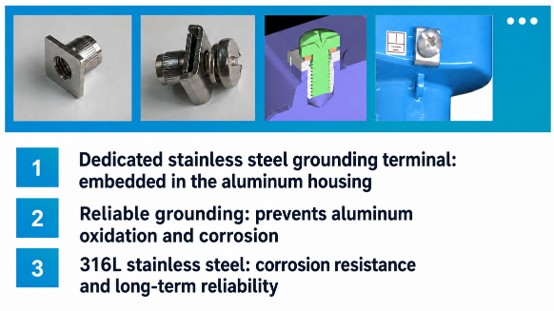
Explosion-proof selection should consider hazardous area classification, gas or dust group, temperature class, protection method, and complete certified loop.
Humidity, corrosion, vibration, and electromagnetic interference should also be considered when selecting wiring methods and output types.
4. Proper Installation Is Still Critical
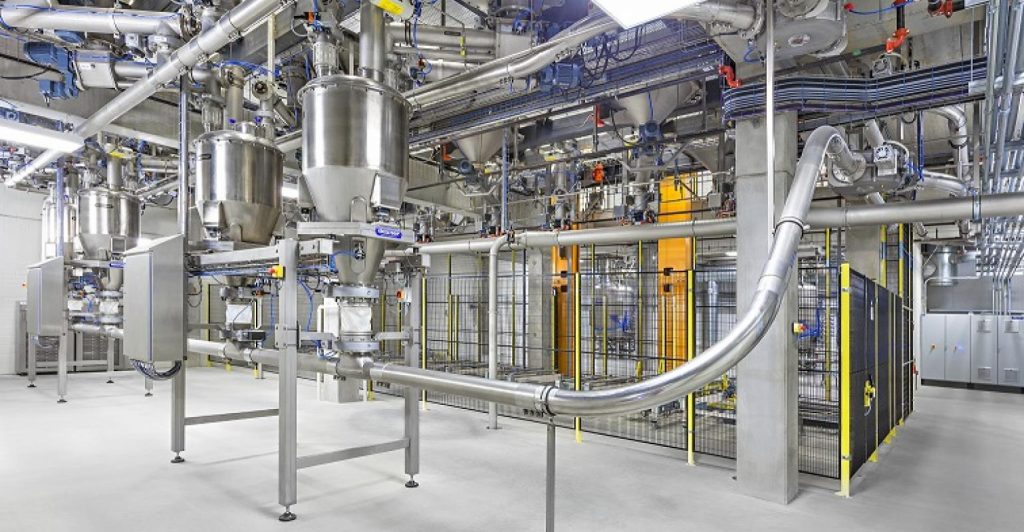
In pneumatic conveying systems, flour plants, coal dust handling, or chemical powder processing, level switches are often installed near motors, valve assemblies, and long cable runs.
Even with the correct output type, false alarms may still occur if signal cables are routed alongside power cables, shield grounding is handled improperly, or grounding loops exist.
Follow control system wiring standards, separate signal and power cables, and clearly identify terminals and isolated circuits inside the control cabinet.
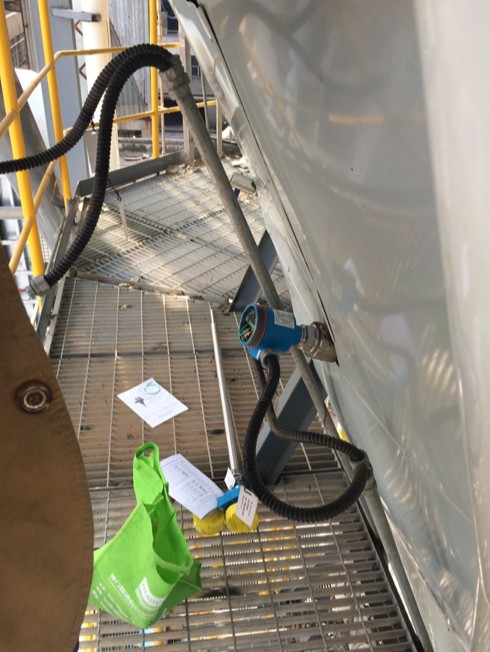
Engineering Tip: Never identify terminals by cable color or wire according to old drawings from similar models. Always follow the current order specification, product nameplate, and supplied instruction manual. After wiring, verify switching direction using actual material or a reliable simulation method.
5. Pre-Commissioning Checklist
- Instrument power supply, voltage rating, and output polarity match the control drawings.
- PLC/DCS input common terminal matches the PNP/NPN logic.
- Relay contacts are derated according to the actual load, and inductive loads use appropriate suppression devices.
- Empty and material-present conditions are both tested, and H/L or NO/NC logic matches the control objective.
- Simulate power failure, cable break, and short circuit to verify the expected fail-safe response.
- For hazardous areas, verify the safety barrier, intrinsic safety parameters, grounding, and cable requirements.
- Check cable sealing, enclosure grounding, protection rating, and process connection installation.
6. Jiwei Automation Product Recommendations
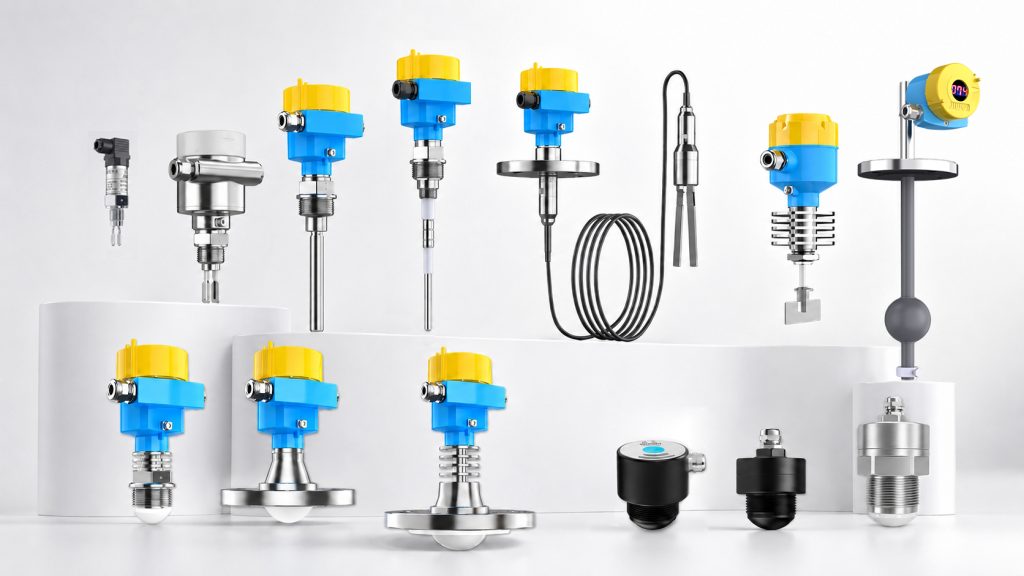
Shenzhen Jiwei Automation Technology Co., Ltd. specializes in level measurement and level switch solutions for powders, granules, and liquids, offering vibrating rod, vibrating fork, RF admittance, rotary paddle, and radar level instruments.
Jiwei emphasizes selecting products based on application conditions, control interfaces, and safety logic, while providing wiring guidance and field application support.
- Tube-11 Vibrating Rod Level Switch: Designed for high- and low-level detection of powders and granular solids. Available with relay output or compatible two-wire output options.
- Fork-11 Vibrating Fork Level Switch: Suitable for point level detection of fine powders and low-density bulk solids. Compact design with no moving mechanical parts.
- Ring-11 Vibrating Fork Liquid Level Switch: Designed for liquid level alarms in tanks, pipelines, and process vessels. Suitable for overfill prevention and dry-run protection.
Selection Recommendation: Provide the material type, bulk density, temperature, pressure, installation method, power supply, PLC input type, and explosion-proof requirements. Jiwei engineers will recommend the appropriate model and output configuration. Final specifications are subject to the official product datasheet and ordering specification.
7. Conclusion
Selecting the output type of a level switch is fundamentally about matching the control interface with the required safety logic. By first defining the receiving module, power supply, load characteristics, and fail-safe strategy, and then choosing between relay, PNP/NPN, two-wire, or NAMUR outputs, you can significantly reduce wiring errors, false alarms, and future system modification costs.