HMI and SCADA: Core Components of Industrial Automation Systems
In modern industrial automation, HMI (Human-Machine Interface) and SCADA (Supervisory Control and Data Acquisition) are two fundamental and essential concepts. Although closely related, they differ significantly in terms of functional positioning, application scope, and technical architecture. Understanding the roles and differences between HMI and SCADA is critical for designing efficient, scalable, and secure industrial automation systems. Whether establishing a new production line or equipment system, or upgrading the automation architecture of an existing plant, making the right choice between HMI and SCADA can optimize system performance and reduce operational costs.
I. HMI: The Core Interface for Real-Time Human-Machine Interaction
1. Definition of HMI
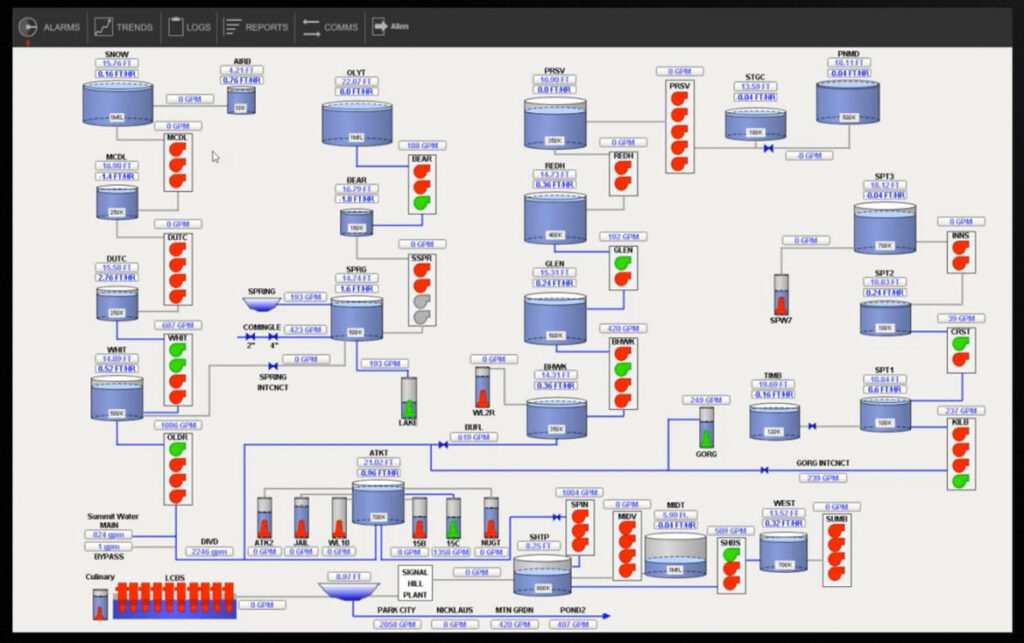
HMI, short for Human-Machine Interface, is a user interface system that connects operators with industrial equipment and processes. Through HMI, operators can monitor production parameters in real time, input control commands, and access critical operational information. HMIs not only display data but also allow operators to intuitively manage and adjust the operating status of equipment.
In industrial production, HMIs commonly take the form of touchscreens, panel displays, industrial PCs, and even mobile devices or tablets. They typically integrate real-time graphical data display, alarm indication, control buttons, and report output functions.
2. Key Functions of HMI
HMI focuses primarily on local operations and real-time monitoring, with core functions including:
- Real-Time Data Visualization: Displays sensor data, such as temperature, pressure, flow, and level, in graphical or numerical formats, enabling operators to quickly understand process conditions.
- Operational Control: Supports local control operations, such as starting/stopping equipment, adjusting valve positions, pump speed, or mixer rotation.
- Alarm Notification and Event Logging: Provides visual or audible alerts when equipment malfunctions or parameters exceed thresholds, while recording operational events.
- Integration with PLCs or Control Systems: Connects with PLCs via industrial protocols like Modbus, Profibus, or Ethernet/IP for real-time data exchange.
- Basic Report Generation: Some HMIs can generate equipment operation reports or logs for operational review and maintenance analysis.
3. Typical Applications of HMI
HMIs are ideal for single-machine or small-system control scenarios, such as:
- Local control of flow meters, pumps, or fans
- Operation monitoring of packaging machines, filling machines, or mixers
- Level monitoring in small reactors or storage tanks
- Local control stations on production lines
In these applications, HMIs reduce operational complexity, minimize human errors, and provide quick visual feedback and control.
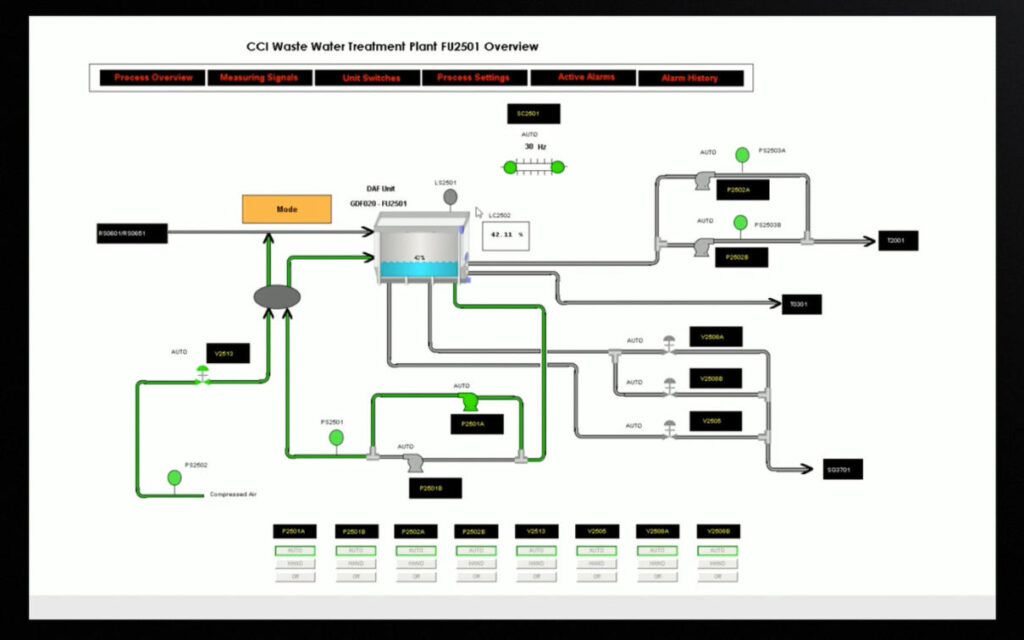
4. Technical Advantages and Limitations of HMI
Advantages:
- Easy to install and operate, suitable for local process control
- Real-time display with rapid response
- Provides intuitive visualization of equipment status
- Relatively low cost and simple maintenance
Limitations:
- Not suitable for large-scale or multi-site centralized monitoring
- Limited historical data storage and analysis capabilities
- Lacks advanced remote access and alarm management functions
II. SCADA: The Intelligent Platform for Supervisory Control and Data Acquisition
1. Definition of SCADA
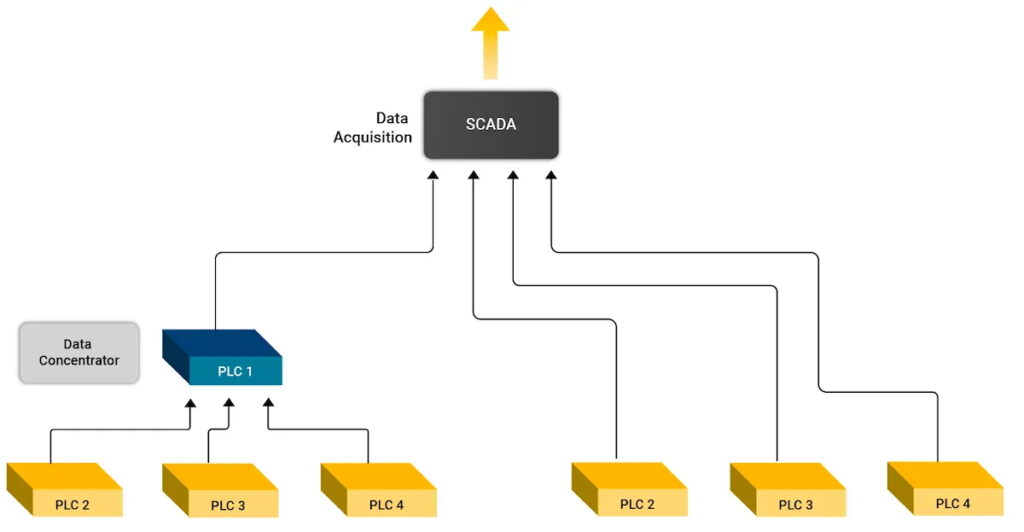
SCADA, short for Supervisory Control and Data Acquisition, is a system that collects, analyzes, and monitors data from industrial equipment and distributed sites to achieve centralized management of an entire plant or industrial area. Unlike HMI, which emphasizes local operation, SCADA focuses on system-level visualization, historical data analysis, alarm management, and remote control capabilities.
A typical SCADA system consists of the following components:
- HMI: Operator interface for displaying system data, controlling equipment, and managing alarms
- PLC or RTU (Remote Terminal Unit): Collects field data and executes control commands
- Communication Networks: Ethernet, Modbus, Profibus, DNP3, etc., for data exchange between devices, controllers, and SCADA software
- SCADA Software Platform: Provides data acquisition, processing, historical storage, trend analysis, alarm management, report generation, and remote access
- Historical Data Storage and Analysis Tools: Supports process optimization, fault analysis, energy management, and safety auditing
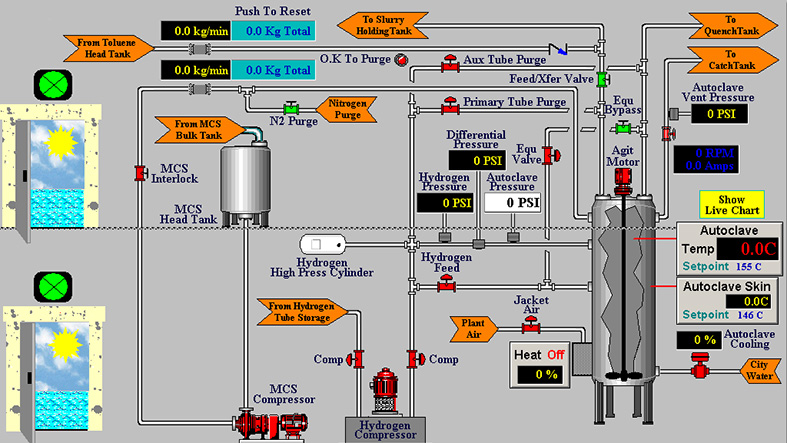
2. Core Functions of SCADA
SCADA extends beyond real-time monitoring to include comprehensive data management and analysis:
- Centralized Data Acquisition: Collects multi-point data from PLCs, RTUs, sensors, and other field devices
- Real-Time Monitoring and Control: Displays system-wide operational status through centralized HMIs and allows remote control
- Historical Data Storage and Trend Analysis: Records long-term data and generates trend graphs for production optimization and predictive maintenance
- Alarm Management and Event Logging: Defines high/low threshold alarms, bulk notifications, and event tracking
- Remote Access and Cloud Integration: Modern SCADA systems support VPN or cloud platforms for remote monitoring and troubleshooting
- Data Integration and Report Generation: Integrates data from various subsystems, producing operational reports, energy statistics, and compliance documentation
3. Typical Applications of SCADA
SCADA is suitable for large-scale, distributed, or complex industrial processes, including:
- Municipal water and wastewater treatment plants
- Oil and gas pipelines, storage, and refining facilities
- Power substations and distribution system monitoring
- Multi-line, large-scale industrial plant automation
- Distributed energy systems and smart microgrids
SCADA systems not only enable monitoring and operation of devices but also support data analysis, production optimization, energy management, and compliance monitoring.
4. Technical Advantages and Limitations of SCADA
Advantages:
- Supports centralized management of multiple sites
- Enables remote monitoring and operation
- Provides historical data storage and trend analysis
- Supports advanced alarm management and reporting
- Can integrate diverse industrial devices and subsystems
Limitations:
- Higher cost and complex deployment
- Requires reliable network and communication infrastructure
- Demands trained operators and maintenance personnel
III. Key Differences Between HMI and SCADA
| Dimension | HMI | SCADA |
|---|---|---|
| Functional Scope | Local monitoring and control | System-level centralized monitoring, data acquisition, and analysis |
| Application Scale | Single machine or small system | Multi-site, large-scale industrial process |
| Data Management | Real-time display primarily, limited historical data | Real-time + historical data, trend analysis, reporting |
| Control Method | Local operation | Centralized control with remote operation capability |
| Alarm Management | Basic alarm indication | Advanced alarm management and event tracking |
| Communication | Direct connection to PLC or controllers | Multi-protocol, cross-network integration of multiple devices |
| Cost | Low to medium | Medium to high, depending on system complexity |
In summary, HMI focuses on single-machine operation and on-site monitoring, while SCADA provides system-level visualization, control, and data analytics capabilities.
IV. Selection Guidelines for HMI and SCADA
1. Project Scale and Complexity
- Small equipment or single-process control: Pumps, fans, mixers, or level meters—HMI is recommended for low cost and intuitive operation.
- Multiple devices, distributed or remote systems: Full plant water monitoring, oil pipeline monitoring, or large factory automation—SCADA is recommended for centralized control and data analysis.
2. Data Requirements and Historical Analysis
- If trend recording, reporting, or historical analysis is required, SCADA is more suitable.
- For real-time monitoring and simple alarms, HMI is sufficient.
3. Remote Operation and Security
- SCADA supports remote operation, cloud access, and multi-user permissions, suitable for modern industrial automation and smart factory requirements.
- HMI is typically limited to local operation, which may reduce remote access risks in security-sensitive environments.
4. Cost and Maintenance Considerations
- For small projects or limited budgets, HMI is an economical and easy-to-maintain choice.
- SCADA involves higher investment but can improve production efficiency and safety in the long term through optimized management and remote operation.
V. Comparative Practical Applications
Water Treatment Plant:
- HMI: Local control and status display for individual pumps and valves
- SCADA: Monitors the entire plant, collects liquid level, flow, and pressure data from all pumping stations and reservoirs, enables remote operation, alarm notification, and historical trend analysis
Oil Pipeline:
- HMI: Local control for a single pump or booster station
- SCADA: Centralized management of pipeline data, real-time monitoring of pressure, flow, leak alarms, and pump status, enabling remote control and optimized scheduling
Industrial Production Line:
- HMI: Operating panel for a single packaging or filling machine
- SCADA: Centralized monitoring for the entire production line, including multi-device data acquisition, process optimization, and production report generation
VI. Future Development Trends
With the advancement of industrial digitization and smart manufacturing, the boundaries between HMI and SCADA are increasingly merging:
- Smart HMI: Integrates some data logging, trend analysis, and remote access capabilities
- Cloud SCADA: Utilizes cloud computing and IoT for cross-location centralized monitoring and remote debugging
- Integrated Industrial IoT: Deep integration of sensor networks, edge computing, and SCADA for predictive maintenance and autonomous process optimization
This trend allows enterprises to flexibly combine HMI and SCADA according to their needs, achieving more efficient and intelligent industrial automation systems.