JWrada® Radar Level Meter Application in a 2m LPG Horizontal Tank in Malaysia
Project Background: Why Is LPG Horizontal Tank Level Measurement Challenging?
In energy systems and chemical auxiliary storage applications, LPG horizontal storage tanks are widely used. This project was located in Malaysia. Although the tank measuring range was only 2 meters, the client required high standards in measurement stability, operational safety, and real-time monitoring. Under hazardous and potentially explosive conditions, instrumentation reliability becomes especially critical.
LPG (Liquefied Petroleum Gas) presents several practical measurement challenges. The medium is highly volatile, and a vapor space is always present inside the tank. Variations in temperature and pressure can affect the dielectric constant, potentially influencing signal identification. The horizontal tank structure limits installation space and may cause multiple reflections due to its curved internal surface. In a short measuring range such as 2 meters, higher resolution and stronger interference immunity are required. Furthermore, as the application is within a hazardous area, the device must comply with strict intrinsic safety standards.
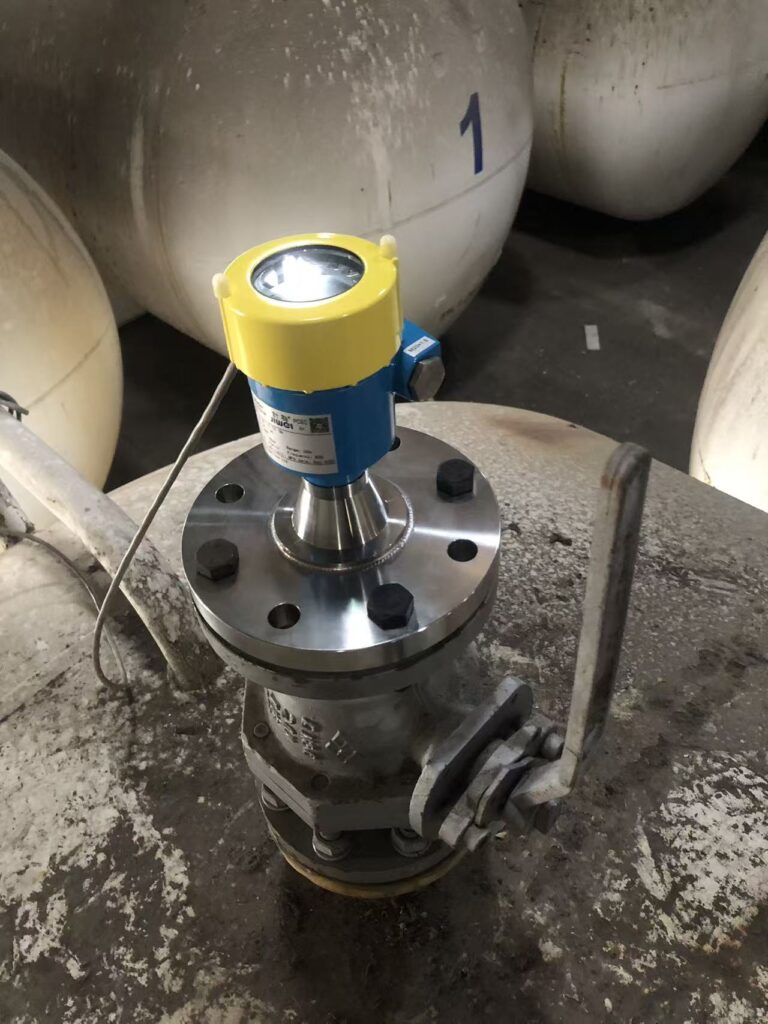
Under these conditions, traditional float-type and differential pressure level transmitters show limitations, including frequent maintenance, multiple sealing points, and potential leakage risks. In comparison, non-contact radar level measurement offers advantages in safety and long-term operational stability.
After evaluating the working conditions, the project team selected the Jiwei JWrada® radar level meter to upgrade the 2m LPG horizontal tank level measurement system.
On-Site Application of JWrada® Radar Level Meter
Project Parameters
- Medium: LPG (Liquefied Petroleum Gas)
- Tank Type: Horizontal pressure vessel
- Measuring Range: 2 meters
- Working Pressure: Medium pressure
- Output Signal: 4–20mA + HART
- Explosion Protection: Ex ia (Intrinsic Safety)
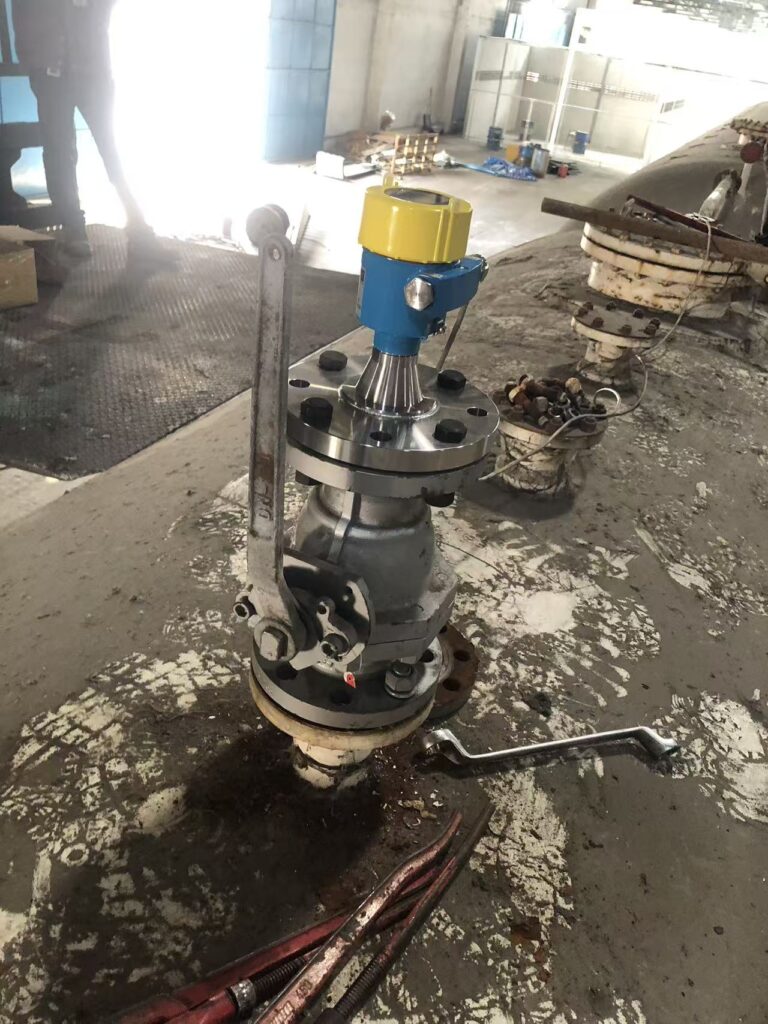
The device was installed via a top-mounted flange, with the radar beam directed vertically toward the liquid surface. Due to the curved internal structure of the horizontal tank, multiple reflections from the tank wall were possible, requiring strong echo recognition capability during commissioning.
Technical Challenges and Solutions
1. High Resolution Requirement in Short Measuring Range
A 2-meter measuring span means a limited signal window, demanding higher radar frequency performance and algorithm resolution capability. The JWrada® high-frequency radar features a narrower beam angle and stronger signal focusing, helping to reduce interference from tank walls.
2. Vapor and Pressure Fluctuation Interference
In LPG tanks, vapor density changes with temperature. Some radar devices may generate false echoes under such conditions. JWrada® utilizes a self-developed echo recognition algorithm and dynamic filtering mechanism to distinguish actual liquid level echoes from vapor interference signals.
3. Multi-Path Reflection from Horizontal Tank Structure
The curved top of a horizontal tank can easily produce multi-path reflections. During commissioning, targeted parameter optimization was carried out based on EFT curve analysis, effectively suppressing unwanted signals.
Core Advantage: Software System as the True Competitive Barrier
In this project, the key differentiator was not only hardware performance but the proprietary software system integrated into the JWrada® radar level meter. Compared to conventional radar devices that rely solely on local commissioning, JWrada® positions software capability as one of its core strengths, enhancing overall measurement reliability and engineering adaptability through algorithms, remote architecture, and data analytics.
The JWrada® radar level meter provides a comprehensive software framework, including remote firmware updates, working condition commissioning, fine parameter configuration, remote fault code access, and real-time echo curve and EFT curve analysis. By deeply analyzing echo signal characteristics, the system can accurately identify true liquid level signals and suppress interference, ensuring long-term stable output.
Notably, JWrada® supports a cloud-server-based remote commissioning mechanism. Engineers can connect to the device through a cloud platform and collaborate one-on-one with on-site technicians. Real-time operational status and raw echo data can be viewed remotely, allowing professional diagnostic analysis based on echo and EFT curves. This approach eliminates the traditional dependency on on-site intervention and enables rapid cross-regional technical support.
During project implementation, commissioning followed three structured stages. First, initial installation parameter configuration ensured correct measurement logic. Second, echo recognition optimization was performed to eliminate interference from tank structure and vapor space through algorithm adjustments. Third, operational stability verification confirmed signal linearity and consistency under continuous working conditions.
Throughout the commissioning period, engineers remotely accessed the system via the cloud server, read real-time field data, and performed parameter optimization without repeated on-site visits. This significantly shortened the project delivery cycle and reduced implementation costs. More importantly, the system supports customized parameter optimization and algorithm fine-tuning based on specific pressure, temperature, and structural conditions, ensuring optimal performance for each unique application.
Currently, few domestic manufacturers have established a mature cloud-based deep remote commissioning and algorithm collaboration framework. This forms an important technical barrier for JWrada® in engineering applications.
Project Results and Operational Performance
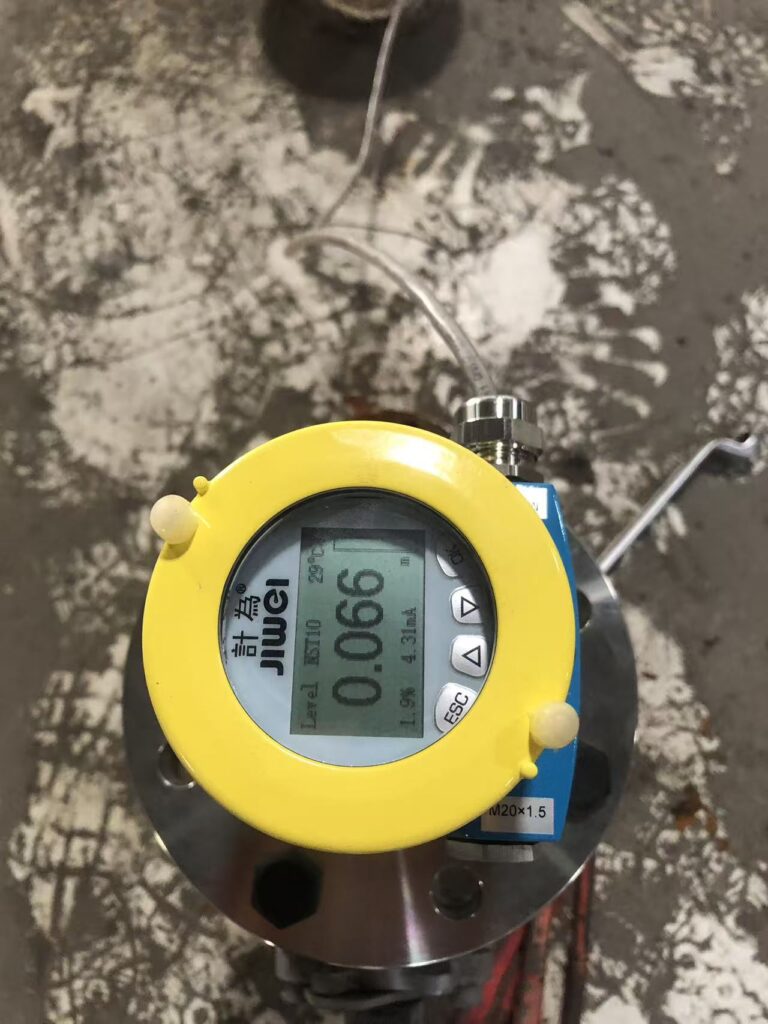
After commissioning, the system operated steadily. Liquid level data remained continuous, with no noticeable signal jumps or abnormal fluctuations. The 4–20mA output trend corresponded consistently with actual level variations, meeting process control requirements. Even in the presence of vapor, the device maintained reliable recognition of the true liquid surface, without obvious false echo interference. Operational data could be accessed remotely for routine inspection and status confirmation.
During a three-month continuous observation period, no false alarms or signal interruptions were reported. Overall performance satisfied the site’s process management requirements.
According to user feedback, compared with the previously installed differential pressure transmitter, routine inspection and maintenance workload was reduced. The liquid level data became clearer and more readable, and the non-contact measurement principle provided additional safety assurance. Overall system operation became more intuitive, and maintenance management more convenient.
Conclusion: Reliable Hardware, Software-Driven Future
This 2m LPG horizontal tank project in Malaysia demonstrates the stable performance of the JWrada® radar level meter in short-range pressure vessel applications. Beyond hardware reliability, its proprietary software system and cloud-based commissioning mechanism establish a significant technological advantage.
As storage tank digitalization and remote operation trends continue to develop, hardware alone is no longer the primary differentiator. Radar level meters capable of remote upgrades, algorithm optimization, and cloud-based diagnostics represent the future direction of industrial level measurement.
JWrada® is not only a radar level meter, but a continuously evolving intelligent measurement system.