Case Study: JWrada® Radar Level Transmitter for LPG Spherical Tank Level and Pressure Monitoring
Project Background
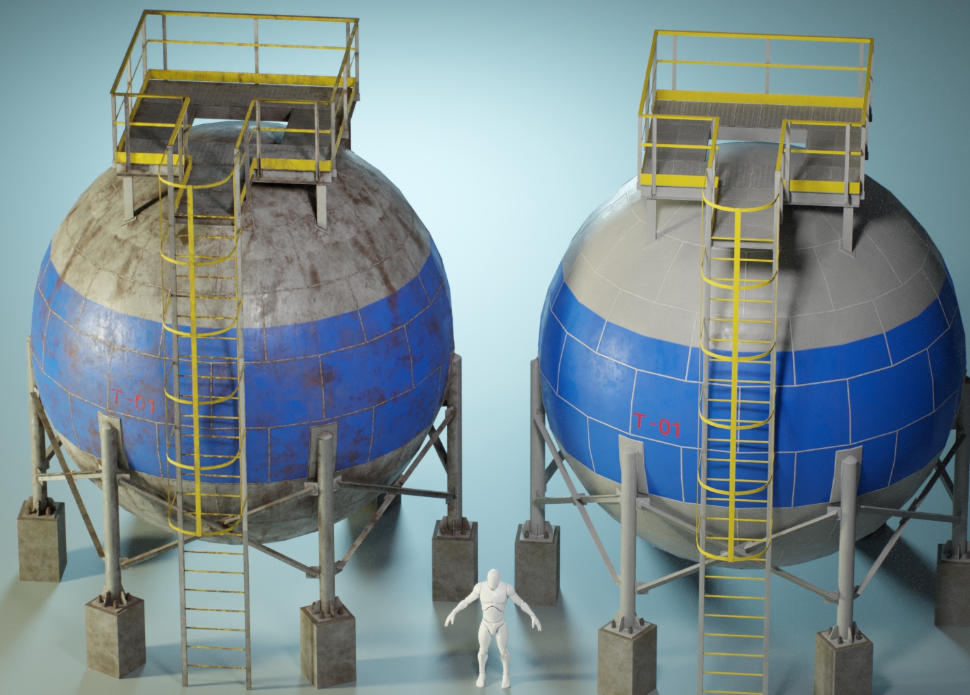
Liquefied Petroleum Gas (LPG) is widely stored in spherical tanks due to their structural strength and uniform stress distribution under pressure. These tanks are commonly installed underground or partially covered with earth for safety and space optimization. However, this installation method presents significant challenges for level and pressure monitoring in liquid gas tanks.
In this project, the customer required a highly reliable measuring system for an LPG spherical tank with the following process conditions:
Process Data
- Measuring task: Continuous level and pressure measurement
- Measuring point: Spherical tank
- Measuring range: Up to 20 meters
- Medium: LPG
- Process temperature: -10 to +45 °C
- Process pressure: +1 to +3 bar
- Special challenges: Low dielectric constant, low temperature, limited maintenance access
Because LPG has a low dielectric constant, traditional radar instruments often struggle to generate strong echo signals. In addition, service access is typically only available during scheduled shutdown periods every few years. The customer required a maintenance-free, high-accuracy, and remotely manageable solution.
Technical Challenges in LPG Spherical Tanks
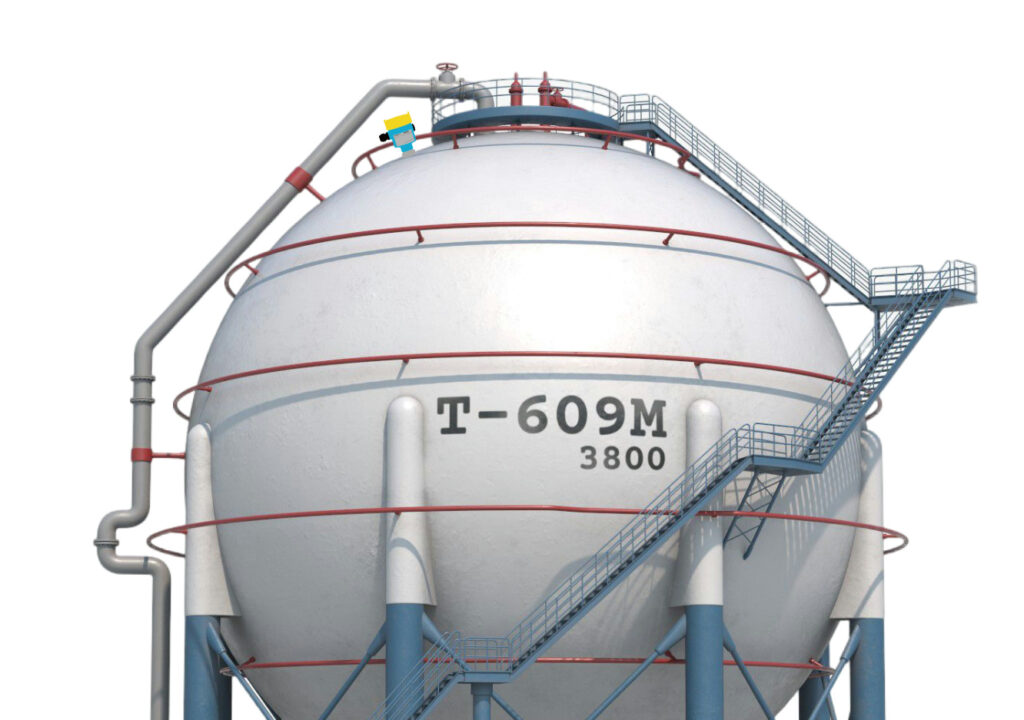
Monitoring LPG inside a spherical tank presents several technical difficulties:
- Low Dielectric Constant
LPG reflects weaker radar signals compared to water-based liquids, increasing the difficulty of accurate detection. - Temperature Fluctuations
Temperature variations affect vapor density and internal pressure, which can influence signal stability. - Limited Accessibility
Since spherical tanks are often underground or earth-covered, routine maintenance is complex and costly. - Safety Requirements
Reliable continuous measurement is critical to prevent overfilling and ensure operational safety.
The customer needed a process-independent measurement system capable of delivering accurate readings despite these constraints.
Solution: JWrada® Radar Level Transmitter
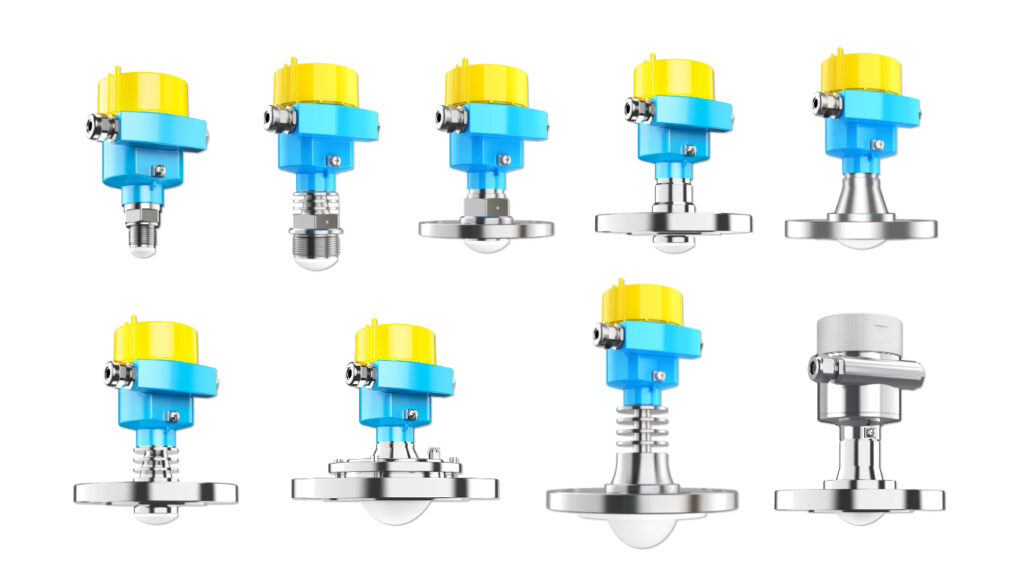
To address these challenges, the project implemented the Jiwei JWrada® Radar Level Transmitter, a high-performance measurement solution specifically designed for demanding industrial environments such as LPG spherical storage tanks and other pressurized gas applications.
Unlike conventional radar level instruments that rely primarily on hardware performance, JWrada® integrates advanced microwave technology with powerful proprietary signal processing algorithms. This combination significantly enhances echo recognition capability, especially in low dielectric media such as LPG, where reflected signals are inherently weak. The system is engineered to maintain stable performance even under complex tank geometries, vapor presence, and fluctuating operating conditions.
High-Performance Radar Technology
The JWrada® system is capable of delivering reliable and accurate level measurement with a measuring range of up to 150 meters, making it suitable not only for LPG spherical tanks but also for large storage terminals, tall silos, and extensive industrial process vessels.
Key technical advantages include:
- Extended measuring range up to 150 meters for large-scale applications
- High reliability in low dielectric constant media, such as LPG and other liquefied gases
- Advanced signal processing algorithms for improved echo discrimination and false target suppression
- Stable operation under low-temperature conditions, including environments from -10 °C and below
- Pressure resistance up to +30 bar, ensuring compatibility with medium- to high-pressure storage systems
- Strong immunity to vapor, condensation, and environmental interference
Even in spherical tank installations—where internal reflections and curved surfaces can generate complex signal paths—the JWrada® radar maintains accurate, repeatable, and stable level readings. Its optimized antenna design and intelligent echo analysis enable precise detection of weak reflections typical in low-permittivity media.
In addition, the system’s software-driven architecture allows adaptive parameter optimization according to actual process conditions. This ensures consistent measurement accuracy across varying temperatures, pressures, and tank configurations, supporting long-term operational reliability in critical LPG storage applications.
Core Competitive Advantage: Software-Driven Performance
One of the key differentiators of JWrada® radar level transmitters is its independently developed software architecture.
1. Advanced Software Capabilities
JWrada® offers unique software functions including:
- Remote firmware updates
- Real-time working condition commissioning
- Flexible parameter configuration
- Intelligent fault code diagnostics
- Echo curve and EFT curve analysis
These features are fully developed in-house. Currently, no comparable domestic solution provides the same integrated cloud-based debugging capability.
Cloud-Based Remote Commissioning
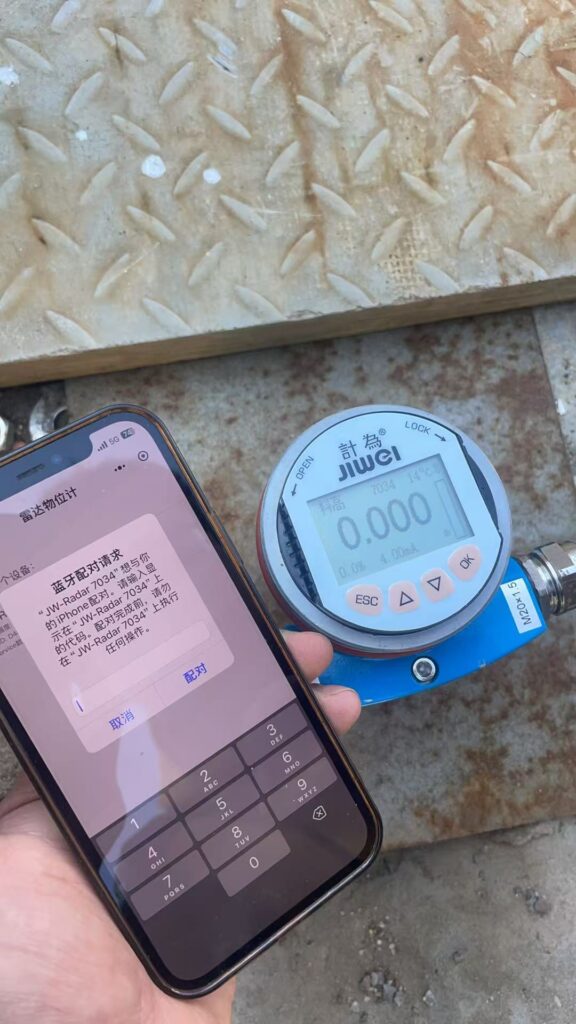
A standout feature of the JWrada® radar level transmitter is its cloud server–based remote debugging mechanism.
Through a secure cloud platform, engineers can connect directly with on-site personnel for one-to-one collaborative commissioning. This allows:
- Real-time viewing of operating status
- Live echo curve monitoring
- EFT (Enhanced False Target) curve analysis
- Immediate parameter adjustments
Instead of relying solely on on-site trial-and-error configuration, engineers can analyze signal reflections remotely and optimize settings based on actual tank geometry and process conditions.
Customized Algorithm Optimization
Every LPG spherical tank has unique internal characteristics, including:
- Nozzle height and orientation
- Internal obstructions
- Vapor composition variations
- Surface fluctuation behavior
JWrada® enables customized parameter tuning and algorithm adjustments tailored to each installation.
This means:
- Adaptive filtering for weak reflection signals
- Optimized gain control for low dielectric media
- Enhanced suppression of false echoes
- Stable performance during temperature shifts
The result is maximum measurement accuracy in each specific operating environment.
Project Results and Customer Benefits
After installation and remote commissioning, the system achieved the following performance outcomes:
Reliable Operation
- High measuring accuracy despite low dielectric constant LPG
- Stable signal output across the entire 20-meter range
- No false alarms during pressure fluctuation
Cost-Effective Performance
- Maintenance-free operation between shutdown cycles
- Reduced need for on-site engineering visits
- Lower lifecycle operating costs
User-Friendly Maintenance
- Sensor replacement possible during operation using a cut-off valve
- Remote diagnostics eliminate unnecessary shutdowns
- Quick troubleshooting via cloud-based support
Because remote debugging and software optimization can be performed without dismantling equipment, operational continuity is significantly improved.
Why JWrada® Is Ideal for LPG Tank Monitoring
In LPG storage applications, reliability is a mandatory requirement rather than an optional feature. Safe operation, stable measurement, and long-term signal consistency are essential for pressurized liquid gas tanks, particularly in underground or remotely installed spherical vessels. JWrada® addresses these demands through the integration of high-frequency radar technology, advanced signal processing capabilities, proprietary intelligent software, cloud-based remote commissioning, and customized algorithm optimization. This comprehensive approach enables accurate and stable level and pressure monitoring in liquid gas tanks, even under low dielectric conditions and fluctuating process environments.
Unlike traditional radar systems that rely primarily on hardware specifications, JWrada® places software intelligence at the core of system performance. The embedded algorithms continuously refine echo analysis, suppress false signals, and adapt to real operating conditions. Combined with remote debugging and parameter optimization via cloud connectivity, each device can be fine-tuned according to its specific installation environment. As a result, JWrada® ensures that every transmitter operates at its optimal performance level, delivering dependable measurement results throughout the entire lifecycle of the application.
Conclusion
LPG spherical tank measurement presents challenges including low dielectric constants, limited maintenance access, and demanding safety standards. By integrating advanced radar hardware with cloud-enabled remote debugging and proprietary software algorithms, JWrada® radar level transmitters provide a reliable, cost-effective, and future-ready solution.
For operators seeking precise and maintenance-free level monitoring in liquid gas tanks, JWrada® delivers not only accurate measurement—but also intelligent adaptability for long-term industrial reliability.