How Radar Level Measurement Improves CIP Cleaning Efficiency in Dairy Industry — JWrada-21
In the food and beverage industry, hygiene directly determines product quality and brand reputation. For dairy manufacturers in particular, the Clean-in-Place (CIP) system is not only a routine cleaning process, but also a critical element ensuring production safety and stable operation.
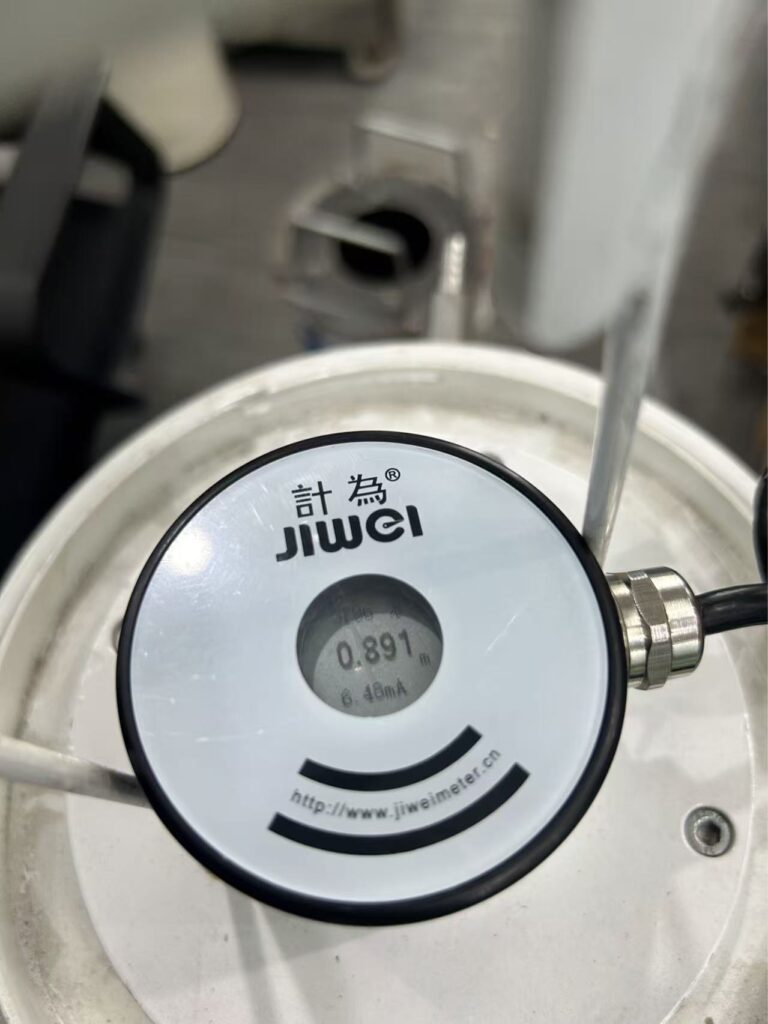
This article presents a real-world application case of the Shenzhen Jiwei Automations Ltd JWrada®-21 radar level sensor, demonstrating how it improves CIP chemical management efficiency in a butter and cream production facility.
1. Project Background: CIP Management Challenges in a Large Dairy Plant
The facility mainly produces spreadable butter and solid butter, operating multiple production lines at a large scale.
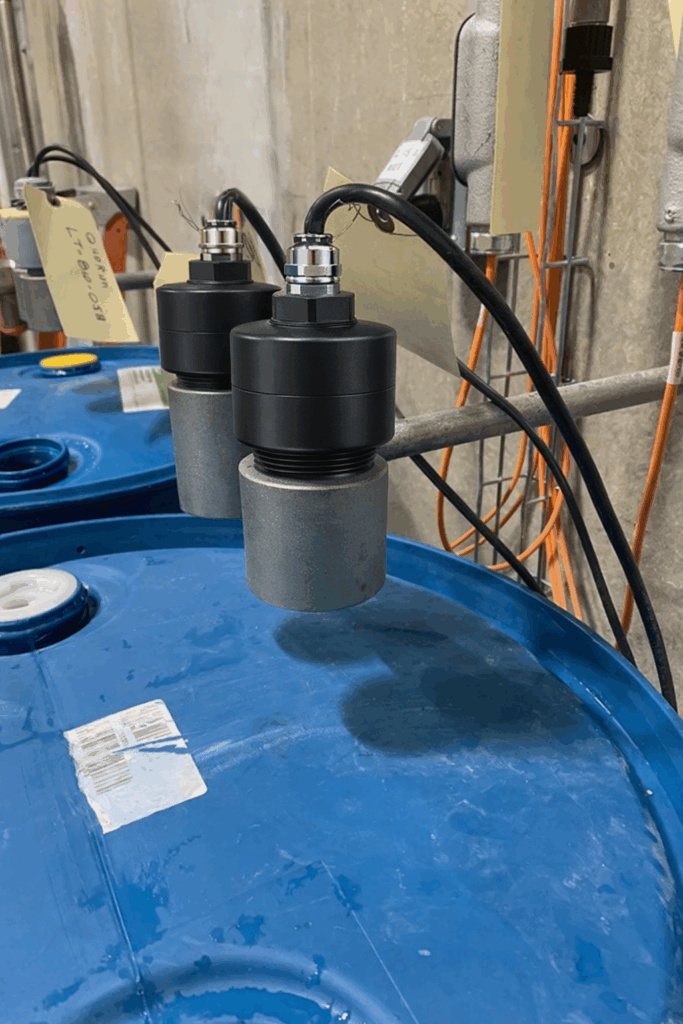
In its CIP system, cleaning chemicals are stored in multiple 55-gallon polyethylene drums and day tanks, distributed across different production areas and used for various cleaning stations.
More than 20 chemical containers are operating simultaneously, making overall management complex and distributed.
Before introducing automation, the plant relied entirely on manual level management and inventory tracking. Operators needed to regularly inspect each chemical drum, visually check the liquid level, manually record data, and arrange refilling based on experience. This required frequent movement across multiple production areas, resulting in high workload and low efficiency.
This approach created several key problems:
- High labor workload due to frequent inspections
- No real-time visibility of chemical consumption
- Poor data continuity and limited historical analysis capability
- Risk of chemical shortage during CIP processes
- Large amount of manpower consumed in repetitive tasks
As production scale expanded and the number of containers increased, this manual model was no longer able to meet modern requirements for efficiency, stability, and real-time monitoring.
2. Application Requirements: Strict Standards in Food Industry
During evaluation, the plant defined clear requirements for a suitable solution:
- Non-contact measurement meeting food hygiene standards
- Compatibility with corrosive CIP chemical media
- Easy installation without modifying existing containers
- Suitable for plastic drums and mobile tanks
- Strong resistance to vapor, condensation, and environmental interference
- Capability for centralized system monitoring
Eventually, the plant selected the Shenzhen Jiwei JWrada®-21 80GHz radar level measurement solution.
3. Solution: JWrada®-21 Radar Level Sensor
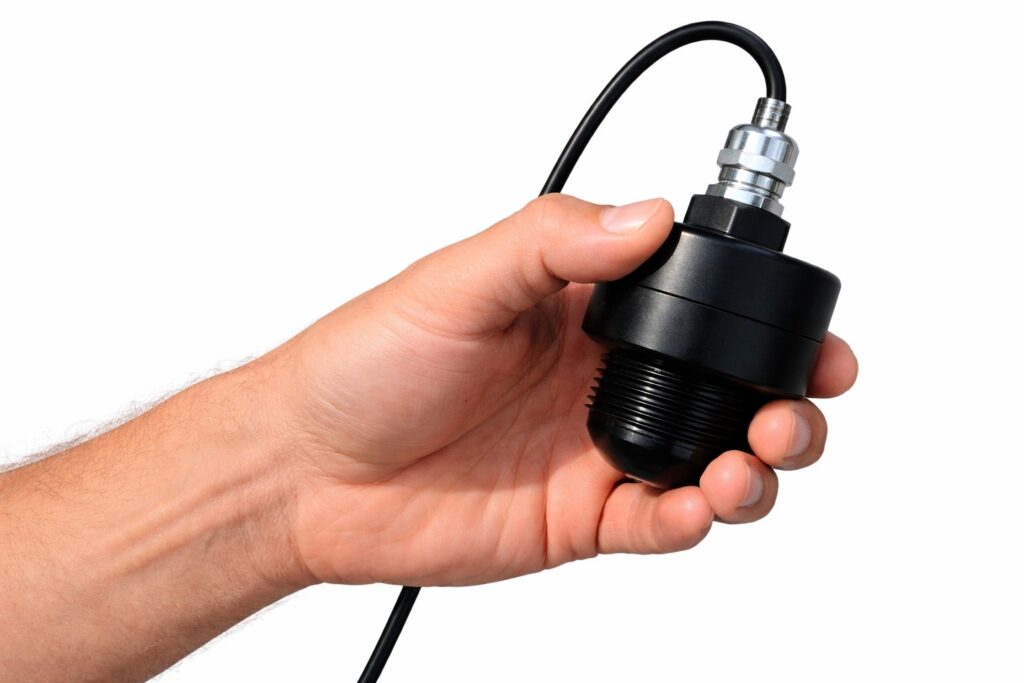
The JWrada®-21 adopts advanced 80GHz high-frequency radar technology, featuring a narrower beam angle and stronger signal focus capability, making it ideal for small tanks and complex industrial environments.
Key advantages include:
- Non-contact measurement, no medium contamination risk
- 80GHz high-frequency radar ensures high accuracy
- Suitable for small tanks and narrow installation spaces
- Immune to steam, foam, and temperature fluctuations
- Capable of penetrating non-metallic containers (e.g., PE plastic drums)
- Long-term stable operation with no mechanical wear
4. Installation Method: Mobile CIP System Application
The plant uses 55-gallon polyethylene drums, which are moved between different CIP stations.
The JWrada-21 radar level sensor can be installed above fixed measurement positions, enabling continuous non-contact measurement without modifying the container structure.
Combined with Jiwei’s Bluetooth commissioning system, engineers can quickly complete:
- Parameter configuration
- Range calibration
- Signal verification
- On-site commissioning
This significantly reduces installation and commissioning time.
5. Intelligent Operation and Commissioning Upgrade
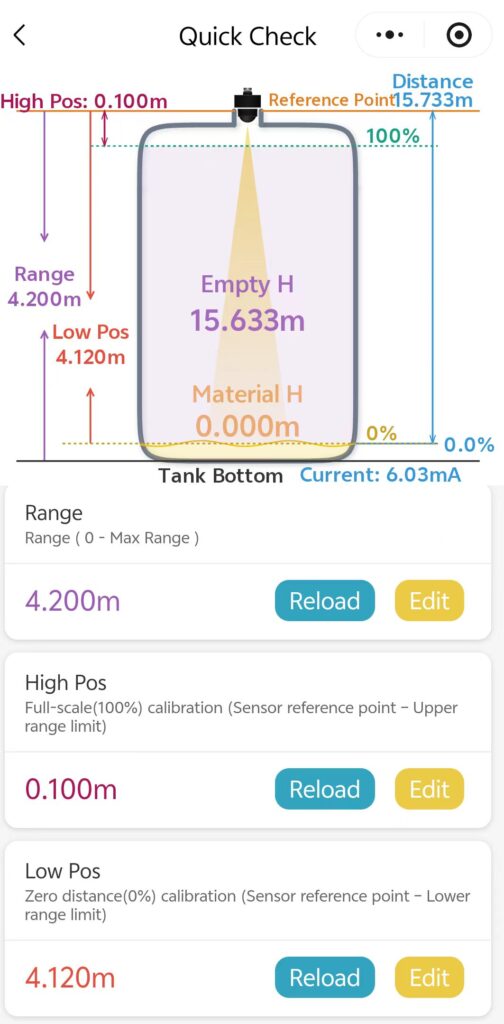
The JWrada® radar level system integrates multiple advanced operation methods, significantly improving field efficiency and flexibility.
The system includes:
- Stable Bluetooth connectivity
- Intuitive mobile APP interface
- LCD display + physical button manual control
This enables a hybrid operation mode: remote + local + manual control.
In most applications, no complex commissioning is required. Parameters can be pre-configured at factory level, and on-site adjustment is also supported. Even when the tank is already filled with medium, each device can be configured within approximately 2–5 minutes, greatly improving commissioning efficiency.
Through Bluetooth connection, engineers can perform real-time configuration and monitoring from a safe area. Local engineering teams can also provide remote support, and device parameters can be copied from one device to multiple units, eliminating repetitive setup work and significantly improving engineering efficiency.
In addition:
- Local LCD display synchronizes real-time level data
- APP provides advanced configuration and extended functions
- Supports seamless software upgrades and long-term scalability
The system offers high flexibility and future expandability.
With these advantages, JWrada® radar level sensors have been widely adopted in multiple projects and have successfully replaced international brands such as VEGA in various applications, becoming a representative solution in China’s high-end radar level measurement field.
6. Application Results: Significant CIP System Improvement
After system deployment, all CIP chemical containers achieved real-time level monitoring, resulting in significant improvements.
The previous manual inspection method was replaced by automated monitoring, eliminating frequent on-site checks across different areas and greatly reducing operator workload.
At the same time, chemical consumption became fully visible in real time, allowing management to accurately track usage and improve inventory transparency. Continuous data acquisition also eliminated delays that previously caused CIP interruptions due to insufficient chemicals.
In terms of replenishment management, more accurate data enabled better planning, reducing reliance on experience-based decisions. Repetitive manual operations were significantly reduced, allowing staff to focus on higher-value tasks.
Operators can now view all container status through a unified monitoring platform, enabling centralized management and system-wide optimization.
7. Long-Term Value: Efficiency and Cost Optimization
After introducing radar level measurement technology, the plant achieved multiple improvements:
- Significant reduction in manual inspection frequency
- More stable and reliable CIP system operation
- Increased transparency in chemical inventory management
- Reduced risk of unplanned shutdowns
- Improved overall production efficiency
Due to the non-contact measurement principle, the system experiences almost no mechanical wear, resulting in extremely low maintenance requirements and reduced lifecycle operating costs.
8. Conclusion
In dairy and food industries, the stability of CIP systems directly affects production safety and product quality.
The JWrada®-21 radar level sensor enables reliable real-time monitoring of CIP chemical tanks using advanced 80GHz non-contact measurement technology, transforming traditional manual management into an automated and digital system.
This case demonstrates that radar level measurement can achieve:
- Higher operational efficiency
- More stable process control
- Lower labor costs
- More reliable CIP assurance
For dairy, beverage, and food processing industries, this represents a modern, efficient, and highly reliable solution for CIP level management.