The Value and Challenges of Vibrating Fork Level Switches
Vibrating fork level switches are widely applied in various level measurement scenarios due to their simple structure, maintenance-free design, and high stability. In many engineering projects, vibrating forks have become the “default choice” for point-level detection.
However, in real-world applications, a paradox often arises: the instrument itself operates normally, yet false alarms, delayed alarms, or even complete non-activation can occur.
This article combines real engineering cases to systematically analyze the application boundaries of vibrating fork level switches from both their operating principle and site conditions, helping engineers avoid potential pitfalls during the selection phase.

1. Case Study: Intermittent High-Level Alarm in a Reactor Vessel
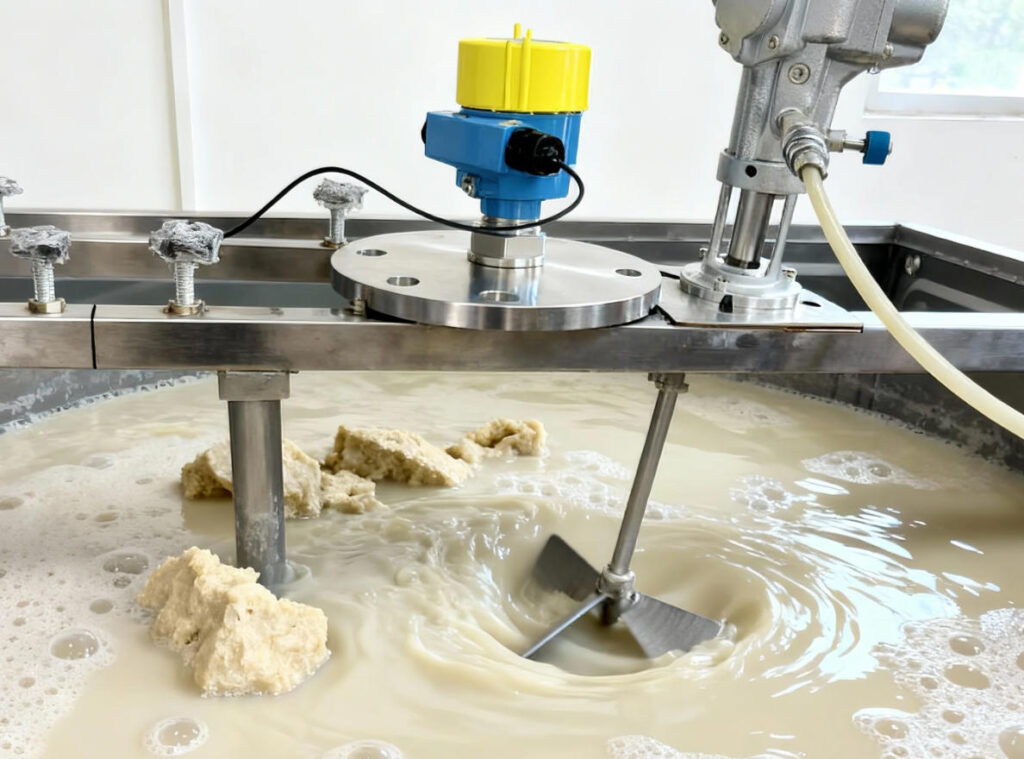
In a chemical enterprise, a vibrating fork level switch was initially selected for high-level alarm in a reactor vessel handling a complex chemical medium. The on-site conditions included a high-viscosity, adhesive liquid, with internal agitation present. After a period of operation, multiple anomalies were observed: the level existed but no alarm was triggered, alarm response was significantly delayed, and after cleaning, the device temporarily recovered, only for the issues to recur. Device self-checks showed all parameters were normal, yet on-site alarms remained unstable.
The root cause lies in the mismatch between process conditions and the working principle of vibrating fork level switches: high-viscosity media easily form a coating on the fork surface, and agitation combined with surface turbulence prevents the fork vibration from accurately reflecting liquid level.
2. Operating Principle and Application Boundaries of Vibrating Fork Level Switches
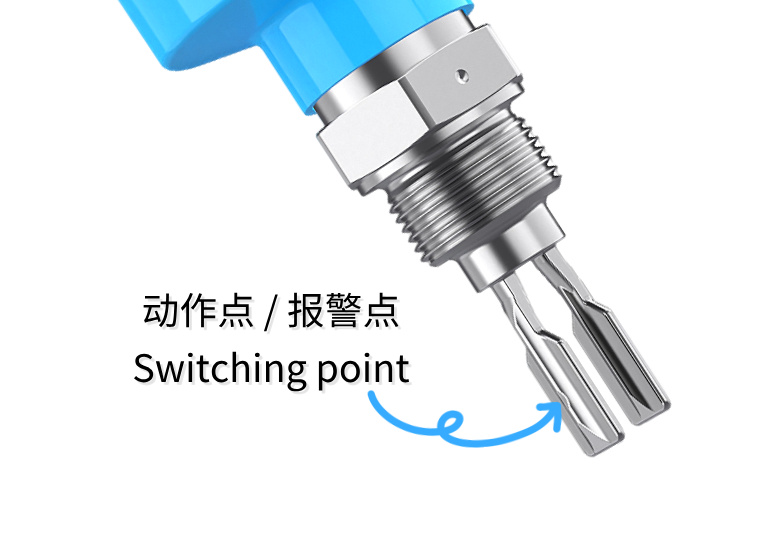
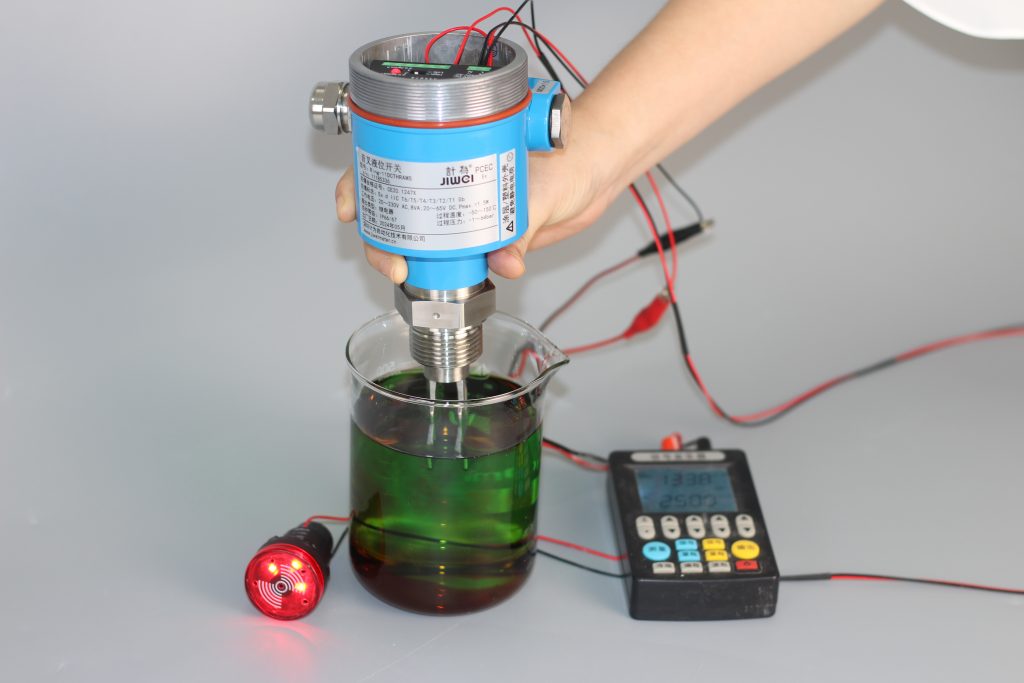
Vibrating fork level switches detect liquid level by monitoring changes in fork vibration frequency:
- Air or vapor: the fork vibrates freely and steadily.
- Liquid coverage: vibration frequency changes, triggering a switch signal.
The effectiveness of this detection relies on two prerequisites: the medium must genuinely cover the fork to the activation point, and liquid coverage must significantly affect the vibration. When operating conditions deviate from these prerequisites—for example, when medium adhesion, crystallization, or severe surface turbulence occurs—the switch may generate false alarms, delayed alarms, or fail to operate.
3. Common Operating Conditions Unsuitable for Vibrating Fork Level Switches
- High-viscosity or adhesive liquids
- Surface coating → false coverage
- Persistent coating → distorted vibration
- Alarm cannot recover
- Crystallizing or scaling media
- Salts or chemical solutions prone to crystallization with temperature or concentration changes
- Frequent cleaning required
- Gradual vibration change → reduced accuracy
- Strong agitation or rapid level fluctuations
- Frequent surface level changes
- Local, transient fork coverage
- Alarm flickering → operator uncertainty
- Very low-density or specialized media
- Vibration change minimal
- Trigger conditions unstable
- Common in specialized solvents or mixed media
4. Why “Works Initially but Fails Over Time”?
In many engineering sites, vibrating fork level switches perform normally when first installed, leading personnel to assume long-term stability. However, this initial performance usually occurs because:
- The fork surface is clean without liquid coating or scale.
- Extreme process characteristics such as strong agitation, temperature fluctuation, or surface turbulence have not yet manifested.
- Short-term contact with the medium does not accumulate to affect vibration frequency.
Over time, liquid gradually adheres to the fork surface, forming a film or scale, especially in high-viscosity or crystallizing chemical liquids. This coating alters vibration characteristics, reducing amplitude or shifting frequency, which causes delayed alarms, false alarms, or complete non-activation.
Dynamic process conditions exacerbate the issue. Agitation constantly impacts the fork, and rapidly fluctuating surfaces may momentarily cover the fork without reflecting actual liquid levels.
It is important to note that these phenomena are not product quality defects, but rather reflect the exposure of operational limits. Understanding this is crucial for selection and maintenance, allowing engineers to provide redundancy or choose more suitable measurement technology, preventing false alarms or failures during long-term operation.
5. Alternative Solutions to Consider
When conditions involve high viscosity, sticky media, or strong agitation, consider:
- RF Admittance Level Switch: high-viscosity or sticky liquids
- Vibrating Level Switch (different principle): high dust or particulate content
- Radar Level Meter: continuous level measurement
Jiwei instruments typically define the application boundaries of vibrating fork switches during the selection phase to avoid “installable but ineffective” scenarios.
6. Pre-Selection Checklist for Practical Use
Before choosing a vibrating fork level switch, verify the following:
- Is the medium prone to adhesion or crystallization?
- Is there strong agitation or liquid splashing?
- Is regular manual cleaning allowed?
- Is this a critical safety alarm point?
If two or more answers are “yes”, careful consideration is advised before selecting a vibrating fork solution.
7. Conclusion
Vibrating fork level switches offer a stable and reliable point-level detection method, provided the operating conditions align with their working principle. In environments with high viscosity, sticky media, crystallization, or strong agitation, stability can be significantly compromised.
Selection Recommendations:
- Thoroughly evaluate medium characteristics and process conditions
- Choose more suitable detection methods if necessary
- Avoid false alarms, delayed alarms, or non-activation