
Explosion Hazard Zoning: Key to Industrial Safety
In industries such as petrochemical, coal mining, dust processing, fine chemicals, and storage and logistics, explosive environments can occur. Ensuring safe production requires identifying risks at the source, and hazard zoning is the foundation for all explosion-proof designs, equipment selection, ventilation layout, and operational management. Scientific zoning defines the boundaries and severity levels of hazardous areas, enabling targeted engineering measures to reduce ignition sources and prevent accidents.

1. Theoretical Basis of Explosion Hazard Zoning
1.1 Explosion Triad and Hazard Formation
Explosions occur when combustible material, oxidizer, and an ignition source coexist. Combustible substances include natural gas, gasoline vapors, coal dust, or metal dust. The oxidizer is usually air, providing oxygen for flame propagation. Ignition sources include sparks, friction, static electricity, or hot surfaces. Hazard zoning assesses the likelihood of all three elements coinciding, using frequency and duration as main criteria—the longer and more frequent, the higher the hazard level.
1.2 Release Sources and Ventilation
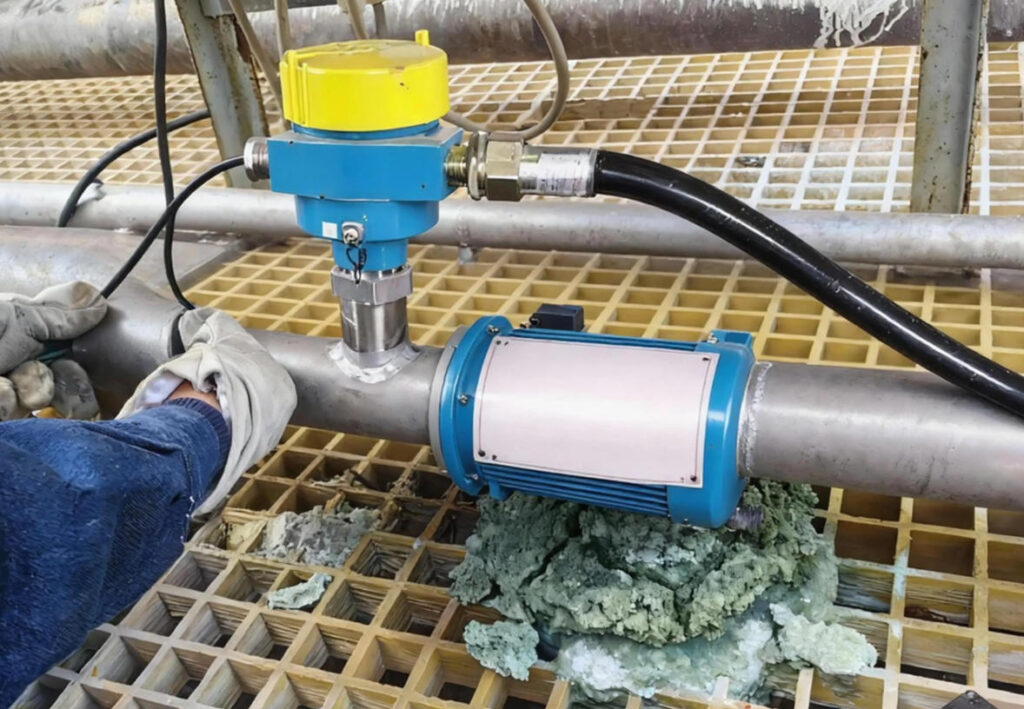
Release sources are points where combustible substances may escape, such as pump seals, valves, flanges, or dust conveyance joints. They are categorized by frequency: continuous, occasional, or only under abnormal conditions. Ventilation affects the hazard by diluting combustible concentrations. Good airflow prevents combustible gas or dust from accumulating to dangerous levels.

1.3 Engineering-Economic Balance
Zoning must balance safety and cost. Overly narrow zoning may miss hazards, while overly broad zoning can increase equipment costs. Effective zoning considers material properties, release probability, spatial layout, and operational experience.
2. Gas and Vapor Hazard Zoning
Hazardous gas and vapor areas are typically classified as Zone 0, 1, and 2:
- Zone 0: Continuous hazard where explosive gases are present for long durations (e.g., tank interiors).
- Zone 1: Occasional hazard due to leaks during normal operations (e.g., pump rooms, valve clusters).
- Zone 2: Rare hazard where explosive mixtures appear briefly under abnormal conditions (e.g., tank surroundings).
Gas properties affect dispersion. Heavier-than-air gases tend to accumulate near the floor, lighter-than-air gases rise. Zoning height should consider diffusion patterns and ventilation.
3. Dust Hazard Zoning
Dust explosions occur when suspended dust reaches explosive concentrations. Dust particle size, dryness, and composition influence risk. Zones are classified as:
- Zone 20: Continuous dust clouds (e.g., inside mills or mixers).
- Zone 21: Occasional dust clouds during operation (e.g., filling, discharge points).
- Zone 22: Rare dust clouds, typically from disturbance of settled dust.
Dust zones are often defined using release distance methods, providing practical guidance for engineering implementation.
4. Key Factors Affecting Zoning
- Combustible properties: Flash point, lower explosive limit (LEL), and dust characteristics determine risk severity.
- Release parameters: Leak rate, pressure, and temperature influence hazard formation.
- Ventilation: Adequate airflow prevents accumulation of combustible substances.
- Spatial structure: Closed spaces may trap gases, open areas allow dispersion; obstacles affect local hazards.
- Equipment condition: Aging, wear, or vibration can increase leak probability, requiring periodic zoning review.
5. Engineering Implementation
- Equipment selection: Match hazard zones with suitable explosion-proof types.
- Ventilation verification: Ensure combustible concentrations remain below explosive limits using monitoring or modeling.
- Zoning maps and signage: Mark horizontal and vertical boundaries, release sources, and applicable equipment zones.
6. Typical Industrial Scenarios
- Petroleum storage: Tank interiors → Zone 0; periodic vent emissions → Zone 1; external leakage → Zone 2.
- Flour milling: Mill interiors → Zone 20; equipment surroundings → Zone 21; settled dust areas → Zone 22.
- Chemical laboratories: Small-scale solvent evaporation → Zone 2; fume hoods considered controlled zones.
Conclusion
Explosion hazard zoning is the starting point for managing explosive environments, and it underpins equipment selection, process layout, ventilation, and operational safety. Only by understanding combustible properties, release mechanisms, and dispersion behaviors can zoning be accurately aligned with actual facilities, forming an effective risk control system.
A dynamic, closed-loop approach—evaluating release sources, verifying ventilation, matching equipment, and periodically reviewing—ensures zoning effectively supports industrial safety.