
Woodchip Silo Stability in Biomass Energy Systems: How Vibrating Rod Level Switches Reduce Combustion System Risks
In biomass-fueled energy systems, woodchips are increasingly adopted due to their wide availability, cost-effectiveness, and lower carbon emissions. Compared to traditional solid fuels, however, woodchips exhibit low bulk density, irregular structure, bridging tendency, and fluffiness. These physical characteristics make them prone to level misreadings, feeding interruptions, and even combustion system disruptions during storage and handling.
For continuously operating combustion systems, the stability of level measurement not only affects production efficiency but also directly impacts equipment safety and the continuity of energy supply. During an upgrade of a woodchip storage system at a biomass energy project, level measurement was identified as a critical focus of the improvement initiative.

Project Background: System Risks from “Fluffy” Materials
The project implemented a closed woodchip silo for fuel buffering. Material is fed from overhead conveyors into the silo and continuously discharged through the bottom feeding mechanism into the combustion system, ensuring stable and continuous boiler operation. From a process perspective, this is a typical continuous feeding system. However, several representative measurement challenges emerged in actual operation:
- Significant fluctuations in woodchip bulk density, influenced by moisture content and particle size
- Bridging and void formation, leading to unstable material layers
- Irregular material surfaces, complicating predictable detection
- Randomness in discharge, causing dynamic changes in level
Under such conditions, traditional level measurement technologies that perform well in controlled environments often exhibit increased false alarms on site, such as:
- “Empty silo” alarms despite sufficient material
- Failure to trigger high-level signals near full capacity
- Lag in response due to material adhesion, affecting timely detection
These issues are not merely measurement errors; they can cascade into operational risks. Continuous upstream feeding may cause overflow; unstable combustion feeding can affect boiler thermal efficiency; frequent manual verification increases operation and maintenance costs. The project team recognized that woodchips, though seemingly simple, represent a complex solid material that imposes higher demands on the stability and anti-interference capability of level measurement.

Why Common Level Switches Fail with Woodchips
In the realm of solid-level measurement, multiple technologies exist, but their suitability is highly dependent on material properties. For low-density, highly dynamic biomass materials like woodchips, traditional detection principles often struggle to maintain consistent performance.
- Rotary paddle switches rely on mechanical resistance of the paddle to detect levels. While reliable for compacted or heavy materials, fluffy woodchips may fail to provide sufficient force, causing the paddle to be buried without triggering. Irregular friction during flow can also produce false signals.
- Capacitive and RF admittance devices depend on stable dielectric properties. Woodchip moisture content varies with environment, batch, and season, affecting dielectric constant and leading to inconsistent switch points and reduced measurement repeatability.
Through multiple on-site reviews and process analysis, the team concluded that for low-density, dynamically changing materials, level detection must rely on repeatable and verifiable physical response mechanisms rather than incidental contact or parameters easily affected by environmental changes. This principle guided the subsequent technology selection.
Vibrating Rod Level Switch: Reliable Detection Based on Vibration Changes
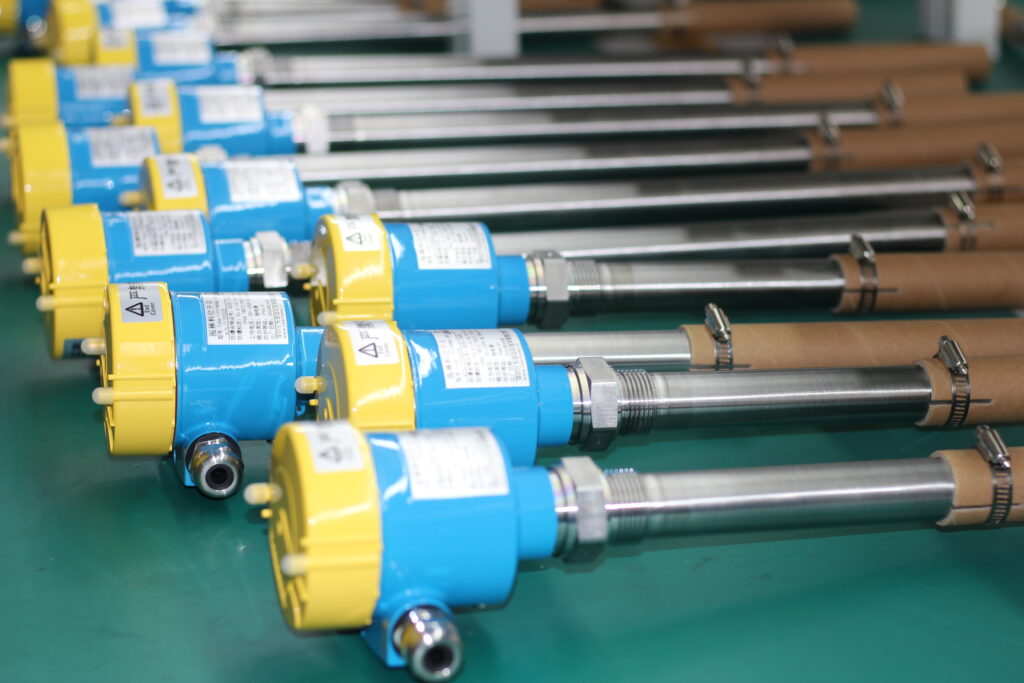
After comprehensive technical evaluation and on-site compatibility analysis, the project selected vibrating rod level switches for high- and low-level detection, aiming to:
- Prevent overfilling of the silo
- Avoid combustion interruptions affecting boiler stability
- Reduce reliance on manual inspection and enhance system automation
Vibrating rod level switches operate by monitoring vibration state changes. When powered, the probe vibrates at a fixed frequency. Material covering the probe alters the vibration amplitude and energy transfer characteristics, which the electronics detect to output a switch signal. The detection process does not rely on complex calculations, providing a clear and verifiable engineering response.
Unlike weight- or electrical-parameter-based technologies, the core advantage is determining material presence by whether vibration is suppressed, establishing a repeatable physical response and significantly reducing sensitivity to density fluctuations. Even with loose, lightly compacted woodchips, effective contact with the probe ensures stable detection, providing reliable boundary signals for continuous feeding systems.
Why Vibrating Rod Level Switches Are Ideal for Woodchips
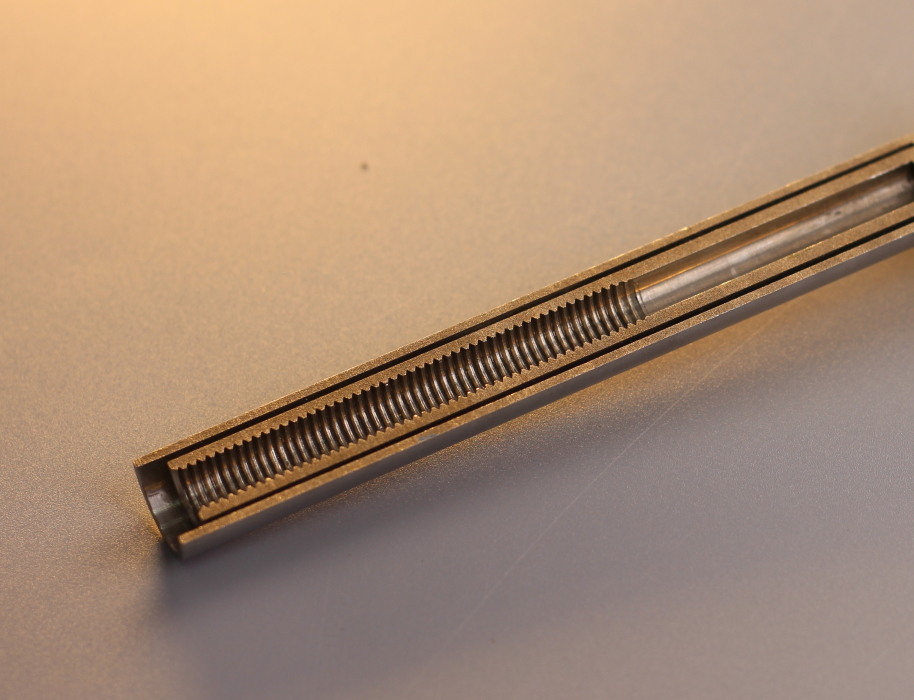
Evaluation of site operation characteristics and long-term stability requirements revealed several advantages of vibrating rod switches in this application:
- Deterministic response in low-density materials
By monitoring vibration energy, the switch identifies whether vibration is suppressed. This allows immediate detection without waiting for material compaction, providing timely response and clear signal boundaries even with irregular woodchip piles. - Dual-rod design enhances sensitivity and reliability
The patented dual-rod structure improves detection sensitivity and repeatability compared to single-rod designs. Feedback signals are more stable, even with low-density, fibrous woodchips, reducing missed detections and lag. - Improved anti-adhesion, ensuring long-term stability
Continuous vibration disturbs initial material deposits, preventing long-term adhesion. The dual-rod structure further optimizes vibration coverage and signal feedback, lowering false alarm probability and extending stable operation cycles. - Low maintenance reduces lifecycle costs
High-stability dual-rod switches decrease unplanned downtime and inspection needs while reducing the safety risks of entering silos. For continuous combustion systems, predictable boundary signals enhance overall system certainty.
In summary, dual-rod vibrating rod level switches not only fulfill basic detection requirements but also provide a repeatable, physics-based solution for complex material conditions, establishing a reliable safety boundary and improving long-term responsiveness and stability.
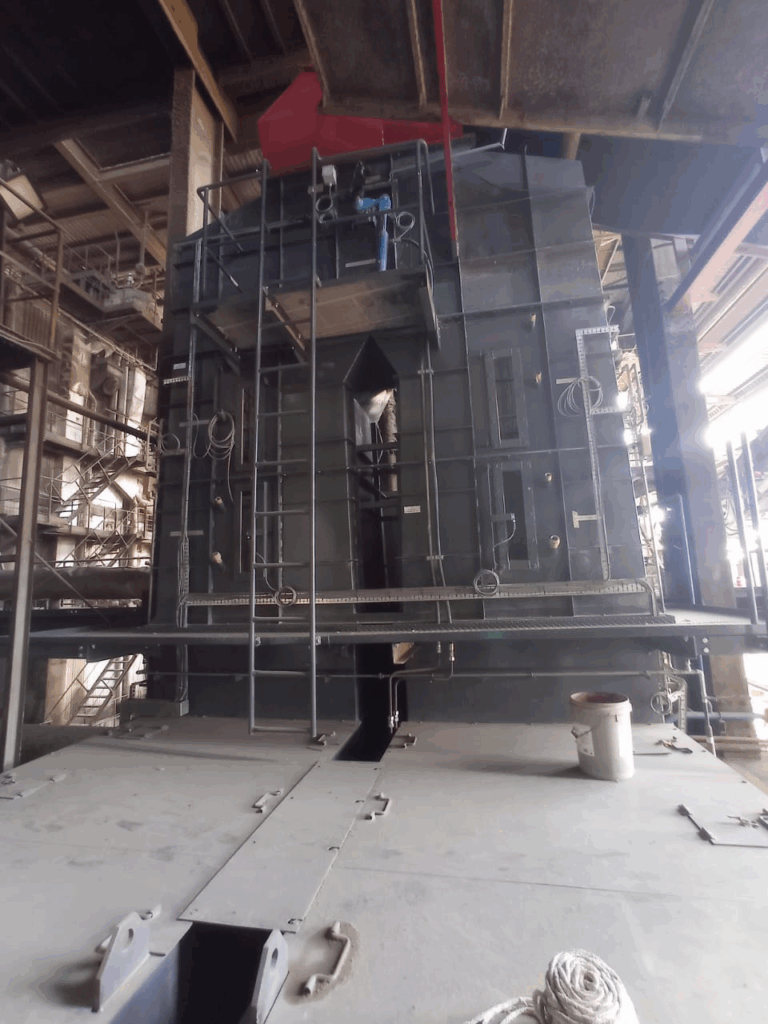
From Single-Point Measurement to System Reliability
Many plants focus on conveying or combustion efficiency while underestimating basic detection. Yet a single erroneous level reading can affect the entire energy chain. As industry demands continuous, predictable operation, level detection evolves from an auxiliary device to a critical node ensuring system stability. Vibrating rod switches provide more than a switch signal—they form a deterministic operational foundation.
Conclusion
With the rapid growth of biomass energy, woodchips and other light fuels are widely adopted, but their complex behavior challenges traditional level measurement. Vibrating rod switches, leveraging a repeatable physical vibration response, provide timely, reliable detection even with loose, fibrous materials. The patented dual-rod design further improves sensitivity and long-term reliability while reducing maintenance needs. When silos are stably monitored, feeding is predictable, and manual intervention is minimized, the system achieves higher certainty and safety—demonstrating the core objective of industrial automation in biomass and powder material applications.