Application of JWrada® MINI 80GHz Radar Level Transmitter in Small Sealed Storage Tanks
1. Application Overview
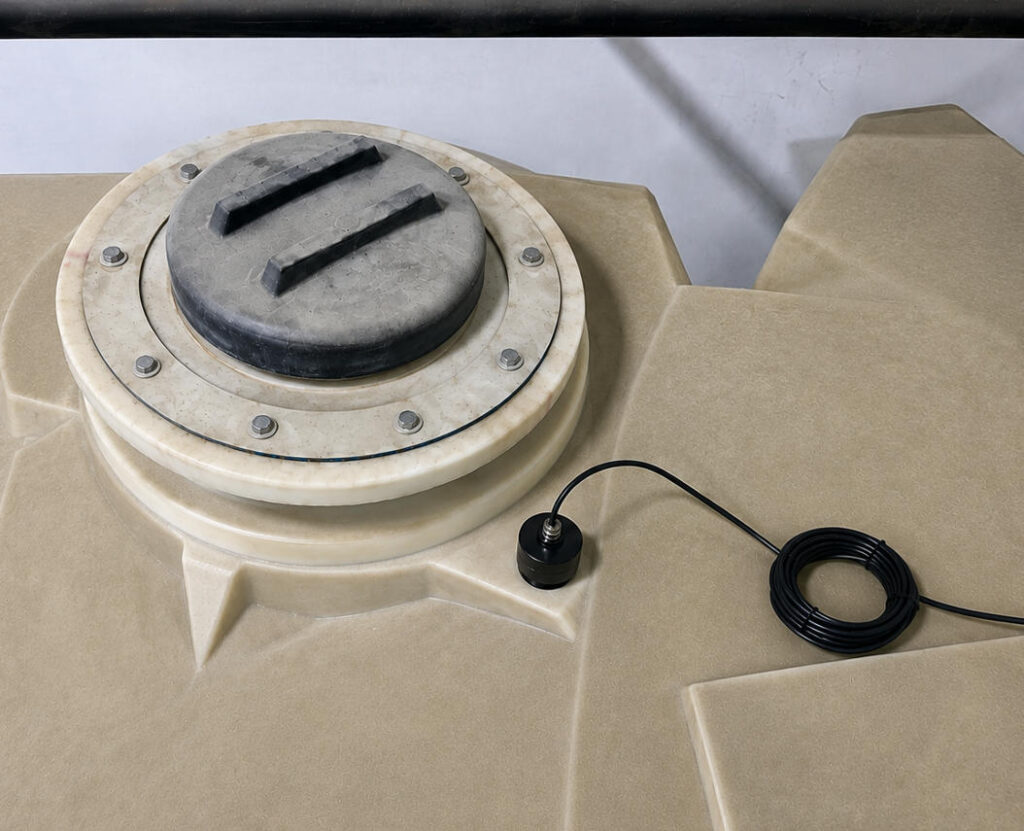
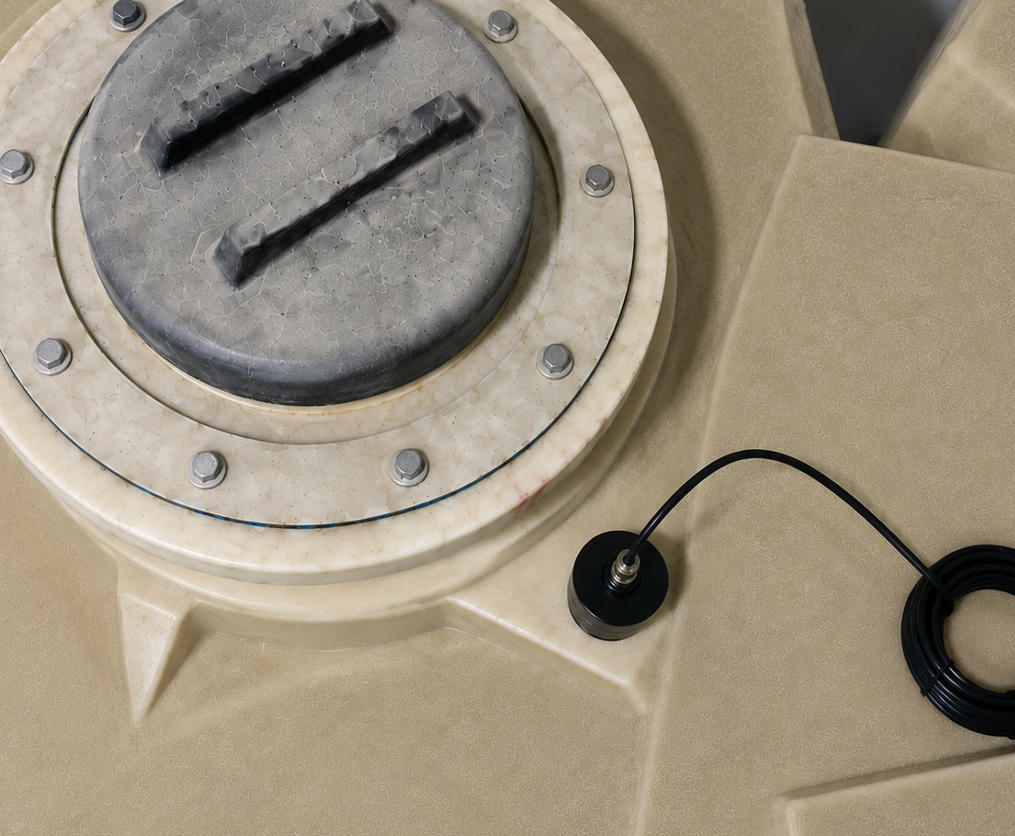
This case study focuses on a small sealed storage tank level measurement system. The tank is made of non-metallic materials such as PE or FRP and features a flanged top sealing structure. It represents a typical small-volume industrial process vessel with limited installation space and restricted headroom.
The process medium inside the tank is a liquid chemical raw material or mixed solution with certain corrosive and volatile properties. Due to the fully sealed structure and lack of external observation access, level measurement can only rely on continuous online instrumentation.
This type of application is characterized by the following typical measurement conditions:
The tank diameter is relatively small, resulting in short echo propagation distance
The top structure is complex with multiple sealing layers
The medium may contain slight vaporization or volatile gases
The tank material is non-metallic, which causes attenuation of microwave signals
Installation space is limited and instrument size is sensitive
2. Analysis of Conventional Level Measurement Technologies
In small sealed storage tank applications, traditional level measurement technologies are often limited due to installation constraints, complex media conditions, and sealed process environments. Ultrasonic level transmitters operate based on acoustic wave propagation in air, but in practical applications they are easily affected by temperature gradients, which cause variations in sound velocity and result in measurement deviation. In addition, vapor or condensation inside the tank can attenuate or scatter acoustic signals, and in confined spaces multiple reflections may lead to echo overlap, reducing measurement stability. Therefore, ultrasonic technology shows limited adaptability in small or sealed tank applications.
Capacitive level transmitters measure level by detecting changes in dielectric constant. However, their performance is highly dependent on medium properties. Changes in medium composition may lead to calibration drift, while probe surfaces are prone to fouling or scaling, affecting long-term stability. In addition, capacitive instruments require direct contact with the process medium, which increases maintenance frequency and operational risks in corrosive or viscous media applications.
Hydrostatic level transmitters determine liquid level by measuring static pressure at the bottom of the tank. However, in small sealed storage tanks, this method has structural limitations. It typically requires bottom tank penetration, introducing potential leakage risks. Measurement accuracy is also affected by variations in medium density. Furthermore, its applicability is limited in non-metallic or compact tank structures, making it less suitable for such applications.
3. Radar Level Measurement Principle and Applicability
This project adopts the JWrada® MINI 80GHz FMCW radar technology. The measurement principle is based on frequency-modulated continuous wave radar. The radar emits high-frequency microwave signals, which are reflected by the liquid surface. The distance is calculated by measuring the frequency difference between the transmitted and received signals, thereby determining the liquid level.
The basic relationship is expressed as:
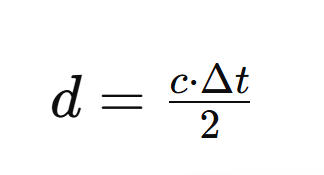
d: distance between radar and liquid surface
c: speed of light
Δt: signal round-trip time
Within FMCW radar systems, distance is derived through frequency difference measurement, which significantly improves short-range resolution performance.
4. Technical Advantages of 80GHz Radar in Small Tanks
4.1 Narrow Beam Characteristics Enabled by High Frequency
Compared with 26GHz radar systems, 80GHz radar has a significantly narrower beam angle, which is particularly beneficial in small tank applications. The narrower beam reduces unwanted reflections from tank walls and minimizes interference from internal structures such as flanges, nozzles, or agitators, thereby improving signal purity. In small-diameter tanks, where space is limited and reflection paths are complex, this feature significantly enhances echo stability and measurement reliability.
4.2 Optimized Low Dead Zone for Short-Range Measurement
Small storage tanks typically have limited level variation ranges, requiring strong near-field measurement capability. Dead zone control is therefore a critical design requirement. The JWrada® MINI improves near-range detection performance through optimized antenna design and advanced signal processing algorithms, enabling stable measurement even when the liquid level is close to the sensor installation position. This makes it suitable for continuous short-range monitoring applications.
4.3 Adaptability to Low Dielectric Constant Media
In non-metallic tanks such as PE or FRP vessels, the dielectric constant of the medium is generally low, resulting in weaker radar signal reflections. Conventional radar systems may experience unstable or weak echoes under such conditions. The 80GHz high-frequency radar provides improved signal resolution and higher echo sensitivity, enabling more reliable detection of weak reflections and improving measurement consistency in low dielectric environments.
4.4 Anti-Interference Capability (Vapor, Condensation, and Wall Effects)
Inside sealed storage tanks, common interference factors include trace vapor, condensation films on tank walls, and slight surface turbulence. These conditions may generate false echoes or unstable signals. The JWrada® MINI uses dynamic echo tracking and signal filtering algorithms (echo tracking) to identify and suppress abnormal reflections, ensuring that only valid liquid surface echoes are processed. This significantly improves signal stability and long-term operational reliability in complex industrial environments.
5. Installation Structure Analysis
The device is installed at the top center flange of the storage tank, which meets the basic requirements for radar measurement:
The antenna is vertically aligned with the liquid surface
Interference from tank wall reflections is minimized
Installation position avoids inlet turbulence zones
Due to limited tank space, the device adopts a compact structural design and can be directly mounted on standard flange interfaces without additional brackets. The cable entry uses sealed connectors to ensure long-term stable operation under IP-rated protection.
6. Signal Processing and Output Methods
The JWrada® MINI radar level transmitter supports multiple industrial standard output methods, enabling seamless integration with modern process control systems. It provides a standard 4–20 mA analog output for continuous level signal transmission, compatible with most PLC and DCS architectures. It also supports HART digital communication, enabling remote configuration, device diagnostics, and online commissioning without interrupting the process. In addition, a Bluetooth commissioning interface is available for fast on-site setup and calibration, improving installation efficiency.
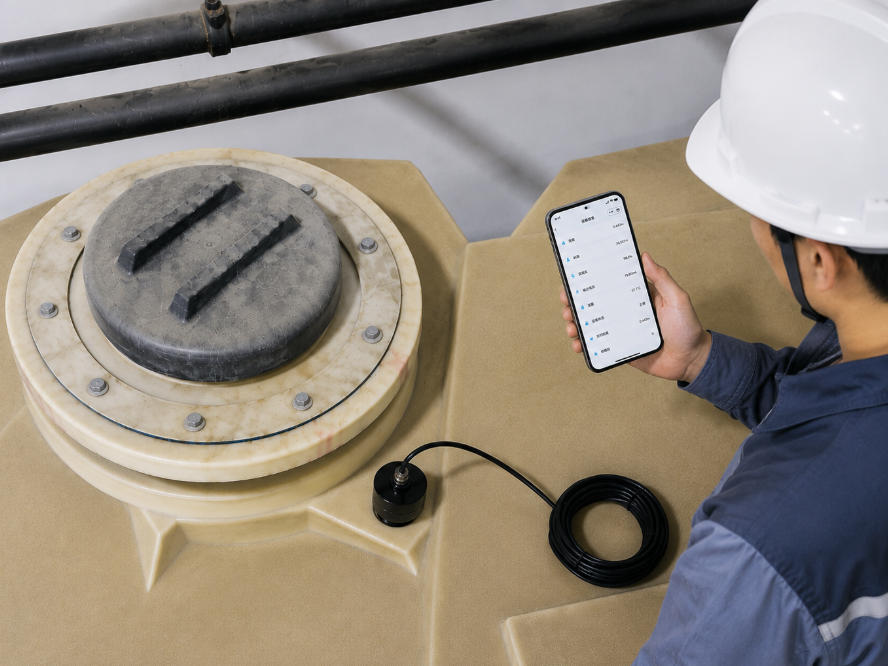
In industrial control systems, the level signal can be directly integrated into PLC or DCS systems to achieve closed-loop control functions. Typical applications include automatic dosing control in chemical processes, high and low level alarm systems for tank safety management, and pump start-stop interlocking control for automated operation and process optimization. This integration capability enhances overall process stability, operational efficiency, and system safety.
7. Operational Stability Performance
During continuous operation, the system demonstrates the following engineering characteristics:
Stable echo curve with no significant drift
Continuous output under small level fluctuations
Low sensitivity to tank material variations
No frequent recalibration required over long-term operation
In small-volume storage tanks, it provides higher long-term stability compared to conventional level measurement technologies.
8. Conclusion
The key challenges of small sealed storage tank level measurement include space limitations, weak echo media, and complex internal reflection environments.
Based on 80GHz FMCW radar technology, the JWrada® MINI significantly improves measurement stability and reliability in confined spaces through narrow beam design and advanced echo signal processing algorithms.
This solution offers clear advantages in non-contact measurement, low maintenance requirements, and industrial automation integration, making it suitable for modern chemical and water treatment systems in small storage tank applications.
80GHz radar level transmitter, small radar level sensor, non-contact level measurement, plastic tank level monitoring, FMCW radar, chemical level measurement, sealed vessel level detection, low dielectric constant media measurement, process industry level control