Steam Drum Level Monitoring: Jiwei Ring-11 Vibrating Fork Level Switch in High-Temperature Boiler Applications
Introduction
In modern power generation systems, the steam drum of a boiler is often considered the “heart” of the entire thermal process. Maintaining a stable water level in the steam drum is critical not only for steam quality and power generation efficiency, but also for overall plant safety.
If the drum water level becomes unstable, the consequences can be severe—from reduced turbine efficiency to catastrophic equipment damage. As industrial automation technologies continue to evolve, many traditional level measurement methods are proving insufficient in extreme operating environments.
This article presents a real-world application at Xiangyang Aneng Thermal Power Plant in Hubei Province, China, demonstrating how the Jiwei Ring-11 vibrating fork level switch provides reliable steam drum level monitoring and high-low water level protection under extreme conditions of 400 °C temperature and 16 bar pressure.
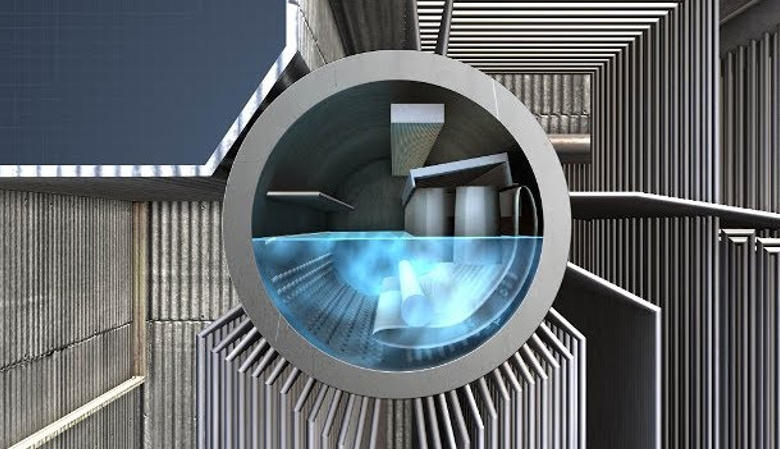
Steam Drum Level Control: A Critical Safety Line in Power Plants
In thermal power plants and combined heat and power (CHP) facilities, heat energy is transferred through steam at various pressure levels. Process temperature control is achieved by regulating steam pressure, which means the steam drum operates under extremely high pressure and temperature conditions.
Typical operating conditions include:
- Steam pressure up to 16 bar
- Operating temperature up to 400 °C
- High-temperature saturated steam environment
Under these conditions, maintaining accurate boiler water level monitoring becomes a significant challenge.
Safety Risks of Improper Water Level
If the water level rises too high, steam-water separation efficiency decreases, allowing moisture to enter the steam pipeline. In severe cases, this can cause water hammer damage to turbine blades.
If the water level drops too low, the boiler water circulation may be disrupted, causing overheating of heat transfer surfaces and potentially leading to tube rupture or boiler failure.
Therefore, reliable high-level and low-level limit protection serves as the final safety barrier for boiler systems.
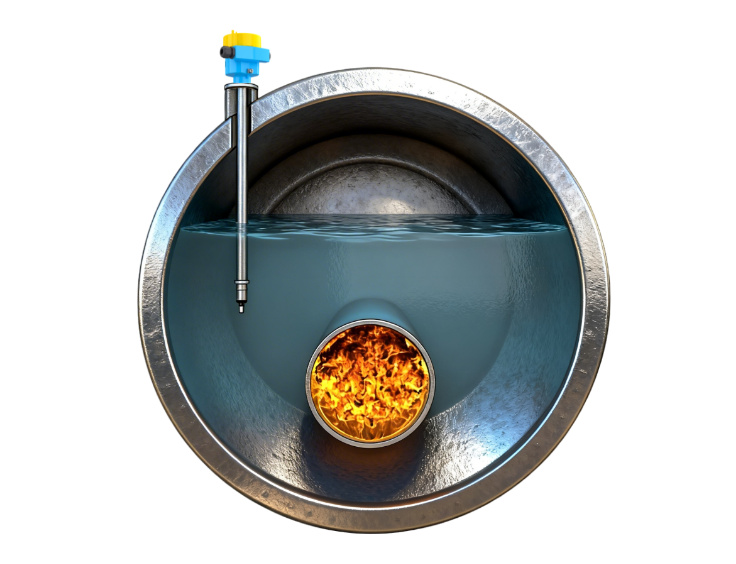
Measurement Challenges in Steam Drum Environments
Steam drum level measurement presents several technical difficulties:
Extreme Temperature and Pressure
The drum contains high-temperature saturated steam, creating harsh operating conditions that can degrade conventional sensors.
Density Fluctuations
Steam density changes significantly with pressure, which can cause measurement errors in traditional differential pressure level transmitters.
Process Disturbances
Foam, bubbles, turbulence, and rapid load fluctuations frequently occur in steam drums, potentially triggering false alarms in conventional level switches.
Strict Safety Standards
Critical boiler instrumentation must often comply with SIL (Safety Integrity Level) certification requirements, ensuring reliability in safety-related applications.
For Xiangyang Aneng Thermal Power Plant, ensuring stable and reliable steam drum level monitoring had long been a priority. However, the previously installed level switches occasionally produced signal drift and false alarms due to high-temperature steam exposure and pressure fluctuations.
To address these issues, the plant initiated a technical upgrade and introduced a more reliable vibrating fork level switch solution.
Why Aneng Thermal Power Plant Chose the Jiwei Ring-11
After extensive technical evaluation and field testing, Aneng Power selected the Jiwei Ring-11 vibrating fork level switch as the core device for steam drum high-level and low-level protection.
This decision was based on several key advantages.
Vibrating Fork Measurement Technology
Unlike float switches or capacitance level switches, the Ring-11 vibrating fork level switch operates based on vibration frequency detection.
A piezoelectric crystal drives the fork to vibrate at its natural resonance frequency. When the fork comes into contact with liquid, the vibration frequency changes due to the difference in medium density. The electronics detect this change and output a switching signal.
This measurement principle offers several benefits:
- Not affected by conductivity or dielectric constant
- Immune to bubbles, foam, or turbulence
- Highly stable in dynamic process conditions
Even in turbulent steam drum environments, the vibrating fork level switch provides clear and reliable wet/dry level detection.
High-Temperature and High-Pressure Design
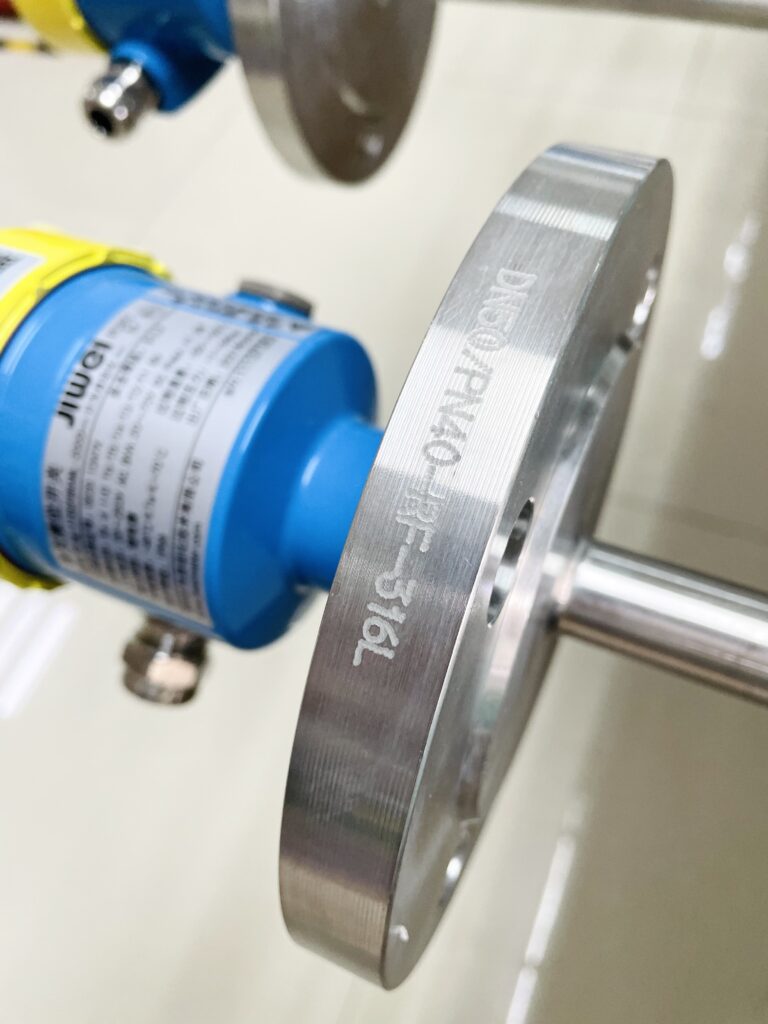
To withstand the extreme operating conditions of steam drums, the Ring-11 features a specially designed high-temperature structure.
Key design features include:
- 316L stainless steel probe for corrosion and heat resistance
- Extended heat dissipation tube to isolate electronics from high temperatures
- Industrial-grade construction for long-term reliability
This design ensures that the probe can withstand direct contact with high-temperature steam and hot water, while the electronic components remain within a safe operating range.
SIL3 Functional Safety Certification

Safety is a fundamental requirement in the power generation industry.
The Jiwei Ring-11 vibrating fork level switch has obtained SIL2/SIL3 functional safety certification, confirming its reliability in safety-related applications.
The device includes built-in self-diagnostic functions that continuously monitor:
- Sensor vibration status
- Electronic module health
- Internal system integrity
If any abnormal condition is detected, the instrument immediately sends a fault alarm signal, ensuring fail-safe operation.
Real-World Application: Aneng Thermal Power Plant Case Study
Project Location
Boiler #2 Steam Drum
Xiangyang Aneng Thermal Power Plant, China
Application
High-level alarm and low-level shutdown protection
During a major overhaul project, engineers installed two Ring-11 vibrating fork level switches on both sides of the steam drum manhole cover.
The two switches serve different safety functions:
- High water level alarm
- Low water level boiler shutdown protection
Installation and Commissioning
The compact structure and standard flange connection made installation straightforward.
Compared with the previous instruments, the Ring-11 required minimal setup. Engineers could configure sensitivity using push-button controls without opening the instrument housing.
This user-friendly design significantly reduced installation and commissioning time.
Operational Performance
During early operation, the boiler experienced several large load fluctuations.
Traditional level instruments often produce false alarms during rapid pressure changes due to density variations. However, the Ring-11 vibrating fork level switch remained stable thanks to its automatic measurement correction technology.
According to the plant’s instrumentation supervisor:
“Since installing the Ring-11 vibrating fork level switches, we have conducted multiple full-water and low-water simulation tests. Each time the fork contacts the water surface, the signal switches within milliseconds. Over a full year of operation, we have not experienced a single false alarm.”
Maintenance Advantages
Routine maintenance has also become significantly easier.
The Ring-11 includes a built-in functional test button, allowing technicians to verify both the electronic circuit and fork vibration without removing the instrument from service.
This greatly simplifies periodic inspection procedures.
Key Technical Advantages of the Ring-11
Automatic Measurement Compensation
Steam drum water density varies with temperature and pressure. Conventional level switches may lose sensitivity under these conditions.
The Ring-11 integrates intelligent algorithms that automatically compensate for changes in medium density, ensuring reliable detection even in high-temperature hot water.
Robust Sensor Design
The vibrating fork probe is engineered so that its natural frequency avoids common industrial vibration ranges, preventing false triggering caused by mechanical vibration.
The fully welded sealing structure also prevents high-pressure steam from entering the instrument housing.
Self-Diagnostics and Fail-Safe Protection
Within its SIL3 safety architecture, the Ring-11 continuously monitors its own operating status.
For example, if the fork becomes coated with deposits or the internal crystal degrades, the device detects abnormal vibration and outputs a predefined fault signal (such as 22 mA) to alert maintenance personnel.
This proactive design enables predictive maintenance, significantly improving system safety.
Operational Benefits for Power Plants
The successful implementation at Aneng Thermal Power Plant demonstrates several important benefits.
Improved Boiler Safety
Reliable steam drum level detection eliminates the risk of drum overflow or low-water accidents, protecting both personnel and equipment.
Reduced Maintenance Costs
The instrument’s low-maintenance design reduces spare part consumption and manual inspection requirements.
Improved Boiler Efficiency
Stable level signals allow the steam drum to operate consistently at optimal water levels, improving steam quality and thermal efficiency.
Conclusion
The successful application at Xiangyang Aneng Thermal Power Plant highlights the reliability and performance of the Jiwei Ring-11 vibrating fork level switch in extreme industrial environments.
With its high-temperature resistance, strong anti-interference capability, and SIL3 functional safety certification, the Ring-11 has become an ideal solution for steam drum level monitoring in power plants, chemical facilities, and industrial boiler systems.
For engineers seeking a high-reliability level limit solution, the Jiwei Ring-11 proves that precise measurement and operational safety can go hand in hand.