Nanfu Battery Silo Level Measurement Case | Tube-11 Vibrating Rod Level Switch
1. Project Background
In the battery manufacturing industry, the storage and feeding process of raw materials plays a critical role in ensuring production stability and continuity. In the case of Nanfu Battery, a wide range of powder and granular materials are involved in production, such as zinc powder, manganese dioxide, and various electrolyte additives. These materials are typically stored in medium to large silos and transported to production equipment through automated feeding systems.
In such processes, Vibrating Rod Level Switch technology is often adopted as a reliable point-level detection solution to ensure accurate monitoring of silo conditions and stable feeding control.
With increasing production capacity and higher automation requirements, Nanfu Battery placed stricter demands on its storage and feeding system. In addition to ensuring continuous and stable material supply, it is essential to accurately monitor the material level inside the silo to prevent production interruptions caused by material shortage or overfilling.
However, in actual operation, traditional level detection methods gradually revealed limitations and became a key factor affecting system stability.
2. On-site Conditions and Technical Challenges
The project involved multiple storage and feeding silos with the following characteristics:
Complex material properties: fine powders with certain adhesion tendencies
Harsh operating environment: heavy dust, vibration, and airflow disturbance inside the silo
Continuous production process: 24/7 operation requiring high equipment reliability
Limited installation space: fixed interface positions and compact silo structure
Under these conditions, the previously used capacitive and rotary paddle level switches experienced several issues:
Frequent false alarms
Dust accumulation on sensors caused signal drift, resulting in incorrect “full/empty” readings
Mechanical wear and failure
Rotary paddle switches suffered bearing jamming and mechanical wear during long-term operation
Delayed response
In unstable material flow conditions, real material level could not be accurately reflected in time
High maintenance cost
Frequent shutdowns were required for cleaning and replacement, affecting production efficiency
The customer clearly requested a more reliable, low-maintenance, and interference-resistant level detection solution.
3. Solution: Tube-11 Vibrating Rod Level Switch
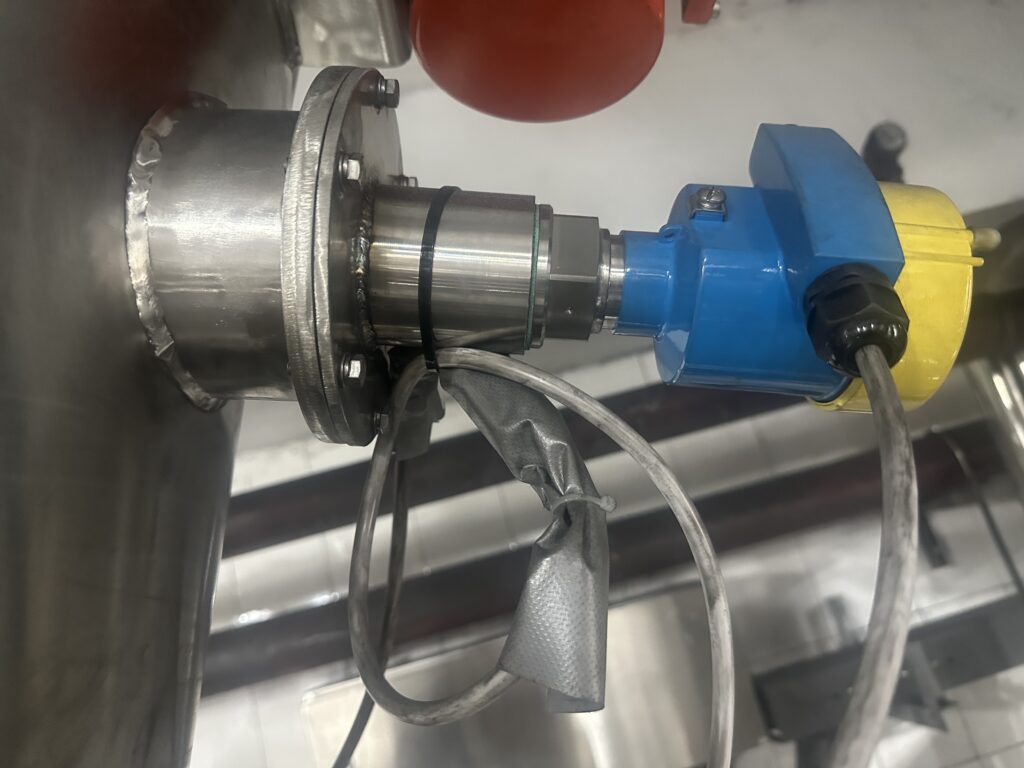
To address these challenges, the project selected Jiwei Tube-11 Vibrating Rod Level Switch for high-level and low-level detection points in the silo system.
Working Principle
Tube-11 Vibrating Rod Level Switch operates based on the vibrating rod principle. Once energized, the probe vibrates at a fixed frequency. The system detects changes in vibration behavior to determine whether material is present.
When no material is in contact with the probe, the vibration remains stable at its natural frequency, indicating an “empty” state. When material covers the probe, damping effects cause changes in frequency and amplitude, which are detected by the control circuit and converted into a switching signal for alarm or interlock control.
The key advantage of this principle is that level detection is based on vibration characteristic changes rather than dielectric constant, capacitance variation, or mechanical resistance, making it highly suitable for powders, granules, and complex industrial conditions.
4. China-Origin Dual-Rod Vibration Structure
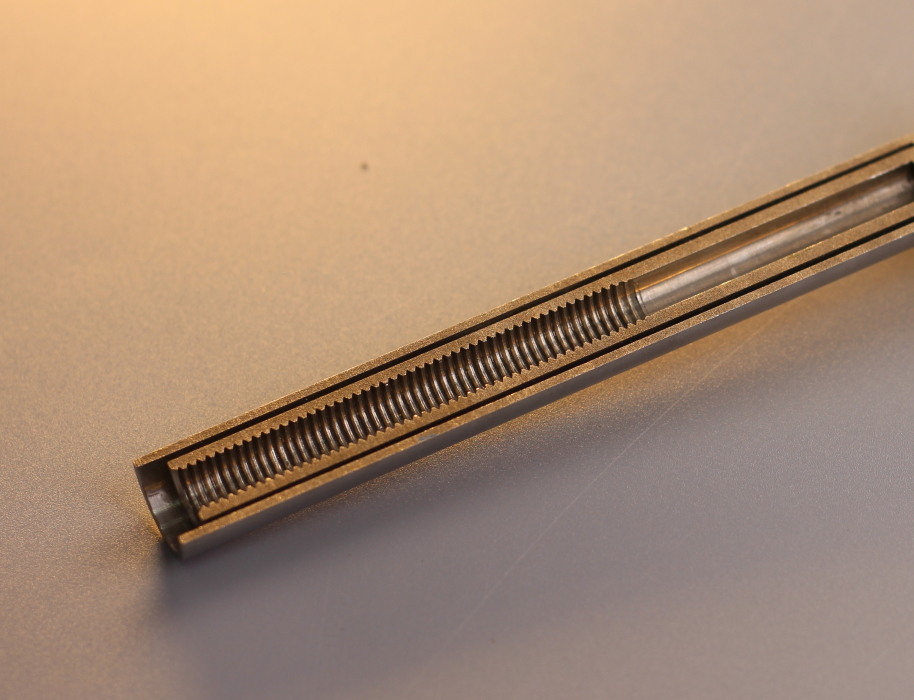
Tube-11 Vibrating Rod Level Switch adopts a dual-rod vibrating structure design, which improves vibration stability and anti-interference capability compared with traditional single-rod designs.
The dual sensing elements work together to form a more stable vibration field, enabling reliable signal identification even under dust accumulation, material buildup, or airflow disturbances.
This structural design represents an early engineering optimization approach in vibration-based level detection in China, focusing on mechanical stability rather than relying solely on electronic signal amplification.
5. Single Rod vs Dual Rod Structure
Traditional single-rod vibrating level switches are represented by brands such as Endress+Hauser and some domestic manufacturers like FineTek.
Single-rod design features a simple structure and lower cost, but it relies on a single vibration system. In dusty environments, uneven material impact, or partial buildup conditions, it may experience signal fluctuations or false triggering, making it less suitable for complex industrial applications.
In contrast, the dual-rod structure provides a more stable vibration system. When material contacts the probe, damping changes are more clearly detected, allowing the control system to better distinguish real material conditions from environmental interference. This significantly improves reliability and sensitivity in continuous industrial operation.
6. Installation and System Integration
In this project, equipment deployment was optimized based on on-site conditions and existing system structure, focusing on installation reliability, measurement stability, and system compatibility to ensure long-term stable operation of Tube-11 Vibrating Rod Level Switches in storage silos.
Installation Position Optimization
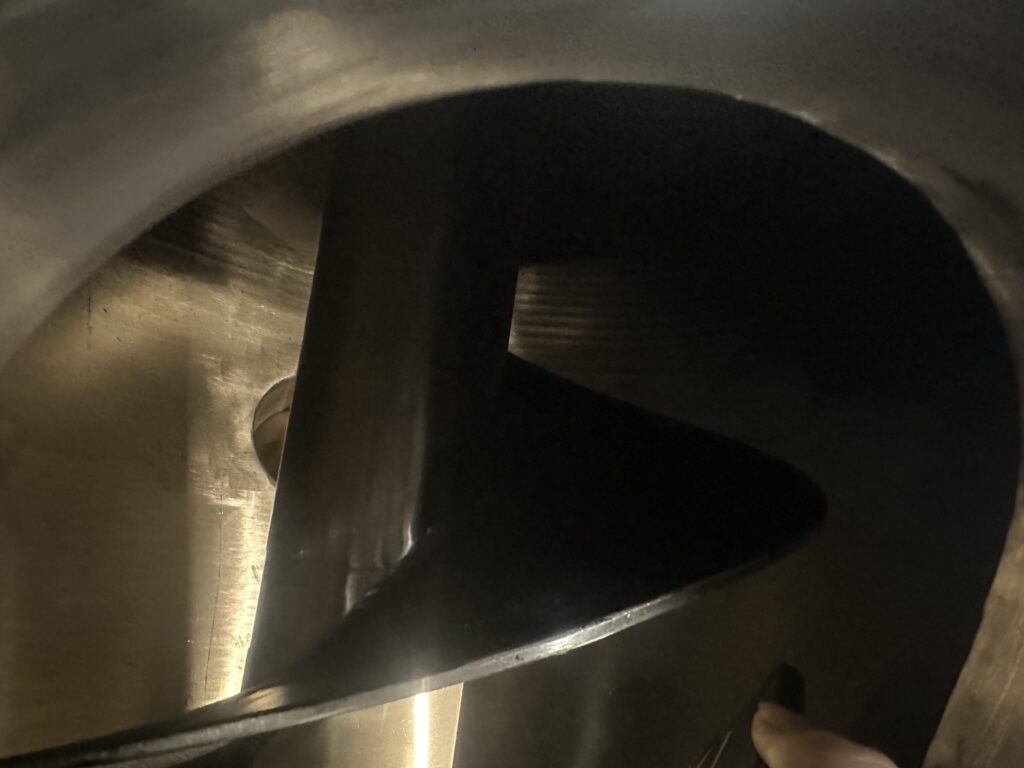
The high-level switch is used to prevent silo overfilling, while the low-level switch ensures continuous material supply. Both positions were carefully selected to avoid direct material impact zones and feeding streams, reducing false triggering caused by high-speed material flow.
Probe Selection
Probe length was selected based on material properties such as density, flowability, and adhesion tendency. The design ensures full coverage of the detection area while avoiding blind spots or excessive mechanical load.
Interface Compatibility
The device uses the same flange connection as the original equipment, allowing direct replacement without major structural modification. This significantly reduces downtime during installation and system upgrade.
Electrical Integration
The system directly connects to the PLC control system with standard switching output signals. This enables automatic alarms, interlocks, and feeding control logic, forming a complete closed-loop silo management system.
7. Performance and Field Results
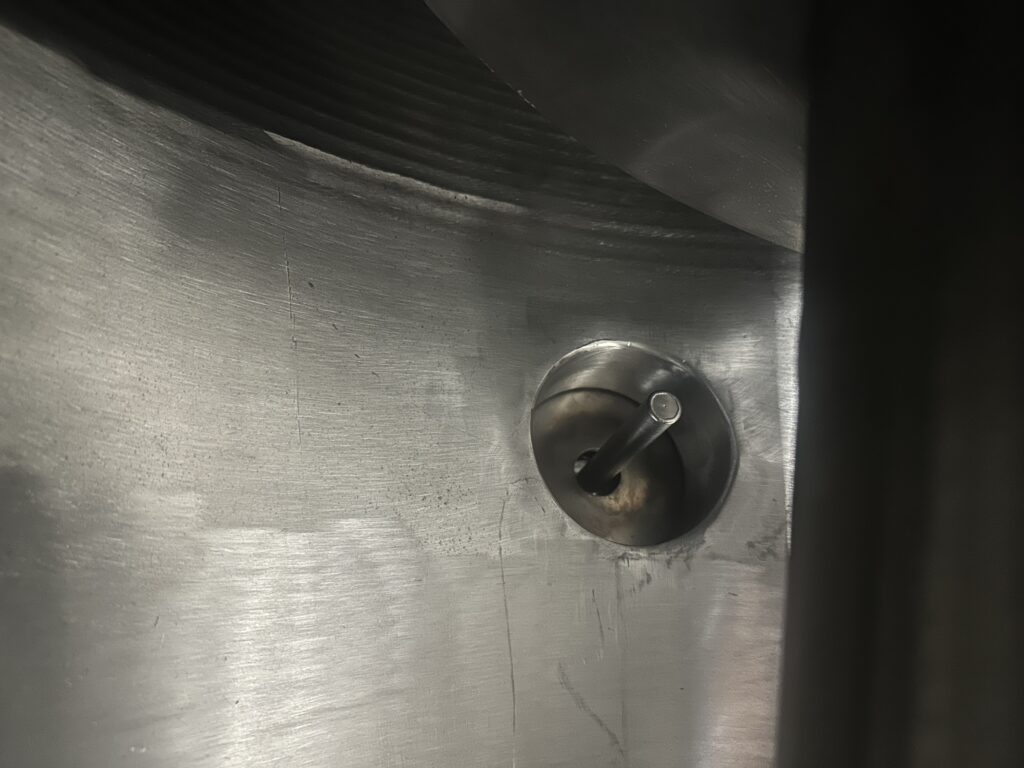
After commissioning, the system showed stable performance and significant improvements:
- Strong resistance to dust interference
- No mechanical wear due to non-moving design
- Fast and stable response to material level changes
- Significant reduction in maintenance requirements
8. Customer Feedback
Field engineers provided the following feedback:
“Previously, rotary paddle switches required maintenance every two to three months. Sometimes jamming would even affect the entire production line. After switching to Tube-11 Vibrating Rod Level Switch, the system has been running continuously for over eight months without false alarms or jamming issues.”
“In dusty environments, false triggering was always a concern. Now the signal is very stable and the PLC system runs much more reliably.”
“Maintenance workload has been reduced by at least 60%, making the system much easier to manage.”
9. Application Scope
Tube-11 Vibrating Rod Level Switch is not limited to battery manufacturing and is also widely used in:
Powders: cement, flour, chemical powders
Granules: plastic pellets, grains
Adhesive or dusty materials
It is especially suitable for high-dust, continuous-operation, and high-reliability industrial environments.
10. Conclusion
In this Nanfu Battery storage and feeding silo project, Tube-11 vibrating rod level switch effectively solved the instability and high-maintenance issues of traditional level switches in dusty environments.
The project demonstrates that in complex industrial applications, selecting the right measurement principle is often more important than simply improving device precision. Tube-11 Vibrating Rod Level Switch, with its reliability-first design philosophy, provides a stable and low-maintenance level detection solution for demanding industrial processes.