Gas-Tight Leadthrough Tuning Fork Level Switch: Safety Design and Engineering Value
Preface: “Minor” Hazards, “Major” Costs in Chemical Production
In the storage and handling of highly corrosive, toxic, or volatile media such as hydrochloric acid, sulfuric acid, hydrofluoric acid, and liquid chlorine, liquid level measurement is not merely a process control parameter—it is a critical part of the safety interlock system. As one of the most commonly used level measurement instruments, the reliability of tuning fork level switches directly determines whether storage tanks will experience overflow or dry pump incidents.
However, under extreme conditions such as high pressure, toxicity, or flammability/explosivity, conventional tuning fork level switches often have a structural risk that is easily overlooked. If the diaphragm in the wetted part is damaged, the instrument may become a “conduit” for media leakage. To address this pain point, tuning fork level switches with gas-tight leadthroughs provide the best solution for intrinsic safety.

I. Structural Limitations of Conventional Tuning Fork Level Switches
1.1 Physical Layout of Piezoelectric Drive and Detection
Most mainstream domestic tuning fork level switches adopt a piezoelectric drive principle. The core component—the piezoelectric ceramic assembly—generates vibration excitation and detects the frequency shift when the fork contacts the liquid.
Because the piezoelectric ceramic must efficiently convert mechanical energy into vibration, it must be installed extremely close to the fork diaphragm. This physical layout places the core electronic components at the frontline of the process interface.
1.2 Historical Reason for “Hollow Structure” Design
In conventional designs, to connect the front-end piezoelectric assembly with the top power module, manufacturers typically use hollow process connections and tubing. The rationale is twofold:
- Wire routing: Provides space for wiring to pass through the instrument body.
- Cost optimization: Hollow tubes reduce stainless steel usage and instrument weight.
1.3 Critical Risk: Backflow Effect After Diaphragm Penetration
The diaphragm at the fork base is usually thin to ensure vibration sensitivity. However, under long-term exposure to corrosive media or pressure pulses, the diaphragm can easily be penetrated.
Once penetrated, the internal hollow structure allows high-pressure liquid or toxic media to rapidly flow along the wire channel. These dangerous media can enter the non-pressurized aluminum housing (junction box) and potentially leak through cable interfaces or housing gaps into the tank environment. For media such as liquid chlorine or hydrofluoric acid, such leakage can result in serious accidents or even casualties.
II. Gas-Tight Leadthrough—The Engineering Core for Risk Mitigation
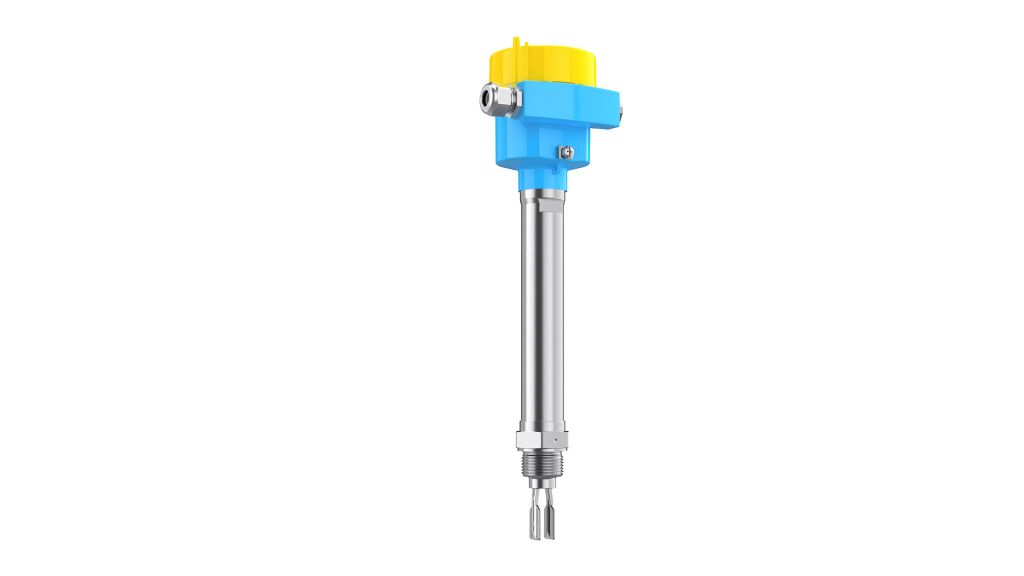
To address the structural shortcomings of conventional products, Jiwei Automations has specially designed the Ring-11 tuning fork level switch with a gas-tight leadthrough. This design establishes a “physical barrier” between the wetted part and the electronics housing.
2.1 Glass-to-Metal Seal Technology
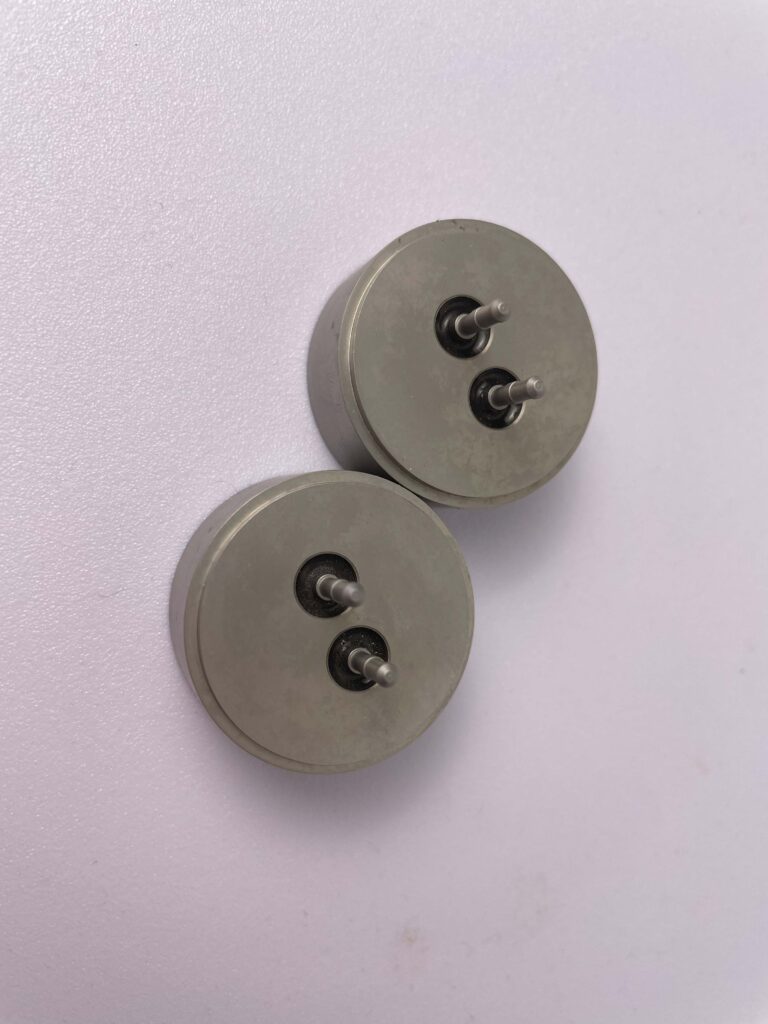
The key innovation is the addition of a specially welded gas-tight leadthrough between the process connection (above) and junction box (below).
This component uses high-performance borosilicate glass and stainless steel, fused at high temperature. This molecular-level bond creates an excellent seal, forming a fully enclosed, non-hollow barrier between the housing and process connection.
2.2 Dual Function: Secondary Sealing and Insulation Protection
- Prevents media penetration: Even if the fork diaphragm breaks under extreme conditions, the incoming liquid is completely blocked at the gas-tight leadthrough, preventing secondary leakage to the housing.
- Protects piezoelectric assembly from moisture: The high-pressure gas-tight seal also isolates the piezoelectric component from external humidity, ensuring stable and accurate signal feedback in high-temperature, high-humidity, and corrosive environments.
III. Comprehensive Upgrade: From Structural Safety to Circuit Reliability
Beyond mechanical anti-leak design, the Ring-11 also implements advanced electronic engineering and material solutions to fill domestic technology gaps.
3.1 Fully Encapsulated Modular Circuit Design
- Modular plastic enclosure: The circuit board is integrated into a semi-cylindrical plastic box, allowing easy replacement without disassembling the instrument, reducing maintenance costs.
- High-polymer potting: Encapsulation isolates electronics from air, preventing oxidation.
- Multiple protection features: Potting provides waterproof, corrosion-resistant, insulating, and flame-retardant properties, while also damping vibrations near pumps or mixers.
3.2 Material Adaptability for Extreme Conditions
- Corrosion-resistant coatings: Optional PFA, ECTFE coatings.
- Special materials: Hastelloy and other rare metals for highly corrosive media like hydrofluoric acid or dichloromethane.
- Temperature and pressure adaptability: Standard type up to 280°C, high-temperature type up to 400°C.
IV. Selection Guide and Application Value
With stricter safety regulations, instrument compliance and safety are the top priorities for selection.
4.1 When to Choose Gas-Tight Leadthrough
Use tuning fork level switches with gas-tight leadthroughs in:
- Low-temperature/high-pressure conditions: LNG measurement, LNG tanks, and high-pressure vessels.
- Toxic/corrosive media: HCl, H2SO4, HF, Cl2, CH2Cl2, etc.
- Volatile/flammable environments: Prevent diffusion of volatile gases along cable routes.
4.2 Authoritative Certifications
- SIL2/3 Safety Integrity Level certification
- National explosion-proof certification (flameproof or intrinsic safety options)
- CE and Russian EAC certification
Users can verify all certifications on official national agency websites, ensuring compliant selection and worry-free operation.
Conclusion
The Ring-11 tuning fork level switch with gas-tight leadthrough provides a reliable domestic solution for high-risk chemical applications, offering intrinsic safety protection. With excellent quality and high cost-performance, it has been validated in complex industrial conditions and widely praised by users. In the pursuit of production efficiency, selecting an instrument that “blocks risk” is the most responsible approach to safety management.