Mini Radar Level Meters for Smart Dairy Farms: Milk Level Monitoring in Milking Robots
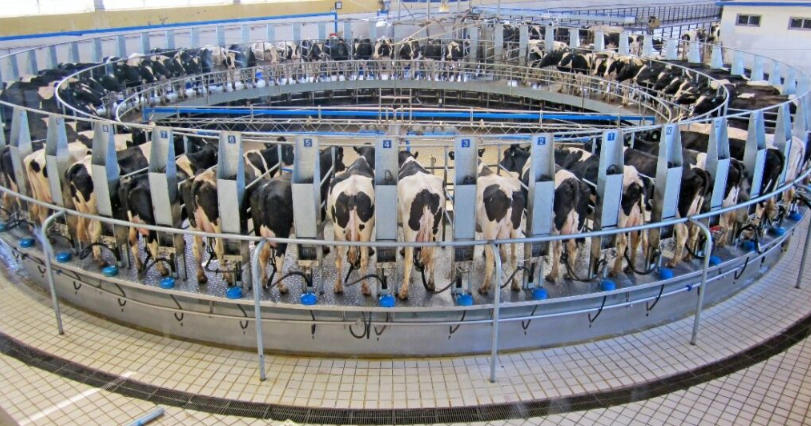
As dairy farming becomes increasingly automated, milking robots, cleaning systems, and automated liquid handling equipment are playing a growing role in daily farm operations. Reliable liquid level monitoring is essential for managing chemical supplies, monitoring milk collection, and providing equipment control systems with timely operating data.
In August 2026, a smart dairy farm project implemented by a robotics automation company deployed 88 Jiwei radar level meters to monitor liquid levels in chemical containers and milk tanks. Because the containers were relatively small and installation space was limited, the project required compact level measurement instruments that could integrate into the robotic equipment while allowing operators to view level readings locally.
The project selected the Jiwei JWrada-22 Mini Radar Level Meter for continuous liquid level monitoring in both chemical containers and milk tanks.
This application demonstrates how compact radar level measurement can support liquid management in automated dairy farming.
1. Liquid Level Measurement Challenges in Automated Dairy Farms
Automated dairy equipment often incorporates small containers for cleaning or treatment liquids, as well as tanks for collecting and temporarily storing milk. Although these containers are relatively small, their liquid levels must be monitored to support routine operations.
Several factors affect instrument selection and installation.
Limited Installation Space
Milking robots and associated automation equipment have compact mechanical structures. Conventional level instruments may occupy too much space or be difficult to integrate into small containers.
A mini radar level meter offers a compact alternative for applications where installation dimensions are an important consideration.
The instrument is installed above the liquid and measures the distance to the liquid surface without requiring a sensing element to remain immersed in the liquid.
Bubbles and Liquid Surface Fluctuations
Some chemical liquids can produce bubbles during filling. Changes in the liquid surface may affect radar echoes and complicate measurement.
In this project, the chemical liquid behaved similarly to an iodine-based antiseptic solution and generated noticeable bubbles during replenishment. The application therefore required careful adjustment of the instrument’s installation position and measurement parameters.
During commissioning, Jiwei engineers provided remote technical assistance through the Jiwei Tools® app to review the measurement conditions and optimize the instrument configuration. The objective was to reduce false echoes associated with bubbles and liquid-surface fluctuations and improve measurement performance under the actual operating conditions.
The effectiveness of this approach depends on the specific liquid properties, container geometry, and installation conditions.
Convenient On-Site Reading
Farm operators may need to inspect equipment while wearing protective or work gloves. A local display makes it easier to check liquid level readings directly at the equipment without relying exclusively on a separate control interface.
For compact automated equipment, local indication can complement the level data transmitted to the control system.
2. Why Choose the JWrada-22 Mini Radar Level Meter?
The JWrada-22 was selected primarily because of the small container dimensions, the required measurement range, and the need for local level indication.
Compact Design for Small Tanks
The JWrada-22 is part of Jiwei’s mini radar level meter series. Its compact design helps simplify installation in small liquid containers and equipment with limited mounting space.
This makes it worth considering for applications such as:
- Liquid containers integrated into milking robots
- Small chemical storage tanks
- Cleaning and treatment liquid containers
- Compact water and wastewater tanks
- Other small liquid vessels requiring continuous level measurement
Final instrument selection should be based on the required measuring range, process connection, liquid properties, container design, and environmental conditions.
Non-Contact Continuous Level Measurement
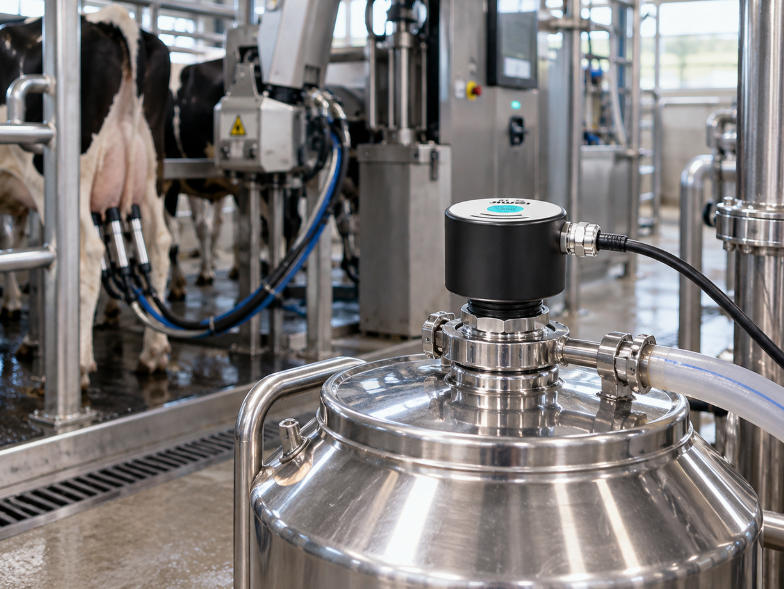
A radar level meter measures the distance between the instrument and the liquid surface using radar signals. The liquid level is then determined using the configured reference height and measurement parameters.
Because measurement is non-contact, the instrument does not need to be immersed in the liquid. This can be advantageous in applications where minimizing direct contact with the measured medium is desirable.
In the chemical containers, continuous level data helps operators determine the remaining liquid quantity and identify when replenishment may be needed.
In the milk tanks, the instrument monitors changes in liquid level as milk enters or leaves the container. These readings provide level information that can support milk collection and transfer management.
Important: Non-contact measurement does not automatically establish food-contact compliance or hygienic suitability. Applications involving milk require a separate assessment of the complete installation, including the instrument’s wetted or exposed components, cleaning procedures, and applicable food-processing requirements.
Local Display for Equipment Operators
The local display allows operators to view level readings at the installation point.
For automated dairy equipment, this provides a convenient way to inspect container status during routine operation and maintenance.
When integrated with a suitable control system, level readings may also be used as an input for monitoring, replenishment alerts, or other application-specific functions.
3. Applications in Chemical Containers and Milk Tanks
The project applied mini radar level measurement to two different liquid monitoring tasks.
Chemical Liquid Level Monitoring
The chemical containers used in the project were made from small-diameter 304 stainless steel. During replenishment, bubbles and surface disturbances created additional challenges for stable level measurement.
The JWrada-22 was installed above the container to monitor the liquid surface continuously.
During initial commissioning, Jiwei engineers helped optimize the instrument configuration remotely. Installation position, echo characteristics, and parameter settings were considered to improve the instrument’s response to the actual operating conditions.
The resulting level data helps operators monitor remaining chemical liquid and plan replenishment more effectively.
Milk Level Monitoring in Milking Robots
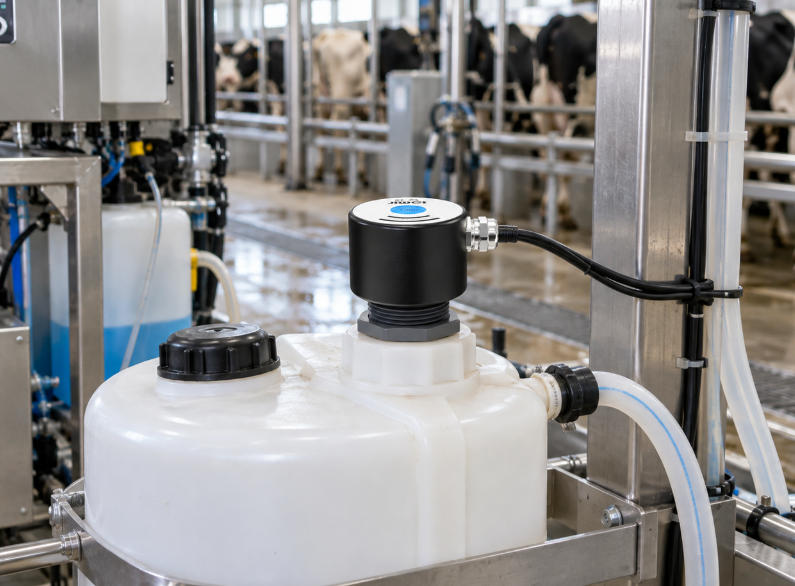
The project also used the JWrada-22 to monitor milk levels in food-grade plastic containers associated with milking equipment.
During milk collection and transfer, the liquid level changes as the tank fills or empties. Continuous measurement provides information about these changes, helping the automation system track the status of the milk container.
The radar instrument is mounted above the tank and measures the liquid surface without requiring direct immersion of the measuring element.
For dairy applications, however, the complete installation must be evaluated against the required hygiene, cleaning, and food-safety standards. The suitability of a particular radar level meter depends on the specific instrument configuration and the requirements of the application.
4. Preparing for Future Container Capacity Upgrades
The project initially used small 304 stainless steel chemical containers and food-grade plastic milk tanks. As the equipment develops, container dimensions, materials, and capacities may change.
When container capacity or geometry changes, the level measurement arrangement may also require reassessment.
Relevant factors include:
- Container height and internal geometry
- Required measuring range
- Instrument mounting position
- Process connection and installation clearance
- Liquid properties and surface conditions
- Measurement reference settings
- Control system requirements
A radar level measurement solution can often be adapted to a different container configuration through appropriate instrument selection, installation changes, and parameter adjustment. The actual measuring range and compatibility must be verified for each new setup.
For equipment manufacturers, considering level measurement during the design stage can simplify integration and reduce the need for major modifications when the equipment is upgraded.
5. Supporting Smarter Dairy Farm Automation
The deployment of 88 Jiwei mini radar level meters demonstrates the role of compact level measurement in automated livestock equipment.
By monitoring chemical liquid and milk levels, the instruments provide continuous measurement data that can support liquid replenishment, milk collection, and equipment status monitoring.
The main considerations in this project were:
- Compact installation: Suitable instrument dimensions for small containers and integrated robotic equipment.
- Continuous monitoring: Level readings for chemical liquids and milk during normal operation.
- Remote commissioning support: Assistance with installation and parameter optimization for challenging liquid-surface conditions.
- Local indication: Convenient access to level readings at the equipment.
- Adaptability: The ability to reassess instrument configuration as container dimensions and equipment requirements change.
As dairy farms continue to adopt robotics and automated liquid handling, reliable level measurement will remain an important part of equipment integration.
6. Choosing a Mini Radar Level Meter for Dairy Equipment
When selecting a mini radar level meter for a milking robot or other dairy automation equipment, engineers should evaluate more than the physical size of the instrument.
The main selection criteria include:
- Measuring range: Confirm the required range based on the container dimensions and normal operating levels.
- Installation space: Check the available mounting height, nozzle dimensions, and clearance around the radar antenna.
- Liquid conditions: Evaluate bubbles, foam, turbulence, condensation, and other factors that may affect radar echoes.
- Local display: Determine whether operators need to view readings directly at the installation point.
- Output and integration: Verify compatibility with the equipment’s control system and required signal interfaces.
- Material and hygiene requirements: For milk applications, confirm that the complete installation meets the relevant food-contact and cleaning requirements.
- Commissioning: Allow for parameter configuration and echo evaluation under actual operating conditions.
Selecting the appropriate instrument and validating it under real operating conditions helps improve measurement reliability and supports effective integration into automated equipment.
Conclusion
The Jiwei JWrada-22 Mini Radar Level Meter was selected for a smart dairy farm project involving 88 instruments for chemical container and milk tank level monitoring.
Its compact form factor, non-contact measurement principle, local display, and remote commissioning support addressed key integration requirements for small containers used with automated robotic equipment.
For manufacturers developing milking robots and other smart farming systems, mini radar level measurement offers a practical approach to obtaining continuous liquid level data. Proper instrument selection, installation, and application-specific validation remain essential to achieving reliable results.
Looking for a compact radar level measurement solution for automated equipment? Contact Jiwei Automations to discuss your container dimensions, liquid properties, measuring range, and integration requirements.