How to Solve Alcohol Level Measurement Challenges: Radar Level Meters and Tuning Fork Level Switches in a Chemical Plant
Alcohol level measurement is an important part of liquid level monitoring in the chemical industry. Alcohols such as methanol, ethanol, isopropanol, and butanol are commonly used in chemical production and storage. Depending on the specific substance and operating conditions, these liquids may present challenges related to flammability, volatility, and measurement stability.
Unreliable level measurement can affect material transfer, process control, and tank management. In certain applications, it may also contribute to risks such as tank overflow, insufficient liquid supply, or pump dry running. Selecting suitable radar level meters, tuning fork level switches, and explosion-proof instrumentation is therefore essential for chemical process monitoring and protection.
Recently, a chemical manufacturer in eastern China optimized multiple liquid level measurement points in its alcohol processing facilities. The project combined Jiwei radar level meters with Ring-11 tuning fork level switches to support continuous level monitoring and high- and low-level alarm functions.
1. Project Background: Alcohol Level Measurement in Chemical Processing
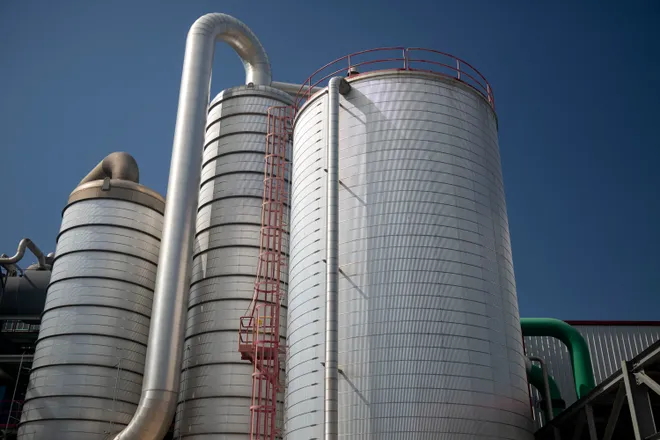
The manufacturer’s production processes involved several types of alcohol-based liquids. Measurement points were distributed across reaction vessels, intermediate storage tanks, recovery tanks, and finished-product storage tanks.
Before the upgrade, some measurement points experienced fluctuating level readings, unstable alarms, and frequent maintenance requirements. These problems were particularly challenging in applications involving volatile liquids and complex tank headspace conditions.
For alcohol production and storage, level instrumentation must do more than display the liquid level. It must also support continuous monitoring, limit-level alarms, hazardous-area requirements, and integration with industrial automation systems.
The project therefore required a measurement solution that could address both continuous liquid level monitoring and independent point-level detection at critical operating limits.
2. Key Challenges in Alcohol Level Measurement
2.1 Flammable Liquids Require Appropriate Explosion-Proof Instrumentation
Many commonly used alcohols, including methanol and ethanol, are flammable. Depending on the substance, process conditions, and facility design, their production and storage areas may require equipment suitable for classified hazardous locations.
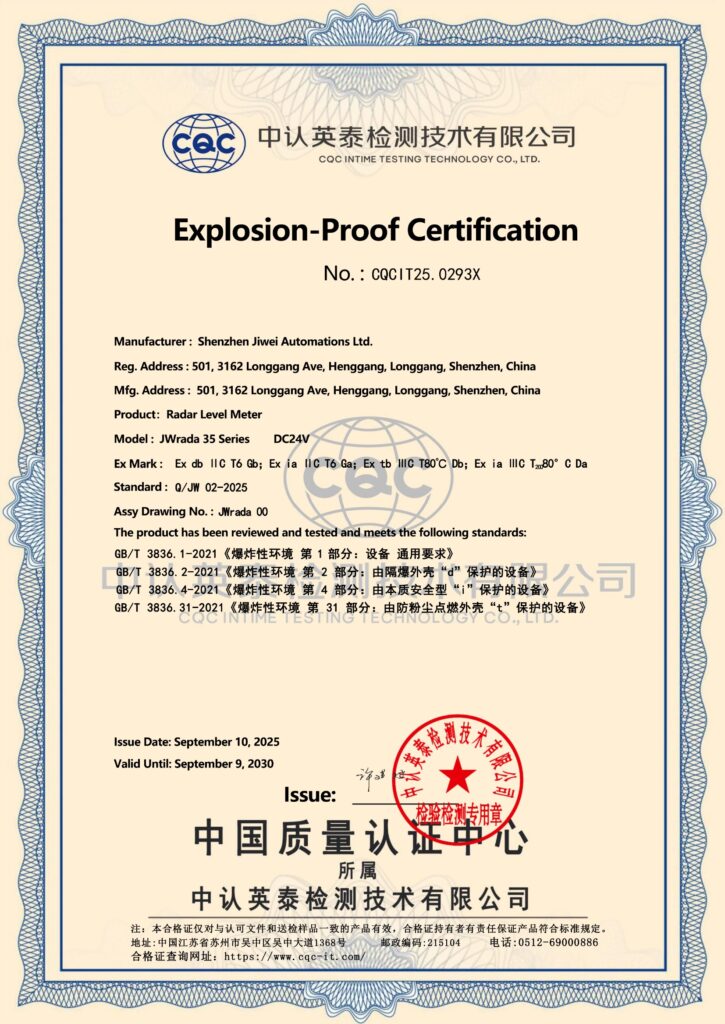
Radar level meters and tuning fork level switches must therefore be selected according to the applicable hazardous-area classification, required protection concept, temperature class, and relevant local regulations.
An explosion-proof designation alone does not establish suitability for every installation. The instrument’s actual certification and marking must match the requirements of the intended location.
2.2 Volatile Liquids Can Complicate Level Measurement
Volatile alcohols can produce vapor in the space above the liquid surface. Depending on the application, condensation, changes in the tank atmosphere, foam, or process disturbances may also affect measurement conditions.
If the instrument cannot reliably distinguish the actual liquid surface from interfering echoes, the displayed level may fluctuate or alarms may be triggered incorrectly.
For these applications, radar level measurement requires appropriate echo processing, suitable installation geometry, and configuration based on the actual tank conditions.
2.3 Low Dielectric Constants Can Challenge Radar Level Meters
Some alcohols have relatively low dielectric constants compared with water. As a result, the reflected radar signal may be weaker, depending on the specific liquid and operating conditions.
Radar level meters must therefore provide adequate signal sensitivity and echo-processing capability to identify the actual liquid surface.
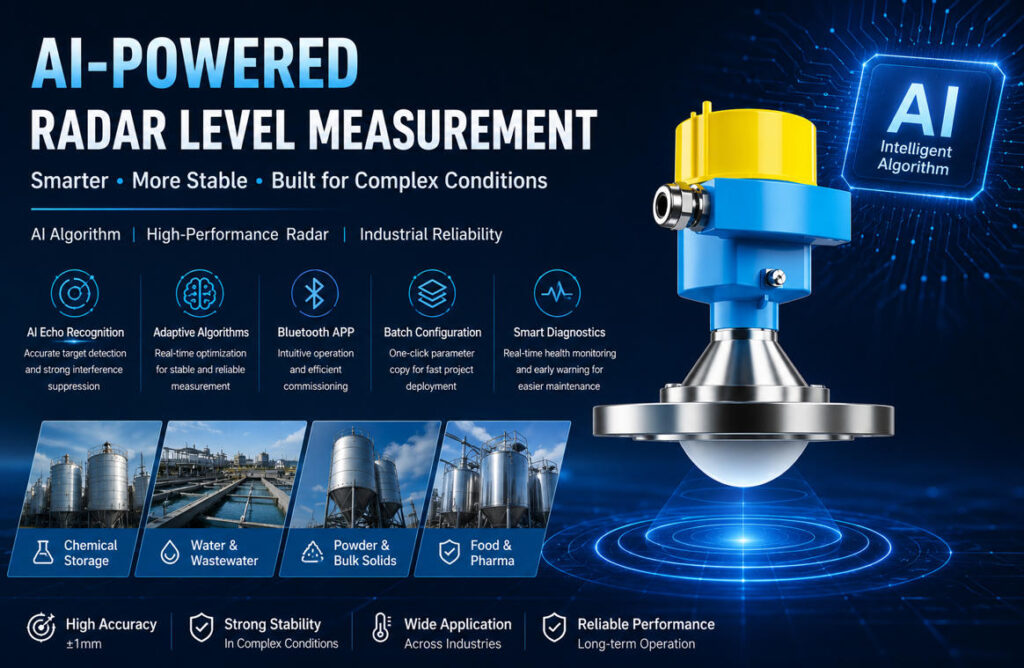
Jiwei JWrada radar level meters use 80 GHz frequency-modulated continuous-wave (FMCW) technology and intelligent echo processing to support liquid level measurement in challenging applications.
Actual performance depends on the liquid properties, tank geometry, installation conditions, and instrument configuration. The suitability of a particular model should be verified for the intended application.
2.4 High- and Low-Level Alarms Are Important for Process Protection
High-level alarms help operators identify potential overfilling conditions, while low-level alarms can help prevent insufficient liquid supply and pump dry running.
Continuous level measurement provides information about changing liquid levels. However, some critical applications also require a separate switching signal when the liquid reaches a predefined high or low limit.
A suitably selected tuning fork level switch can provide this point-level signal for alarms or interlocks, subject to the system design and applicable safety requirements.
3. The Solution: Radar Level Meters Combined with Tuning Fork Level Switches
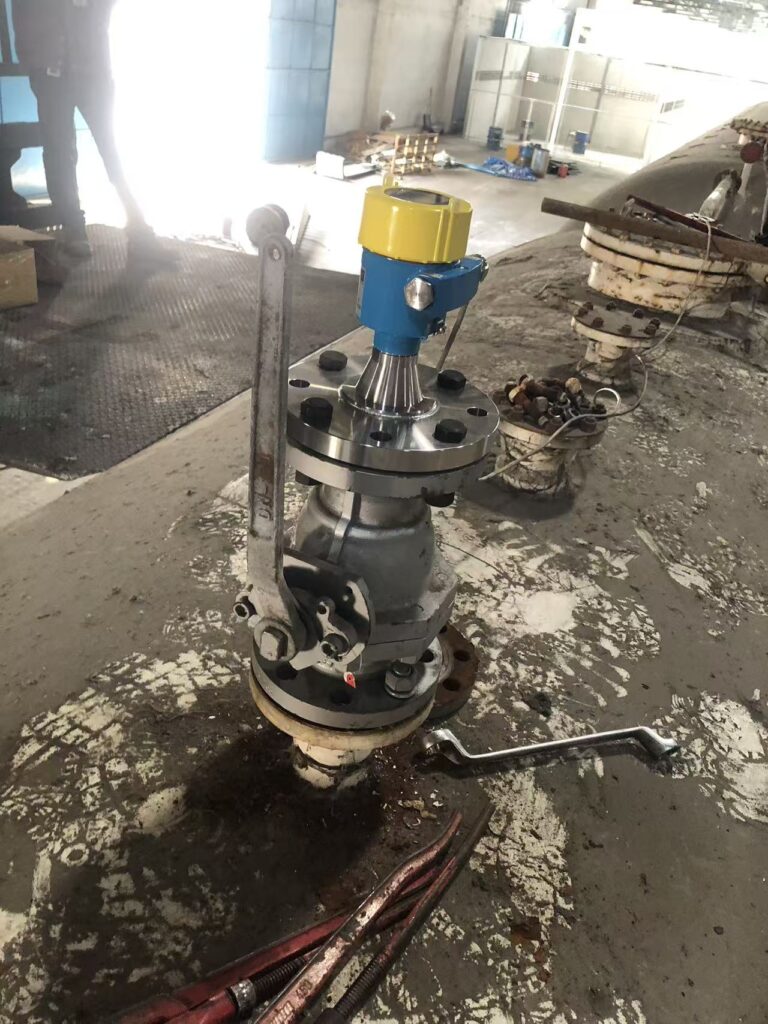
Based on the reported project requirements, the chemical plant adopted a combined solution involving 200 Jiwei JWrada radar level meters and Ring-11 tuning fork level switches.
The two instrument types perform different but complementary functions.
Continuous Level Monitoring with JWrada Radar Level Meters
Radar level meters were selected for tanks and process vessels where operators needed continuous information about changing liquid levels.
Radar instruments measure the distance to the liquid surface without direct contact with the liquid. This measurement principle can reduce maintenance associated with direct liquid contact, although the antenna and other exposed components must still be suitable for the actual environment.
For alcohol storage tanks and recovery vessels, the radar level meter provides continuous level information that can support inventory monitoring, material transfer, and process control.
High- and Low-Level Detection with Ring-11 Tuning Fork Level Switches
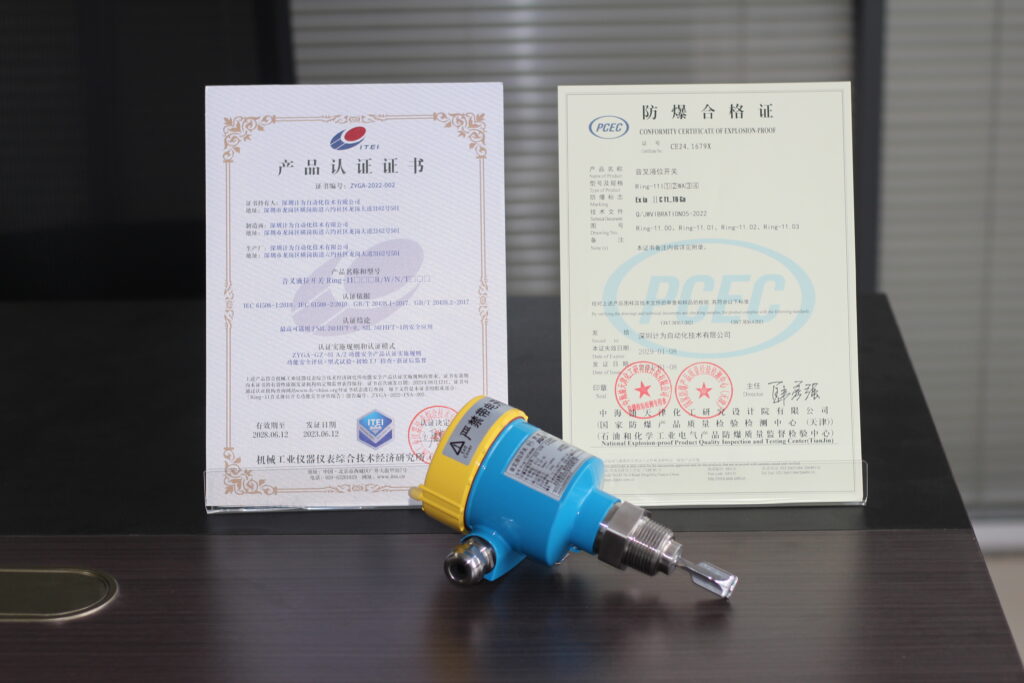
Ring-11 tuning fork level switches were used at selected points where a discrete high- or low-level signal was required.
A tuning fork level switch detects the presence or absence of liquid at its sensing element by monitoring changes in the fork’s vibration behavior.
When the liquid reaches the sensing point, the instrument changes its switching output according to its configured operating mode. The signal can then be used for alarms, pump protection, or other control functions.
The specific installation must be checked for liquid properties, process temperature and pressure, material compatibility, electrical interface, and hazardous-area requirements.
Why Combine Continuous Measurement and Point-Level Switching?
The combined approach addresses two distinct process requirements:
- Continuous measurement: Radar level meters provide ongoing information about the liquid level.
- Point-level detection: Tuning fork level switches provide switching signals at predefined liquid level limits.
When properly designed and integrated, this arrangement can improve process visibility while providing additional alarm or control functions at critical measurement points.
It is important to note that a tuning fork level switch does not replace continuous measurement, and a radar level meter does not automatically replace a dedicated point-level switch where an independent switching function is required.
4. Advantages of Jiwei Level Instruments for Alcohol Applications
4.1 Stable Radar Measurement in Challenging Conditions
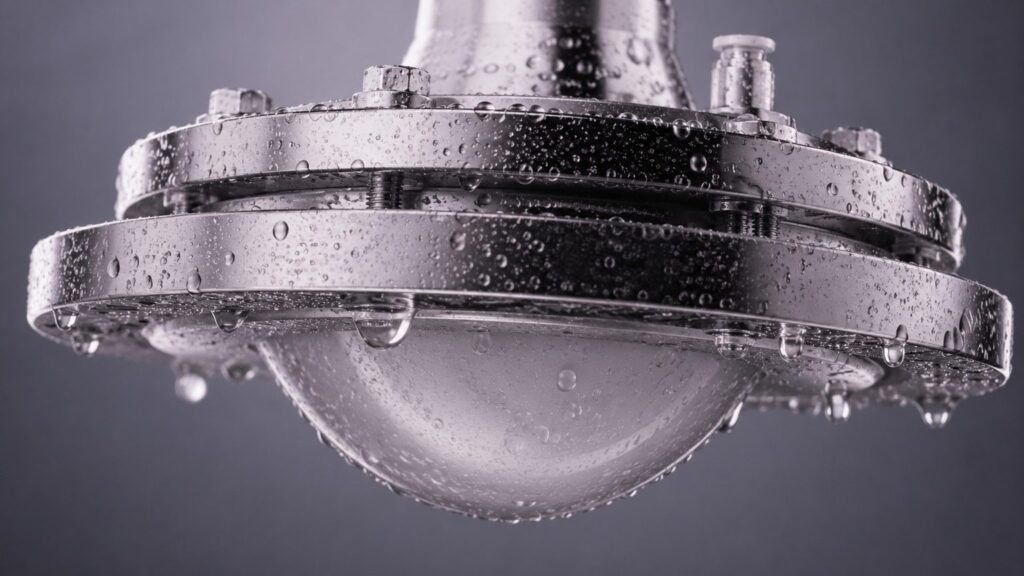
Jiwei JWrada radar level meters use 80 GHz FMCW technology and intelligent echo processing to support reliable identification of the liquid surface.
These features can be beneficial in applications involving relatively low-dielectric liquids, changing tank conditions, or complex internal structures.
Depending on the selected model and configuration, available communication and commissioning functions may include HART or Modbus communication and Bluetooth-based setup.
The appropriate configuration should be determined according to the required measuring range, process connection, operating conditions, and control system.
4.2 Non-Contact Measurement for Reduced Maintenance
Radar level meters measure the distance to the liquid surface without direct contact between the liquid and the sensing antenna.
This can reduce maintenance associated with direct exposure of the sensing element to the process liquid. However, chemical compatibility must still be considered for the antenna, process connection, seals, and any other components exposed to the tank environment.
For alcohol storage and processing applications, non-contact measurement can be a practical option when the installation geometry and radar signal conditions are suitable.
4.3 Point-Level Detection for High- and Low-Level Alarms
Jiwei Ring-11 tuning fork level switches are designed for liquid point-level detection.
When selected within their specified operating limits, they can be used to detect predefined liquid level conditions and provide switching signals for alarms or control functions.
Potential applications include:
- High-level alarms for tank overfilling prevention
- Low-level alarms for liquid supply monitoring
- Pump protection and process interlocks
- Liquid presence detection at critical points
The reported minimum liquid density capability is 0.5 g/cm³. This specification should be checked against the applicable Ring-11 model and operating conditions before selection.
The actual switching behavior, process compatibility, and installation requirements must be confirmed for each application.
4.4 Vibration-Based Detection for Liquid Level Switching
A tuning fork level switch identifies changes in the vibration behavior of its sensing element when the surrounding medium changes.
This operating principle can support point-level detection in a variety of liquids. Performance nevertheless depends on the liquid’s physical properties, the formation of deposits or coatings, and the instrument’s specified operating conditions.
For alcohol applications, the switch should be evaluated for the actual liquid composition, temperature, pressure, and installation position rather than assumed to be suitable for every alcohol-based medium.
4.5 Bluetooth-Based Commissioning and Maintenance
Some Jiwei JWrada models support Bluetooth-based commissioning through a compatible mobile application.
Where this function is available, authorized personnel can configure parameters or inspect instrument status from a suitable working position without repeatedly accessing the instrument’s local controls.
This may be helpful for tanks installed at elevated locations or in areas where direct access is inconvenient.
Bluetooth availability and permitted operating distance depend on the selected model, device compatibility, and site conditions. Remote operation does not replace hazardous-area work procedures or the requirement to follow site safety rules.
4.6 Integration with PLC and DCS Systems
Compatible Jiwei radar level meters and Ring-11 tuning fork level switches can be integrated into industrial automation systems according to their respective electrical outputs and communication interfaces.
Radar measurement data can be used for continuous level monitoring, while the tuning fork switch provides a discrete signal for the selected alarm or control function.
When connected to a programmable logic controller (PLC) or distributed control system (DCS), the instruments can support coordinated monitoring and control of tanks and process vessels.
The final system design should define alarm thresholds, switching logic, interlocks, fault responses, and any required independent protective functions.
5. Application Results
According to the reported project information, the instruments were introduced at multiple alcohol level measurement points in the chemical plant.
The combined measurement and switching arrangement was intended to improve continuous level monitoring while strengthening high- and low-level alarm functions at selected locations.
The reported application benefits included:
- More consistent level monitoring: Operators gained clearer information about changing liquid levels at instrumented points.
- Additional point-level protection: Tuning fork switches provided dedicated switching signals for configured alarm functions.
- Simplified operational management: Continuous measurement and point-level detection addressed different monitoring requirements within the same process.
- Automation integration: Compatible signals could be incorporated into the plant’s control system for monitoring and control.
These results describe the reported application objectives and outcomes. Quantified improvements in accuracy, maintenance frequency, or incident reduction should only be published when supported by verified site data.
Conclusion: Choosing the Right Level Measurement Solution for Alcohol Tanks
Alcohol level measurement presents several challenges, including flammability, volatility, relatively low dielectric constants in some liquids, and demanding operating environments.
For methanol, ethanol, isopropanol, and other alcohol-related applications, instrument selection should consider both the measurement objective and the process safety requirements.
Jiwei JWrada radar level meters provide continuous, non-contact level measurement, while Ring-11 tuning fork level switches provide point-level switching for selected high- and low-level alarm functions.
By combining these technologies where appropriate, chemical plants can obtain continuous level information and dedicated switching signals for process monitoring and control.
Before selecting an instrument, confirm the liquid composition, tank dimensions, process temperature and pressure, required measuring range, electrical interface, and hazardous-area classification.
Looking for a suitable radar level meter or tuning fork level switch for alcohol storage tanks? Contact Jiwei Automations to discuss your application requirements and identify an appropriate instrument configuration.