
Why Are Relays Essential in Automation Systems? Principles, Types, and Applications
In modern industrial automation and electrical control systems, relays are fundamental and critical control components. They respond to electrical signals to open or close contacts, enabling the control of electrical circuits. Whether in industrial production lines, motor control systems, building automation, or equipment control, relays play an essential role.
Relays provide a reliable interface between low-power control signals and high-power electrical devices, allowing complex automation systems to operate safely and stably. Therefore, understanding the working principles and common types of relays is highly important for engineers involved in automation design and equipment maintenance.
This article introduces the basic working principle of relays and the most common types used in automation systems, along with their applications.
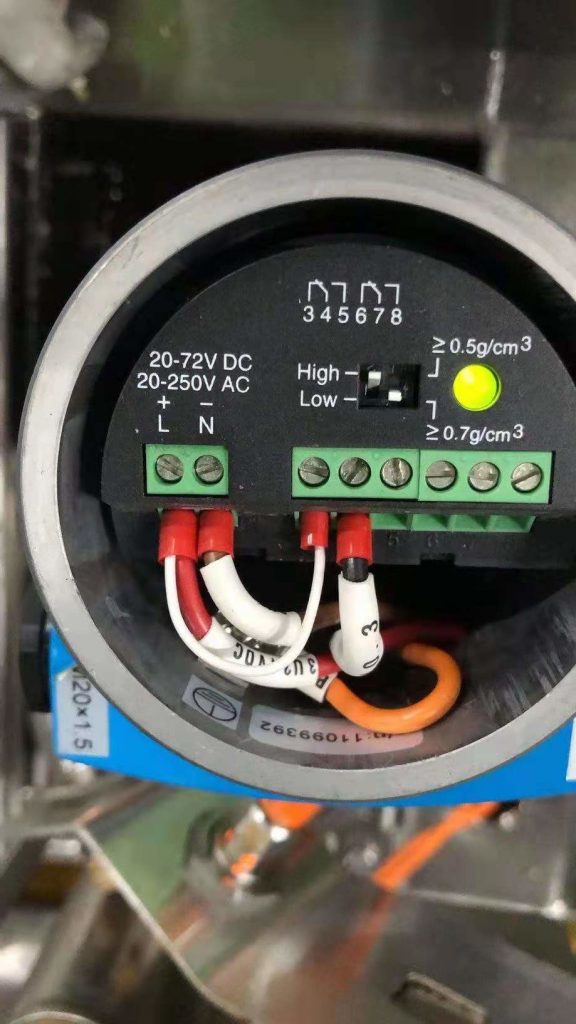
What Is a Relay?
A relay is an electrically operated switch controlled by an electrical signal. It enables a small control signal to manage a larger electrical load, forming an important interface between control systems and actuators.
In traditional relays, the core structure typically consists of a coil, an electromagnet, and contacts. When current flows through the coil, a magnetic field is generated, causing the electromagnet to activate and mechanically move the contacts, thereby opening or closing the circuit.
Through this mechanism, relays can control motors, lighting systems, heating elements, and various industrial equipment.
Common Types of Relays in Automation Systems
Different automation applications require different types of relays. Based on working principles and usage scenarios, the most common types include the following:
1. Electromagnetic Relay (EMR)
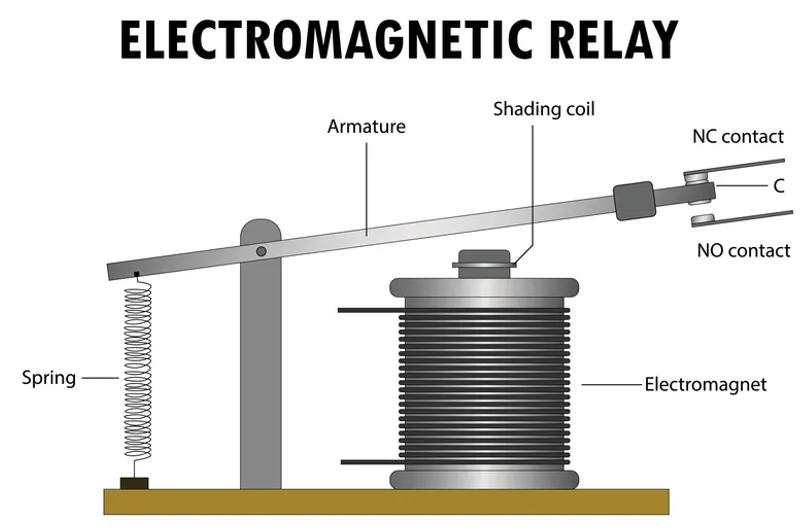
Electromagnetic relays are the most traditional and widely used type. They operate based on electromagnetic principles. When the coil is energized, a magnetic field is generated, driving the mechanical contacts to switch.
This type of relay features a simple structure and high reliability, making it widely used in industrial control systems.
Typical applications:
- Motor control circuits
- Power distribution systems
- HVAC (Heating, Ventilation, and Air Conditioning) systems
Advantages:
- Simple structure
- Capable of handling relatively high current and voltage
Disadvantages:
- Mechanical contacts may wear over time
- Slower response compared to solid-state relays
2. Solid State Relay (SSR)
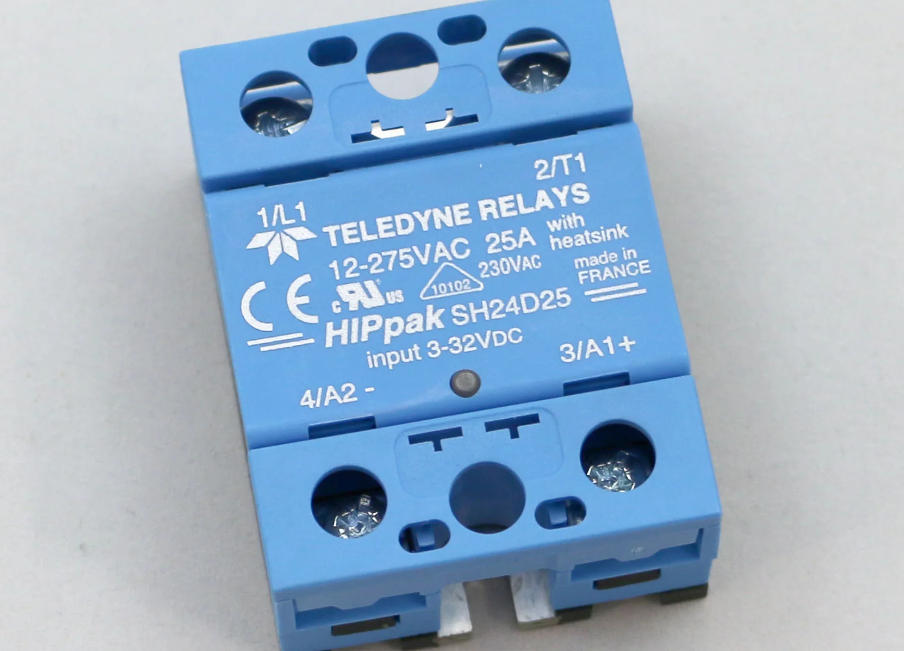
Unlike electromagnetic relays, solid state relays have no moving parts. They use semiconductor components such as transistors, diodes, or thyristors to perform switching functions.
Because there are no mechanical contacts, SSRs offer longer service life and faster switching performance.
Typical applications:
- Industrial automation systems
- Temperature control systems
- Electronic control equipment
Advantages:
- Longer lifespan due to no mechanical wear
- Silent operation
- Faster response time
Disadvantages:
- Higher cost
- Heat dissipation must be considered in high-power applications
3. Time Delay Relay (TDR)
A time delay relay is designed to operate after a preset time delay. Through an internal timing mechanism, it triggers contact switching after a defined delay period following energization or de-energization.
It is commonly used in systems that require sequential or timed control.
Typical applications:
- Conveyor systems
- Sequential motor starting systems
- Lighting control systems
Advantage:
- Precise time control for automation processes
4. Thermal Relay
Thermal relays are primarily used for motor and equipment overload protection. They typically use a bimetallic strip structure. When excessive current causes temperature rise, the bimetallic strip bends and triggers the relay to disconnect the circuit.
Typical applications:
- Motor overload protection
- Electrical equipment temperature protection
Advantage:
- Effective protection against overheating
Disadvantage:
- Slower response compared to other protection devices
5. Latching Relay
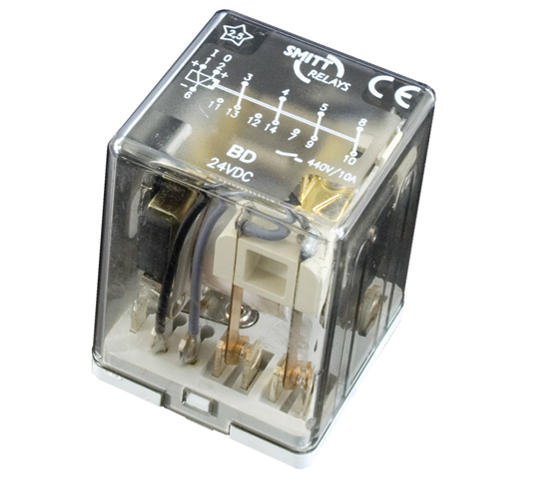
A latching relay, also known as a bistable relay, can maintain its state even after the control signal is removed.
It requires only a short pulse to change state and will remain in that position until the next pulse is applied.
This makes it highly energy-efficient, especially suitable for battery-powered or low-power systems.
Typical applications:
- Lighting control systems
- State memory in automation systems
- Circuit breaker control
Advantage:
- Energy-saving operation
6. Protective Relay
Protective relays are essential for electrical system safety. They detect abnormal conditions such as overcurrent, undervoltage, or short circuits and trigger circuit breakers to isolate the faulty section.
They play a critical role in ensuring safe operation in power systems.
Typical applications:
- Power distribution systems
- High-voltage grids
- Industrial protection systems
Advantages:
- Enhances system reliability and safety
- Fast fault response
Why Are Relays Essential in Automation?
Relays are indispensable in automation systems for several reasons:
Electrical isolation:
They provide isolation between low-power control circuits and high-power load circuits, protecting sensitive components from voltage surges.
Process automation:
Relays enable complex sequential operations by controlling multiple devices simultaneously, reducing human intervention and improving efficiency.
Safety and protection:
Thermal and protective relays detect abnormal conditions and disconnect power to prevent equipment damage.
Energy efficiency:
Latching relays consume minimal energy to maintain their state, making them suitable for energy-sensitive systems.
Flexibility:
Different relay types meet diverse requirements, including timing control, overload protection, and state retention.
Conclusion
Relays are indispensable components in automation systems. From simple switching control to complex industrial automation, they ensure safe and efficient system operation.
By understanding the characteristics and applications of different relay types—such as electromagnetic relays, solid-state relays, time delay relays, thermal relays, latching relays, and protective relays—engineers can design more reliable and efficient automation systems.
As industrial automation technology continues to advance, relays increasingly integrate with modern digital control systems and remain essential components across various industries worldwide.