Swivel Flange: The Installation Advantage for Jiwei JWrada-35 Radar Level Meter
In the field of industrial automation, level measurement is a critical component to ensure production safety and efficiency. Whether in chemical storage tanks, liquefied petroleum gas (LPG) tanks, or high-viscosity liquid production processes, level instruments act as the “eyes” of the industrial process. The flexibility of the installation method directly impacts measurement accuracy, ease of commissioning, and long-term operational stability.
In this context, the swivel flange provides unprecedented convenience and reliability for instrument installation. Jiwei Automation’s JWrada-35 radar level meter adopts this innovative mounting structure, offering users a flexible, safe, and efficient level measurement solution.
1. What is a Swivel Flange?
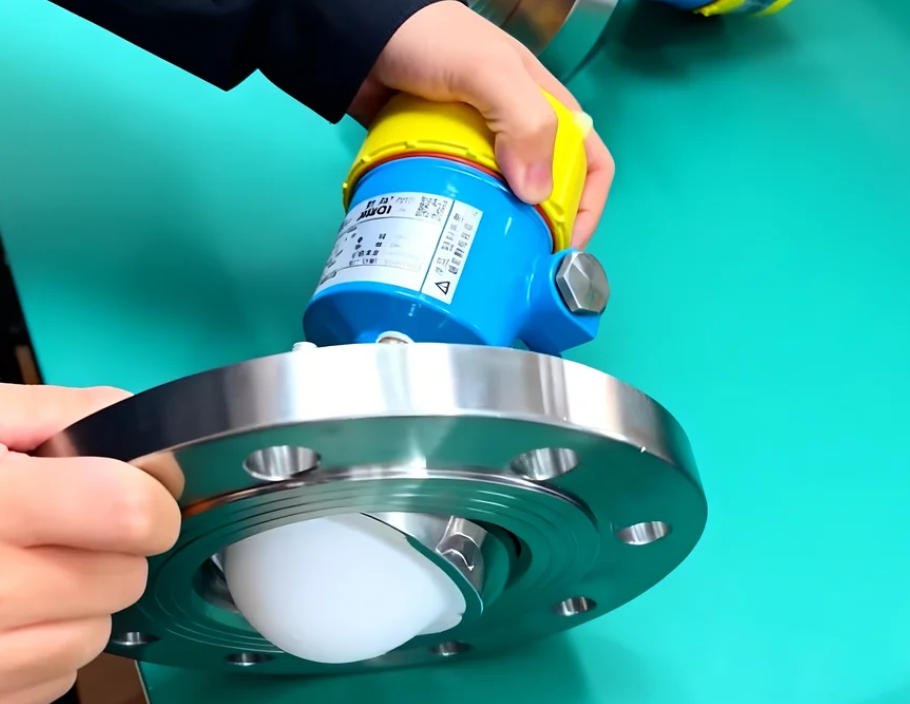
A swivel flange is a type of mounting flange that integrates a rotatable installation structure. Traditional flanges usually have a fixed angle, which can be problematic when the piping layout is complex or space is limited, often requiring extra modifications or elbows to adjust the installation angle. A swivel flange allows the user to rotate the instrument during installation, achieving the optimal measurement angle without changing the piping structure.
In other words, the flange not only provides a secure mounting point but also offers high flexibility for instrument positioning and commissioning, enabling engineers to optimize placement efficiently.
2. Advantages of a Swivel Flange
- Flexible installation, reduced modification cost
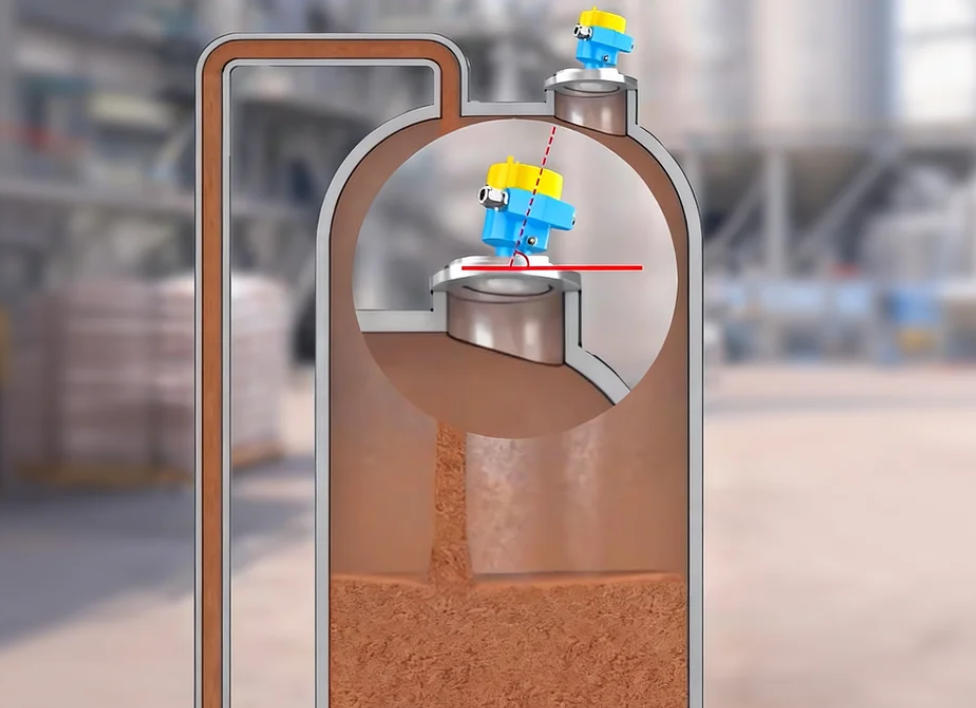
In most tanks or reactors, top or side space is limited. The swivel flange allows engineers to freely adjust the instrument orientation, avoiding pipe modifications or additional elbows, saving installation time and costs. - Optimized measurement accuracy
Radar level measurement accuracy is sensitive to installation position and antenna orientation. A swivel flange allows precise adjustment of the instrument to the optimal angle, minimizing reflection errors and improving measurement stability. - Easy on-site commissioning and maintenance
With traditional fixed flanges, commissioning often requires disassembly or instrument repositioning. The swivel flange allows direct rotation of the instrument for commissioning, making operations safer and faster. Routine maintenance or replacement is also easier, reducing labor and safety risks. - Suitable for diverse process conditions
Swivel flange designs maintain sealing integrity and structural strength, enabling stable measurement under high temperature, high pressure, volatile or foaming media, and high-viscosity liquids.
3. Suitable Applications for a Swivel Flange
- Limited space or complex piping layouts
When the tank top has restricted space or multiple obstacles such as pipes, valves, or mixers, traditional fixed flanges may prevent optimal orientation. Swivel flanges allow flexible adjustment, ensuring the radar wave is perpendicular to the liquid surface. - Liquid surfaces with interference
High foam, high viscosity, or turbulent surfaces can cause radar reflection errors. Adjusting the instrument angle with a swivel flange helps avoid interference, producing cleaner echo signals. - Frequent commissioning or maintenance needs
For tanks requiring periodic instrument replacement or tuning, the swivel flange allows rotation without pipe disassembly, reducing downtime and operational risk. - Harsh environments
Swivel flanges provide durability and sealing for high-temperature, high-pressure, or corrosive media applications, ensuring long-term stable performance.
4. Advantages of Combining JWrada-35 with a Swivel Flange
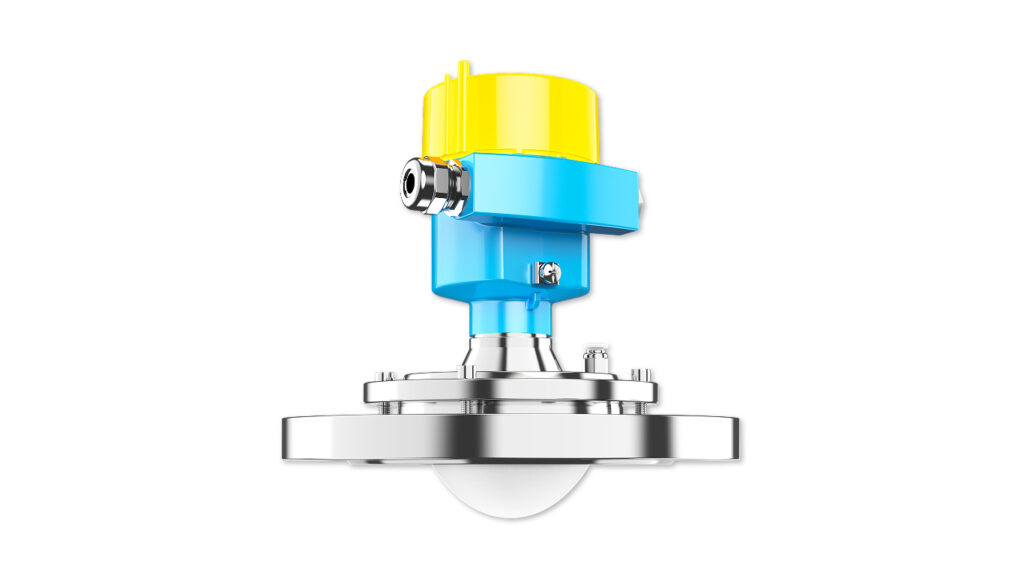
Jiwei’s JWrada-35 radar level meter, combined with a swivel flange, provides multiple benefits:
- Simpler installation: No need to modify piping; quick setup for engineers.
- More stable measurement: Optimized radar wave orientation reduces interference.
- Efficient commissioning: Rotate the instrument on-site to fine-tune settings.
- Safer maintenance: Instrument can be serviced or replaced without disassembling the tank.
- Adaptable to complex conditions: Performs reliably in high temperature, high pressure, foam, or viscous media.
Paired with Jiwei’s cloud-based remote commissioning, users can adjust the instrument angle on-site while simultaneously monitoring echo signals and EFT curves remotely—achieving “cloud commissioning + local swivel adjustment” for maximum efficiency.
5. Application Cases
- LPG Tank Level Measurement
In high-risk LPG tank retrofit projects, JWrada-35 with swivel flange successfully replaced imported instruments. Engineers can quickly rotate the device to avoid mixers or safety valves, ensuring precise level monitoring. - Chemical Reactor Level Measurement
For high-viscosity or foaming liquids, traditional flange installation often causes measurement errors. Swivel flanges allow optimal radar wave orientation, significantly reducing false alarms. - Carbon Fiber Production Tanks
In carbon fiber lines, fibers may entangle or generate static interference. By adjusting the instrument angle using a swivel flange, combined with optimized electronics, false alarms were effectively eliminated, solving long-standing measurement challenges.
6. Conclusion
A swivel flange is more than just a mounting accessory; it is a tool that enhances flexibility, stability, and maintenance efficiency in industrial level measurement. When combined with the Jiwei JWrada-35 radar level meter, it enables fast installation, precise measurement, and efficient commissioning in space-constrained or complex process environments.
Flexible installation. Stable measurement. Efficient operation.
This is the new value that swivel flanges bring to industrial level measurement. With the rise of industrial automation and smart instrumentation, the combination of swivel flanges and intelligent radar level meters is becoming a standard solution for safe and efficient production.