What Is a Radar Level Sensor? Complete Guide to Radar Level Measurement Technology
In the grand landscape of modern industrial automation, level measurement plays a crucial role. Whether in massive storage tanks in the petrochemical industry or precision reactors in food and pharmaceutical production, accurately knowing the level of materials inside vessels is essential for ensuring production safety and optimizing process efficiency.
Among the many level measurement technologies available today, radar level sensors have gradually become the industry’s preferred solution due to their non-contact measurement capability, high accuracy, and strong resistance to interference.
This article provides an in-depth look at the definition, working principle, and main types of radar level sensors, while also examining their application scenarios, calibration methods, and key differences from other measurement technologies—combined with the advanced technologies developed by Shenzhen Jiwei Automations Ltd.
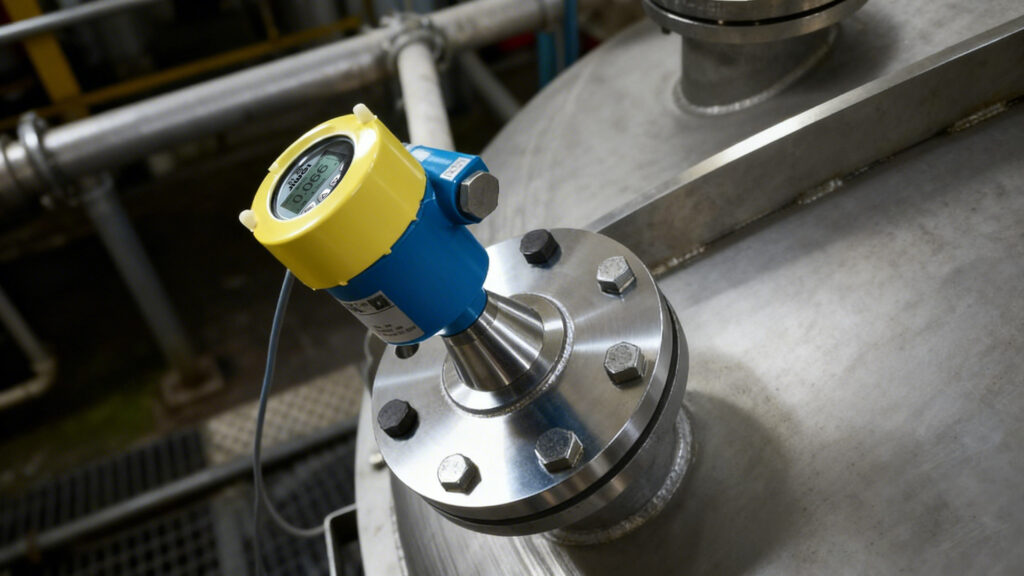
Key Highlights of Radar Level Sensors
Definition and Principle
Radar level sensors measure distance using microwave signals. The sensor transmits microwaves that are reflected by the material surface and received back by the antenna. The level is determined by calculating the time difference.
Applications
Radar level measurement is widely used in oil & gas, chemical processing, pharmaceuticals, and food & beverage industries, especially in harsh environments involving corrosion, high temperature, or high pressure.
Calibration
Calibration typically involves setting reference points (zero and full level) and mapping the measurement range to a standard 4–20 mA output signal.
Radar vs Ultrasonic
Radar uses microwaves and is not affected by temperature, pressure, dust, or vacuum. Ultrasonic sensors rely on sound waves and are easily influenced by environmental conditions.
Non-contact vs Guided Wave Radar
Both use microwave technology. Non-contact radar transmits signals through air without touching the medium, while guided wave radar transmits signals along a probe (rod or cable) that directly contacts the material.
What Is a Radar Level Sensor?
A radar level sensor, also known as a radar level transmitter, is an advanced instrument that measures level using microwave technology.
As a non-contact measurement solution, it emits microwave signals toward the measured medium (liquid or solid) and receives the reflected echo from the material surface. By calculating the round-trip time of the microwave signal, the sensor accurately determines the distance to the material surface and converts it into the actual level value.
Compared with traditional measurement technologies, radar offers a significant advantage: excellent penetration capability and minimal environmental influence, enabling stable performance even under complex process conditions.
How Does a Radar Level Sensor Work?
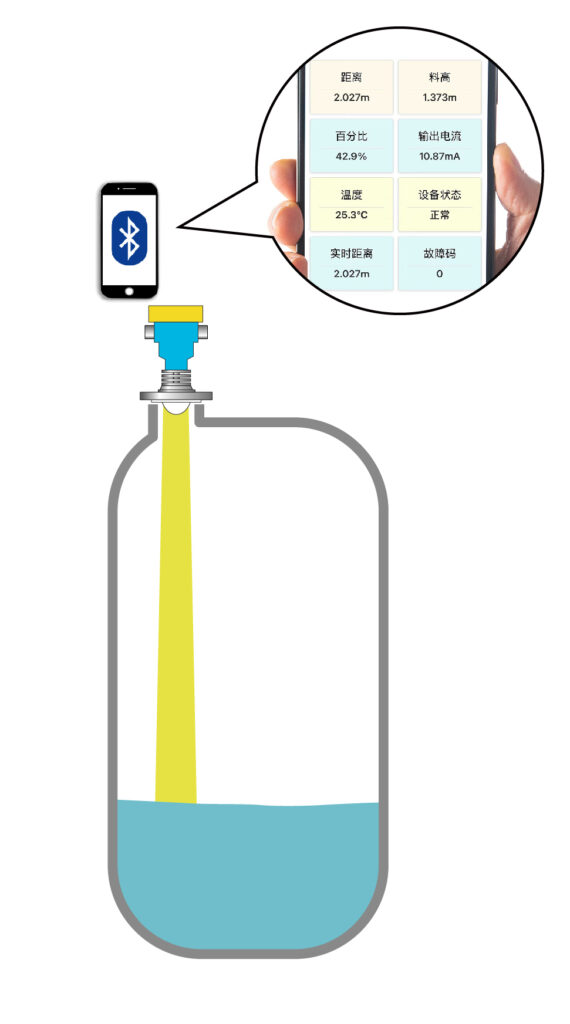
Radar level sensors operate based on the Time-of-Flight (ToF) principle.
A high-frequency oscillator inside the sensor generates electromagnetic waves (microwaves), which are transmitted through an antenna. These waves travel at the speed of light through space. When they reach the material surface, they are reflected back to the sensor.
The instrument precisely measures the time between signal transmission and reception. Since the speed of light is constant, the internal algorithm calculates the distance and converts it into a level measurement.
Two Main Types of Radar Level Sensors
Radar level sensors are generally divided into two categories:
- Non-contact radar level sensors
- Guided wave radar level sensors
Differences Between Non-Contact Radar and Guided Wave Radar
Although both technologies rely on microwave pulses, the key difference lies in the signal propagation path.
Non-contact radar sensors
The microwave signal is transmitted through an antenna and travels through air to the material surface before being reflected. The sensor does not contact the medium, similar to a flashlight beam.
Guided wave radar sensors
The microwave signal travels along a probe (rod or cable) inserted into the vessel. Reflection occurs at the interface between the probe and the material. This contact measurement concentrates signal energy.
Both technologies can measure liquids and solids continuously, but their optimal application scenarios differ.
Advantages and Disadvantages of Non-Contact Radar
Non-contact radar sensors are popular due to easy installation and low maintenance.
Advantages
Wide applicability
Suitable for liquids, solids, and slurry materials.
Excellent corrosion resistance
No contact with the medium makes them ideal for corrosive liquids.
Low maintenance cost
No moving parts, reducing mechanical failures and downtime.
Resistant to environmental conditions
Not affected by air movement, temperature gradients, pressure variations, or dust.
High accuracy
Capable of millimeter-level measurement precision.
Easy installation
Typically installed from the top of the tank without emptying the vessel.
Disadvantages
Higher initial cost
Compared with some traditional instruments.
Near-field blind zone
Due to extremely fast electromagnetic wave propagation, a short-distance blind zone may exist.
Interface measurement limitations
Standard non-contact radar cannot measure liquid-liquid interfaces such as oil-water boundaries.
Guided Wave Radar Level Transmitters
Guided wave radar also uses microwave technology but transmits signals along a probe, concentrating energy and providing advantages in certain conditions.
Advantages
Strong resistance to interference
Effective in suppressing steam and foam interference.
Overfill protection
Ideal for preventing tank overflow.
High reliability
Performs well in condensation, steam, or agitation environments.
Interface measurement capability
Can measure liquid-liquid interfaces such as oil-water separation.
Insensitive to surface turbulence
Foam, boiling, dust, or agitation have minimal effect.
Disadvantages
Limited measurement range
Usually less than 30 meters due to probe length.
Hygienic restrictions
Cleaning the probe may be challenging in high-sanitation environments.
JWrada® Radar Level Meters from Shenzhen Jiwei Automations Ltd.
Today, radar hardware technology has largely matured. The real competitive advantage increasingly lies in software algorithms and intelligent services.
As a leading Chinese manufacturer in industrial automation, Shenzhen Jiwei Automations Ltd. has launched the JWrada® radar level meter series, which combines international-level hardware performance with unique software capabilities.
The core advantage of JWrada® lies in its software-defined instrumentation platform.
Traditional radar instruments provide only basic measurement functions. In contrast, JWrada® integrates a full software ecosystem including:
- Firmware updates
- Parameter configuration
- Process debugging
- Fault code diagnostics
- Real-time device monitoring
Cloud-Based Remote Commissioning
A standout innovation of the JWrada® radar series is cloud-based remote debugging.
This technology transforms traditional on-site maintenance:
Remote collaborative debugging
Engineers can assist field personnel remotely via cloud servers.
Real-time echo curve analysis
Engineers can analyze echo curves and EFT curves to identify interference sources.
Customized algorithm optimization
Filtering parameters and thresholds can be adjusted according to specific process conditions, ensuring optimal measurement performance.
These functions are independently developed by Shenzhen Jiwei Automations Ltd., representing a major step forward in industrial IoT-enabled instrumentation.
Featured Radar Level Sensor Series
Shenzhen Jiwei offers a full range of radar level measurement solutions.
JWrada® Pro Series – Radar Level Meter
A high-performance 80 GHz non-contact radar sensor designed for continuous level measurement in tanks and process vessels.
Features
- Measurement range up to several tens of meters
- Explosion-proof certification
- Hygienic design suitable for food & beverage industries
- Bluetooth configuration and cloud diagnostics support
JWrada®-35 – Radar Level Meter for Solids
Designed for challenging applications such as powders and bulk solids with heavy dust and low dielectric constants.
Features
- Stable operation in heavy dust environments
- Quick startup wizard for easy configuration
- Maintenance-free design for narrow silos
- Certified safety protection
JWrada® MINI – Compact Radar Sensor
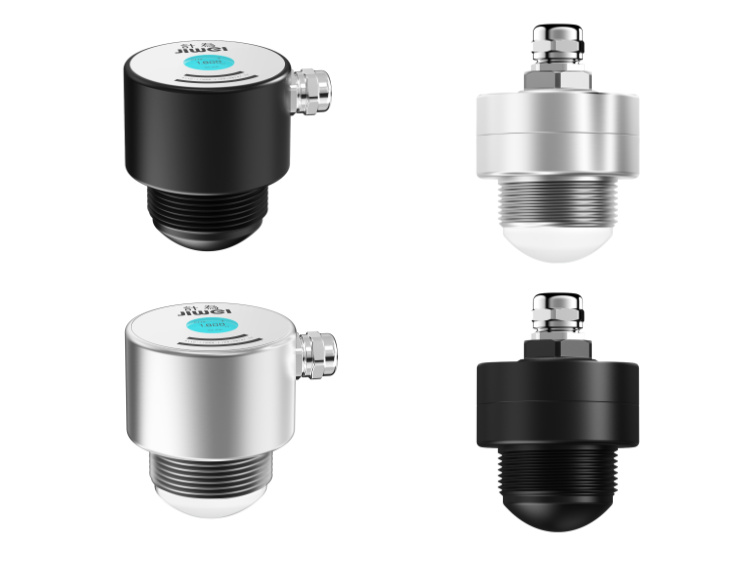
A compact radar sensor designed for small tanks and space-limited installations.
Features
- Cost-effective solution
- PA12 process connection with strong corrosion resistance
- Non-contact measurement for long service life
- Stable performance even with surface turbulence or steam
Radar vs Ultrasonic Level Sensors
Both technologies provide non-contact measurement but differ significantly in performance.
Radar transmitters emit high-frequency microwave signals that do not require a medium for propagation.
Ultrasonic sensors rely on sound waves traveling through air, making them vulnerable to environmental factors such as:
- Temperature variations
- Steam and vapor
- Dust or turbulence
- Vacuum conditions
Therefore, in high-temperature, high-pressure, dusty, or corrosive environments, radar sensors are the more reliable solution.
How to Calibrate a Radar Level Transmitter
Calibration ensures accurate measurement.
Basic calibration steps
Establish reference points
Define the zero level (empty tank) and full level.
Parameter configuration
Input the vessel dimensions into the instrument.
Signal mapping
Map the measurement range to a 4–20 mA output signal.
Calibration with JWrada® Software
Calibration of JWrada® radar sensors is highly simplified.
Technicians can configure the instrument via Bluetooth or cloud connection, while real-time echo curve analysis ensures accurate parameter settings and false echo suppression.
Choosing the Right Level Sensor
Selecting the right technology requires evaluating several factors:
Process conditions
Radar sensors are ideal for steam, vacuum, dust, or extreme weather conditions.
Measurement range
For tanks exceeding 20 meters, radar is usually necessary.
Interface measurement
Guided wave radar is preferred for oil-water interface measurement.
Maintenance requirements
Remote diagnostics and cloud debugging significantly reduce maintenance costs.
Cost considerations
Ultrasonic sensors may offer lower initial cost in simple applications, but radar often provides better long-term ROI.
Troubleshooting Radar Level Sensors
Common issues include:
No output signal
Check calibration parameters and wiring connections.
Signal fluctuations
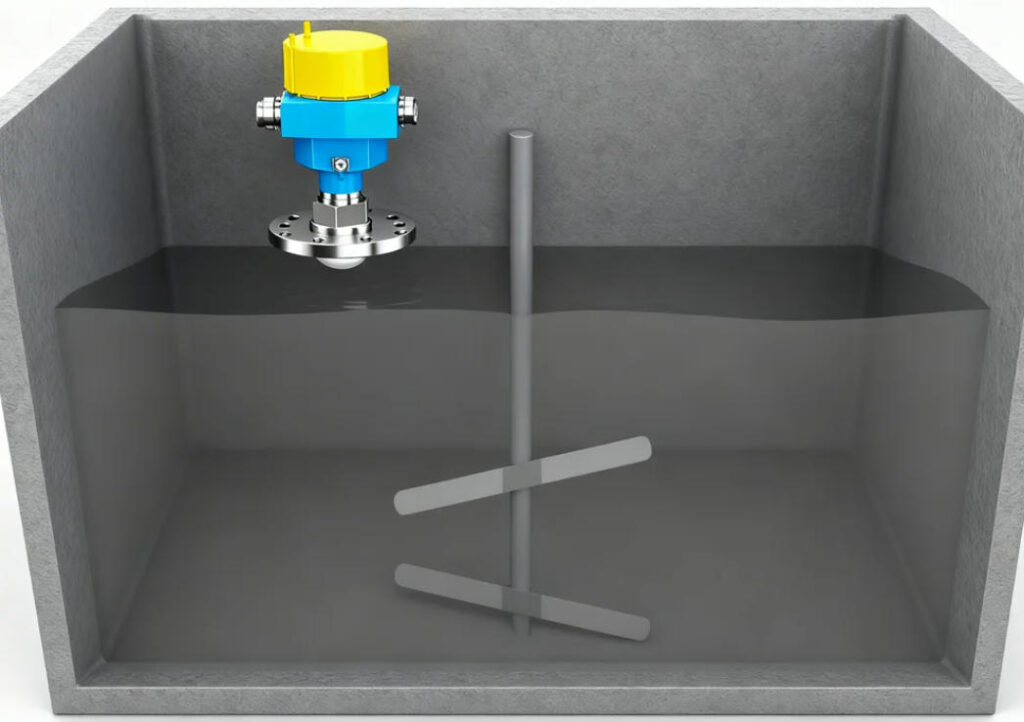
Use echo curve analysis to identify interference from agitators or internal structures.
Constant level reading
Inspect probe contamination (for guided wave radar) or antenna buildup (for non-contact radar).
Communication issues
Verify PLC input modules and communication protocol settings.
Conclusion
Radar level measurement technology is redefining industrial level measurement standards.
Changes in viscosity, density, or chemical composition that affect traditional technologies usually have minimal impact on radar measurement.
Especially non-contact radar sensors, which prevent contamination, reduce wear, and deliver reliable performance even in harsh environments.
As a professional instrumentation manufacturer, Shenzhen Jiwei Automations Ltd. provides a complete portfolio of radar level sensors—from non-contact radar to guided wave radar, and from standard to high-temperature applications.
Through its proprietary software platform and cloud-based remote debugging technology, Jiwei offers customers a new level of intelligent measurement solutions.
For technical consultation or product selection support, please contact the Shenzhen Jiwei Automations Ltd. technical team.