Comprehensive Guide to Radar Level Transmitters: Working Principles, Industrial Applications, and Core Differences Analysis
In the field of modern industrial automation, precise level measurement is the cornerstone of ensuring production safety and efficiency. As a high-performance, non-contact measurement solution, Radar Level Transmitters have become the preferred choice for industries such as oil and petrochemicals, chemicals, pharmaceuticals, and food processing, thanks to their exceptional stability.
This article delves into every aspect of radar level measurement technology and introduces how the Shenzhen Jiwei (Jiwei) JWrada® series redefines the competitive advantages of domestic radar level meters through self-developed software algorithms and remote cloud-based commissioning technology.
I. Executive Summary: Key Takeaways
- Definition & Principle: Utilizes the time difference between the emission and reflection of microwaves (electromagnetic waves) to calculate the distance from the sensor to the medium surface.
- Operational Environment: The JWrada® series performs excellently under extreme conditions such as high temperature, high pressure, strong corrosion, heavy dust, or steam.
- Radar vs. Ultrasonic: Radar uses microwaves, which are unaffected by temperature, pressure, or vacuum; Ultrasonic relies on sound waves, which are easily disturbed by fluctuations in the environmental medium.
- Key Classifications: Divided into Non-Contact Radar (no physical contact) and Guided Wave Radar (contact with the medium via a waveguide rod/cable).
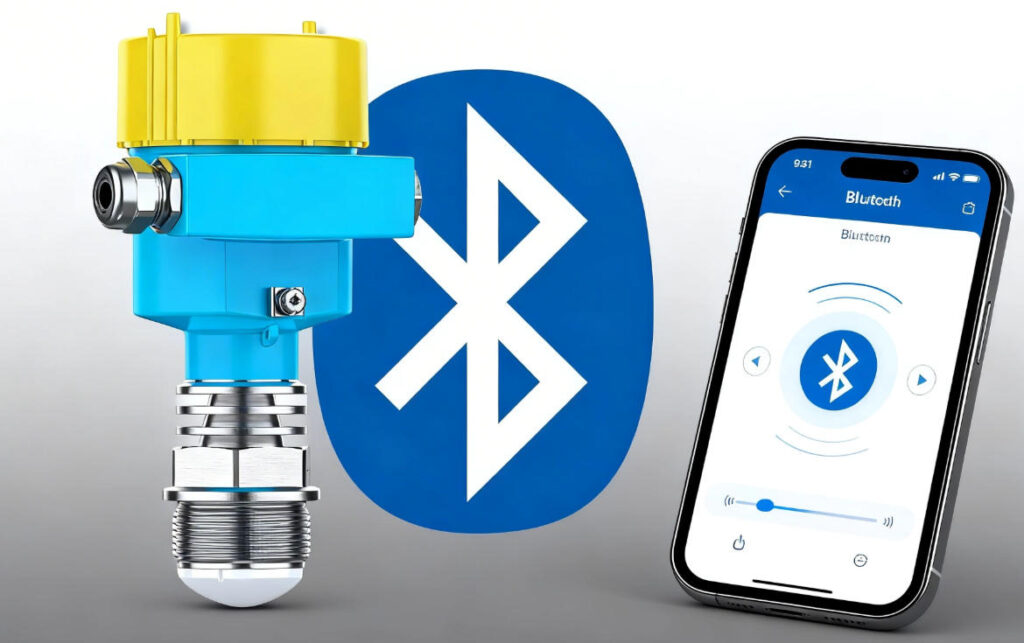
- Core Competitiveness: The unique advantage of JWrada® lies in its self-developed software system, which supports one-on-one remote debugging via cloud servers, real-time echo curve analysis, and EFT curve diagnostics, filling a technical gap in similar domestic products.
II. Working Mechanism of Radar Level Transmitters
1. Basic Principle
The core of a radar level meter is an electromagnetic wave emission source. The sensor emits microwave signals toward the measured medium (liquid or solid). The signal reflects upon hitting the medium surface and is received back by the sensor antenna.
By precisely calculating the Time of Flight between emission and reception, combined with the known wave speed (speed of light), the device accurately derives the distance D:
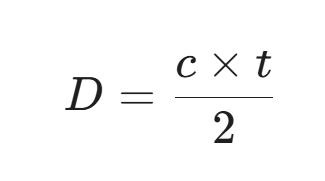
Where c is the wave speed and t is the travel time.
2. Software-Defined Measurement by JWrada®
Unlike traditional hardware-driven radars, Jiwei’s JWrada® places software algorithms at the heart of the system:
- Commissioning & Parameter Setting: For different scenarios (such as tanks with agitators or dusty silos), the software automatically filters out interference echoes.
- Fault Code Viewing: Through an intuitive software interface, users can quickly locate anomalies caused by hardware or environmental factors.
- Real-time Analysis: Supports real-time viewing of Echo Curves and EFT (Interference Echo Suppression) curves, helping engineers accurately identify the true level.
III. Primary Types of Radar Level Transmitters
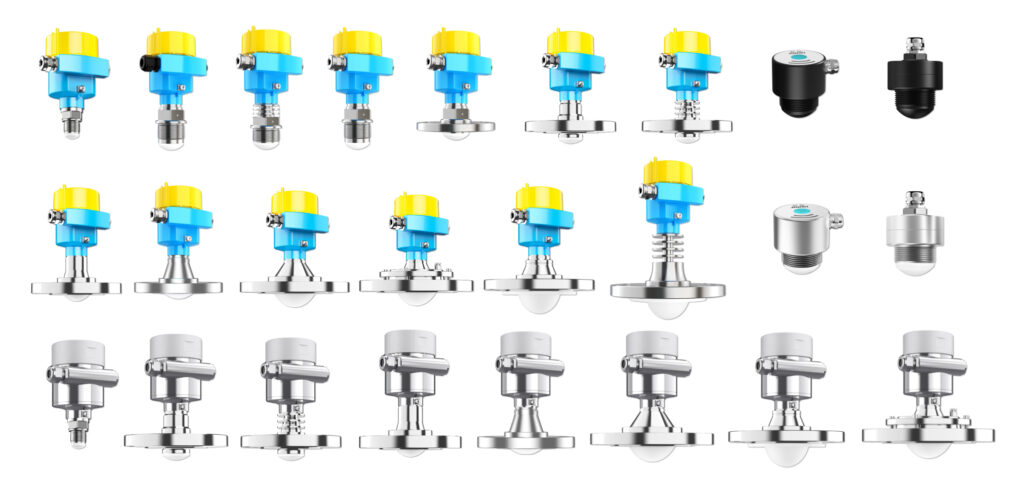
In practical applications, radar level meters are generally divided into two categories based on working conditions:
1. Non-Contact Radar Level Transmitters
These sensors do not directly contact the material, emitting electromagnetic waves into space via antennas (such as horn or drop-shaped antennas).
- Typical Product: JWrada® series (e.g., high-frequency radar for liquids).
- Advantage: Due to the lack of contact, the sensor is unaffected by medium corrosion, wear, or adhesion, resulting in extremely low maintenance.
2. Guided Wave Radar (GWR)
GWR utilizes a waveguide rod or steel cable to guide microwaves to the medium surface.
- Advantage: The signal is concentrated around the waveguide, resulting in low energy loss. It can penetrate foam or steam and is ideal for measuring Interface Levels (e.g., oil-water interface).
IV. Core Technical Breakthrough: JWrada® Remote Cloud Debugging
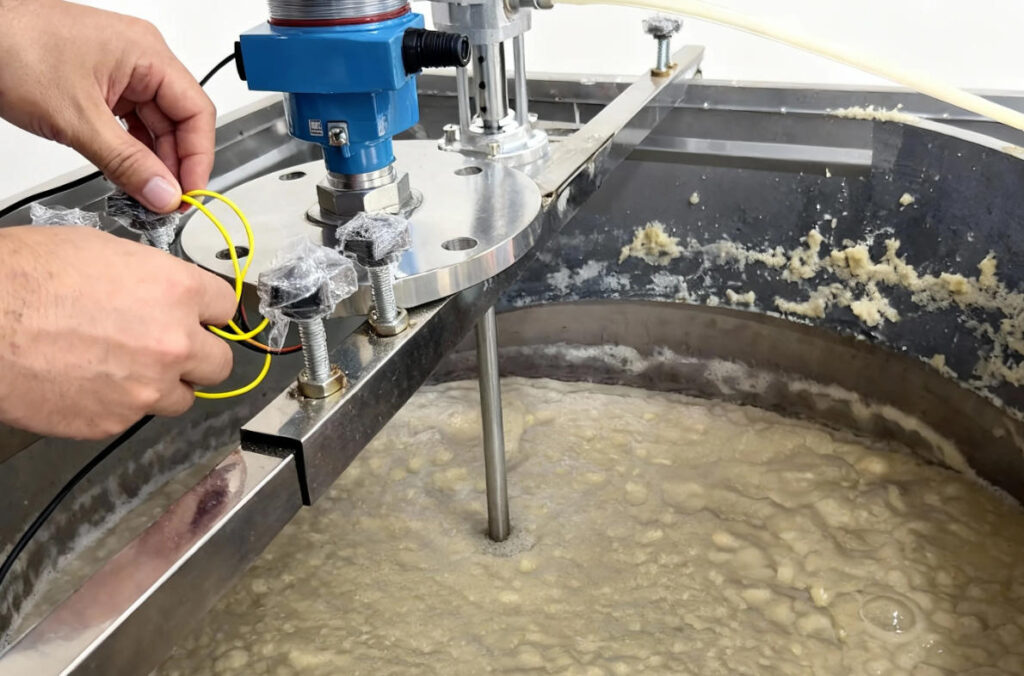
Traditional radar level meters often require factory engineers to visit the site when encountering complex conditions (such as reactors with complex internal structures). Jiwei JWrada® has changed this through innovation:
1. One-on-One Cloud Server Collaboration
JWrada® supports remote access based on cloud servers. No matter how remote the site is, Jiwei engineers can synchronize with onsite personnel through the cloud.
2. Deep Echo Diagnosis
Using self-developed software, engineers can remotely call up echo curves. By comparing the EFT curve, the software identifies which signals come from obstacles like agitator blades or ladders and which represent the true level.
Key Point: This customized parameter optimization and algorithm adjustment ensure that every JWrada® unit achieves optimal accuracy in its specific industrial environment. Currently, other domestic manufacturers lack such a closed-loop solution integrating remote diagnosis and real-time algorithm tuning.
VI. Application Examples and Product Matrix
1. Liquid-Specific Radar: JWrada® 80GHz High-Frequency Series
Targeted at liquid storage tanks, acid-base solutions, and chemical raw materials:
- Precision: Features an extremely narrow beam angle (e.g., 3°), effectively avoiding interference from tank walls.
- Durability: Supports up to 220°C and 25 bar pressure.
- Hygienic: Suitable for the food industry, meeting food safety standards.
2. JWrada® Stainless Steel Series
Specifically designed for harsh conditions, suitable for both liquid and solid applications:
- Features:
- Full stainless steel construction for corrosive environments and high-demand industrial sites.
- Rugged and durable with excellent shock and vibration resistance.
- Resistant to high temperature and pressure, meeting petrochemical and energy industry needs.
- Simple and reliable structure with low maintenance costs.
VII. Radar vs. Ultrasonic: Why Choose Radar?
While ultrasonic sensors are more economical for short-range, simple conditions, radar offers irreplaceable advantages:
- Medium Independence: Ultrasonic relies on air conduction; wind speed, temperature fluctuations, and vacuum will cause it to fail. Radar microwaves can propagate even in a vacuum.
- Interference Resistance: Radar can penetrate dust, steam, and light foam, which often cause ultrasonic signal loss.
- Measurement Distance: Radar range far exceeds ultrasonic (150m vs. 20m).
VIII. Calibration and Maintenance Recommendations
Despite JWrada®’s powerful self-diagnostic functions, regular professional verification is necessary:
- Five-Point Calibration: In 4-20mA analog systems, select five representative level points for range calibration to ensure current output precisely matches actual depth.
- Software Monitoring: Regularly log into the JWrada® debugging software to check signal strength. A drop in echo amplitude may indicate antenna buildup or significant environmental changes.
IX. Common Troubleshooting (DIY Guide)
- No Signal Output: Check the PLC or display end first. A blank display usually indicates an I/O card failure or wiring issue.
- Reading Jumps: Usually related to complex internal interference. Use the JWrada® EFT function to filter out obstructions.
- Data Drift: Check if the process medium has undergone drastic temperature changes or if there is condensation/icing on the antenna.
X. Conclusion: How to Choose the Right Solution?
Choosing a level meter is not about “the more expensive, the better,” but about “suitability for the site.”
- If your budget is limited and conditions are simple (normal temp/pressure, short range), Ultrasonic may suffice.
- If you face extreme weather, long-range measurement, or fine chemical processes, JWrada® Radar Level Transmitters are the more cost-effective long-term choice.