Compact, economical, yet smarter: Field application of the JWrada®-21 radar level transmitter
In industrial automation, process control, as well as environmental and public utility sectors, stable and reliable level measurement remains the foundation for continuous system operation. From wastewater treatment plants to chemical storage tanks, from powder silos to open stockpiles, any abnormal level signal can trigger cascading effects and even lead to production line shutdowns.
Therefore, radar level measurement technology has become a standard configuration in an increasing number of industries.
At the same time, a more practical trend is emerging: not all measuring points require high-end, complex instrumentation. In a large number of standard applications, users prioritize compact design, cost efficiency, and reliable performance.
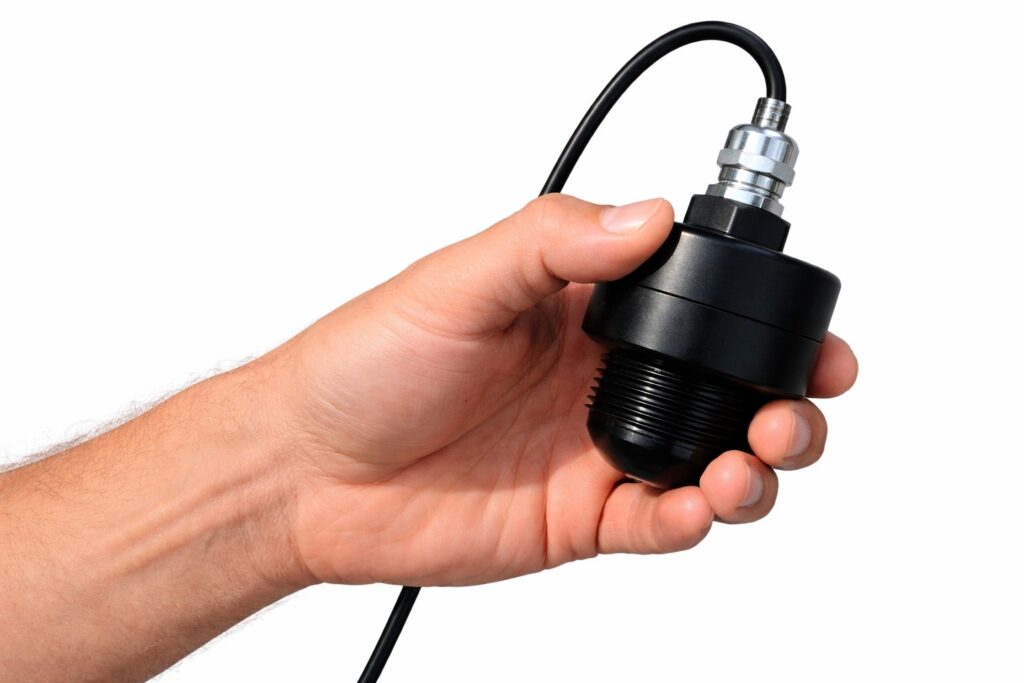
The JWrada®-21 radar level transmitter from Shenzhen Jiwei Automations Ltd is designed precisely for these requirements.
Radar level measurement: a key factor in process reliability
In real industrial environments, measurement conditions are often far more complex than in laboratory settings.
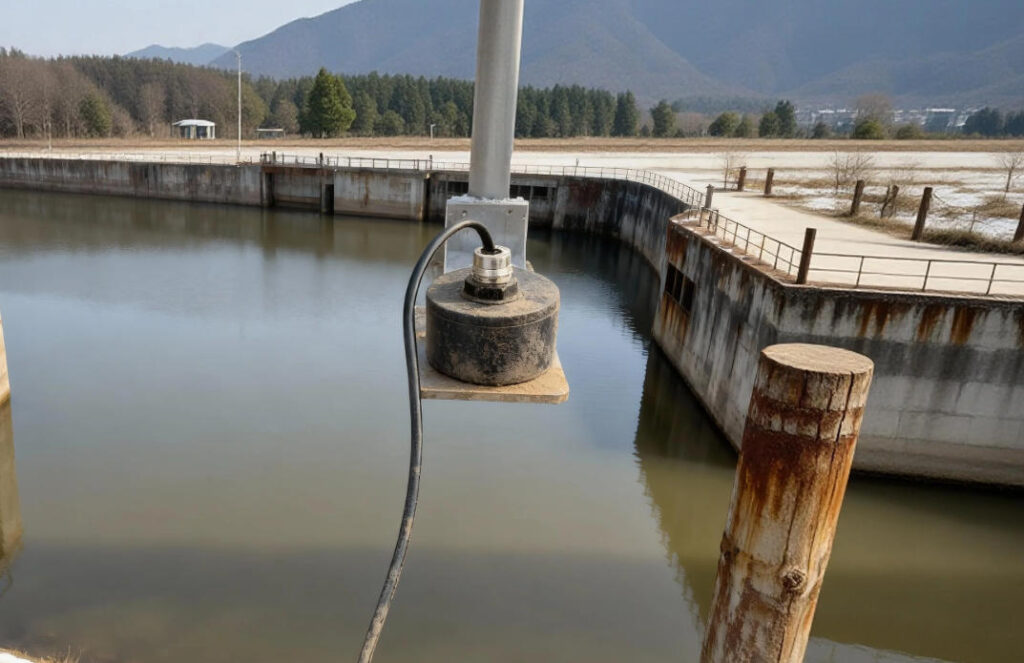
Steam, dust, temperature fluctuations, and internal tank structures can all interfere with conventional measurement methods. Radar level transmitters, however, provide a clear advantage thanks to their non-contact measurement principle.
In a wastewater treatment project, the customer’s original measuring device frequently triggered false alarms under foam and surface turbulence conditions. After replacing it with the JWrada®-21 radar level transmitter, the level signal became significantly more stable, and abnormal fluctuations were greatly reduced.
This improvement is attributed to the strong anti-interference capability of radar signals, combined with optimized echo recognition algorithms that accurately distinguish real liquid surfaces from false echoes.
After several months of operation, the customer reported a significant improvement in system stability and a noticeable reduction in operational interventions.
Simplifying complexity for standard applications
The design philosophy of the JWrada®-21 radar level transmitter is not based on adding more features, but on focusing on core application requirements.
In a food industry CIP tank application, limited installation space and frequent cleaning cycles required a highly simplified and low-maintenance solution.
The JWrada®-21 demonstrated strong adaptability in this scenario. Its compact design allowed quick installation in confined spaces, while its excellent beam focusing capability effectively avoided interference from internal structures.
More importantly, its non-contact measurement principle eliminates direct contact with the medium, reducing contamination risks and mechanical wear.
After implementation, installation efficiency increased by approximately 40%, commissioning time was reduced by more than half, and maintenance requirements were nearly eliminated.
Compact, economical, yet powerful: multi-scenario adaptability of JWrada®-21
In practical applications, radar level transmitters often need to operate in tanks with limited space or complex internal structures, such as agitators, coils, or support elements. These conditions place higher demands on signal focusing performance.
Thanks to its strong beam concentration capability, the JWrada®-21 can accurately identify real level echoes even in narrow spaces or tanks with dense internal installations, ensuring stable and reliable measurement results.
At the same time, its ease of use significantly expands its application range. From water and wastewater systems to food processing, chemical production, and building materials industries, the JWrada®-21 can be easily integrated into existing systems with minimal deployment effort.
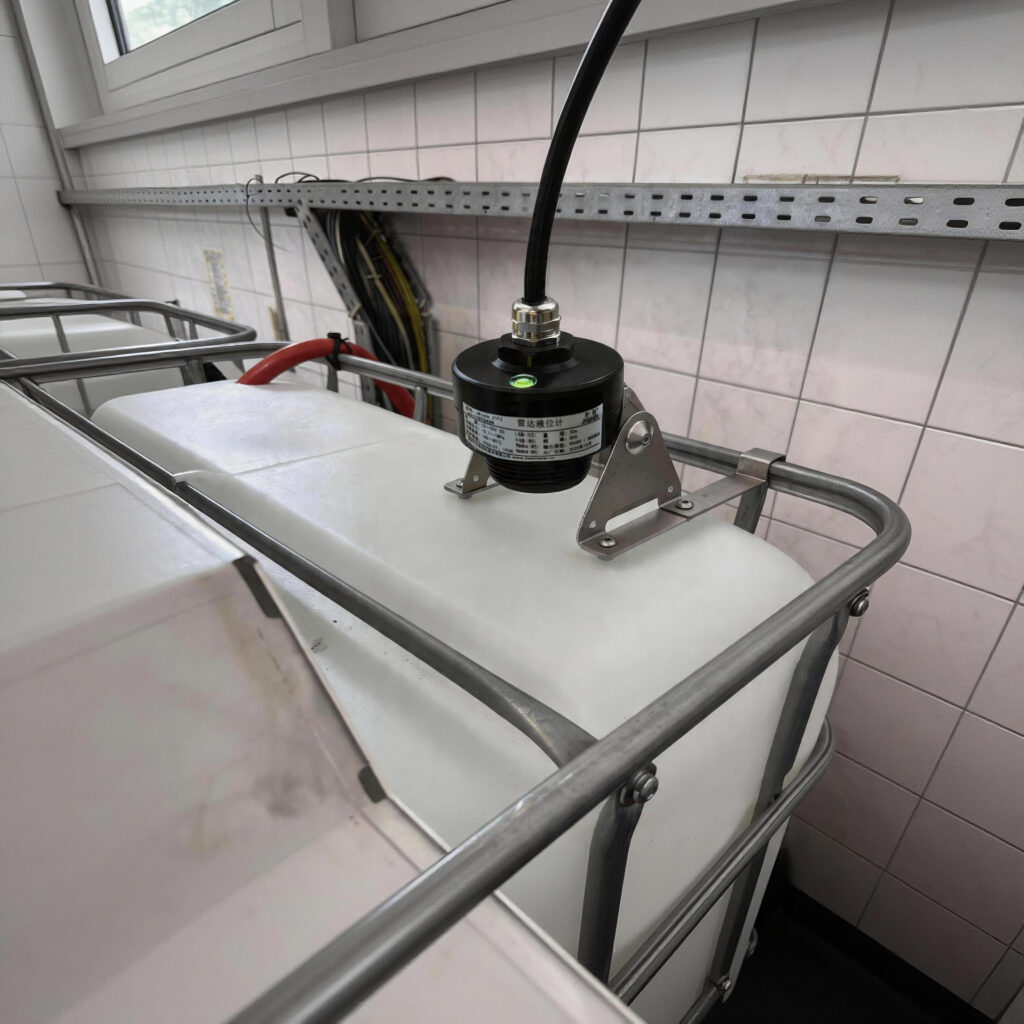
In some special applications, such as level monitoring of IBC plastic containers, the JWrada®-21 can perform external non-contact measurement. By penetrating the plastic tank wall, it directly obtains level data without requiring sensor removal during container replacement, greatly improving operational efficiency.
Initially, this type of economical radar level transmitter was mainly used in basic water treatment applications. However, with growing field experience, more industries have recognized that stable and cost-effective solutions are also essential for auxiliary and non-critical measuring points.
The JWrada®-21 has gradually become a general-purpose solution for both liquid and solid level measurement applications.
Compact does not mean compromise: balancing performance and cost
Many users intuitively assume that lower cost inevitably means reduced performance. However, this assumption does not apply to the JWrada®-21 radar level transmitter.
It is based on a mature high-frequency radar measurement platform, providing stable echo detection and strong signal consistency under standard operating conditions. Even in environments with dust, steam, or process disturbances, it maintains reliable measurement output, avoiding signal drift or misinterpretation caused by environmental changes.
From an application perspective, this means users do not need to pay for unnecessary high-end redundancy features while still achieving stable and predictable measurement performance, ensuring industrial reliability at controlled investment cost.
Stable performance in harsh conditions
In water treatment and outdoor applications, operating conditions are often highly demanding. Equipment may be exposed to high humidity, corrosive gases, temperature variations, rainfall, and in some cases even temporary submersion or rapid level fluctuations.
The JWrada®-21 radar level transmitter addresses these challenges through optimized structural design and material selection. Reinforced housing protection, sealing structure improvements, and carefully selected components ensure long-term mechanical and electrical reliability in harsh environments. In addition, the non-contact nature of radar measurement further reduces direct environmental impact on the sensor itself.
In practical use, this design enables stable signal output even under fluctuating conditions, minimizing data anomalies and system malfunctions caused by environmental interference.
From a system perspective, this stability not only improves single-point measurement reliability but also enhances overall process control redundancy, providing a more robust data foundation for long-term continuous operation.
Hazardous area applications: safety without added complexity
In industries such as chemical processing and energy production, many measurement points are located in hazardous or explosive environments, which impose strict safety requirements and increase system complexity.
The JWrada®-21 radar level transmitter is designed with these application scenarios in mind. While fully complying with explosion protection and safety standards, it minimizes reliance on additional external systems, allowing for simpler integration into field control architectures. Through optimized electrical design and signal processing architecture, the need for additional safety barriers or complex configurations is significantly reduced, simplifying overall engineering design.
This approach ensures safe and compliant operation while significantly reducing installation and commissioning complexity.
From a project execution perspective, this helps shorten engineering cycles, reduce commissioning effort, and lower overall system cost, making it well suited for large-scale, multi-point industrial applications.
Digital connectivity: a built-in capability, not an add-on
With the continuous advancement of industrial digitalization, field devices are evolving from simple measurement tools into fundamental nodes within data networks.
The JWrada®-21 radar level transmitter is designed accordingly. It is no longer just a measuring instrument but a key data acquisition node within automation systems. It supports remote access and parameter configuration, allowing engineers to adjust key settings and monitor operating status without frequent on-site visits. Continuous monitoring of operating conditions also enables early detection of abnormal trends, improving overall system controllability.
At the system integration level, the device can be seamlessly connected to PLC, DCS, or cloud platforms for real-time data sharing and centralized management.
For end users, this translates into improved process transparency and significantly faster response to on-site issues, further enhancing system stability and operational efficiency.
Core differentiation: software-defined radar level transmitter
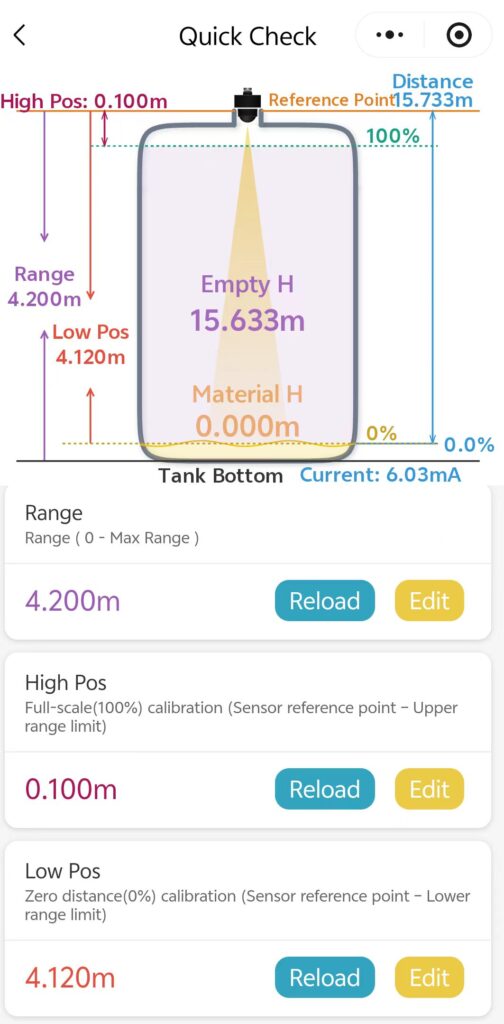
If hardware defines the baseline performance of a device, software determines its upper limit.
The core competitive advantage of JWrada® lies in its independently developed software architecture.
The JWrada®-21 supports firmware upgrades, parameter configuration, and diagnostic data access. Through a cloud-based platform, engineers can perform real-time remote commissioning in collaboration with on-site personnel, accessing radar echo curves and EFT curves.
Based on this data, targeted parameter optimization and algorithm adjustments can be performed to achieve optimal measurement performance under specific operating conditions.
In real-world projects, this approach reduces commissioning time from several days to just a few hours while significantly improving success rates.
Remote commissioning and OTA: continuous evolution of the device
The JWrada®-21 supports remote commissioning and OTA (over-the-air) online upgrades, enabling continuous optimization and evolution even after deployment.
As process conditions change over time—such as variations in media properties, tank structures, or operating parameters—measurement performance may be affected. Remote commissioning allows engineers to adjust device parameters in real time without visiting the site, ensuring stable and reliable operation.
At the same time, OTA upgrades enable firmware updates that not only fix potential issues but also introduce algorithm improvements and feature enhancements, allowing device performance to continuously evolve rather than remain static after delivery.
This architecture transforms the JWrada®-21 from a traditional “deliver-and-forget” instrument into a continuously evolving measurement system, better aligned with modern industrial demands for flexibility and long-term stability.
Key advantages: a better solution for standard applications
From a system-level perspective, the JWrada®-21 radar level transmitter represents a balanced engineering design approach for industrial applications.
Mechanically, its compact integrated structure allows installation in space-limited or complex environments while maintaining mechanical robustness and field adaptability. In signal processing, high-frequency radar measurement combined with optimized echo recognition algorithms ensures stable and continuous output under various complex media conditions.
In terms of cost-performance balance, the JWrada®-21 does not achieve cost reduction by sacrificing measurement capability. Instead, it optimizes functionality focus and engineering design to deliver better cost efficiency while maintaining reliability.
In system integration and deployment, it supports fast installation and commissioning, reducing field complexity and improving overall project execution efficiency.
More importantly, from a system evolution perspective, the JWrada®-21 is not just a standalone instrument but an intelligent node with software-driven capabilities. Through remote commissioning, parameter configuration, and OTA upgrades, it continuously evolves through algorithm optimization and functional enhancement, transforming from static hardware into a dynamic, adaptive measurement system.
Conclusion: keeping complexity inside the system
In level measurement applications, true innovation lies in simplifying the user experience.
The JWrada®-21 radar level transmitter from Shenzhen Jiwei Automations Ltd achieves this by embedding complexity within the system itself through integrated hardware and software design.
The result is stable operation, continuous optimization, and long-term controllable cost of ownership.