Application Trends of NAMUR Output and Ring-11 Vibrating Level Switch
In industrial automation, process control, and hazardous area detection, the unification and reliability of signal standards have always been one of the core challenges. Among them, the NAMUR output standard, as a widely used signal interface specification in intrinsically safe systems, is playing an increasingly important role in more and more industrial applications, especially in chemical, petroleum, pharmaceutical, and dust-explosive hazardous environments.
With continuously increasing industrial safety requirements, the NAMUR standard is no longer just a signal format, but is gradually becoming an important technical label for high-reliability industrial sensing devices.
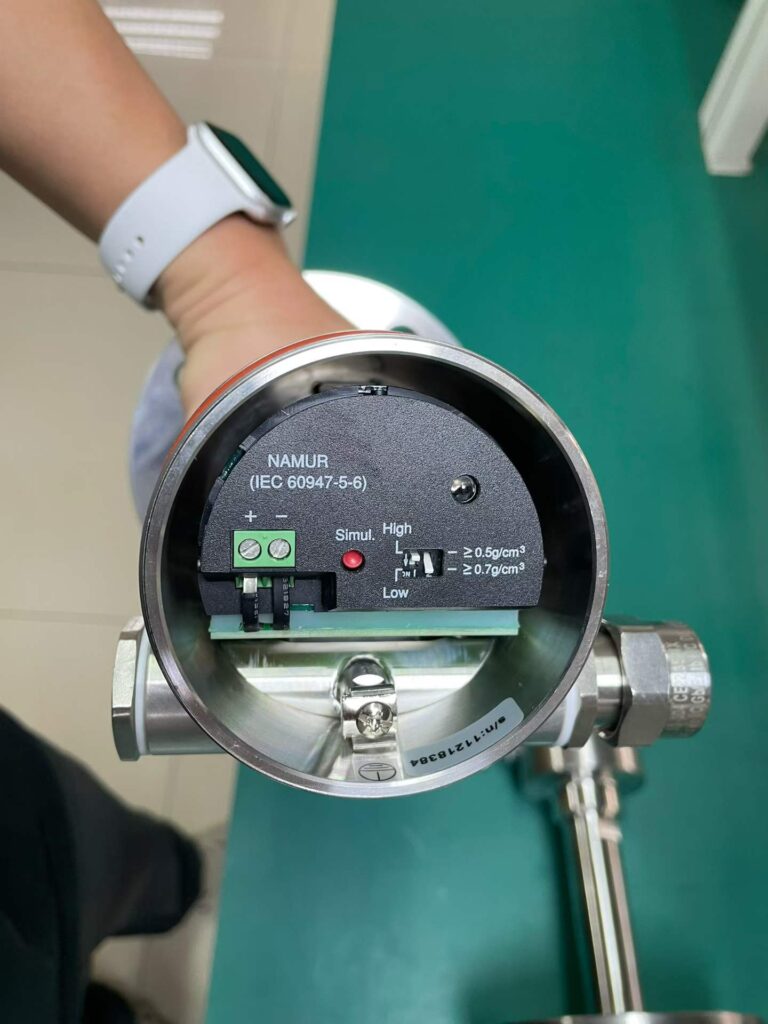
I. What is NAMUR Output?
NAMUR (Normenarbeitsgemeinschaft für Mess- und Regeltechnik in der Chemischen Industrie) is a standardization association of measurement and control in the German chemical industry.
In level switches, proximity switches, and process detection applications, NAMUR output generally refers to a current-based signal output method compliant with IEC 60947-5-6. Its key characteristics include:
Signal transmission through current variation (rather than voltage switching)
Typically designed with low-power intrinsic safety
Compatible with safety barriers (Zener Barrier / Isolator)
Strong anti-interference capability, suitable for long-distance transmission
Capable of wire break and short-circuit diagnostics
In typical applications, NAMUR sensors output two signal states:
Low current state (e.g. < 1.2 mA): “no material / empty”
High current state (e.g. > 2.1 mA): “material present / full”
This design provides extremely high safety and stability in hazardous area applications.
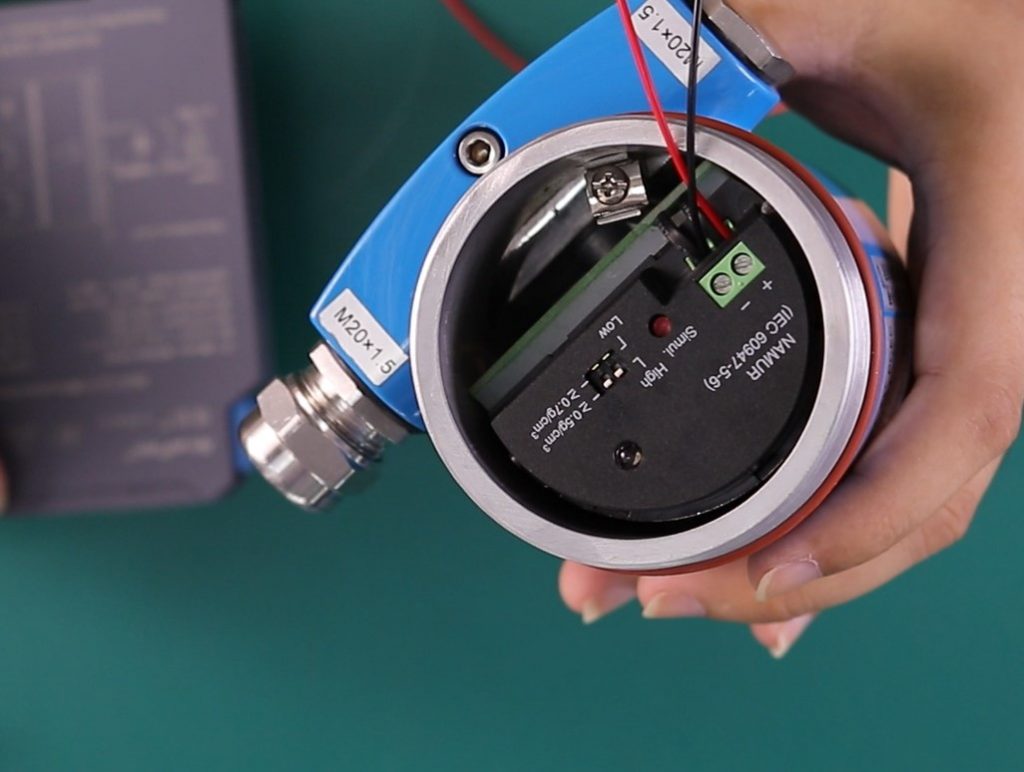
II. Why is NAMUR Output Becoming More Important?
With increasing complexity in industrial field environments, the limitations of traditional relay or simple switch outputs have gradually become apparent. In environments with strong electromagnetic interference, long-distance wiring, and high reliability requirements, such signal types are easily affected by external disturbances and lack effective line diagnostic capabilities. In addition, their limited compatibility with intrinsically safe explosion-proof systems restricts their application in chemical, petroleum, and other hazardous industries.
In contrast, the NAMUR output standard demonstrates significant advantages in industrial sensing applications. It is specifically designed for intrinsically safe systems and is highly compatible with Ex ia explosion-proof architectures, making it widely applicable in chemical, oil and gas, and dust hazardous environments. In terms of anti-interference performance, current-based signal transmission significantly improves system stability in complex electromagnetic environments. At the same time, NAMUR interfaces provide line diagnostic capability, effectively detecting faults such as wire breakage and short circuits, thereby improving system safety and maintainability. In addition, this standard can be seamlessly integrated into PLC, DCS, and safety control systems, offering excellent industrial compatibility. Therefore, NAMUR output is gradually becoming a standard configuration for high-end industrial level switches.
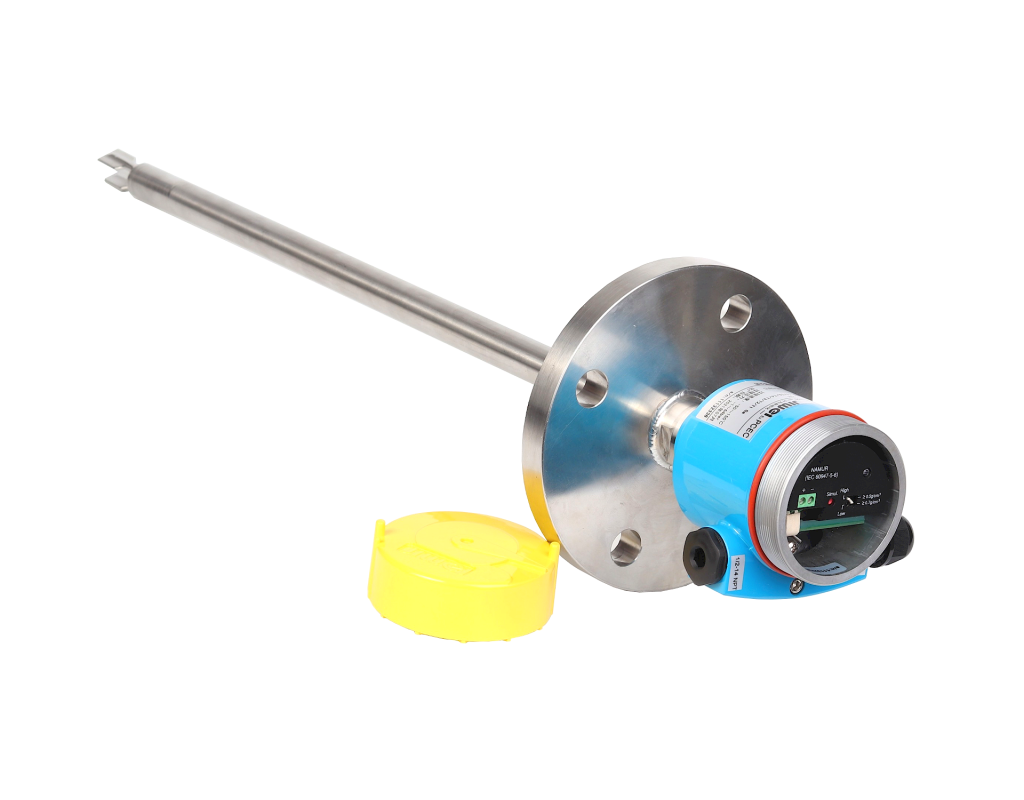
III. Introduction of Ring-11 NAMUR Vibrating Level Switch
Against this technological trend, Jiwei Automations has launched the NAMUR output version of the Ring-11 vibrating level switch, designed for liquid level detection in various process applications.
Ring-11 adopts a vibrating structure principle. It detects the presence of liquid by analyzing the change in vibration characteristics when the probe moves between air and liquid.
Its working principle is as follows:
The probe vibrates at a fixed frequency in air
When immersed in liquid, the vibration is damped
The control circuit detects the vibration change and outputs a switching signal
This structure is independent of medium conductivity or dielectric constant, making it suitable for a wide range of complex industrial liquid conditions.
IV. Advantages of NAMUR Output + Ring-11 Combination
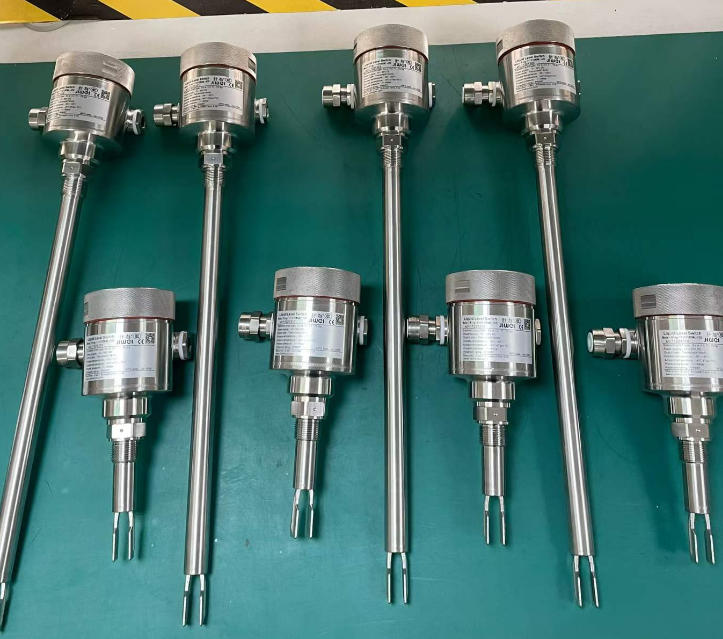
The core value of the Ring-11 NAMUR version lies in combining highly reliable vibration detection technology with intrinsically safe output standards, making it suitable for hazardous areas and high-standard industrial systems.
Its main advantages include:
- Suitable for Ex ia intrinsic safety systems
NAMUR output is naturally compatible with safety barrier systems and can be used in Zone 0 / Zone 1 / Zone 2 hazardous areas. - Stable and reliable signal
Current-based signal output provides better anti-interference performance than traditional relay outputs. - Easy system integration
Can be directly connected to PLC or DCS systems without complex signal conversion modules. - Suitable for various liquid media
Including water, oil, chemical liquids, and slightly contaminated process liquids. - Low-maintenance structure design
No complex moving mechanical parts, suitable for long-term continuous operation.
V. Typical Applications
The Ring-11 NAMUR output version is widely used in industrial applications with high safety and reliability requirements, especially in complex process conditions and hazardous environments.
Typical applications include:
Chemical storage tank level control and safety alarm systems for monitoring corrosive or flammable media;
Oil and fuel system level monitoring and interlock protection to ensure safe operation of petroleum storage and transportation;
Municipal and industrial water treatment systems for level detection in sedimentation tanks, clear water tanks, and wastewater treatment units;
Food and pharmaceutical process level control requiring hygienic and stable operation;
Environmental and industrial wastewater systems to prevent overflow and abnormal conditions;
Various hazardous area level safety protection applications ensuring reliable operation in explosion-proof environments.
In these applications, system stability and safety are always the key requirements, and NAMUR output provides high anti-interference capability, intrinsic safety compatibility, and diagnostic functions, significantly improving system reliability and safety level.
VI. Market Status in China: Supply Landscape of NAMUR Level Switches
At present, in the Chinese industrial sensor market, products with NAMUR output capability for vibrating level switches are still relatively limited.
In practical applications, most manufacturers still rely on relay outputs or PNP/NPN outputs, while truly NAMUR-compliant devices suitable for intrinsic safety system integration remain relatively few.
Jiwei Automations (Shenzhen Jiwei Automations Ltd) is one of the early companies in China to achieve vibrating level detection technology, NAMUR standard output integration, and industrial explosion-proof application adaptation, with early technical development and engineering application experience in this niche field.
The launch of the Ring-11 NAMUR version enables domestic users to access a solution that better complies with international standards in hazardous area level detection, reducing dependence on imported products.
VII. Technology Trend: NAMUR as a High-End Industrial Sensor Label
From a global industrial development perspective, NAMUR output is gradually evolving from an “explosion-proof interface standard” into a broader industrial signal standard with expanded application boundaries, moving toward higher reliability and system standardization.
In current industrial automation systems, NAMUR output has become a standard interface for high-reliability level switches and demonstrates strong compatibility in Industry 4.0 digital systems. It is also increasingly used in Safety Instrumented Systems (SIS) as a standardized input signal to enhance system safety levels and diagnostic capabilities.
In the future, as industrial processes continue to demand higher safety, stability, and intelligence, level switches with NAMUR output capability will occupy an increasingly important position in the high-end industrial market and become a key component in process control and safety systems.
VIII. Conclusion
The NAMUR output standard is not only a signal format, but also represents higher requirements for safety, reliability, and system compatibility in industrial sensing devices.
The Ring-11 NAMUR vibrating level switch combines mature vibration detection technology with international standard output, providing a more stable and safer solution for liquid level detection.
With the continuous advancement of industrial automation toward higher standardization in China, the Ring-11 with NAMUR output capability is becoming an increasingly important choice for hazardous area liquid level detection.