Why Do High-Level and Low-Level Monitoring Systems Keep Failing? A Root Cause Analysis from Engineering Control Logic
In industrial process control, high-level and low-level liquid monitoring systems are supposed to be the most fundamental and critical safety protection mechanisms. However, in many real-world applications, a typical phenomenon occurs repeatedly: the system shows “normal” liquid level readings, yet overflow events, pump damage, or even production shutdowns still happen.
This issue is not rare and is widely observed across industries such as chemicals, water treatment, food processing, and energy. More importantly, the problem is often not whether level monitoring is installed, but whether the monitoring system is truly integrated into the control logic.
In the same storage tank, it is common to see cases where overflow occurs but no alarm is triggered, or where a pump runs dry and is damaged while the system still indicates normal operation. This clearly shows that the core issue is not measurement availability, but whether the monitoring system has real closed-loop control capability.
1. High-Level Monitoring: Not a Reminder, but a Damage Prevention Mechanism
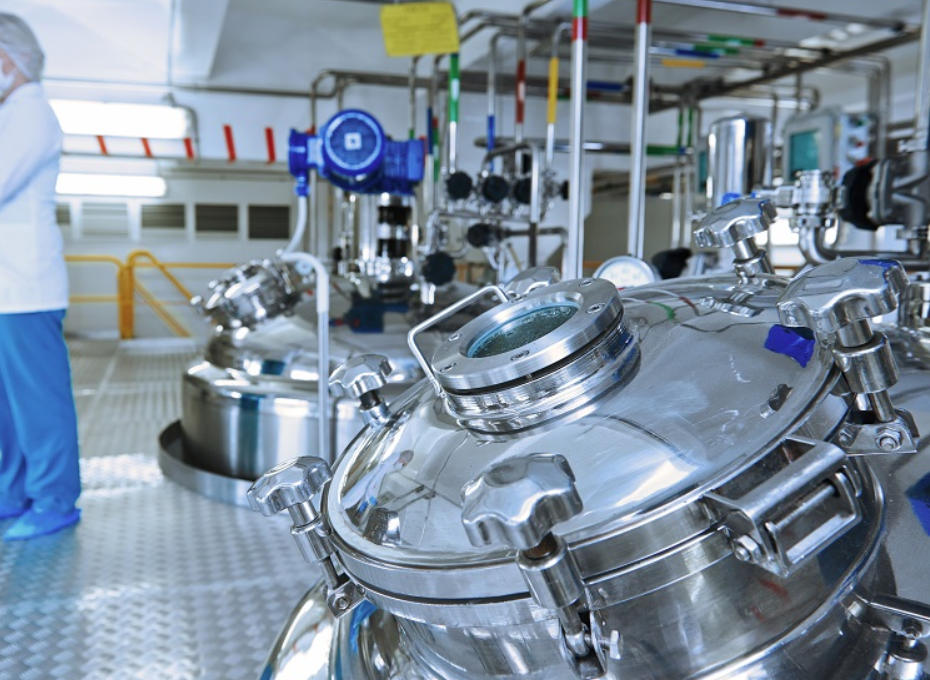
In field applications, one of the most common misunderstandings is treating high-level monitoring as a simple “warning signal” rather than a “safety execution device”.
Typically, high-level sensors are installed at the top of tanks or near overflow positions. During operation, operators may still see a “normal range” on the DCS interface while the liquid level is already close to the overflow point. Once this situation is detected, it is often too late to respond.
From a system design perspective, high-level monitoring should function as the first protective barrier against overflow accidents, not just an alarm point.
Therefore, high-level monitoring should include at least three levels of control functionality:
1) Basic Alarm Function
When the liquid level reaches the preset high threshold, audible and visual alarms should be triggered immediately, and signals should be sent to DCS or SCADA systems for operator response.
2) Automatic Interlock Shutdown
The high-level signal must be able to close inlet valves or stop upstream pumps, preventing further liquid inflow at the source.
3) Safety Backup Mechanism
In critical processes, overflow or emergency discharge systems should be activated, and in extreme cases, interlocked shutdown should be executed to prevent accident escalation.
Root Causes of High-Level Monitoring Failure
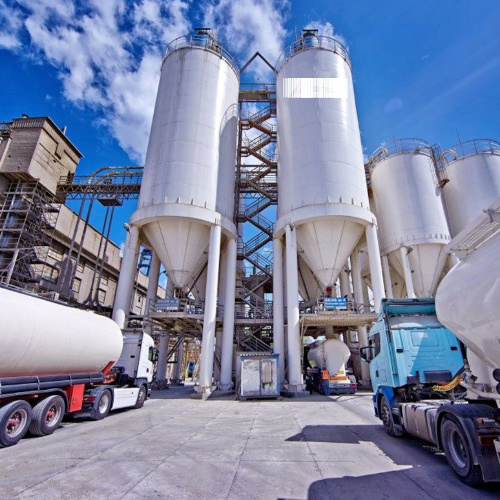
In many field cases, high-level monitoring failure is not caused by complete instrument breakdown, but by functional mismatch between device selection and operating conditions:
- Float type: sticking due to medium adhesion
- Ultrasonic: false echoes caused by foam or steam
- Capacitive type: signal drift due to medium variation
- High temperature/high pressure: reduced signal stability
The final result is: the instrument exists, but the data is unreliable, making control logic ineffective.
2. Low-Level Monitoring: The Overlooked Safety Baseline
In industrial accident statistics, equipment damage caused by low-level monitoring failure is no less frequent than overflow accidents.
A typical scenario is: a pump continues operating normally with stable current readings, while the tank is already nearly empty. This leads to dry running, causing mechanical seal failure and irreversible damage within minutes.
This demonstrates that low-level monitoring is not an auxiliary function, but a critical protection mechanism for equipment safety.
Three Core Functions of Low-Level Monitoring
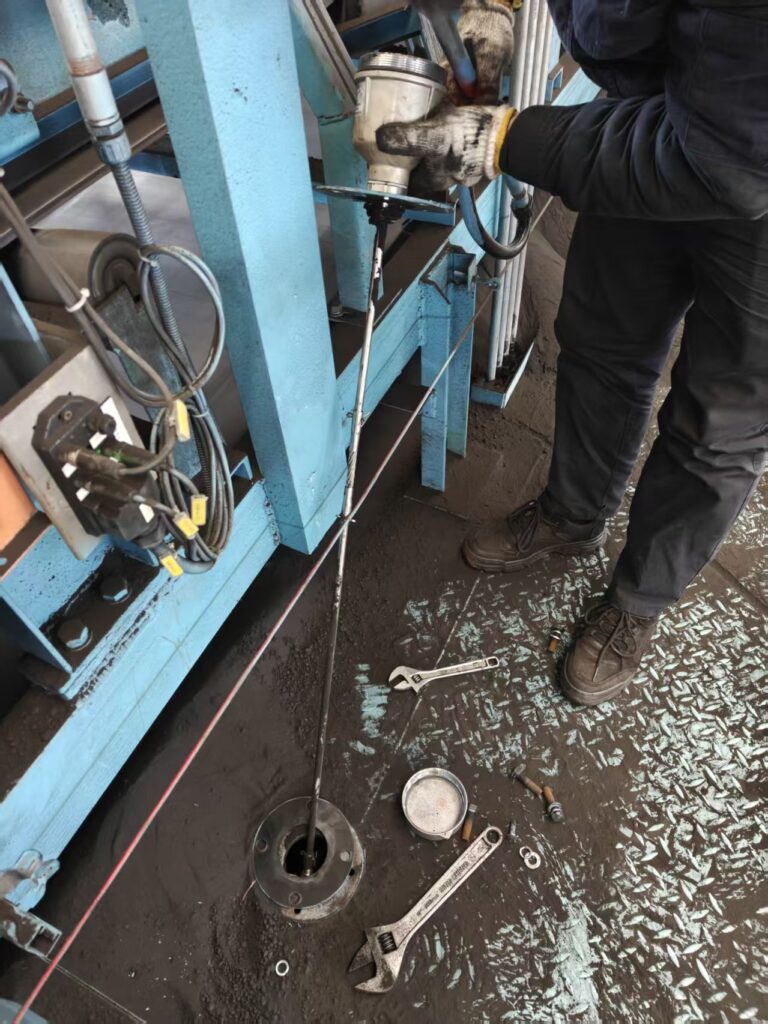
1) Prevent Dry Running Damage
When the liquid level drops to the low threshold, the pump should be immediately interlocked to stop operation, preventing dry running damage.
2) Automatic Refill Control
Inlet valves or supply pumps can be activated automatically to maintain the process within the required operating range.
3) Early Warning Mechanism
Early-stage low-level alarms provide operators with sufficient time to respond and investigate abnormal conditions.
Why Low-Level Monitoring Fails More Easily
Low-level monitoring typically operates under more extreme conditions:
- Near-empty tanks with unstable signals
- Bottom sediment affecting detection
- Foam or steam interference
- Highly sensitive process variations
Therefore, low-level monitoring depends more on reliability than measurement accuracy.
Engineering Consensus Solution
In practical field experience, tuning fork level switches are widely used for low-level protection due to their advantages:
- Only detect presence or absence of medium
- Strong anti-interference capability
- No frequent calibration required
- High adaptability to industrial conditions
A widely accepted engineering conclusion is:
For low-level protection, discrete level switches are often more reliable than continuous level instruments.
3. Three Fundamental Causes of Liquid Level Monitoring Failure
From an engineering system perspective, liquid level monitoring failures mainly originate from three factors:
1) Improper Installation Position
If the high-level setpoint is too high, there is insufficient response time;
If the low-level setpoint is too low, equipment damage may already occur before alarm activation.
2) Mismatch Between Instrument Selection and Process Conditions
Typical mismatches include:
- Ultrasonic sensors in foam conditions
- Capacitive sensors in highly corrosive environments
- Low-cost instruments in steam environments
All of these lead directly to inaccurate readings.
3) Alarm Without Interlock Control
This is one of the most dangerous issues in field applications. Even if an alarm is triggered, if no control action is executed, the system continues operating, and accidents cannot be prevented.
4. Fundamental Difference Between High-Level and Low-Level Monitoring
From a safety system perspective:
- High-level monitoring = prevents overflow (external tank risk control)
- Low-level monitoring = prevents equipment damage (internal system protection)
Together, they form a complete liquid level safety loop.
5. Practical Instrument Selection Principles
Based on field applications, the following selection logic is recommended:
1) Clean liquid and stable conditions
Ultrasonic or radar level transmitters can be used
2) High temperature, high pressure, or complex conditions
Radar level transmitters are preferred
3) Foam, steam, or turbulent media
Avoid ultrasonic devices; use more robust measurement technologies
4) Low-level protection applications
Tuning fork or float level switches are preferred, prioritizing reliability
6. Conclusion: The Core Issue Is Not “Measurement”, but “Control”
The real core of industrial liquid level monitoring is not whether the level is displayed correctly, but whether the system has a true closed-loop control capability.
High-level monitoring determines whether overflow accidents can be prevented, while low-level monitoring determines whether equipment damage can be avoided due to dry running. Together, they form the fundamental safety barrier of industrial processes.
If the monitoring system remains only at the “display level” without entering the “control level”, then no matter what type of instrument is used, accidents cannot be effectively prevented.