Level Switch TÜV-Recognized Laboratory Reports: What They Really Mean — A Technical Insight into the Ring-11
In the field of industrial automation, whether a device is reliable is often far more important than how impressive its specifications appear. Especially in continuous production environments, high-risk applications, and industries with extremely stringent safety requirements, even a slight deviation in level measurement can lead not only to production downtime but also to serious safety incidents.
Therefore, what truly supports long-term stable operation is not a single technical parameter, but systematically validated data and testing results verified by authoritative institutions.
Among various certification and testing systems, TÜV-recognized laboratory reports are highly trusted across the global industrial market. This is because they represent a validation mechanism that is rigorous, transparent, and fully traceable.
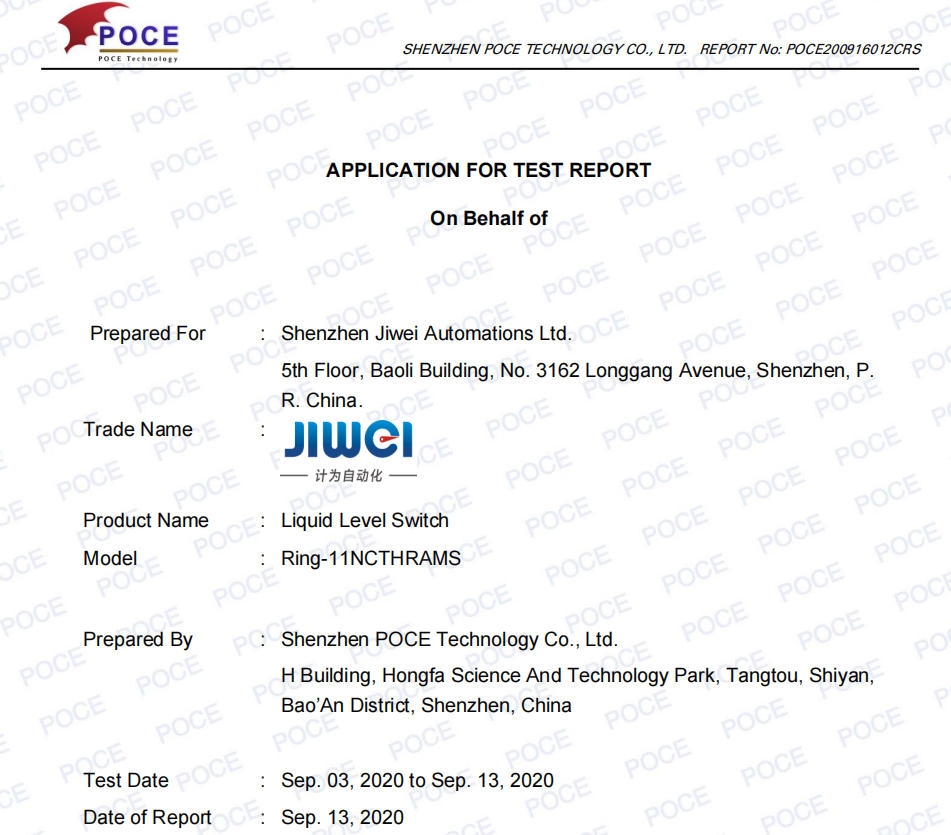
This article focuses on this core value and, taking the Ring-11 level switch from Shenzhen Jiwei Automations Ltd as an example, provides an in-depth analysis of the technical value and industry significance of its 78-page English TÜV-recognized third-party laboratory report issued by a professional testing organization such as POCE.
1. What Is a TÜV-Recognized Laboratory Report?
“TÜV” originates from Germany and is one of the most authoritative technical inspection and certification systems worldwide, representing strict industrial standards and highly rigorous testing procedures. Well-known organizations such as TÜV Rheinland and TÜV SÜD are widely involved in product testing, certification, and quality evaluation on a global scale.
A TÜV-recognized laboratory report is not merely a testing document, but rather a comprehensive output of a validation system that complies with international standards. It typically includes the following core characteristics:
1.1 Strict Testing Standards System
The testing process is usually carried out in strict accordance with international standards such as IEC (International Electrotechnical Commission), EN (European Standards), ISO (International Organization for Standardization), as well as ATEX / IECEx standards in explosion-proof applications.
This means that the product is not tested in a single dimension, but is subjected to systematic evaluation across multiple critical performance aspects. Moreover, these standards are continuously updated, so the testing represents the current highest level of industrial compliance rather than outdated requirements.
1.2 Third-Party Independence and Objectivity
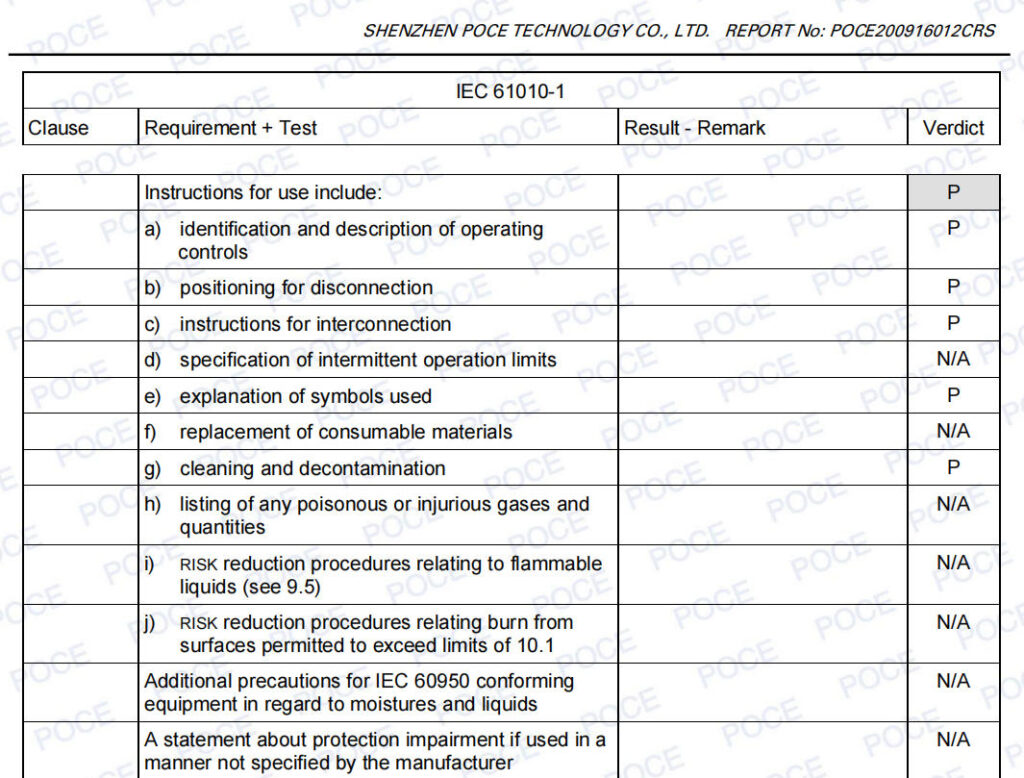
One of the core values of the TÜV system lies in its strict requirement for independence. Testing is conducted by qualified third-party laboratories, such as POCE-type professional testing institutions mentioned in this article.
This independence ensures that:
- The manufacturer cannot interfere with the test results
- The data source remains completely objective
- The results are highly credible
For buyers and engineers, this is particularly important, as it directly determines whether the evaluation basis can be trusted.
1.3 Authoritative Recognition and Global Applicability
Another key value of TÜV reports lies in their global recognition. In many international projects, such reports can be directly used as:
- Compliance certification
- Technical validation evidence
- Core documentation for tendering
These reports carry not only technical significance but also a certain level of legal credibility. As a result, they are widely accepted in global markets, particularly in Europe, Southeast Asia, and the Middle East.
2. What Does a 78-Page English Report Represent?
When a product is supported by a 78-page English TÜV-recognized laboratory report, it indicates that the product has undergone a highly systematic and comprehensive testing process.
Many people tend to overlook the significance behind the number of pages, but in engineering practice, this often represents the depth of testing and the completeness of data.
2.1 Comprehensive Content: Full Lifecycle Testing Coverage
A complete 78-page report typically goes far beyond verifying a single performance parameter. Instead, it provides a systematic record of the product’s performance under different stages and conditions. The content generally includes:
- Product structure and design description
- Testing environments (temperature, humidity, pressure, etc.)
- Electrical performance and signal stability testing
- Mechanical strength and impact resistance
- Environmental adaptability (high/low temperature, humidity)
- Protection rating (IP level) verification
- Electromagnetic compatibility (EMC) testing
- Safety and explosion-proof evaluation
- Long-term operation and stability testing
Each module represents a simulation of real industrial conditions rather than simplified laboratory scenarios.
2.2 Full English Format: Designed for Global Markets
A fully English report is not simply a language choice, but a reflection of international usability. It means:
- The report can be directly used for overseas client audits
- No secondary translation is required, reducing risk of misinterpretation
- It aligns with international engineering communication standards
In cross-border projects, English technical documentation significantly improves communication efficiency and professional credibility.
2.3 Data Transparency: Fully Traceable Evidence
Such reports usually include detailed data records, such as:
- Raw test data
- Performance curves and trend analysis
- Error margins and statistical evaluation
- Detailed testing conditions and environments
This level of transparency transforms the report from a simple conclusion document into a complete technical data archive, enabling engineers to perform deeper analysis and evaluation.
3. Technical Value of the Ring-11 Level Switch
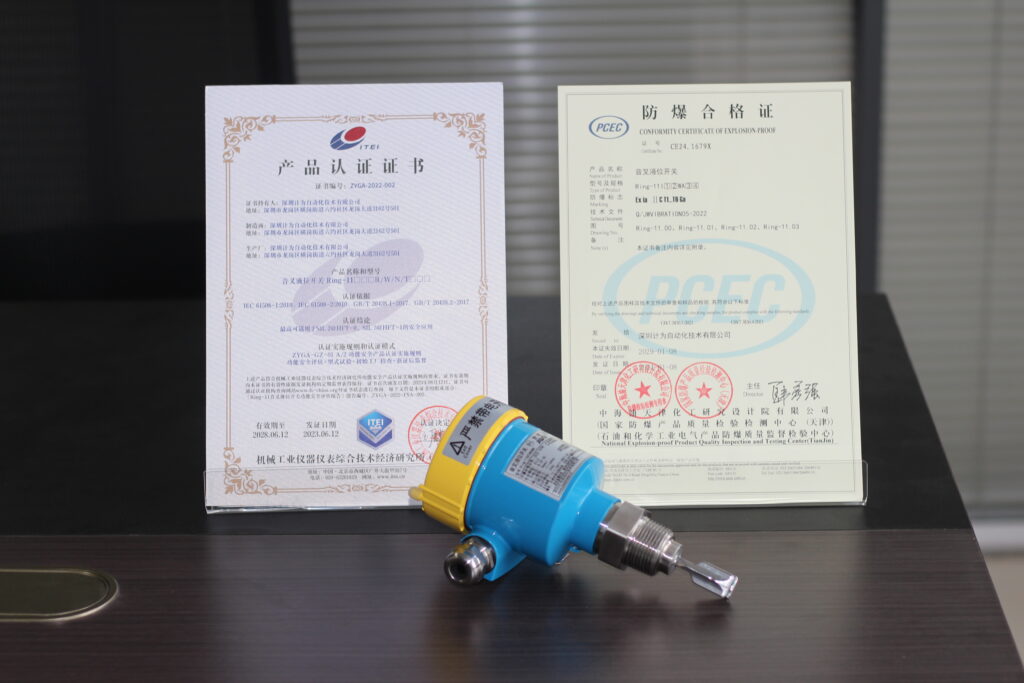
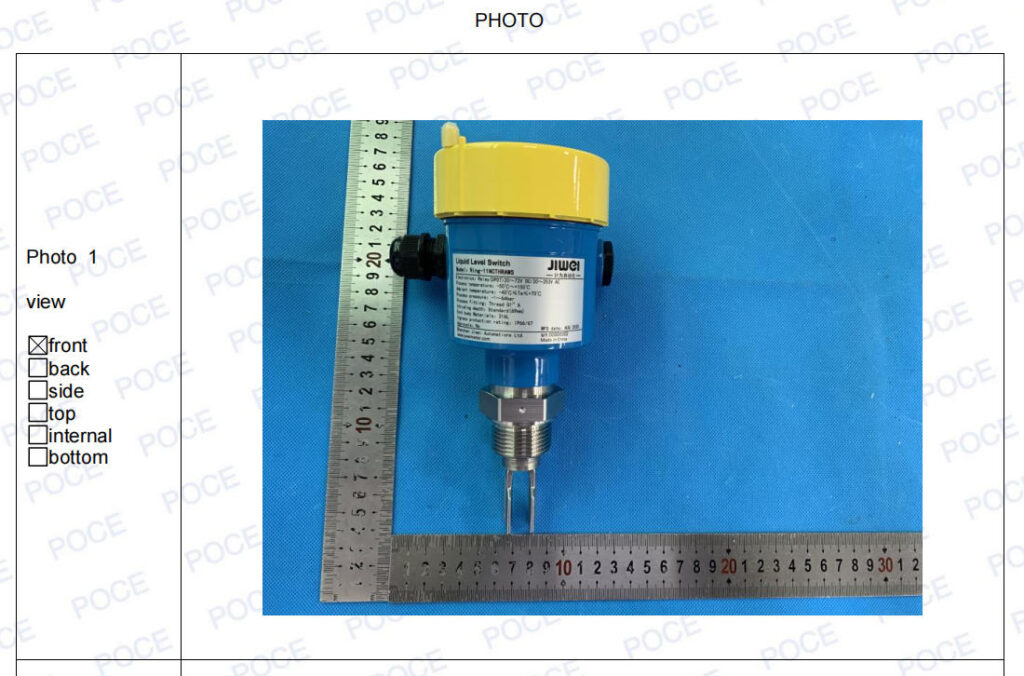
The Ring-11 level switch from Shenzhen Jiwei Automations Ltd has obtained a TÜV-recognized third-party laboratory report. This signifies that its performance has been validated through systematic testing rather than remaining at the design or theoretical level.
3.1 Tested Under Harsh Industrial Conditions
The report covers a wide range of extreme conditions that level switches may encounter in real industrial environments, including:
- High and low temperature adaptability
- Continuous vibration and mechanical shock
- High humidity and corrosive environments
- Long-term continuous operation stability
- Electrical insulation and safety performance
These tests are designed to closely simulate real-world applications rather than ideal laboratory conditions.
3.2 Difference from Conventional Products
Many standard level switches rely primarily on internal testing or basic functional verification. In contrast, the Ring-11 stands out due to:
- Third-party testing execution
- Verifiable and traceable data
- More comprehensive testing dimensions
- Internationally recognized results
This represents not just a difference in testing, but a difference in the level of validation system.
3.3 Engineering Value
For engineering projects, the value of such a report extends beyond the product itself and supports the entire project lifecycle:
- Selection phase: provides reliable reference
- Design phase: supports system compatibility
- Acceptance phase: serves as technical proof
- Operation phase: reduces failure risk
In other words, the report not only proves product compliance but also ensures system stability.
4. Practical Role of TÜV Reports in Industry
4.1 Building Customer Trust
In industrial procurement, customers often face multiple brands and solutions, and information asymmetry is common. A TÜV report serves as a key factor in reducing uncertainty.
Especially in industries such as oil & gas, food & beverage, and pharmaceuticals, whether a product has an authoritative test report often directly influences the final decision.
4.2 Supporting Project Bidding
In large-scale projects, technical documentation plays a critical role. Many tenders explicitly require:
- Third-party test reports
- Compliance certifications
- Verified technical data
The TÜV report of the Ring-11 level switch can be directly used as a strong technical support document.
4.3 Reducing Operational Risks
Equipment failure is not a question of if, but when.
Products verified through TÜV testing can effectively reduce:
- False alarms
- Measurement failures
- Environmental adaptability issues
- Potential safety risks
This is particularly valuable for systems requiring long-term continuous operation.
5. Why Choose the Ring-11 Level Switch?
Shenzhen Jiwei Automations Ltd has been deeply engaged in level measurement technology for years. The Ring-11 level switch stands out not only in structural design but also in its complete validation system.
5.1 Reliability-Oriented Design
From the early stage of development, the Ring-11 level switch is designed to meet complex industrial conditions, including:
- Structural stability
- Strong anti-interference capability
- Long-term operational durability
This ensures the product is not just functional, but consistently reliable over time.
5.2 Verified by Authoritative Testing
With a 78-page TÜV-recognized English report:
- Data is rigorously validated
- Performance is fully traceable
- Results are globally recognized
5.3 Wide Industrial Applicability
The Ring-11 level switch is suitable for a wide range of materials and conditions, including:
- Powder materials
- Liquid media
- High-temperature environments
- Corrosive conditions
This versatility enables stable application across multiple industries.
6. How TÜV Reports Support Customer Decision-Making
6.1 Visible Technical Evidence
Instead of relying on marketing claims, engineers can evaluate:
- Real test data
- Actual performance results
This significantly improves decision accuracy.
6.2 Comparable Standards
Customers can compare products based on:
- Testing conditions
- Performance consistency
- Data stability
This enables more scientific and objective selection.
6.3 Risk Control in Advance
By validating performance before purchase, customers can avoid:
- Mismatched equipment
- Frequent maintenance
- High replacement costs
This plays a key role in overall project cost control.
7. Conclusion: A Report Represents Industrial Trust
In industrial automation, a report represents far more than documentation—it reflects a complete system of validation and engineering capability.
A TÜV-recognized 78-page English laboratory report represents:
- Strict international validation
- Systematic testing procedures
- Quantifiable performance data
- Long-term operational reliability
The Ring-11 level switch from Shenzhen Jiwei Automations Ltd demonstrates that reliability is not just claimed—it is proven. level switch level switch level switch level switch level switch