
Explosion-Proof Temperature Classes T1~T6 vs. T6 — The Critical Difference Every Engineer Must Know
In industries such as chemicals, oil & gas, pharmaceuticals, and battery materials, whenever hazardous gases are present, the temperature class of explosion-proof equipment is a parameter that must never be ignored. However, many engineers and users get confused when they see “T1~T6” versus “T6.” What exactly is the difference between the two? Which one is safer? And how should you choose in real projects?

1. What Is a Explosion-Proof Temperature Class?
The temperature class is one of the most critical indicators for explosion-proof equipment. It defines the maximum surface temperature the device is allowed to reach during operation. Why is this important? Because if the equipment surface exceeds the auto-ignition temperature of the surrounding flammable gas, it may ignite the gas and cause an explosion.
International standards divide temperature classes into six levels:
- T1 ≤ 450°C
- T2 ≤ 300°C
- T3 ≤ 200°C
- T4 ≤ 135°C
- T5 ≤ 100°C
- T6 ≤ 85°C
👉 Remember: The higher the number, the lower the allowed temperature — and the higher the safety level.
This means T6 is the strictest and safest temperature class in the system.
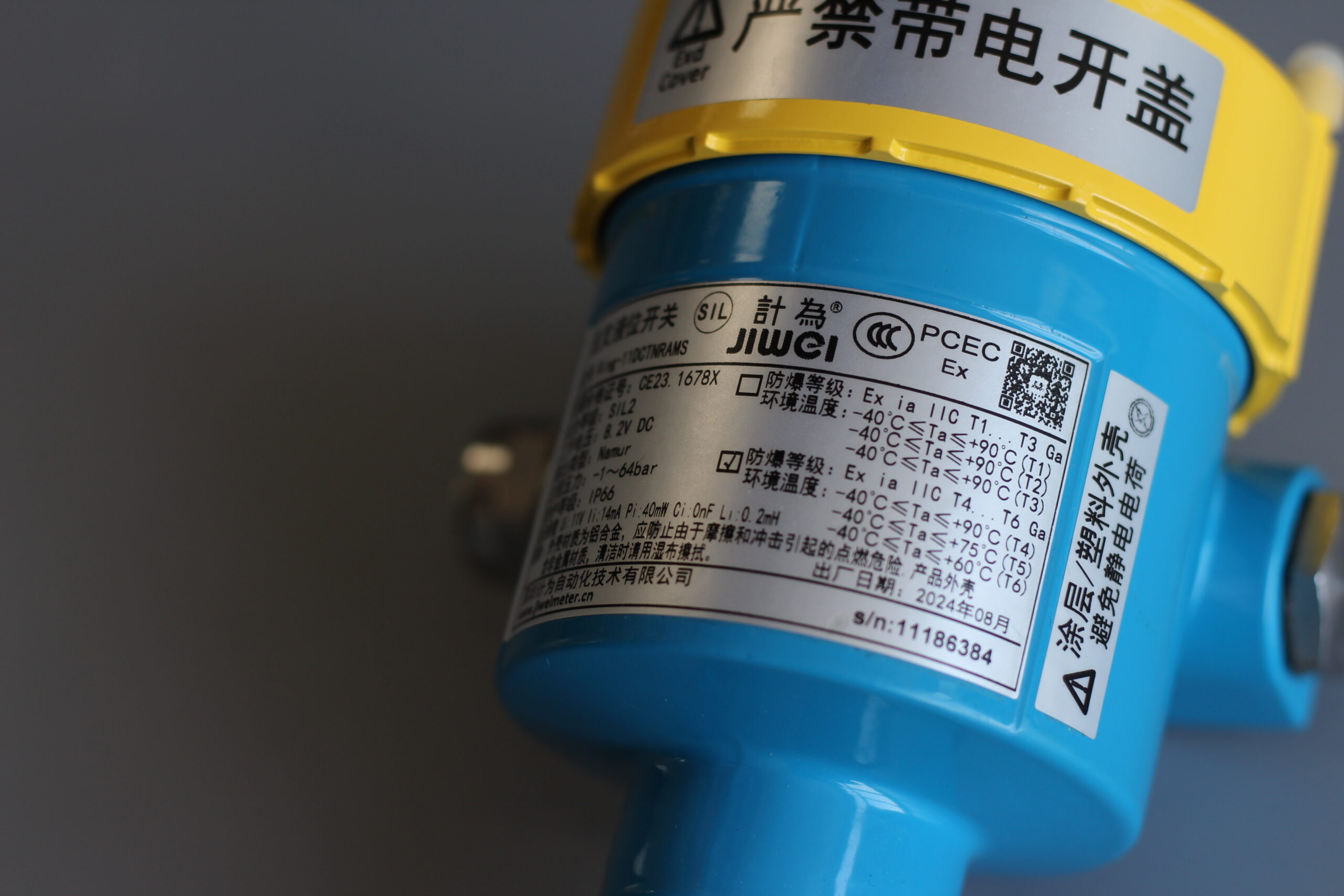
2. What Does “T1~T6” in Explosion-Proof Actually Mean?
“T1~T6” is a range-based indication commonly used in product series descriptions, selection guides, or marketing materials. It tells users that:
This product family covers applications from T1 to T6.
In other words, the series may include different models suitable for gases with high ignition temperatures (e.g., T1/T2) as well as gases requiring low-temperature limits (e.g., T5/T6).
However, it is crucial to understand:
- “T1~T6” is NOT the certification of a single device.
- It does NOT mean a specific model passed all six temperature classes.
- It does NOT mean one device can be used in all T-class environments.
In reality, different models or configurations within a series may correspond to different temperature classes. The actual temperature class must follow the nameplate, certificate, and test data.
Thus, “T1~T6” simply describes the capability range of the product family, not the performance of an individual device. During engineering design, acceptance, and safety reviews, this distinction must be clear to avoid mis-selection or installation errors.

3. What Does “T6” Mean?
“T6” is a specific, single, certified temperature class. It means:
The device’s surface temperature does not exceed 85°C under the most severe test conditions.
It is the strictest and safest category.
In real-world conditions, T6 devices must maintain very tight temperature control. Even under worst-case scenarios—high ambient temperature, increased electrical load, or poor heat dissipation—the surface temperature must remain below 85°C.
This ensures that the equipment will not ignite gases with very low ignition temperatures, such as ether or acetylene.
Since T6 has the lowest temperature limit:
- It offers higher safety than T1~T5.
- Any T6-certified device can be used in applications requiring T1–T5.
- T6 is inherently downward compatible.
Therefore, in environments with unknown gas types, mixed gases, or unstable gas compositions, T6 is generally the most reliable choice.
4. Which Is Safer: T1~T6 or T6?
Clearly, T6.
Because:
- T6 is a specific certified level — the strictest available.
- It has the lowest allowable surface temperature (≤85°C).
- It automatically covers all T1~T5 scenarios.
- It is the safest choice when gas types are unknown or complex.
Meanwhile, “T1~T6” is only a range of Explosion-Proof description, not a device-level classification.
5. Why Do People Get Confused?
There are three main reasons:
1. Range-style labeling is misleading
Marketing materials often show “T1~T6”in Explosion-Proof causing users to assume one device fits all levels.
2. Some buyers misunderstand the safety meaning
They mistakenly think “T6 is more dangerous because it is a bigger number,” when the opposite is true.
3. Technical communication lacks clarity
If the specific model’s certified temperature class is not explicitly stated, procurement and safety teams may interpret it incorrectly.
6. How Should You Select Explosion-Proof Temperature Classes Correctly?
Proper selection must start with the actual process conditions.
First, identify the ignition temperature of the flammable gas.
If the ignition temperature is below 100°C, you must select T6 or T5. Otherwise, there is a real risk of ignition caused by equipment surface temperature.
Next, always verify the equipment’s actual certified temperature class.
Do not rely on brochures. The certificate and nameplate are the only valid references.
For complex environments, prioritize T6.
It provides the highest safety margin when the gas mixture is uncertain or when conditions fluctuate.
Finally:
“T1~T6” is only a series-level description in Explosion-Proof. It does NOT represent the temperature class of a specific device.
Proper documentation must clearly state:
“This model is certified as T6.”
7. A Simple Analogy
If temperature classes were compared to fire-resistance ratings:
- T1~T6 = the product line offers Levels 1–6
- T6 = this specific unit passed the highest level
From a user’s standpoint, a device that passed the top-level certification is always more trustworthy than a broad range description.
8. One-Sentence Summary
In Explosion-Proof, T1~T6 is a range; T6 is a certification. T6 is stricter, safer, and more universal. Always confirm the actual temperature class — never rely solely on the range description.