Why Fieldbus Control Systems (FCS) Are the Key to Long-Term Automation Success
Background
Fieldbus Control Systems (FCS) play a critical role in automation projects, yet early-stage discussions often focus on questions such as:
Should we use PLC or DCS?
Which industrial network should we choose?
Should we directly aim for ‘smart manufacturing‘?
In reality, many projects appear advanced and stable upon commissioning, but after several years, maintenance becomes increasingly difficult, and operators hesitate to make changes.
The real differentiator is not the choice of controller or network, but whether the field layer possesses systematic engineering capability. This is precisely the core significance of Fieldbus Control Systems (FCS).

The Most Expensive Costs Often Lie in the Field Layer
The “field layer” refers to the part of the control system closest to physical devices, including sensors, valves, actuators, motors, and variable frequency drives.
In traditional automation systems, this layer often uses point-to-point wiring, where each device sends signals individually to the control cabinet. Typical characteristics include:
- Each instrument only transmits a single value
- The system has no awareness of device health
- Troubleshooting relies heavily on human experience
- Over time, dependence on experienced operators grows
Initially, such systems may operate normally, but over time problems accumulate:
- Rewiring is costly, troubleshooting efficiency is low
- Equipment aging occurs without warning
These hidden costs are rarely assessed at project inception, yet they often become the most expensive part of a system’s lifecycle.
What Problems Does FCS Solve?
Many assume FCS is valuable simply because it reduces wiring or changes communication methods. This is only superficial.
The essence of FCS is to integrate fieldbus and control systems into a complete engineering framework, transforming field devices from mere “signal sources” into “manageable intelligent nodes.”
At the engineering level:
FCS = Field Device Intelligence + Networked Communication + Properly Distributed Control + Integrated Engineering & Maintenance
The key change introduced by FCS is a networked field layer centered on fieldbus technology.
From “Transmitting Signals” to “Transmitting Information”
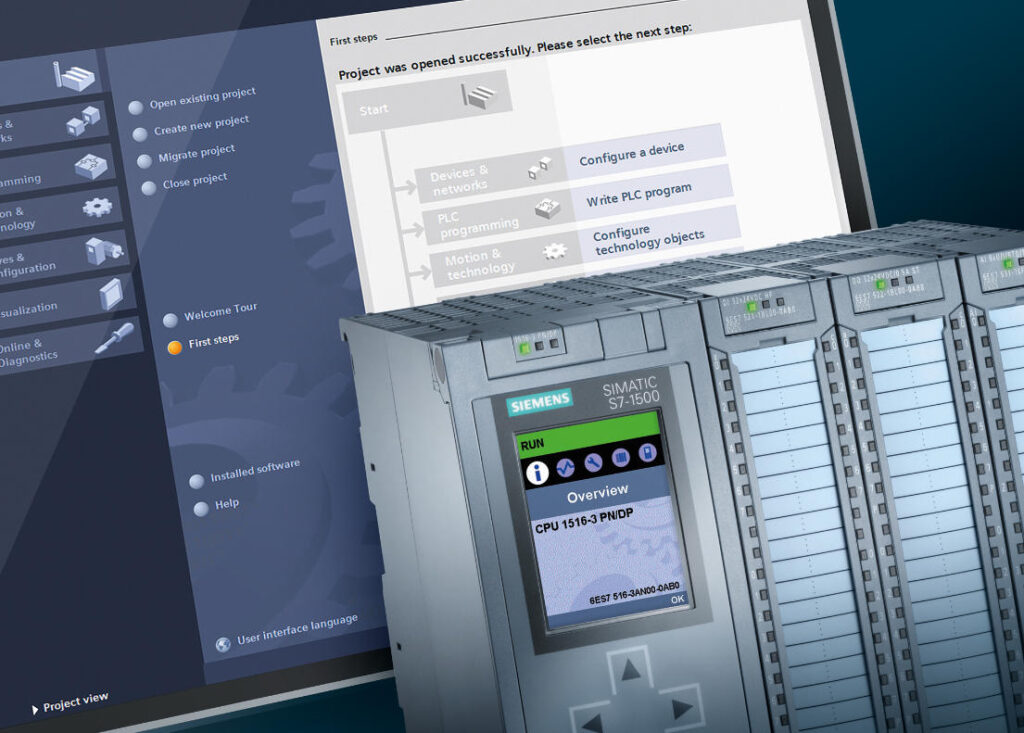
A fieldbus can be understood as a dedicated network for industrial devices: one bus can connect multiple devices, allowing them to exchange not only process values but also status, diagnostics, and configuration data.
This enables the control system to “see” the device itself, not just the signal.
In traditional I/O systems, collected signals are typically:
- Analog: 4–20 mA
- Digital: 0/1
- Process values: pressure, temperature, level
The limitation: the system only sees results and cannot assess device health.
In an FCS, a smart device (e.g., pressure transmitter) can provide:
- Process variable (pressure value)
- Device temperature and power status
- Sensor drift trends and calibration needs
- Diagnostic codes
- Parameter settings and history
Thus, the control system evolves from merely a control loop to a comprehensive engineering system supporting diagnostics and maintenance decisions.
FCS Complements PLCs and DCS, Not Replaces Them
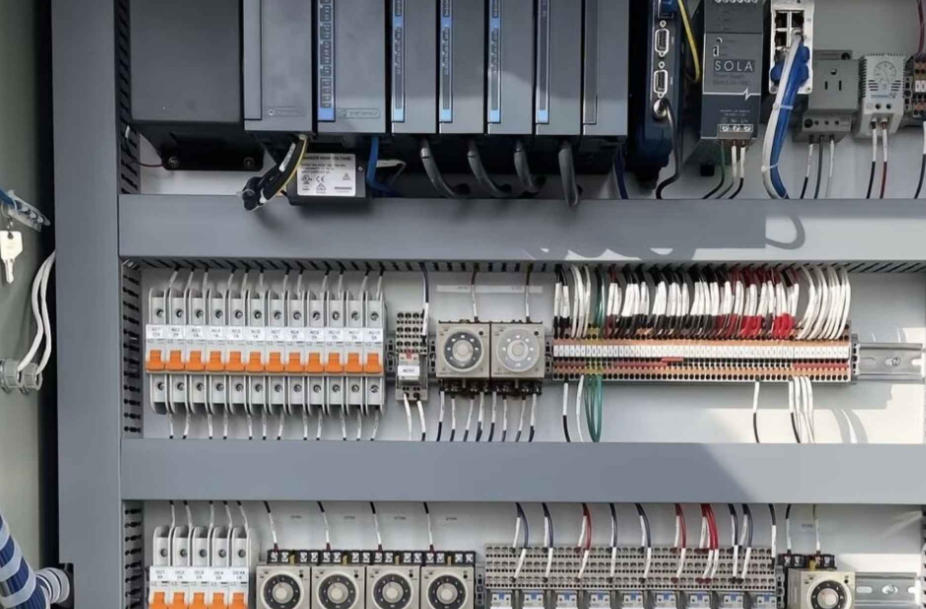
FCS is not a new controller; it is a field-layer system architecture.
- PLC: excels at discrete logic, motion, and device control, focusing on speed and flexibility
- DCS: excels at continuous process control and system redundancy, emphasizing stability and engineering completeness
- FCS: focuses on how field devices are networked, diagnosed, and maintained over the long term
FCS can be combined with PLC or DCS:
- DCS + Fieldbus → typical FCS architecture in process industries
- PLC + Industrial Network + Smart Devices → increasingly used in manufacturing
Simply put: PLC/DCS answers “how to control”; FCS answers “how to organize, maintain, and run the field layer long-term.”
FCS Is a Full Engineering Chain
Understanding FCS requires a system perspective:
- Field Device Layer: smart transmitters, valves, drives, motor protection devices, remote I/O, all with communication, self-diagnosis, and configuration capabilities
- Network Layer: fieldbus and industrial Ethernet (FF, PROFIBUS, PROFINET, Modbus, CAN, EtherCAT) connecting devices
- Control & Monitoring Layer: controllers execute logic; HMI/SCADA handles monitoring, alarms, trends, and reporting
- Engineering & Asset Management Layer: devices auto-identify, parameters centrally managed, diagnostics aggregated, maintenance strategies and asset records
Most FCS ROI comes from the engineering and asset management layer, not merely communication.
Why Many Systems Are “Advanced at First, Hard to Use Later”
The issue is rarely control logic, but whether the field structure is systematic. Without a unified architecture, problems arise:
- Device health is invisible; failures are reactive
- Staff changes leave the system untouchable
- Modification costs escalate
- Automation becomes a burden
FCS prevents this “system aging and loss of control.”
Projects That Benefit Most from FCS
FCS is particularly valuable when:
- Numerous and widely distributed devices exist
- Continuous operation with high downtime cost
- Limited maintenance staff
- Long-term expansion or retrofitting is required
Hence, industries like chemical, energy, water, and pharmaceuticals often adopt FCS early and deeply.
FCS Is Not Just Plug-and-Play
Poor FCS performance is usually due to engineering methods, not technology. Key factors include:
- Network topology and load design
- Proper power supply, grounding, and shielding
- Interoperability of multi-vendor devices
- Traceable parameters, versions, and changes
- Pre-designed fault diagnostics and recovery mechanisms
FCS is a systemic engineering capability, not a one-off technology choice.
Conclusion
The true ceiling of automation systems is not controller performance or communication speed, but whether the field layer is treated as a system requiring long-term governance.
The value of FCS is not in adding complexity, but in making complex systems sustainably controllable.