Why We Uses 316L Stainless Steel for Level Switches?
Why Shenzhen Jiwei Automations Insists on 316L Stainless Steel for Level Switches
In industrial automation, level switches are critical components for ensuring equipment safety and stable production. Whether in chemical, pharmaceutical, food, or new energy industries, level switches must operate reliably under complex conditions. Since its founding, Shenzhen Jiwei Automations has consistently used 316L stainless steel as the base material for its level switches. This commitment not only reflects the scientific choice of materials but also represents the company’s dedication to product quality, reliability, and customer trust. While low-end alternatives such as carbon steel or standard 304 stainless steel exist in the market, Jiwei never compromises—its entry-level products always use 316L to withstand the harshest industrial conditions. For extremely corrosive or highly specialized environments, Jiwei also offers Hastelloy as an optional material, ensuring optimal performance and long-term stability across diverse industrial applications.
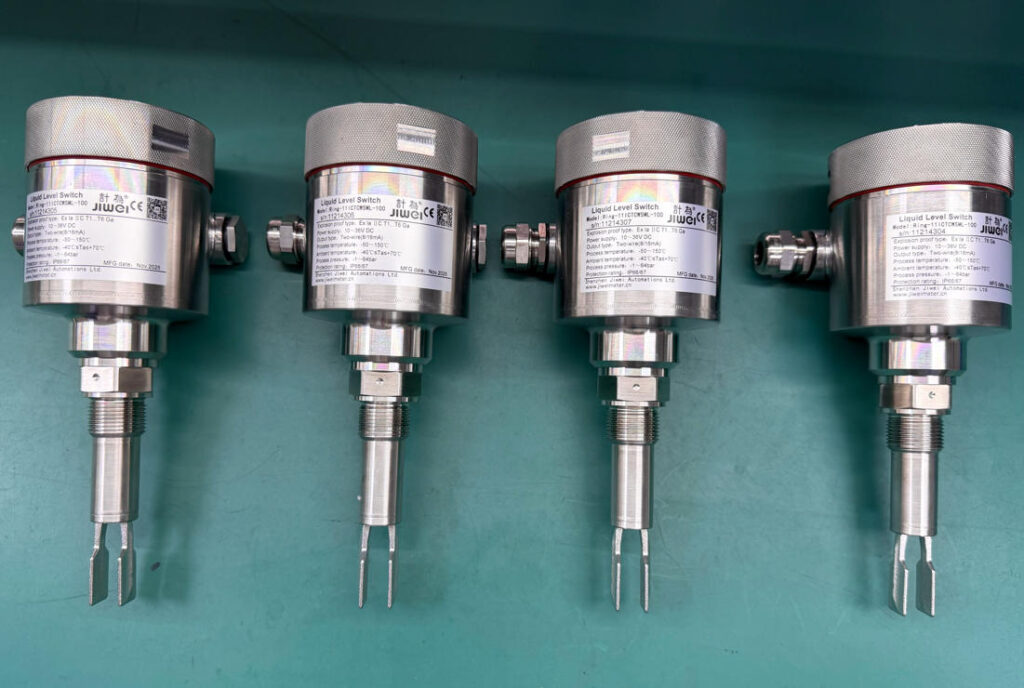
Engineering Advantages of 316L Stainless Steel
316L stainless steel is a low-carbon austenitic alloy containing nickel (Ni), chromium (Cr), and molybdenum (Mo), providing key properties:
- Excellent corrosion resistance: Effective against strong acids, alkalis, salts, and high-chloride environments, suitable for chemical, new energy, and other highly corrosive media.
- High mechanical strength: Maintains dimensional stability under vibration, impact, and high-pressure conditions.
- Wide temperature tolerance: Safe for long-term operation up to around 300°C, with short-term exposure possible at higher temperatures; suitable for hot liquids, steam, and cooling processes.
- Good machinability and cleanability: Smooth surface, easy to polish, weld, and clean, meeting high hygiene standards in food, pharmaceutical, and chemical production.
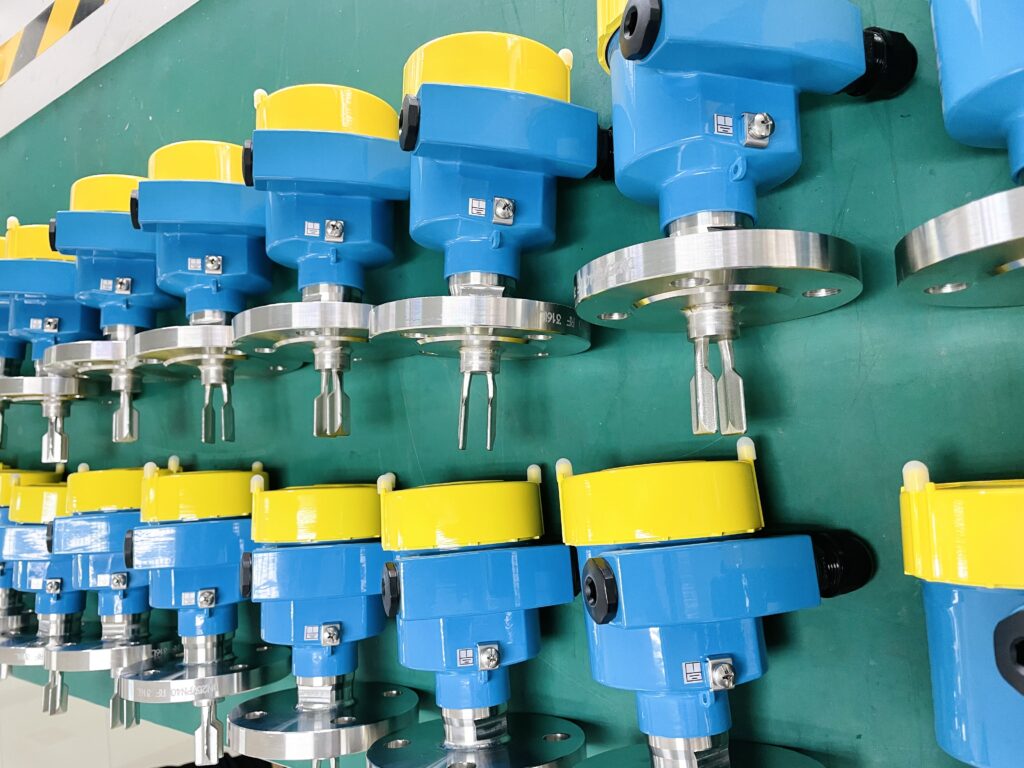
These properties make 316L the standard material for Jiwei level switches, ensuring long-term stability in demanding industrial conditions.
Challenges in Industrial Environments
Level switches in industrial settings directly contact liquids or slurries under highly variable conditions:
- Chemical industry: Strong acids, bases, salts, and high-temperature solutions with severe corrosive potential.
- Food & beverage: Milk, wort, fermentation liquids, requiring sanitary compliance and resistance to high sugar and viscosity.
- New energy: Lithium battery slurries and precursor materials, prone to dust, static, and strong adhesion.
These environments demand corrosion resistance, wear resistance, high-temperature tolerance, and anti-adhesion performance. 316L stainless steel fully meets these requirements, while carbon steel or 304 stainless steel may rust, pit, or attract material deposits, reducing long-term reliability.
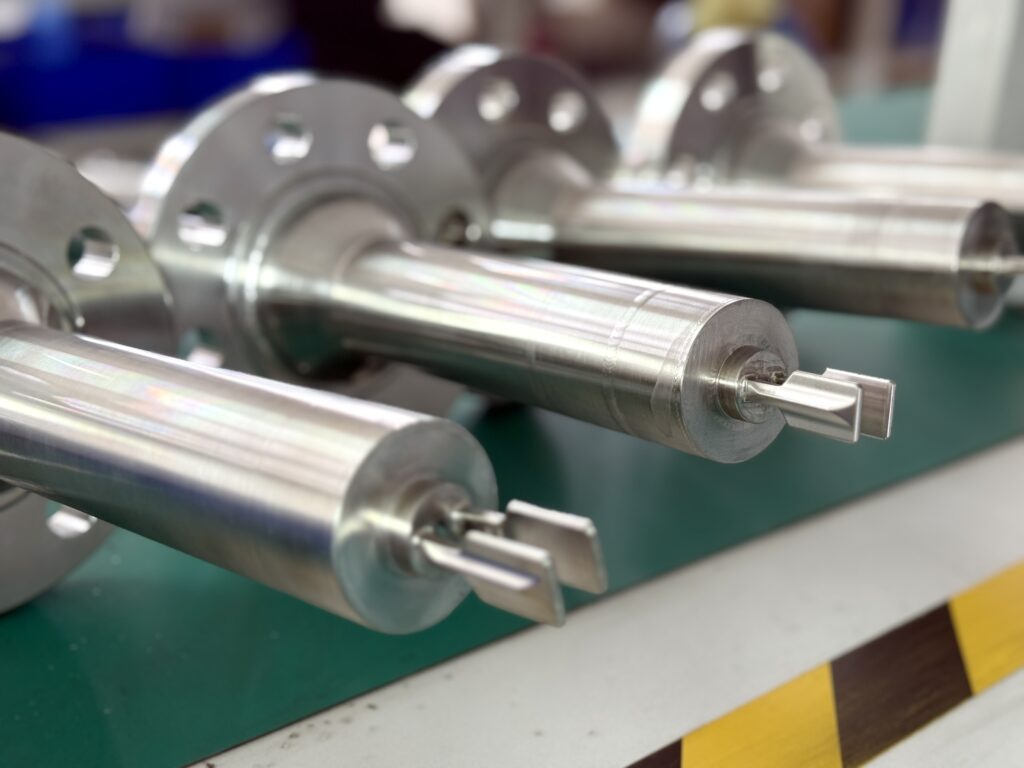
Comparative Advantages over Low-End Materials
Some manufacturers use carbon steel or low-grade stainless steel to reduce costs, which have clear disadvantages:
| Material | Corrosion Resistance | Mechanical Strength | Temperature Range (long-term) | Industrial Suitability |
|---|---|---|---|---|
| Carbon Steel | Poor, prone to rust | High | ≤200°C | Non-corrosive or low-demand applications |
| 304 SS | Moderate, weak vs. chlorides | High | ≤300°C | Low concentration acids/bases |
| 316L SS | Excellent | High | ≤300°C | Chemical, food, new energy, high-demand applications |
Jiwei never compromises on material choice. Even under cost pressure, 316L is the baseline, ensuring long-term reliability and lowering customer maintenance and downtime risks.
Field-Proven Performance
- Chemical industry: In strong acid or base tanks, 316L level switches operate for years without visible corrosion and rarely trigger false alarms. Regular checks of flanges and probes are still recommended, especially with temperature fluctuations.
- Food industry: In breweries and high-sugar wort lines, 316L switches have smooth surfaces that resist material adhesion, reducing maintenance compared to carbon steel or 304 SS. Minor residue may remain during cleaning or downtime.
- New energy: In lithium battery slurry handling, 316L switches resist corrosion and reduce material buildup, minimizing false alarms. Nonetheless, powders and slurries still require periodic inspection and cleaning.
These cases demonstrate that while 316L improves reliability, daily maintenance is still necessary. True stable operation relies on material selection + design optimization + engineering management, not just the instrument itself.
Jiwei’s Strict Quality Control

Choosing 316L reflects Jiwei’s rigorous product quality approach:
- Certified raw materials: All 316L stainless steel sourced from certified suppliers, ensuring chemical and mechanical compliance.
- Precision manufacturing: Every step from machining and welding to surface polishing follows strict standards to ensure smooth surfaces resistant to adhesion.
- Testing and validation: Each switch undergoes corrosion, pressure, temperature cycling, and electrical performance tests to meet high industrial standards.
- Commitment to long-term reliability: With strict quality control and material selection, Jiwei switches operate stably in complex chemical, food, and new energy environments.
This meticulous approach makes Jiwei level switches a benchmark for reliability and longevity.
Conclusion
While low-end carbon steel or 304 SS switches may suffice for short-term use, they cannot ensure long-term reliability in harsh conditions. Shenzhen Jiwei Automations consistently adheres to:
- 316L as the minimum material standard
- Strict control over raw materials and processing quality
- Field-verified long-term reliability
This commitment not only ensures production safety and stable equipment operation but also embodies Jiwei’s dedication to product quality and engineering excellence. 316L stainless steel level switches are not just a technical choice—they are a promise to customers: reliable, safe, long-lasting, and trustworthy.