Engineering Practice of Bilge Well Level Measurement in Marine Applications Based on Radar Level Transmitter Technology
1. Introduction
The bilge well is an important component of the ship’s engine-room drainage system. Its function is to collect engine-room leakage water, condensate, and small amounts of oil–water mixtures, which are then discharged through the bilge pumping system or directed to an oily water separator for further treatment.
Although the bilge well has a relatively small structure, its level signal is directly involved in the automatic start and stop control of bilge pumps, playing a significant role in engine-room operational safety. Therefore, bilge well level measurement is considered a critical auxiliary monitoring application.
Traditionally, this application has relied on float switches or differential pressure methods. However, with the increasing level of ship automation and the demand for continuous monitoring and data traceability, non-contact radar measurement technology has gradually been introduced into this field.
2. Operating Conditions and Technical Challenges
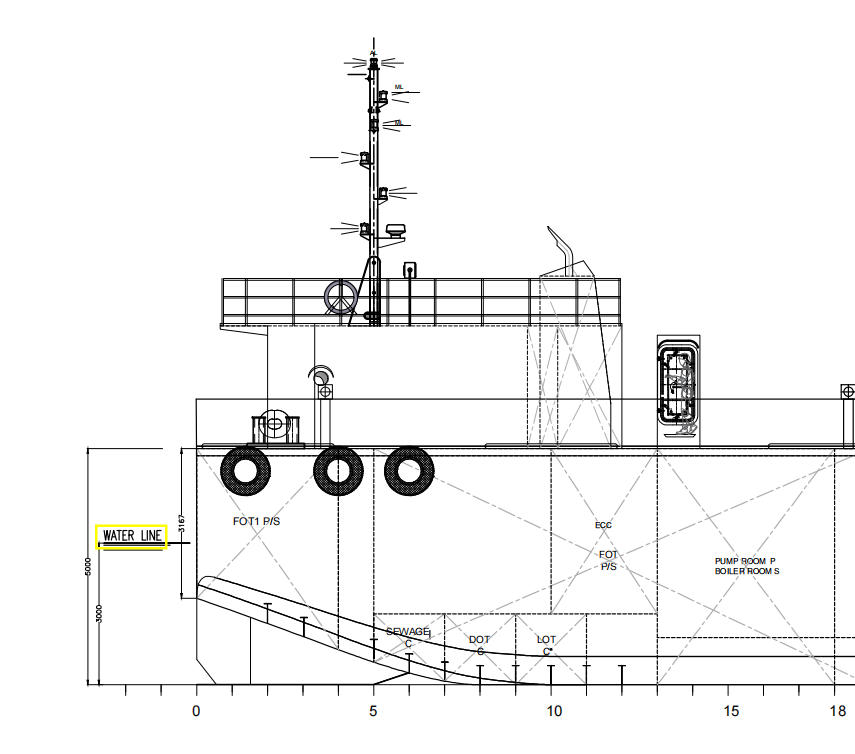
The operating environment of bilge wells presents the following characteristics:
Limited Installation Space
Bilge wells are compact structures, typically with a measuring range of 1–3 m. The top installation distance is short, which may cause near-range reflection interference.
Oil–Water Mixture and Interface Variations
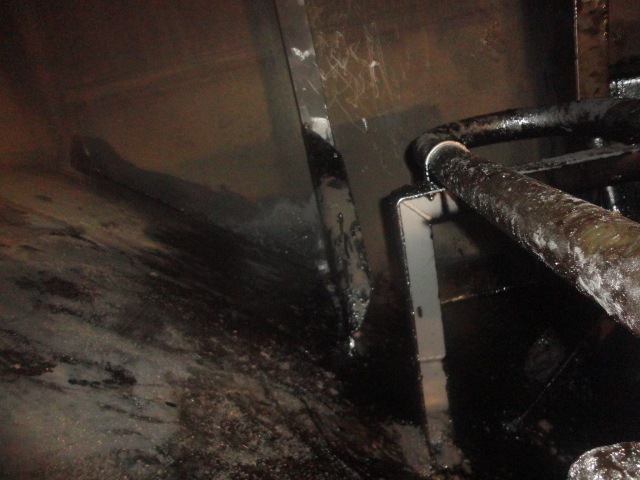
The medium mainly consists of condensate water with small amounts of lubricating oil or fuel leakage. Oil–water stratification is unstable and may generate multiple echo signals.
Vessel Motion and Vibration
During navigation, ships experience continuous rolling and pitching, resulting in frequent liquid surface fluctuations.
High Humidity and Condensation
Engine-room environments are characterized by high humidity and temperature variations. Condensation may form on the antenna surface, affecting long-term measurement stability.
The combination of these factors makes bilge well level measurement a typical small-space, complex-interface application.
3. Technical Solution
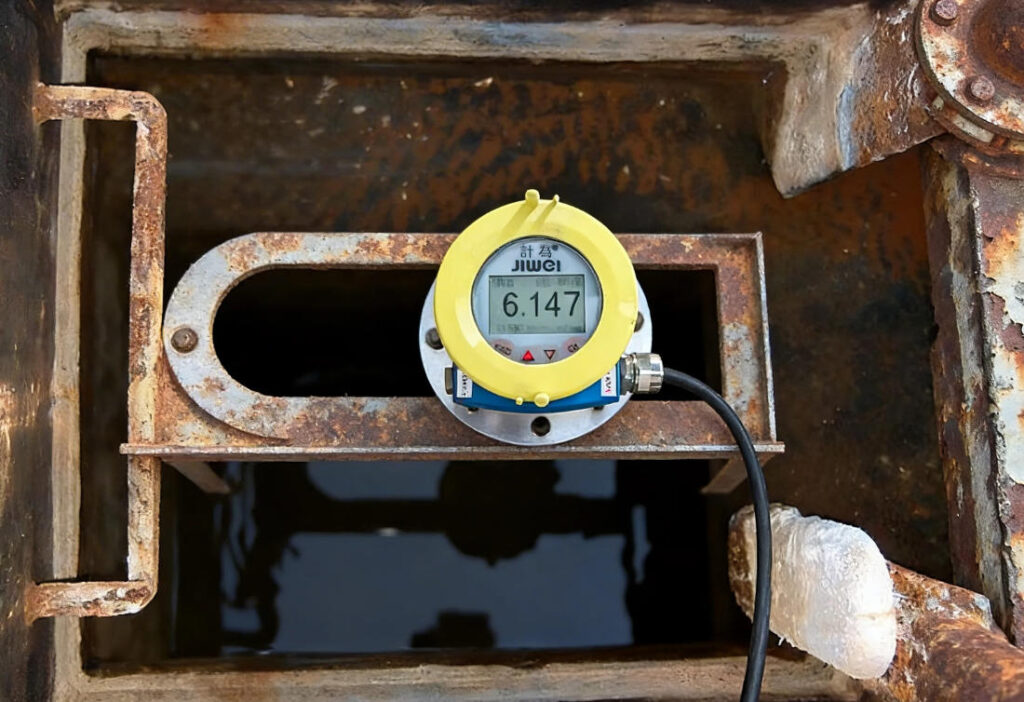
In a marine bulk carrier project, the requirement for continuous bilge well level monitoring was addressed using the JWrada®-32 Radar Level Transmitter provided by Shenzhen Jiwei Automations Ltd.
The device adopts high-frequency radar measurement technology with a narrow beam angle, making it suitable for top-mounted installation in confined structures.
From an algorithm perspective, echo recognition and signal processing mechanisms are used to distinguish multiple reflections caused by oil–water stratification or minor foam, enabling accurate identification of the true liquid surface.
As a non-contact measuring device, its performance is not affected by changes in medium density, and it contains no moving mechanical components, reducing wear-related risks.
4. Operational Performance
In this project, the level transmitter was installed at the top of the bilge well, with a measuring range of approximately 2.5 m, and used for automatic bilge pump control.
After continuous operation during long-term voyages, maintenance records over one year indicated:
- No false alarm events
- No measurement anomalies caused by oil–water stratification
- No open-well cleaning maintenance
- Stable and continuous output signal
The level signal was used as the input parameter for pump control. Throughout multiple drainage cycles, no abnormal pump activations were observed.
Operational data analysis indicates that under combined vibration and interface variation conditions, the radar-based measurement system maintained stable performance.
5. Discussion
Compared with traditional float switches, radar level transmitters in bilge well applications provide the following engineering advantages:
- Continuous level monitoring instead of point detection
- Independence from medium density changes
- No mechanical sticking risks
- Longer maintenance intervals
With the advancement of ship automation systems, continuous level data acquisition contributes to improved drainage control accuracy and enhanced operational management.
6. Conclusion
Although the bilge well is a relatively small auxiliary structure within ship systems, its level measurement stability directly affects the reliability of the drainage system.
Engineering practice demonstrates that radar-based level measurement technology can meet the requirements of continuous monitoring under confined space, oil–water mixture, and dynamic operating conditions.
With the increasing level of digitalization in marine systems, radar level technology shows strong application potential in bilge well and other auxiliary monitoring scenarios.