High-Precision Radar Level Transmitter Selection Guide
High-precision radar level transmitters have become essential sensors in industrial automation. Compared with traditional level measurement methods, radar level transmitters offer non-contact measurement, strong anti-interference capabilities, and stable performance in high-temperature, high-pressure, and dusty environments, significantly improving the reliability of liquid and bulk material level monitoring.
However, radar level transmitters are not “universal.” Incorrect selection can lead to measurement errors, increased maintenance costs, or even production risks. Achieving accurate, stable, and long-term reliable level measurement under complex conditions is a key skill for engineers. This guide systematically analyzes the selection process based on medium characteristics, temperature and pressure, dielectric constant, measuring range, installation method, and environmental conditions, helping enterprises select the most suitable radar level transmitter and avoid costly mistakes.
1. Determine the Type of Measured Medium
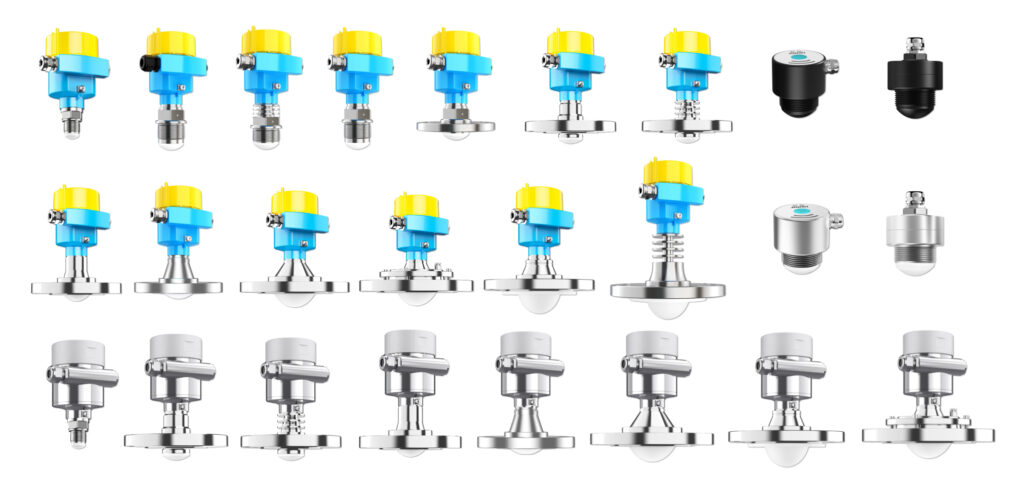
The first step in radar level transmitter selection is to clarify whether the measured medium is liquid or solid.
- Liquid Media: Liquids typically have relatively smooth surfaces and higher dielectric constants (εr ≥ 1.5), which are suitable for non-contact microwave radar measurement. Microwave signals reflect reliably, allowing continuous monitoring. Typical liquids include water, acidic or alkaline solutions, and oils. Special liquids, such as low dielectric constant light hydrocarbons or those with steam or foam, require high-frequency or narrow beam radar to enhance signal reflection and detection accuracy.
- Solid Media: Powder, granules, and bulk materials in silos may have uneven surfaces and produce dust. Radar signals are prone to interference from voids, dust, or unstable flow. These conditions require high-frequency (>26GHz) radar with narrow beam angle, and in some cases, may be combined with guided wave or rod-type radar.
Selection Tip: Obtain the physical properties of the medium (density, flowability, particle size) and surface characteristics to choose the appropriate frequency, beam angle, and probe type.
2. Confirm Operating Temperature and Pressure
Stable radar level measurement depends on selecting models that match temperature and pressure conditions at the site.
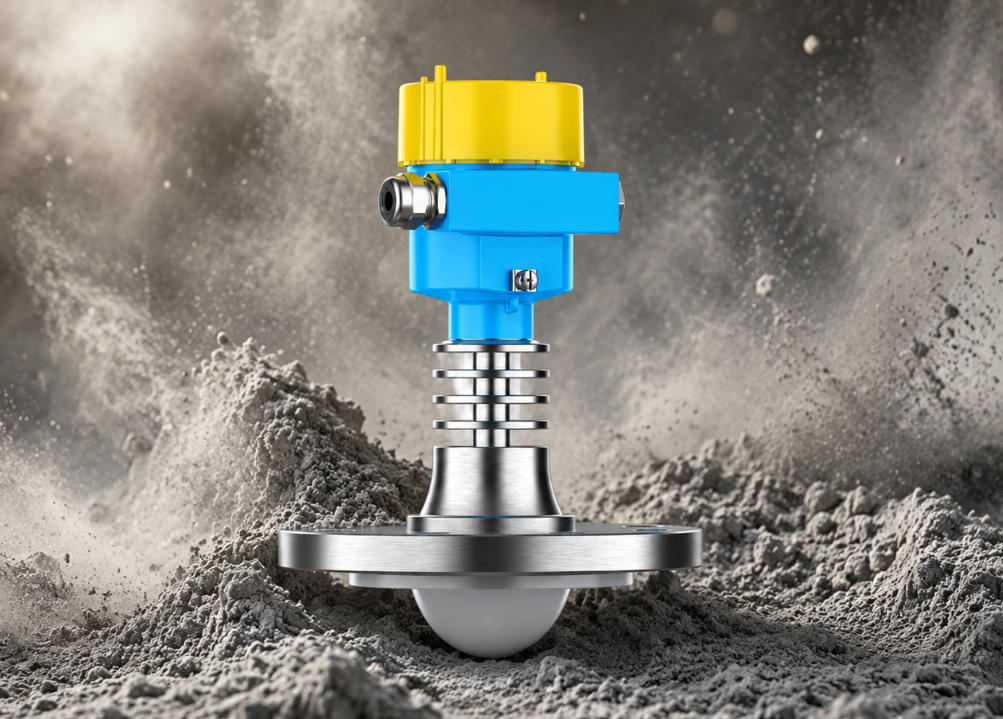
- Temperature: The operating temperature of liquids or solids determines probe materials and sealing requirements. For high-temperature liquids (>200°C), steam, or normal temperature liquids, choose probes made of stainless steel 316L or PTFE-coated materials. Consider thermal expansion for applications with significant temperature fluctuations.
- Pressure: High-pressure vessels require pressure-rated radar transmitters, with pressure ratings exceeding the maximum working pressure. Pressure impacts probe sealing and flange strength.
Selection Recommendations:
- For high-temperature and high-pressure conditions, use specialized high-temperature, high-pressure radar to ensure long-term reliability.
- For low-temperature liquids (-20°C or lower) or cryogenic media such as liquid nitrogen, choose low-temperature radar, and select seals suitable for extreme cold, such as fluoroelastomer or metal seals.
3. Dielectric Constant of the Medium (εr)
Radar level transmitters rely on microwave signal reflection, and the dielectric constant is a critical factor affecting measurement accuracy.
- Liquid Media: Higher dielectric constants result in stronger reflected signals. For example, water has εr ≈ 80, while oil has εr ≈ 2–3. Low dielectric constant liquids require high-frequency radar or narrow beam focusing probes.
- Solid Media: Powders or granules with low density or poor flowability result in weaker reflection signals. Consider increasing radar sensitivity or adding signal processing algorithms.
Selection Tip:
- Provide the dielectric constant and its variation with temperature.
- For mixed media or foaming liquids, intelligent radar with echo recognition and filtering functions ensures measurement stability.
4. Measuring Range and Container Geometry
Radar level transmitters must cover the maximum liquid or material level, with a safety margin.
- Liquid Tanks: Range should slightly exceed the maximum level to accommodate fluctuations or foam. For tall tanks or significant level variation, high-frequency radar improves resolution.
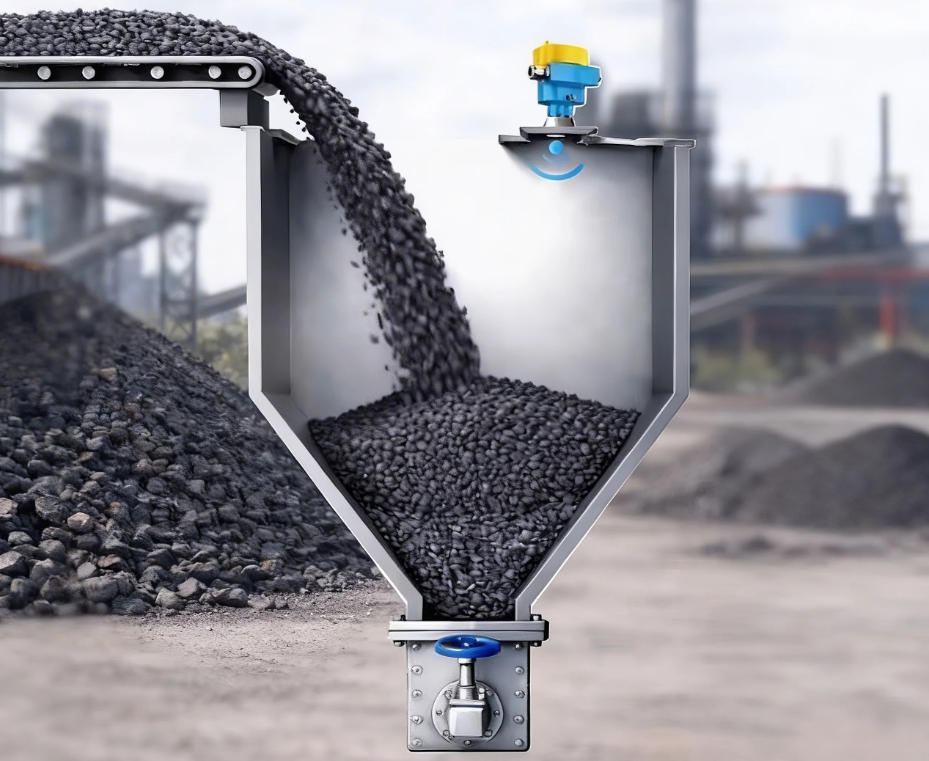
- Bulk Material Silos: Coverage must consider the silo height, pile slope, voids, and irregular flow. A large beam angle may cause sidewall reflections; use narrow beam high-frequency radar.
- Container Shape: Cylindrical, rectangular, or irregular containers have different beam requirements. Complex structures may require simulation or field verification of radar signal paths.
Selection Tip:
- For tall silos (>10 m), a narrow beam radar reduces multiple reflections.
- Avoid positioning the beam path under feed inlets, agitators, or vent pipes; off-center mounting may improve accuracy.
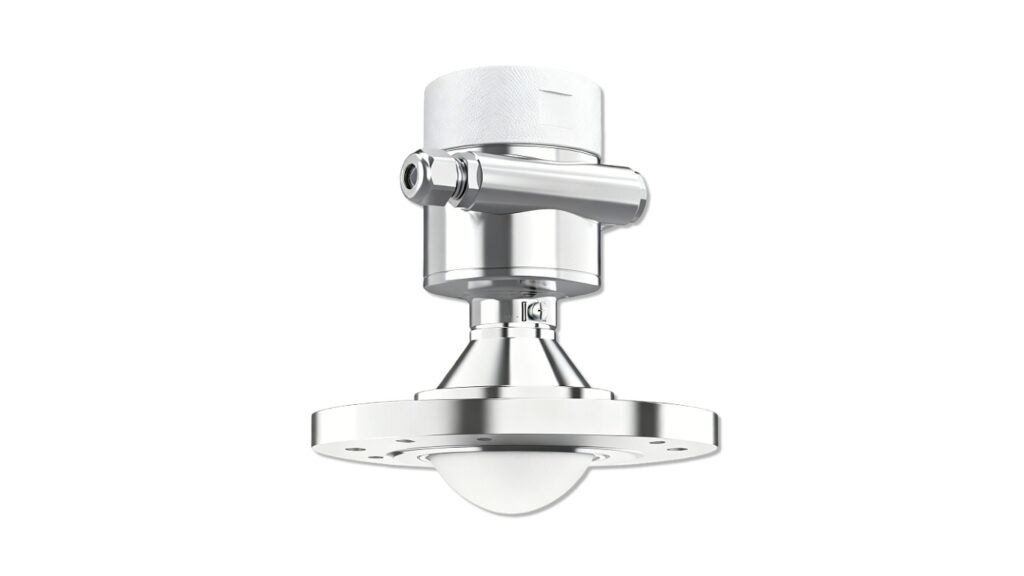
5. Process Connection and Flange Selection
The process connection type should match vessel design and pressure rating, and the flange standard must be confirmed.
- Flange Standards: Common standards include GB (China), ANSI/ASME (USA), JIS (Japan), and DIN (Europe). Choose a compatible flange to ensure reliable sealing.
- Installation Methods:
- Top Mounting: Most common for non-contact radar; avoids medium interference.
- Side Mounting: Suitable for silos, but consider beam obstruction and reflection.
- Inclined Mounting: Reduces foam or material impact, prolonging probe life.
- Baffle Protection: Adding baffles near inlets or high-velocity flow areas can reduce impact and interference.
Selection Recommendations:
- High-temperature or high-pressure applications require pressure-rated flanges and compatible seals.
- Ensure flange type matches the vessel interface and allows for maintenance or removal.
6. Output Signals and Interfaces
Select the output type according to the control system and process requirements:
- Analog Output: 4–20 mA ± HART, compatible with most DCS/PLC systems.
- Digital Communication: Modbus, Profibus, Foundation Fieldbus, suitable for smart control systems.
- Switch/Alarm Output: High/low level alarm settings.
- Safety and Isolation: In hazardous areas, consider intrinsically safe or isolated amplifiers.
Selection Tip:
- Confirm compatibility with the site control system for direct signal integration.
- Hazardous areas require proper Ex certification (e.g., Ex d, Ex ia).
7. Environmental Conditions and Protection Level
Environmental factors greatly affect radar measurement stability.
- Protection Level: IP66/IP67 or above is recommended for outdoor or dusty environments.
- Special Conditions: Steam, foam, dust, or vibration may interfere with radar echoes.
- Corrosion Resistance: For chemical media, choose 316L stainless steel, PTFE, or titanium probes.
Selection Tip:
- High steam or foaming conditions benefit from high-frequency radar with echo processing software.
- In heavy dust environments, consider protective shields or air purge devices.
8. Summary of the Selection Process
A systematic selection process includes:
- Determine the measured medium: liquid or solid, and surface characteristics.
- Confirm operating temperature and pressure; choose suitable high-temp/high-pressure or low-temp radar.
- Verify dielectric constant and its temperature dependence.
- Define measuring range and container geometry; consider beam angle and reflections.
- Select process connection and confirm flange standard (GB/ANSI/JIS/DIN).
- Determine output signals and interface compatibility.
- Consider environmental conditions, protection level, and corrosion resistance.
- Optimize beam angle, frequency, and probe type according to site conditions.
By analyzing these parameters systematically and combining them with site conditions and control requirements, engineers can significantly improve the measurement accuracy, stability, and long-term reliability of radar level transmitters.