How Pneumatic Systems Work: Core Technology in Industrial Automation
In modern industrial automation, pneumatic systems are widely applied across production and processing environments due to their high reliability, flexibility, and safety. From air compressors and power tools to industrial braking systems and automated production lines, pneumatic systems are almost everywhere. Despite their prevalence, many people do not fully understand their working principles and their essential value in industrial settings. This article provides an in-depth analysis of pneumatic system mechanisms, advantages, application scenarios, and demonstrates the intelligent automation solution when combined with Jiwei Fork-11 Fork Level Switches.
1. What is a Pneumatic System?
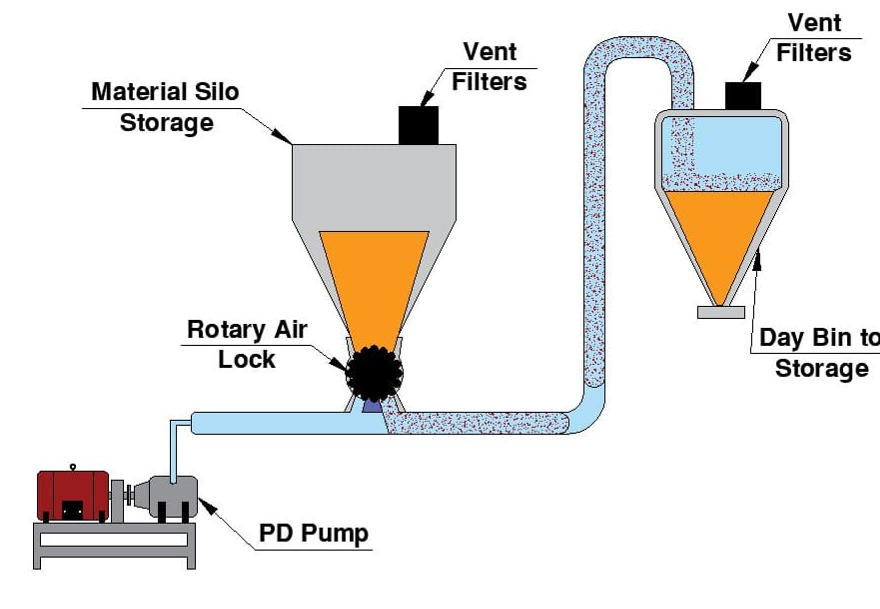
A pneumatic system uses compressed air or gas to drive and control the movement of mechanical components. It mainly consists of a compressed air storage device (air tank), an air compressor, and various pneumatic control elements (such as valves, cylinders, and actuators) to regulate air flow and pressure, converting gas energy into mechanical energy.
Compared to electrical or hydraulic systems, pneumatic systems have clear advantages: lower cost, simple maintenance, high safety, and the ability to operate stably under harsh conditions. Pneumatic systems can also achieve high-precision control, making them widely used in manufacturing, transportation, food processing, and pharmaceutical industries.
In industrial production, pneumatic systems can also be integrated with various sensors and control systems, such as pressure sensors, displacement sensors, or temperature sensors, providing real-time data for intelligent automation and precise control.
2. How Pneumatic Systems Work
The core of a pneumatic system is the transmission and control of compressed air energy. When compressed air is released from the storage tank, it is delivered through pipelines to various pneumatic components. Airflow and pressure are regulated through valves or regulators to ensure stable mechanical output. Examples include:
- Pneumatic cylinders: Compressed air acts on a piston, causing linear or reciprocating motion within the cylinder.
- Pneumatic motors or actuators: Convert air pressure into rotational motion to drive industrial robots or turntables.
- Pneumatic valve control systems: Air pressure moves the valve core to automatically open or close fluid pipelines.
3. Core Advantages of Pneumatic Systems
Pneumatic systems play an important role in industrial automation due to the following advantages:
- High Reliability
Pneumatic systems adapt well to temperature, humidity, and vibration. Unlike electrical drives, they are not affected by short circuits or overload, making them ideal for high-temperature, humid, or vibration-prone production environments. - Safety
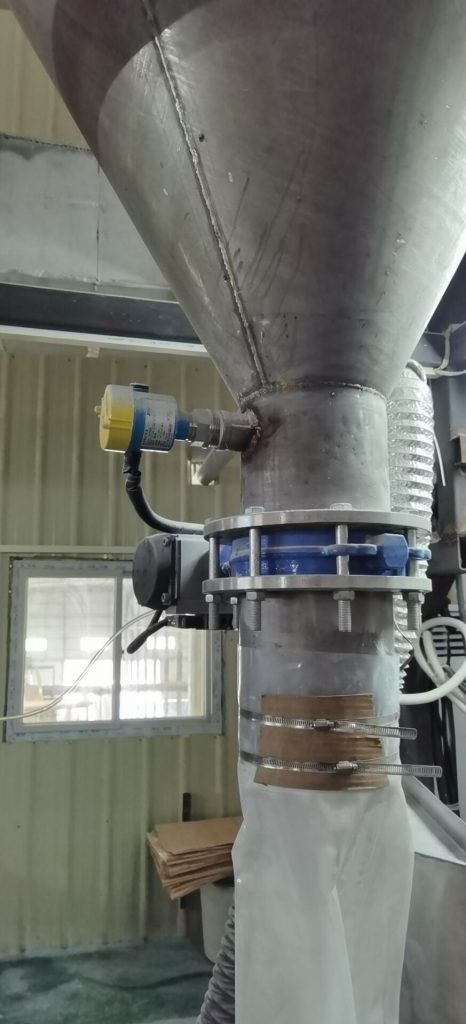
Pneumatic systems do not ignite or use direct electricity, making them safer in flammable or explosive environments. When combined with Fork-11 Fork Level Switches or other sensors, pneumatic systems can avoid operational errors at the source, further improving safety. - Cost-effectiveness
Pneumatic systems have relatively simple structures, low installation and maintenance costs, and long service life. For high-volume or multi-station factories, this reduces investment and operational expenses. - Flexibility
By adjusting air pressure or flow, pneumatic systems can achieve a variety of motion forms. When combined with sensors, they can quickly switch control strategies according to different working conditions. - High Efficiency
Pneumatic systems respond rapidly, often in milliseconds. Coupled with high-sensitivity devices like Fork-11 Fork Level Switches, they enable fast detection and execution, ensuring continuous, stable, and efficient production.
4. Industrial Applications of Pneumatic Systems
Manufacturing
In automated assembly lines, pneumatic systems drive robotic arms, feeding mechanisms, and fixtures. With pressure adjustment and sensor integration, real-time monitoring and automation are achieved, ensuring efficient operation and reducing downtime.
Chemical and Storage Tank Management
Pneumatic systems operate valves, mixers, and material conveyors. By combining pressure, flow, or level sensors, material flow and storage can be automatically controlled, ensuring production continuity and reducing human error.
Food and Beverage Industry
In high-cleanliness production lines, pneumatic systems drive conveyors, mixers, and packaging equipment. Integration with temperature, flow, and position sensors allows real-time monitoring and automatic adjustment, ensuring consistent product quality.
Pharmaceutical and Biotech Industry
In liquid formulation and reactor control, pneumatic systems provide fast and precise valve or transport adjustments. With pressure, temperature, and flow sensors, intelligent control and data feedback ensure stable processes and production safety.
Construction and Mobile Equipment
In field construction or mobile equipment with limited power supply, pneumatic systems provide reliable actuation. Combined with pressure, position, and flow sensors, they enable real-time monitoring, optimized operation, and improved on-site safety.
5. The Value of Jiwei Fork-11 Fork Level Switch in Pneumatic Systems
- Accurate and Reliable
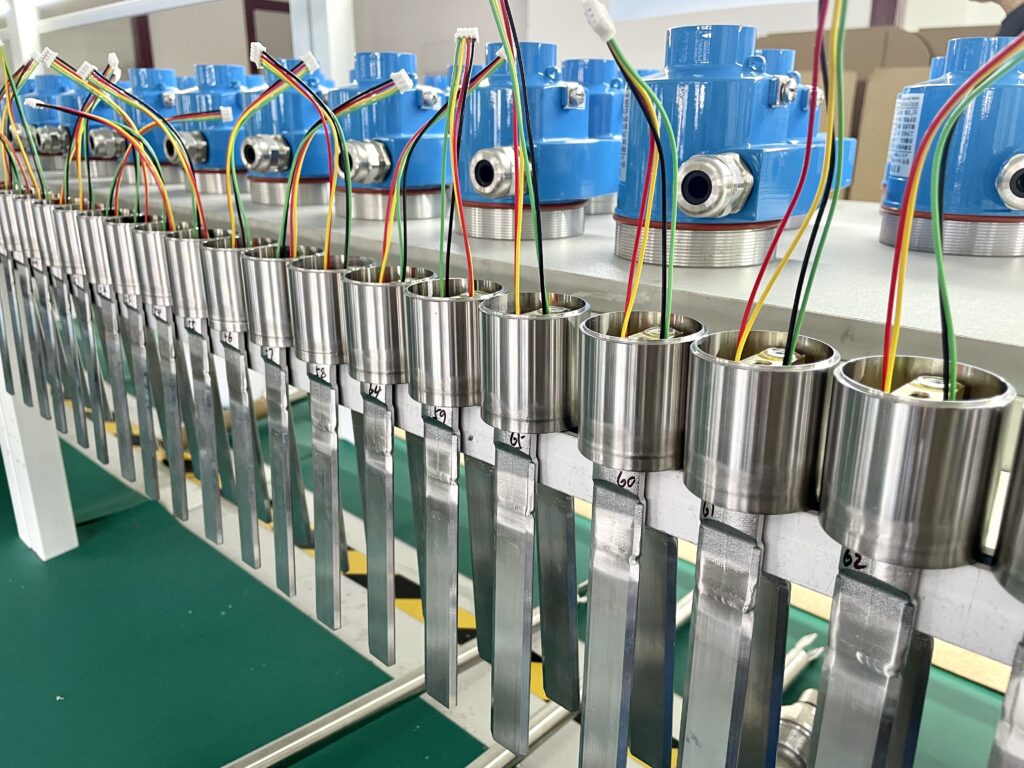
The Fork-11 Fork Level Switch uses vibration principles for high-sensitivity detection, ensuring precise signal triggering even in challenging materials, supporting the accuracy of pneumatic actuation. - Easy Installation
The compact design allows direct installation on tanks, pipelines, or silos controlled by pneumatic valves. Integration is simple and does not require complex modifications. - Durable
Made with stainless steel and corrosion-resistant materials, the switch withstands high temperature and pressure, suitable for chemical, food, pharmaceutical, and other demanding environments. - Adaptable to Multiple Conditions
Fork-11 Fork Level Switches can reliably detect solids, slurries, or granular materials, supporting smart pneumatic system control, reducing manual intervention, and increasing production efficiency.
6. Future Trends
With the development of industrial automation and smart manufacturing, pneumatic systems are evolving toward:
- Digital Control: Integration with PLC and SCADA for remote monitoring and intelligent adjustment.
- Sensor Fusion: Combining Fork-11 Fork Level Switches, radar level meters, and other sensors for multi-dimensional data to improve control precision.
- Energy Efficiency and Sustainability: Optimizing compressed air usage to reduce energy waste.
- Modularity and Standardization: Quick installation and maintenance to minimize downtime.
High-performance devices like Jiwei Fork-11 Fork Level Switches will continue to support the intelligent, reliable evolution of pneumatic systems.
7. Conclusion
Pneumatic systems are indispensable in industrial automation. They provide a reliable, flexible, and safe actuation foundation. Combined with Jiwei Fork-11 Fork Level Switches, they achieve seamless integration between sensing and pneumatic execution, delivering intelligent, precise, and efficient solutions for modern industrial production.
Flexible pneumatic control + precise sensing = the new standard for intelligent industry.
As Industry 4.0 advances, this combination will further improve factory automation levels, enhancing safety and production efficiency in manufacturing, chemical, food, and pharmaceutical industries.