Application and Benefits of Swivel Mounting Flanges in Radar Level Meter Installation
Abstract
In industrial level measurement, radar level meters are widely used in complex applications due to their high precision and reliability. However, challenges such as intricate tank structures and internal obstacles often make standard fixed-flange installations inadequate. This article provides an in-depth analysis of the structural characteristics and key advantages of swivel mounting flanges and examines their critical role when used with the Shenzhen Jiwei JWrada-35 Radar Level Meter. The combination enables optimal beam path alignment through angle adjustment, effectively avoiding interference and achieving accurate measurements even under complex working conditions.
I. Introduction: Installation Challenges in Complex Environments
As industrial automation advances, level measurement technology faces increasingly stringent demands. Radar level meters rely on the Time-of-Flight (ToF) principle of microwave signals, and their performance depends heavily on the quality of the signal path. In practice, engineers often encounter the following challenges:
- Internal Component Interference: Storage tanks and reaction kettles often contain agitators, heating coils, or baffles. If a vertically installed radar beam points directly at these internals, strong false echoes may occur, distorting measurement results.
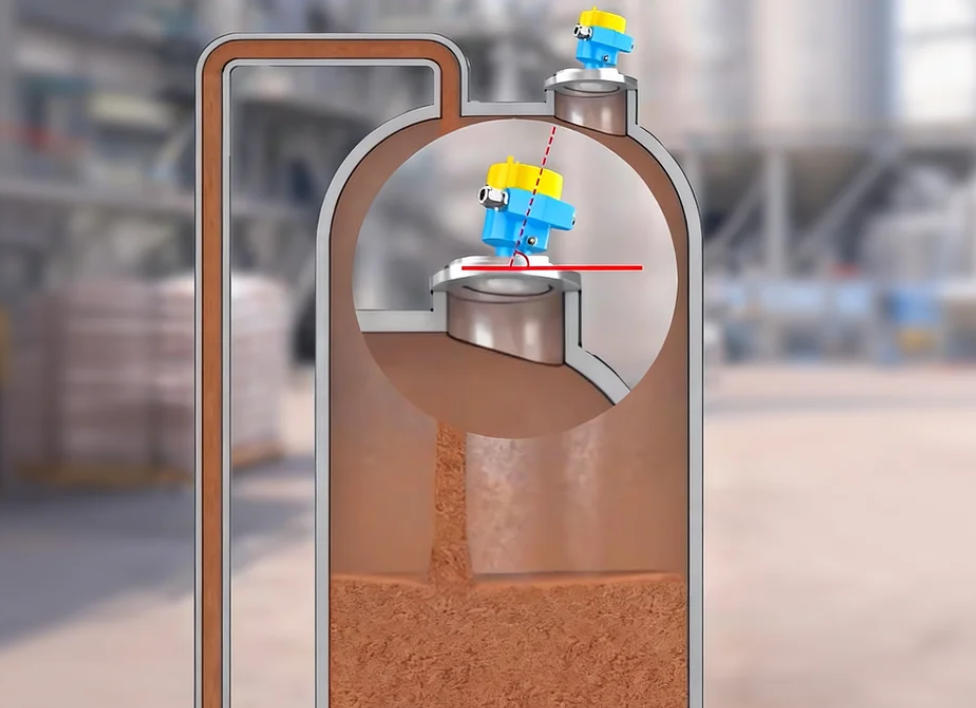
- Irregular Tank Shapes: Tanks with cone bottoms, sloping bottoms, or spherical shapes cause vertical beams to scatter on angled surfaces, creating weak reflections and increasing the measurement dead zone at low liquid levels.
- Installation Limitations: On-site constraints or existing tank modifications can force the mounting point off-center or directly in line with inlets, producing harsh measurement conditions.
The swivel mounting flange, capable of adjusting the antenna angle, provides a standardized solution for these installation challenges.
II. Technical Definition and Structure of Swivel Mounting Flanges
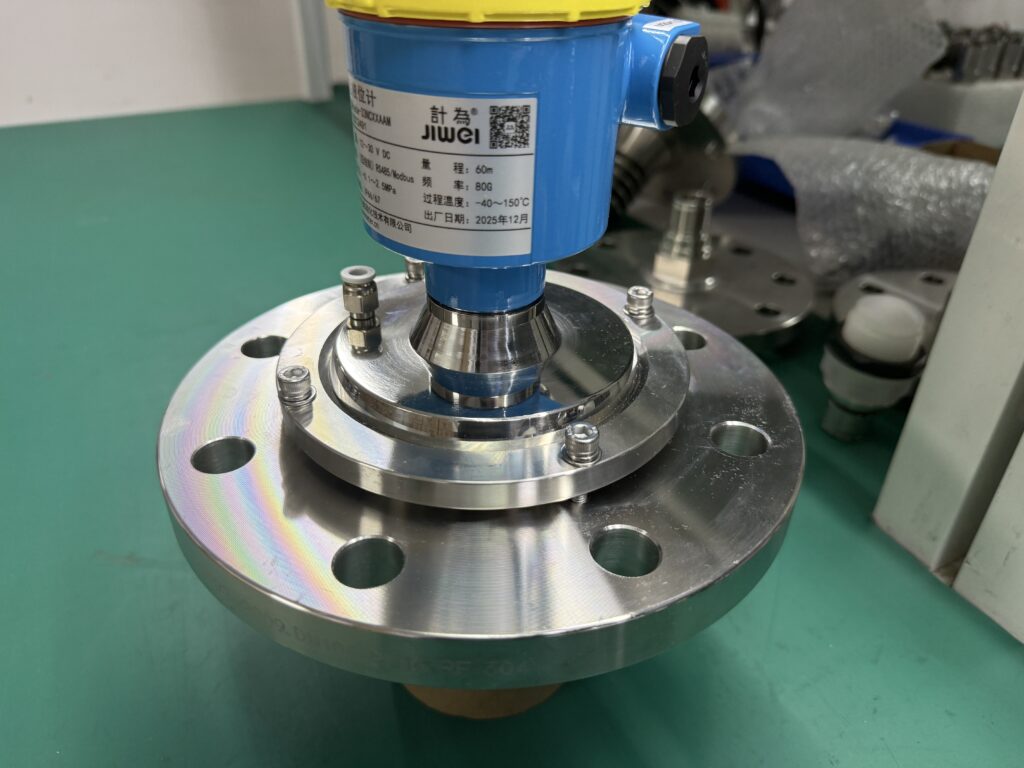
A swivel mounting flange is a specialized process connection designed to allow angular adjustment of the radar level meter—something fixed flanges cannot achieve.
1. Structural Principle
A typical swivel flange consists of an upper flange (instrument connection), a lower flange (process connection), and an intermediate adjustment mechanism. Its core resembles a ball-and-socket joint or a swivel hinge, allowing the instrument to rotate or tilt within a range (typically ±10° to ±30°). Once aligned to the optimal angle, a locking mechanism secures the position while maintaining full sealing performance.
2. Core Functions
- Angle Adjustment: Aligns the radar antenna axis at a specific angle relative to the tank vertical.
- Beam Guidance: Redirects the microwave beam to avoid internal obstacles and focus on optimal reflection areas.
- Sealing and Pressure Resistance: Maintains industrial-grade sealing and withstands pressure and temperature conditions while providing flexibility.
III. Key Advantages of Swivel Mounting Flanges
Compared to standard flat flanges or strap-mounted brackets, swivel flanges offer notable application-level advantages:
- Physical Anti-Interference Capability
Suppressing false echoes is a critical challenge in radar measurement. While modern instruments include software-based echo suppression, physically avoiding obstacles is most effective. Swivel flanges allow fine-tuning of the beam angle, bypassing agitators, coils, or other obstacles, significantly improving the Signal-to-Noise Ratio (SNR) for cleaner measurements. - Optimized Performance in Irregular Tanks
In cone-bottom tanks, vertical beams scatter at the angled surface, weakening the signal. Adjusting the beam with a swivel flange allows perpendicular incidence on the slope, strengthening reflections, eliminating dead zones, and maintaining accuracy even at very low liquid levels. - Simplified Installation and Reduced Costs
Without a swivel flange, engineers must design custom tilt brackets or modify tank nozzles, increasing costs and potentially compromising structural integrity. Swivel flanges provide a ready-made solution that a single engineer can adjust quickly, reducing installation and maintenance effort.
IV. Synergistic Use of Jiwei JWrada-35 Radar Level Meter and Swivel Flange
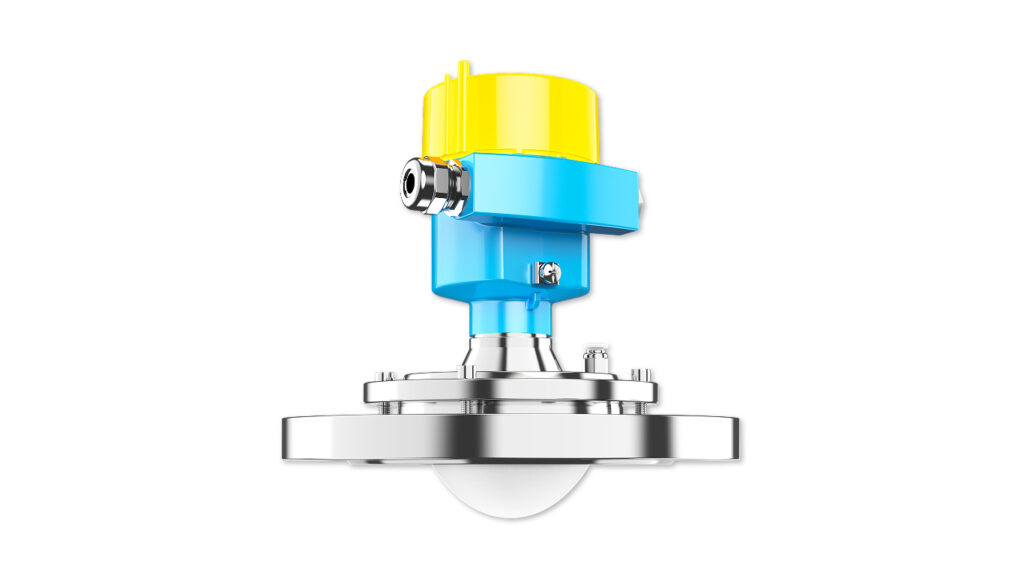
The JWrada-35 is a high-performance radar level meter by Shenzhen Jiwei Automation, designed for complex process environments. When combined with a swivel flange, its hardware and software capabilities are fully leveraged.
1. Technical Features of JWrada-35
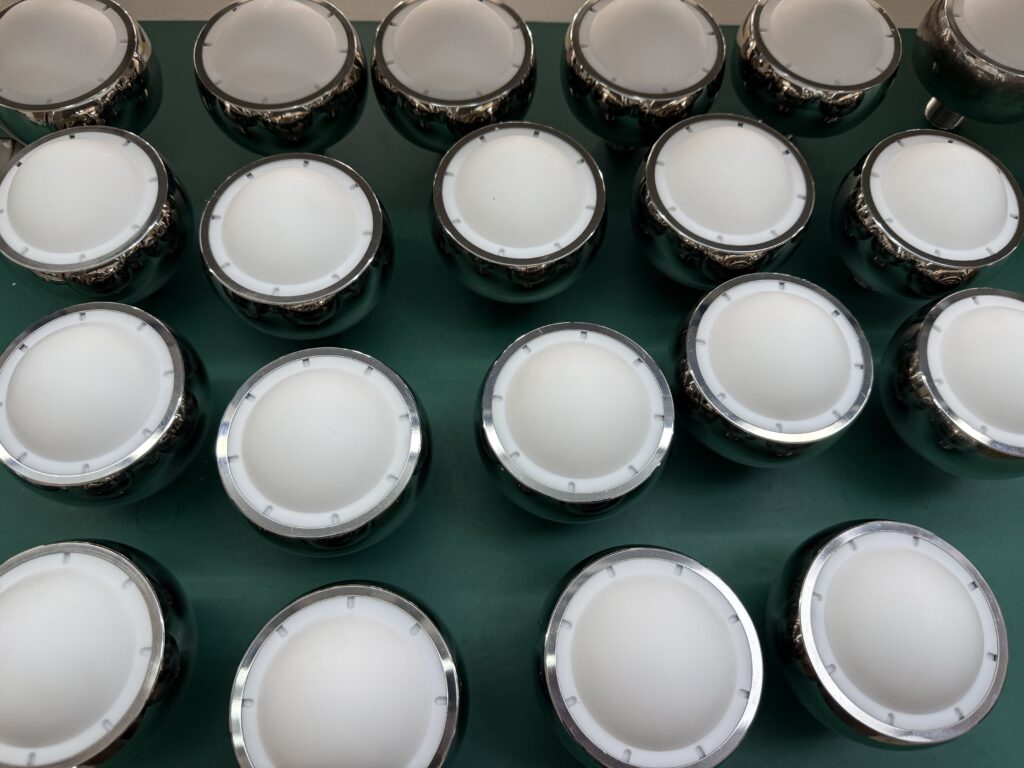
- High-frequency microwave technology with a narrow beam angle.
- Focused energy allows the beam to pass through small obstacle-free gaps within the tank, avoiding wall reflections that wide-beam radars encounter.
2. Advantages of Combined Software and Hardware
- Remote Collaborative Debugging: On-site personnel can adjust the swivel flange while engineers remotely monitor echo and EFT curves via the cloud.
- Waveform Analysis and Algorithm Optimization: Engineers guide the flange adjustment to minimize false echoes, then remotely fine-tune parameters and filter algorithms, achieving optimal measurement.
- Exclusive Domestic Technology: Jiwei’s cloud-based remote debugging is unique among domestic manufacturers, lowering operational difficulty and technical barriers for users.
V. Typical Application Scenarios
- Stirred Reaction Kettles
- Challenge: Agitator blades and vortexing surfaces produce interference.
- Solution: Adjust the swivel flange so the beam passes between blades and away from vortices.
- Cone-Bottom Storage Tanks/Reactors
- Challenge: Weak bottom signal due to slope.
- Solution: Adjust the beam angle to strike the cone slope perpendicularly for stronger reflection.
- Old Tanks with Internal Structures
- Challenge: Fixed beams, ladders, or pipes obstruct vertical installation.
- Solution: Use the swivel flange to redirect the beam, avoiding interference echoes.
- Corrosive or Adhesive Media
- Challenge: Condensation or volatile media affects the antenna.
- Solution: Micro-adjust the flange angle to improve airflow and reduce build-up, combined with JWrada-35’s surface coating.
VI. Installation and Commissioning Guidelines
- Pre-Installation Check: Confirm flange material and pressure rating against the tank interface; inspect sealing components.
- Preliminary Positioning: Install JWrada-35 on the flange with bolts slightly loose for manual adjustment.
- Beam Alignment: Predict interference sources from tank drawings and adjust tilt angle.
- Signal Verification: Observe echo curves via on-site tools or cloud monitoring; fine-tune angle until interference disappears.
- Final Locking: Tighten bolts diagonally to secure position and maintain sealing.
VII. Conclusion
In industrial level measurement, small installation details can determine measurement success. Swivel mounting flanges solve complex interference challenges through simple mechanical adjustments. When paired with the Jiwei JWrada-35 Radar Level Meter, which offers high-performance hardware and cloud-based remote debugging, this combination provides a flexible, precise, and intelligent solution for challenging environments.
This approach embodies Jiwei Automation’s commitment as a National High-Tech Enterprise—focusing on independent R&D and user-centric solutions—ensuring reliable, accurate data even in harsh conditions such as LPG storage and carbon fiber production.
Flexible installation. Precise measurement. Efficient operation.
This is the practical value that swivel mounting flanges bring to industrial radar level measurement.