Field Report: How Jiwei Mini Fork Level Switch Rivals E+H Under Harsh Interference
Jiwei Mini Fork Level Switch proves its reliability in Shandong, one of China’s key economic and industrial provinces along the eastern coast, which boasts a strong manufacturing base. The region’s extensive chemical, machinery, and high-end equipment industries place exceptionally high demands on process control and automation, and its harsh, complex operating conditions have long served as a natural stress test for process instruments.
During our recent visit to Shandong, one key agenda was a dedicated meeting with a highly influential and experienced local instrumentation distributor. The company’s general manager, Mr. Li, has spent over two decades in the industry, representing major domestic and international brands and developing deep insights into real user needs and complex field challenges.

During our discussion, Mr. Li reviewed a challenging real-world case from a nearby fine chemical plant — a case involving level measurement reliability under extreme vibration.
1. Challenges of Skid-Mounted Dosing Systems in Fine Chemical Plants
“Equipment integration and compact design have become standard in today’s fine chemical industry,” Mr. Li noted.
The customer needed to install a level switch on a narrow dosing pipe to detect liquid presence and protect a precision metering pump from dry-run damage. Due to the extremely tight skid layout, only a mini or compact vibrating fork level switch could be used.
But space was not the biggest problem. The installation point was located right beside a high-power booster pump.
“When the pump runs, the vibration is extremely severe,” Mr. Li said. The entire skid experiences continuous high-frequency vibration. For vibrating fork level switches — which detect frequency changes — this creates significant mechanical interference. Additional challenges such as fluid pulsation, bubbles, acoustic noise, and EMI make the application even more complex.

2. Failure of the Shanghai SPES Mini Fork: Only Two Hours of Operation
At the early stage of the project, the customer initially tested a batch of low-cost mini vibrating fork level switches from Shanghai SPES.
While their datasheet parameters seemed acceptable, on-site operation immediately exposed the limitations.
The Shanghai SPES level switch was installed at 10:00 a.m. At 10:30 a.m., the booster pump entered full-load operation. Less than two hours later, the control room received an alarm: the metering pump had tripped under “dry-run protection.” Field engineers confirmed that the pipe was filled with liquid, yet the Shanghai SPES level switch continuously output a “no liquid” signal.
Failure analysis showed micro-cracks in the piezoelectric element and loosened PCB solder joints caused by continuous high-frequency vibration. Weak EMI resistance may also have accelerated component degradation.
“External vibration overwhelmed the fork’s working frequency and caused complete failure,” Mr. Li said. “The production loss from two hours of downtime far exceeds the cost of a hundred high-quality level switches.”
The customer immediately ruled out low-cost options and demanded a reliable alternative.
3. The Only Viable Options: E+H and Jiwei
After the failure of the Shanghai SPES units, only two realistic solutions remained: the international benchmark Endress+Hauser (E+H) and the proven domestic alternative — Jiwei Automation’s mini vibrating fork level switch.
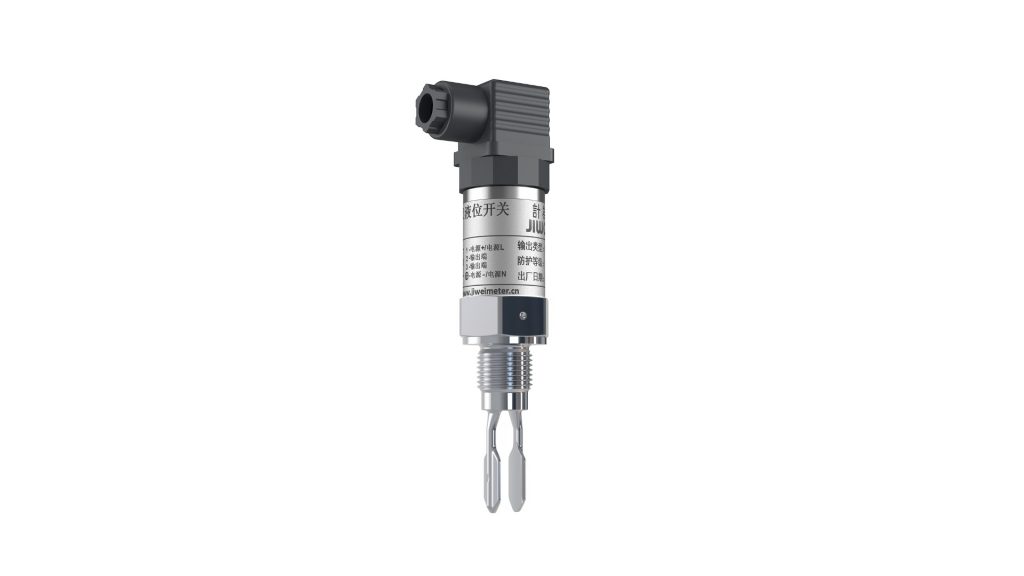
“E+H is a benchmark, of course. But in recent years, Jiwei’s mini fork has performed exceptionally in multiple harsh-condition projects, giving us full confidence,” Mr. Li said.
The customer arranged a side-by-side comparison: one E+H spare unit and one Jiwei mini fork.
The results were decisive.
Under the same intense pump vibration, fluid pulsation, bubbles, and electromagnetic interference, the Jiwei mini fork delivered stable and accurate performance. It detected the liquid state correctly during pump startup, shutdown, and frequency-conversion operation, without any false alarms.
By the date of our visit, it had operated continuously for more than seven months without failure.
4. Why Jiwei Outperformed: Technical Logic Behind the Reliability
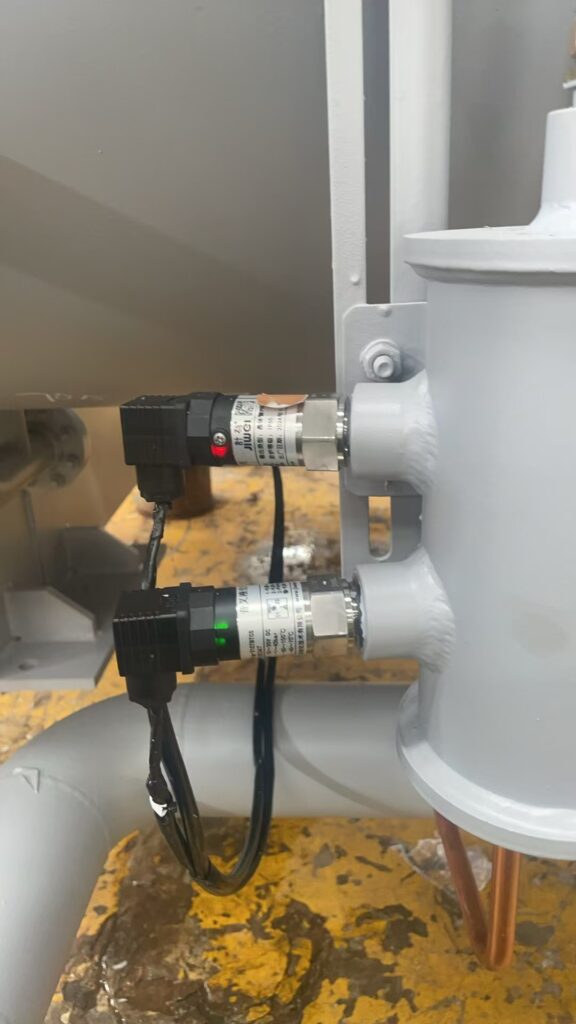
This case demonstrates that high-quality domestic instruments can match — and sometimes rival — international brands in critical applications.
Key drivers of Jiwei’s superior reliability include:
Optimized fork structure
Designed through precise modal analysis to suppress external vibration and reduce sensitivity to fluid pulsation and bubbles.
High-grade piezoelectric and electronic components
Ensuring durability under long-term vibration and providing strong inherent resistance to EMI.
Advanced anti-interference algorithms
Accurately extracting effective damping signals from heavy background noise, filtering out mechanical, acoustic, and electromagnetic interference.
5. Conclusion: Reliability Is the Core Value in Industrial Automation
The contrast is striking: while the Shanghai SPES level switch failed in under two hours, the Jiwei mini vibrating fork has now run for over seven months without issue. In Shandong’s heavy-industry environment, users do not seek the lowest cost — they seek reliable performance under extreme conditions.
As Mr. Li summarized: “The market is becoming rational. Users no longer blindly trust imported products or chase low prices. Companies like Jiwei, which invest in core technologies and solve real problems, are proving that Chinese-made instruments now offer world-class reliability.”
With a reliable vibrating fork level switch guarding critical processes, production systems gain a stronger layer of safety — representing the true value of continuous progress in industrial automation.