How to select level measurement instruments for high-temperature and flammable media?Matching LPG and Thermal Oil Applications
For media such as LPG, thermal oil, and oil flushing fluids, liquid level measurement should not be selected based on measuring range alone. Temperature, pressure, explosion-proof requirements, density, viscosity, installation space, and control purpose must all be considered. For 150℃ high-temperature liquid level applications, the Ring-21 tuning fork liquid level switch or Ring-11 tuning fork liquid level switch can be evaluated first.
For operating temperatures close to 290℃ or higher, the high-temperature or ultra-high-temperature configuration of the Ring-11 should be carefully reviewed. For continuous level measurement, the JWrada radar level meter can be considered. The published temperature ranges of Ring-11 high-temperature and ultra-high-temperature versions cover -50~280℃ and -50~400℃ respectively, with the ultra-high-temperature version adopting a water-cooling design. The published temperature range of the Ring-21 high-temperature compact model covers -50~150℃.
1. Industry Background: The Challenge of High-Temperature and Flammable Liquid Level Measurement Lies in Meeting Multiple Requirements Simultaneously
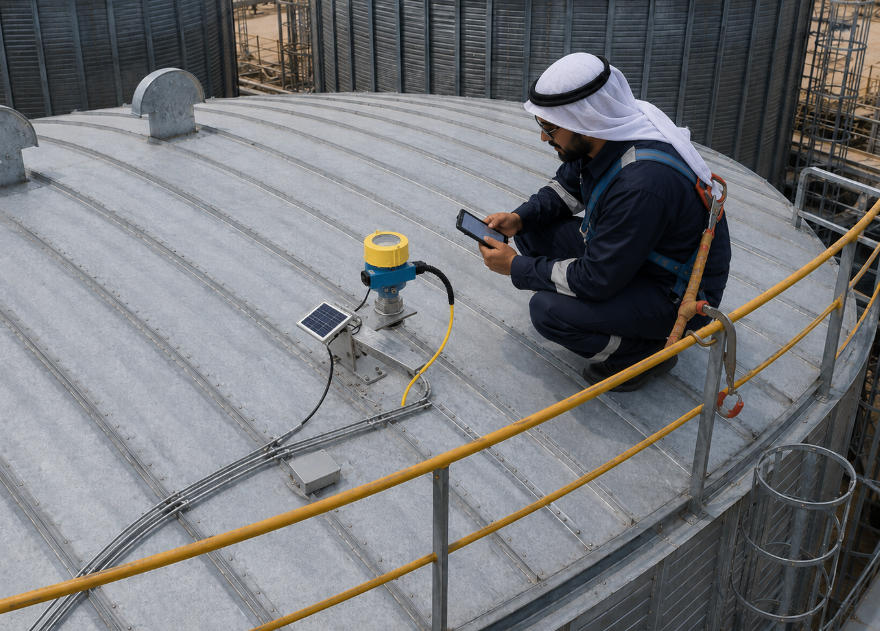
LPG is not an ordinary oil product. Authoritative safety information describes LPG as a medium that is usually stored and distributed as a liquid and easily vaporizes into gas. It is also classified as highly flammable. Once liquid LPG leaks, it can rapidly vaporize and form a large vapor cloud. Since LPG vapor is heavier than air, it may spread along the ground and accumulate in low-lying areas. If it encounters an ignition source, there is a risk of fire or explosion.
Thermal oil and heat transfer systems present another type of challenge. Thermal fluid systems typically transfer heat to reactors, heat exchangers, dryers, and other equipment through a closed circulation loop. Their advantage is that they can provide high-temperature process heat at relatively low pressure. However, from an instrumentation perspective, high temperature continuously tests sealing performance, thermal isolation of the electronics housing, wetted materials, cooling structure, and installation practices. Although 150℃ may not seem extremely high, changes in medium viscosity, strong pipeline vibration, or very short mounting nozzles may still cause false alarms. When the temperature approaches 290℃, the high-temperature structure and heat dissipation or cooling design must be carefully evaluated.
2. Site Challenges: Why Are High-Temperature Oils and LPG Applications Prone to Incorrect Instrument Selection?
2.1 Focusing Only on the Medium Name Instead of Its Actual State
Even when the medium is called LPG, the actual application may involve storage tank level measurement, pipeline liquid accumulation detection, pump inlet protection, or a liquid phase control point in a fractionation process. Different control purposes require different instruments. High and low level alarms focus more on reliable switching action, while inventory measurement or process control requires continuous level accuracy and stable signal performance.
2.2 Focusing Only on the Temperature Point Without Allowing for Heat Transfer Margins
A 150℃ application can be classified as high-temperature liquid level measurement, but 290℃ already exceeds the applicable range of many conventional liquid level switches. Therefore, a 290℃ application should not be treated as “just slightly above the high-temperature range.” Instead, the actual probe temperature, insulation thickness, heat dissipation conditions, mounting orientation, and cooling conditions must be verified.
2.3 Low Density, Foam, Bubbles, Adhesion, and Vibration May Exist at the Same Time
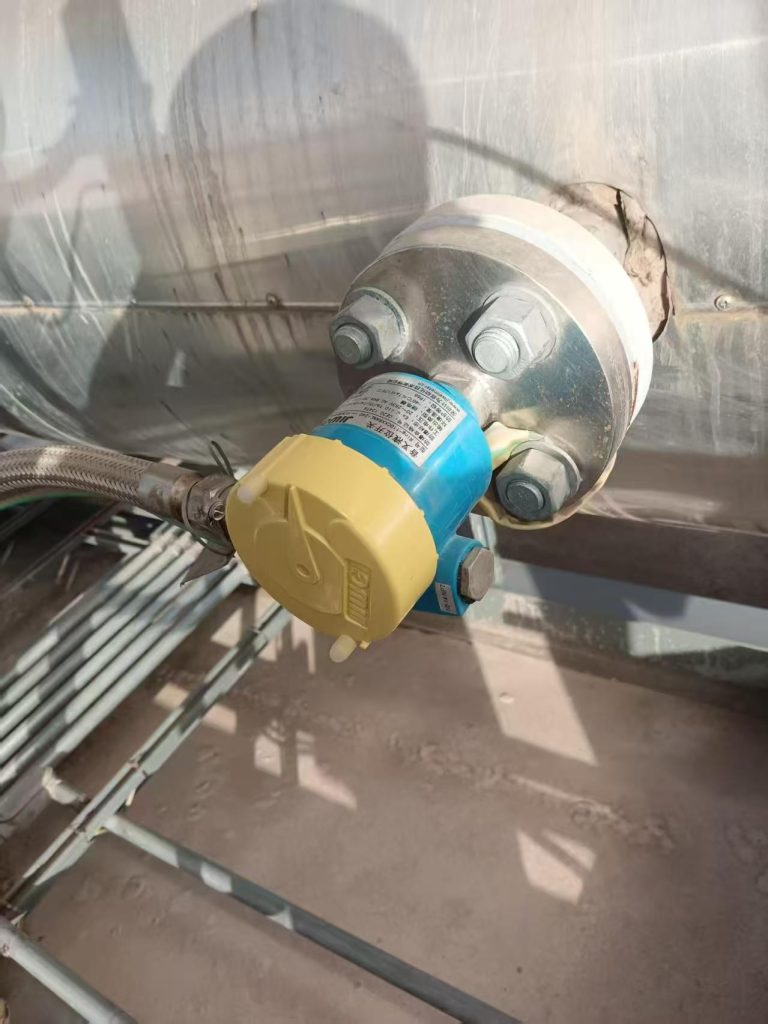
Light liquids such as LPG, thermal oil circulation pipelines, and oil flushing systems may all involve bubbles, flow impact, or vibration. The Ring-11 determines the liquid level based on changes in the vibration frequency of the fork. It is suitable for liquids with densities as low as ≥0.5g/cm³. The fork length is 40mm, and output options include relay, two-wire, NAMUR, and transistor outputs. These features make it more suitable for critical point level alarms, but the medium density, viscosity, flow velocity, and installation position still need to be checked according to the actual site conditions.
3. Principle Explanation: What Roles Do Tuning Fork Liquid Level Switches and Radar Level Meters Play?
Tuning Fork Liquid Level Switch: Suitable for Independent “Reached / Not Reached” Alarms
A tuning fork liquid level switch uses piezoelectric components to drive the fork into vibration. When the fork comes into contact with liquid, its resonant frequency changes. The detection circuit identifies this frequency change and outputs a switching signal. In practical engineering applications, it acts like a reliable “point-level guard,” suitable for high-high level alarms, low-low level alarms, pump dry-run protection, pipeline liquid accumulation detection, and similar applications.
Radar Level Meter: Suitable for Continuous Level Trends and Process Control
The JWrada-35 adopts 80GHz millimeter-wave radar technology. It is designed for complex conditions such as high temperature, high pressure, corrosive media, steam, foam, and dust. Its measuring range can reach up to 150m, and its process temperature parameters include -40~150℃ and -40~220℃. Output options include 4–20mA/HART and RS485/Modbus. For storage tanks, buffer tanks, expansion tanks, and other applications requiring continuous level measurement, radar level meters are more suitable for providing trend, inventory, or control signals. However, for safety interlock points, an independent liquid level switch is still recommended as a protective layer.
4. Jiwei Product Matching Suggestions: Breakdown by Medium and Temperature
4.1 LPG: Prioritize Explosion Protection, Pressure, and Low Density
LPG is a highly flammable medium. A liquid level protection solution should first verify the explosion-proof zone, process pressure, density, temperature, and interlock logic. The Ring-11 explosion-proof tuning fork liquid level switch is available with flameproof, intrinsically safe, and gas/dust dual explosion-proof ratings. Its process pressure range is -1~64bar, applicable liquid density is ≥0.5g/cm³, and process temperature ranges include -50~150℃ for standard temperature, -50~280℃ for high temperature, and -50~400℃ for ultra-high temperature versions.
Recommended application:
For LPG storage tank high-high level alarms, low-low level protection, pump inlet protection, and pipeline liquid accumulation detection, the Ring-11 explosion-proof model can be evaluated first. If continuous level measurement is required, tank structure, pressure, dielectric constant, mounting nozzle, shut-off valves, and safety specifications should be further considered to evaluate radar or other continuous measurement solutions. The selection should not be made based only on the medium name.
4.2 Thermal Oil at 150℃: Distinguish Between “Cost-Effective Point Level” and “Critical Protection Point”
A 150℃ thermal oil level application is commonly found in expansion tanks, circulation tanks, buffer tanks, and return oil pipelines. The Ring-21 high-temperature compact model uses a heat dissipation tube to withstand a 150℃ process temperature. It has a compact structure and a fork length of 38mm. It is mainly suitable for relatively simple working conditions, limited installation space, cost-sensitive applications, and liquid level measurement scenarios that do not require explosion-proof protection.
Recommended application:
For non-explosion-proof areas, small vessels, pipelines, or general high-temperature liquid level alarms, the Ring-21 high-temperature compact model can be considered as an economical solution. If the measuring point is involved in interlocks, the medium is flammable, NAMUR or two-wire output is required, higher pressure is involved, or low-density liquid compatibility is needed, the Ring-11 should be evaluated first.
4.3 Thermal Oil at 290℃: Treat It as an Ultra-High-Temperature Application
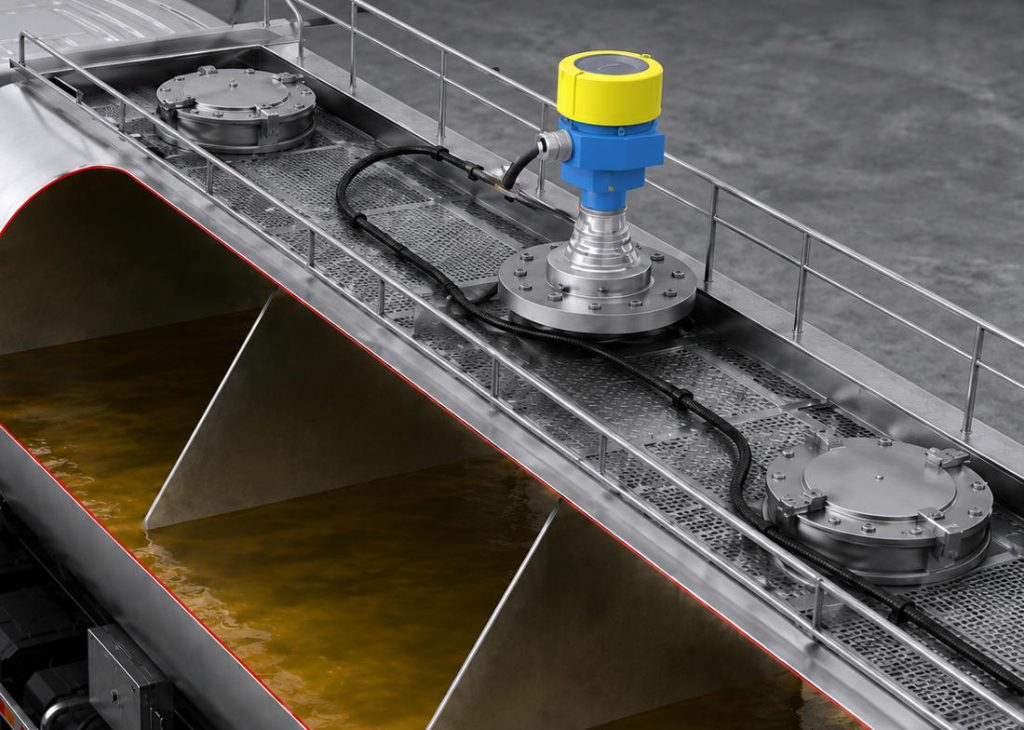
Thermal oil at 290℃ already exceeds the published -50~280℃ range of the Ring-11 high-temperature model. Therefore, it should be re-evaluated as an ultra-high-temperature liquid level protection application. The Ring-11 ultra-high-temperature tuning fork liquid level switch can add a cooling sleeve based on the high-temperature structure. The cooling medium helps reduce the temperature of key probe components, and the process temperature range can cover -50~400℃.
Recommended application:
For high/low level alarms in 290℃ thermal oil expansion tanks or thermal oil circulation systems, it is recommended to provide the actual process temperature, insulation thickness, pressure, mounting length, cooling water conditions, medium viscosity, and alarm point height. Engineers can then verify whether the Ring-11 ultra-high-temperature version and the corresponding process connection should be selected.
4.4 Oil Flushing: Focus on Preventing False Alarms Caused by Flow Impact
Oil flushing is commonly used during equipment commissioning, pipeline cleaning, lubrication systems, or thermal oil system maintenance. Level points in these applications are often temporary and may involve strong flow, bubbles, impurities, and vibration. Tuning fork switches can be used for high and low level alarms in storage tanks, return oil tanks, and buffer tanks before and after filters. However, the installation should avoid liquid inlets, outlets, and strong impact areas, and the fork surface should be properly aligned with the flow direction. Ring-11 installation information also indicates that the tuning fork should not be installed at liquid inlets or outlets to avoid damage or false operation.
Recommended application:
For oil flushing systems operating at normal temperature or within 150℃, in non-explosion-proof areas and with limited installation space, the Ring-21 can be evaluated. If the site involves high temperature, explosion-proof requirements, low density, or interlock requirements, the corresponding Ring-11 configuration is recommended.
5. Conclusion: High-Temperature and Flammable Media Should Use a Combination of “Continuous Measurement + Independent Protection”
LPG, thermal oil, oil flushing fluid, and high-temperature process water do not follow the same selection logic. LPG applications should prioritize explosion protection, pressure, and low density. Thermal oil applications should focus on temperature limit, viscosity, and heat dissipation conditions. Oil flushing applications should focus on flow impact and false operation. Water/hydrocarbon combinations may also involve interface measurement issues.
If continuous level trends are required on site, the JWrada radar level meter can be evaluated. If high/low level alarms, pump protection, or interlock points are required, Ring-11 or Ring-21 tuning fork liquid level switches should be considered for independent point level protection. It is recommended to provide Jiwei Automations with medium information, temperature, pressure, mounting connection, explosion-proof requirements, output signal, and control logic, so that technical engineers can assist in confirming the most suitable product configuration and installation method.