How Jiwei Radar Level Transmitters Solve Complex Level Measurement Challenges in Refineries and Petrochemical Plants
Efficient, predictable, and safe operation is the foundation for every refinery and petrochemical facility to remain competitive and sustainable.
From crude distillation, catalytic cracking, and hydrocracking to aromatics, olefins, and polymer processes, every stage relies on precise and stable instrumentation to maintain material balance and process control. Level measurement is especially critical — it directly affects equipment safety margins, reactor and column stability, and the overall production rhythm of the plant.
In real operating conditions, failures in measurement, signal drift, or unrecognized sudden level changes may result in product off-spec, pump damage, material leakage, or even major safety incidents. For this reason, more and more industry users are upgrading from traditional measurement technologies to the high-performance radar level transmitters provided by Shenzhen Jiwei Automations Ltd. Jiwei radar level transmitters offer exceptional signal processing capability, robust mechanical design, and outstanding stability under harsh conditions, making them a key choice for boosting instrument reliability in refinery and petrochemical operations.
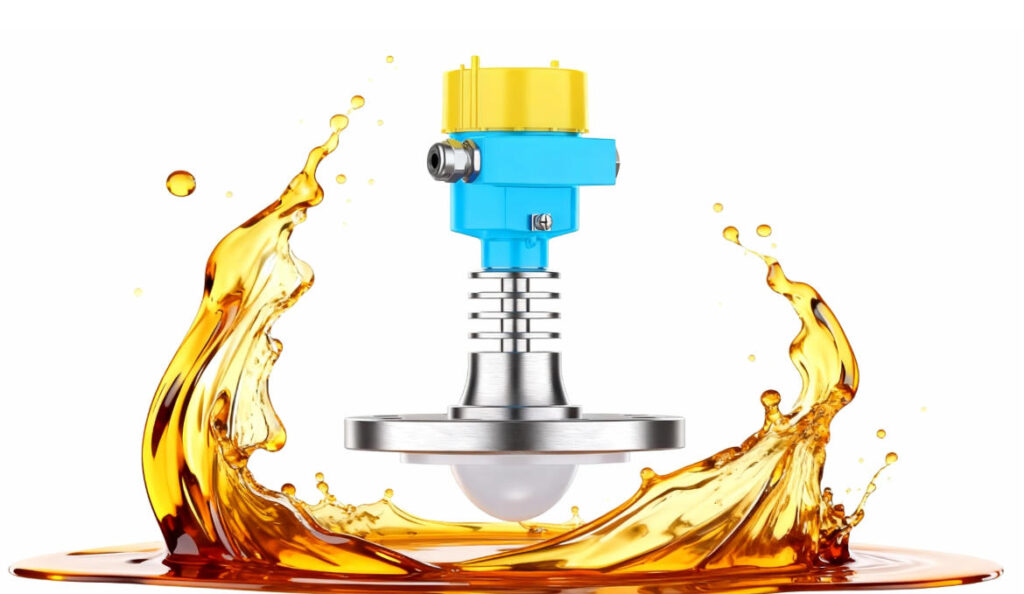
This article discusses the challenges of liquid level measurement in these industries and explains how Jiwei’s radar technologies improve efficiency and reduce operational risks.
1. Complexity and Challenges of Level Measurement in Refining and Petrochemicals
Refinery and petrochemical facilities handle some of the most complex media and harsh environments found in industry. Media vary dramatically—light hydrocarbons, gasoline, diesel, high-viscosity residue, slurry oil, aromatic solvents, volatile intermediates, polymerizable fluids, and materials containing significant impurities.
High temperatures generate dense vapor, leading to signal attenuation in traditional instruments. In high-pressure systems, density fluctuations, temperature gradients, and phase changes affect accuracy. Many reactors contain trays, packing, cyclones, or internal circulation pipes, creating complex reflections. Thick foam or emulsification layers further interfere with measurement.
Environmental regulations add additional demand: overfill protection, leakage prevention, VOC control, custody transfer accuracy, and high-integrity safety loops all require highly reliable level measurement. Any error may lead to shutdowns, off-spec production, or serious safety consequences. In this environment, high-frequency radar has become the industry standard.

2. Why Radar Technology Has Become the Industry Standard
Radar level transmitters measure using electromagnetic waves. They are non-contact, unaffected by pressure, temperature, density, or viscosity, making them ideal for complex refinery and petrochemical processes.
Radar features:
- No contact with the media—immune to corrosion, fouling, or wear.
- High-frequency (80 GHz) narrow beam, capable of avoiding internal obstructions even in vessels with mixers, coils, or trays.
- Extremely wide application range, from atmospheric tanks to high-pressure reactors, from clean fluids to foaming or contaminated media.
As a result, radar is rapidly replacing float, differential pressure, ultrasonic, and magnetic level gauges, becoming the mainstream solution for liquid level measurement in this industry.
3. Core Applications of Radar Level Transmitters in Refineries
3.1 Crude Desalter
Desalters contain complex oil–water interfaces, especially with thick emulsion layers. Jiwei radar level transmitters maintain stable interface signals even under heavy emulsification, supporting efficient crude pretreatment.
3.2 Atmospheric & Vacuum Distillation Units
Reflux drums, side-draw tanks, and bottoms collectors exhibit severe temperature gradients and vapor interference. Jiwei radar resists steam disturbance and dielectric changes, ensuring stable column operation.
3.3 FCC/UFCC Slurry Tanks and Receivers
FCC units feature extreme turbulence and gas–solid flows. Jiwei’s reinforcement echo algorithms maintain continuous reading even when slurry fluctuates violently.
3.4 Hydrocracking and Reforming Reactors
Reactors operate under extreme temperature and high hydrogen pressure. Jiwei’s non-contact radar avoids leakage and drift risks while retaining stable measurement.
3.5 Tank Farms and Product Terminals
Whether crude tanks, product tanks, or chemical storage, Jiwei 80GHz radar penetrates vapor and foam to deliver continuous, accurate levels essential for safety and inventory management.
4. Technical Advantages of Jiwei Radar Level Transmitters
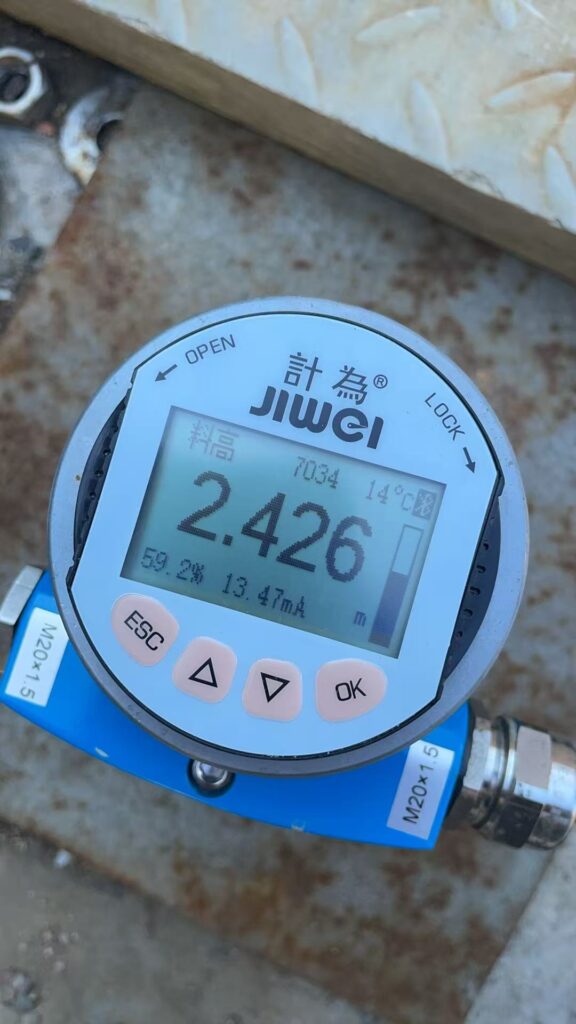
4.1 High-Frequency Radar for Precision
The 80 GHz high-frequency design provides strong beam focusing, enabling clean echo capture even in heavy oil, residue, or low-dielectric hydrocarbons.
4.2 Corrosion and Mechanical Stress Resistance
Jiwei uses reinforced flanges, corrosion-resistant metals, and rugged process connections suitable for outdoor and hazardous areas.
4.3 Stable Performance in Extreme Conditions
Dynamic echo enhancement guarantees smooth level readings in high-steam environments, foam-covered reactors, or rapid liquid fluctuations.
4.4 Intelligent Signal Processing
Multi-echo identification, noise suppression, and interference rejection ensure true level detection even in vessels with complex internals.
4.5 System Compatibility & Wireless Features
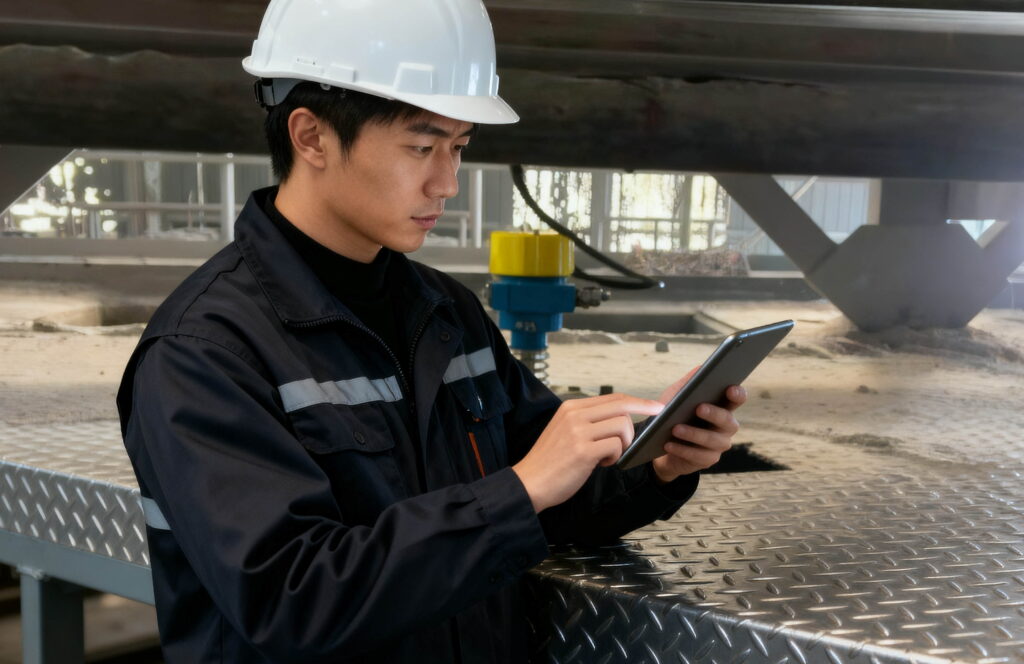
Jiwei radar supports 4–20 mA/HART, PLC/DCS/SIS, and SIL safety loops.
Integrated Bluetooth works with the Jiwei Smart Control® mini-program and self-developed mobile APP, enabling remote commissioning, monitoring, data logging, and cloud updates.
Software is fully self-developed and supports continuous upgrades.
5. Performance in Typical Harsh Applications
- High-viscosity heavy oil tanks — stable echoes despite viscous surfaces.
- Condensate recovery — fast response prevents pump dry-run.
- Polymer reactors with foam — radar still recognizes true level.
- Unpredictable multi-phase mixtures — algorithm reliably tracks real liquid height.
6. Enhancing Environmental Protection, Safety, and Operational Efficiency
Accurate level measurement reduces overfill risk, prevents leakage, and supports VOC control. Reliable radar improves mass balance, energy efficiency, and reduces maintenance due to its non-contact design.
7. Why Choose Jiwei Radar Level Transmitters
Jiwei radar level transmitters are widely validated across refining, petrochemicals, chemicals, new energy, food, and water treatment industries. Their reliability, signal processing performance, and durability make them one of the strongest domestic alternatives in China.
Jiwei radar is a perfect substitute for VEGA in terms of performance.
The German VEGA headquarters has even purchased Jiwei instruments, further proving product quality on an international scale.
Beyond performance, Jiwei provides faster delivery, higher cost-effectiveness, and more responsive engineering support — earning strong trust from global users.
Conclusion
In the refining and petrochemical industry, level measurement is more than just numbers — it ensures plant safety, operational efficiency, and environmental compliance.
Jiwei radar level transmitters, with their high reliability, advanced signal algorithms, and adaptability to harsh conditions, have become an essential tool for improving measurement quality and minimizing operational risks. For plants seeking higher safety margins, lower maintenance costs, and more accurate measurement, Jiwei radar level transmitters are a trusted long-term solution.